Ever wondered what fuels the world’s economies? Land, labour, capital, and entrepreneurship are the powerhouse ingredients behind every product and service. Master these factors, and you hold the key to business growth and economic dominance.

Behind every product you buy and every service you use, there’s a carefully orchestrated combination of key resources at work. These resources, known as the factors of production, are the essential ingredients that businesses need to create goods and deliver services.
Economists classify these factors into four main categories: land, labour, capital, and entrepreneurship. Land provides the natural resources, labour supplies the human effort, capital includes the tools and machinery, and entrepreneurship brings it all together through innovation and risk-taking.
Together, they form the foundation of economic activity, shaping industries, driving growth, and influencing everything from job markets to global trade.
But who controls these factors?
The answer depends on the economic system whether it’s capitalism, where private businesses dominate, or socialism, where the government plays a larger role. And in today’s fast-changing world, technology is emerging as a powerful force, transforming how these traditional factors interact.
Evolution of factors of production
The concept of factors of production has transformed dramatically since Adam Smith first penned The Wealth of Nations in 1776. What began as a simple trio: land, labour, and capital, has evolved into a dynamic framework that powers modern economies.
Smith revolutionised economic thought by highlighting how specialisation boosts productivity, imagine a pin factory where divided tasks create exponential output. David Ricardo then revealed how comparative advantage could optimise these factors across borders, a principle that still guides global trade today.
The Industrial Revolution supercharged this evolution, as steam engines and mechanisation redefined capital’s role. No longer just money or tools, capital became the technology that multiplied human effort.
By the 20th century, economists recognised entrepreneurship as the fourth pillar, the spark that combines land, labour, and capital into thriving enterprises.
Today, these factors remain vital, but their interplay has grown more complex. Digital startups thrive on intangible capital (like software), while AI reshapes labour markets.
Yet the core truth endures: how societies harness these elements determines their prosperity.
Four factors of production
1. Land
Land is the first and foundational factor of production. It broadly refers to any natural resource that is used to produce goods and services. This includes not just agricultural land but also natural resources such as forests, minerals, water, and even real estate for urban development. Essentially, land is the raw material for production.
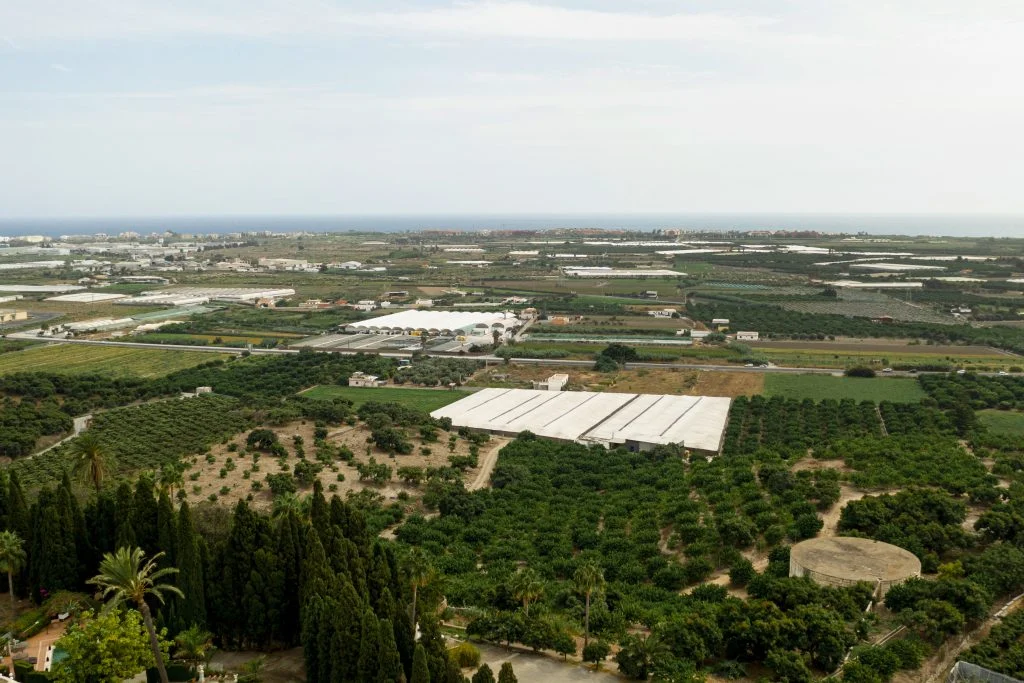
Examples of Land as a Factor of Production:
- Agricultural land: Farmland used for growing crops like wheat, maize, or vegetables.
- Natural resources: Oil, coal, and other mineral deposits extracted from the earth.
- Real estate: Property used for residential, commercial, or industrial purposes.
Land’s role can differ depending on the industry. In agriculture, the land’s value is high due to its direct use in farming. In contrast, technology firms may not require land to the same extent. A technology company can operate from a small office or even a home-based startup, significantly reducing its reliance on land. However, for businesses like real estate development, land becomes the core resource.
2. Labour
Labour refers to the human effort used in the production process. It includes both physical and mental efforts contributed by workers at all levels of the production chain. From factory workers to engineers and from teachers to office workers, labour is an indispensable part of every business or service.

The value of labour depends largely on the skills, training, and experience of the workers. Skilled workers, such as doctors, engineers, or scientists, are typically paid more because they provide higher value due to their specialised knowledge. In contrast, low-skilled labour, such as unskilled manual work, tends to earn lower wages.
Examples of Labour as a Factor of Production:
- Factory workers: Those involved in manufacturing products.
- Teachers: Contributing knowledge and education.
- Engineers: Designing and developing technologies.
- Artists and musicians: Creating art, music, and other cultural products.
Economists often distinguish between different types of labour, including human capital, which refers to the skills and education that enhance an individual’s productivity. Countries rich in human capital, where workers have higher education and more skills, tend to experience greater productivity and efficiency.
3. Capital
Capital refers to the tools, machinery, and financial assets used to produce goods and services. Unlike land, capital is a man-made factor of production that facilitates the creation of products or services. It is also important to distinguish capital from money; while money can help acquire the necessary capital goods, money itself is not considered a factor of production.

Capital goods are used repeatedly in the production process. They include machinery, equipment, infrastructure, and buildings that are essential for producing goods or services. For example, the machinery used in a factory, the computers in an office, and the vehicles in a logistics company all fall under capital.
Examples of Capital as a Factor of Production:
- Machinery and equipment: The heavy machinery used in construction, mining, or manufacturing.
- Buildings and infrastructure: The offices, warehouses, and retail spaces that support business operations.
- Technology: Computers and software that support industries like tech, finance, and education.
Capital can be divided into two types:
- Fixed capital: Long-term assets like factories and machinery.
- Working capital: Short-term assets such as raw materials and cash used for day-to-day operations.
Investments in capital goods are crucial for boosting productivity. For instance, a company that invests in state-of-the-art machinery can produce goods at a faster rate, improving efficiency and reducing costs in the long run.
4. Entrepreneurship
Entrepreneurship involves the ability to bring together land, labour, and capital to create a product or service that meets the needs of consumers. Entrepreneurs are the innovators who take on the risk and responsibility of starting and running businesses. They make decisions regarding what to produce, how to produce it, and how to market it.

Entrepreneurs are vital for the economy as they introduce new ideas, drive competition, and foster innovation. Their ability to combine the other factors of production determines the success or failure of a business. Without entrepreneurship, the factors of production would remain idle or underutilised.
Examples of Entrepreneurship in Action:
- Startups: A technology entrepreneur who creates a new software product by combining labour (developers), capital (computers and software), and land (office space).
- Business owners: A restaurateur who brings together chefs (labour), kitchen equipment (capital), and restaurant space (land) to create a dining experience.
- Innovators: Entrepreneurs like Elon Musk, who has combined various resources (capital, labour, and technology) to create disruptive companies like Tesla and SpaceX.
Entrepreneurship is often seen as the driving force of economic development because it not only creates jobs but also leads to technological advancements and new industries.
The role of technology in factors of production
Although not traditionally classified as one of the four factors of production, technology has become increasingly influential in modern economies.
Technology can significantly impact the efficiency and effectiveness of land, labour, and capital. By introducing new technologies, businesses can streamline production, reduce costs, and increase output.
For example, the introduction of robotics in manufacturing has revolutionised production processes, allowing companies to produce goods faster and more reliably.
Similarly, advancements in software and cloud computing have transformed how companies operate, making it easier to manage operations and communicate globally.
Ownership of the factors of production
The ownership and control of factors of production depend largely on the type of economic system in place. In capitalist economies, private individuals or companies typically own the factors of production, including land, labour (in the form of workers), and capital goods. The goal of these owners is to generate profit through the production of goods and services.
In socialist economies, the government may control or regulate the use of the factors of production. Here, land and capital are often owned collectively by the state or the people, with the aim of distributing wealth and resources more equally.
In communist systems, the state owns all factors of production, theoretically ensuring that all goods and services are produced for the benefit of the community as a whole.
Are all factors of production equally important?
While all four factors of production, land, labour, capital, and entrepreneurship are essential for production, their relative importance can vary depending on the business or industry.
For instance, in industries like software development or finance, human labour and entrepreneurship may be the most valuable factors, while in agriculture, land and capital goods like tractors may play a larger role.
Furthermore, the importance of each factor can change over time as technological advancements and economic conditions evolve.
For instance, the rise of automation and artificial intelligence is making capital (in the form of machines and robots) more important in many industries, reducing the reliance on human labour.
Final thoughts
The four factors of production, land, labour, capital, and entrepreneurship, are vital for creating goods and services in any economy. These factors are the building blocks of economic activity, and their management and efficient use are crucial for the success of businesses and the overall economy.
The role of each factor can vary depending on the industry, economic system, and technological advancements. However, understanding these factors and how they work together allows businesses and entrepreneurs to navigate the complexities of the production process and contribute to economic growth.
Ultimately, the factors of production help shape the economic landscape, influencing everything from individual livelihoods to the broader economy’s health and growth.