
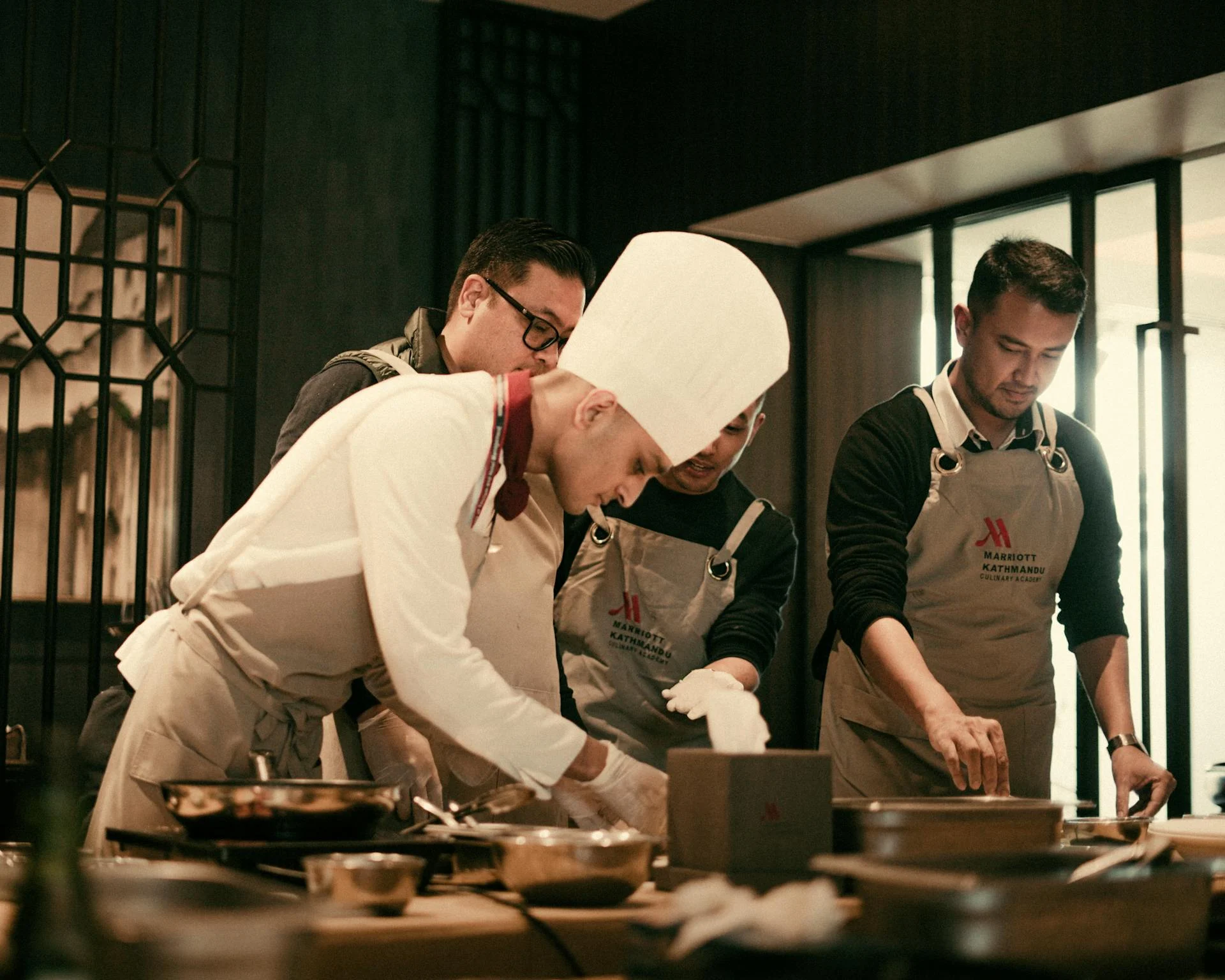
The Kitchen Has Always Been a Business
Long before business schools popularized the term “operational efficiency,” professional kitchens had already mastered it. Every service, every prep timeline, every vendor negotiation, every staff rotation — these are not just culinary decisions. They are business decisions made under pressure, often in real time. Yet for decades, the professional kitchen was treated as a trade environment rather than a leadership one. That perception is changing, and the shift is reaching into how food professionals build their careers.
Today, some of the most capable operational leaders in the hospitality, food technology, and consumer goods sectors came up through rigorous culinary training — not MBA programs. The reason is not sentimental. It is structural.
What the Kitchen Actually Teaches
Professional culinary training develops a specific type of intelligence that classrooms rarely replicate: the ability to manage complexity, maintain standards, and lead people simultaneously. A chef running a kitchen service manages supply chains, cost margins, team dynamics, and product quality — all within a single shift. These are competencies that take business professionals years to develop in controlled environments.
The discipline of mise en place, for instance, extends far beyond food preparation. It is a systems-thinking model — the practice of organizing every resource before execution begins so that variables are controlled, and outcomes are predictable. Leaders across manufacturing, logistics, and events management have drawn on this exact principle without realizing it traces back to the kitchen.
Culinary professionals also develop a notable tolerance for high-stakes decision-making. Service does not stop for mistakes. Recovery must be immediate, composed, and team oriented. These conditions build a kind of leadership muscle that only develops through genuine pressure, not case studies.
Formal Training as a Business Differentiator
This is precisely why structured academic pathways into the culinary world carry weight beyond the craft. Completing a culinary arts bachelor degree equips graduates not only with technical mastery but with business fluency — including coursework in management, operations, and entrepreneurship. The result is a professional who understands both the language of the kitchen and the language of the balance sheet.
That dual competence is increasingly rare and increasingly valued. As the food industry becomes more complex — shaped by global supply chains, technology integration, shifting consumer behavior, and sustainability demands — operators need leaders who understand the full picture. Technical expertise without business literacy creates talented craftspeople who hit a ceiling. Business training without technical grounding creates managers who cannot earn the trust of the teams they lead.
The most effective leaders in this industry tend to hold both.
The Entrepreneurship Pipeline Nobody Talks About
Culinary training has long been one of the most direct pipelines to entrepreneurship. The barriers to starting a food business, while not trivial, are lower than in many industries. A trained culinary professional can move from practitioner to owner with relative speed because they already understand the product, the process, and the customer experience from the ground up.
What formal academic training adds to this is risk management, financial planning, and market awareness. These are the competencies that separate food businesses that survive their first three years from those that do not. The failure rate in restaurants and food ventures is often cited as exceptionally high, and in most cases, the gap is not in the food — it is in the business model.
Food entrepreneurs who enter with both craft and commercial skills are building more durable businesses. They are also building them across a wider range of formats: ghost kitchens, food technology startups, catering enterprises, corporate dining contracts, and product development for consumer-packaged goods.
A Leadership Profile the Industry Needs
The food and hospitality sector is also navigating a talent crisis that goes beyond entry level staffing. There is a shortage of mid-level and senior managers who understand both operations and people. Culinary professionals with formal business training are filling that gap, moving into roles that include food and beverage director positions, operations management in hotel groups, and leadership roles in food service corporations.
What makes these candidates effective is not that they studied both cooking and business. It is that their training gave them a genuine understanding of how quality, culture, and commerce intersect. They have worked in environments where those three things must coexist every single day, under conditions that demand accountability.
As industries outside food begin to look at operational models that prioritize adaptability and team cohesion, the kitchen model of leadership is drawing wider interest. The tools developed in culinary training — precision, speed, coordination, and creative problem solving — translate across sectors in ways that are only beginning to be recognized.
The boardroom and the kitchen were never as far apart as they seemed.











