In today’s competitive manufacturing sector, output quality needs to be high, volume needs to be maximized where possible, and all units need to be the same.
For manufacturers looking to optimize their production process, many are now turning to the most advanced industrial quality control solutions. This recent progression in how businesses can monitor and maintain industrial quality control is leading to preventative, rather than reactive, maintenance and replacement.
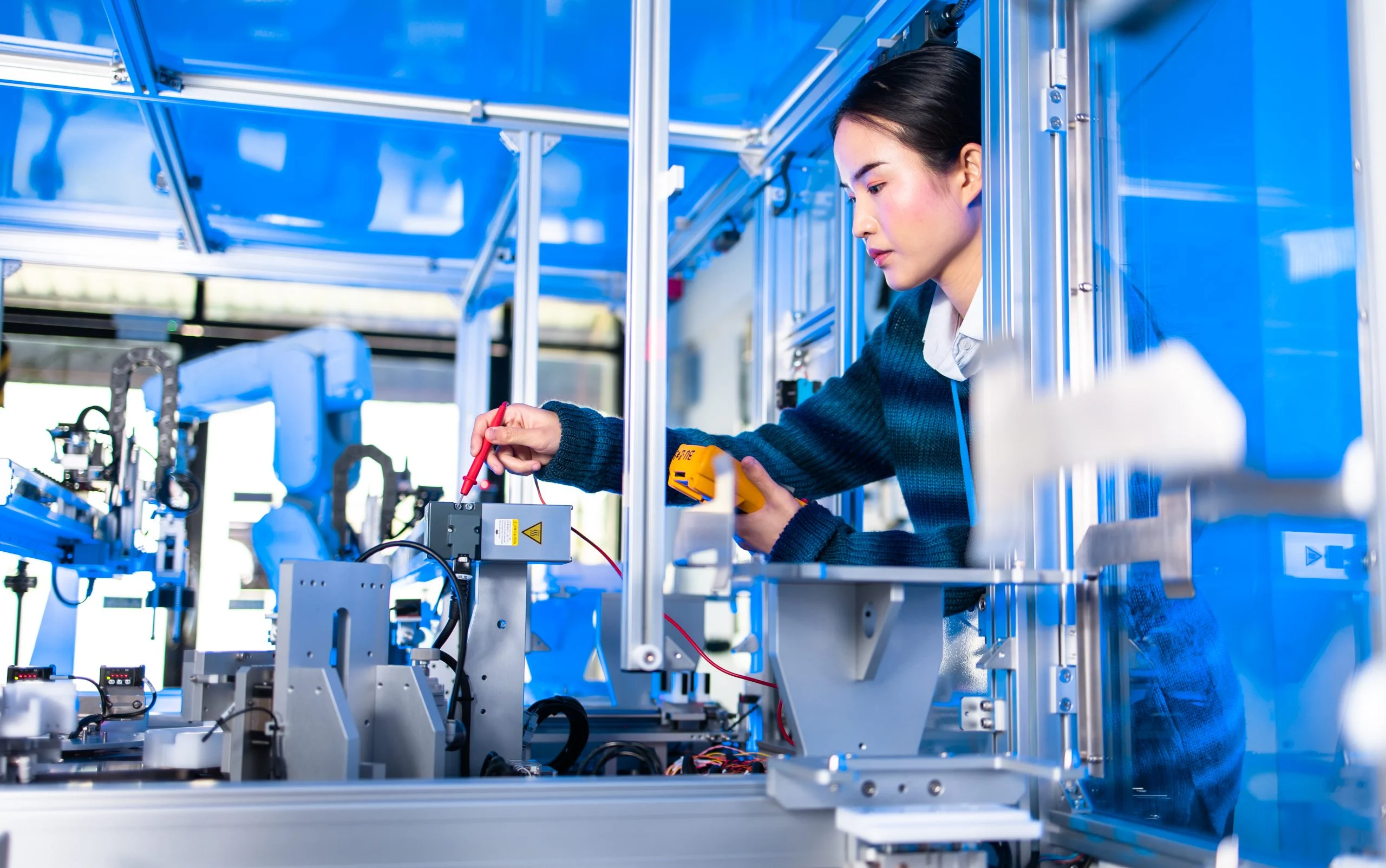
How Quality Assurance Works in Manufacturing
Historically, quality assurance in manufacturing relied mostly on manual observations and measurements, and finished with post-production testing. However, although these methods were the best for their time, they invariably led to delays, were inconsistent, and cost more in the long run. Today’s quality assurance in manufacturing has evolved, and is about being proactive and working proactively to solve production issues before they can become severe.
A large part of this is due to digitalizing the production process. By putting sensors, software, and data analysis at different points on the production line, a company can know exactly what is happening at every point on its line and correct any issues instantly that it might encounter. Their problem-solving becomes predictive, and the company can cut wastage across the production line, only shipping components that meet their specifications or, in some cases, can be alerted in time to save a product from having to be scrapped. The benefits of a smart industrial quality control system are, therefore, more than simply reducing the rate of production errors. A company can find itself more streamlined with less downtime due to quality control-related issues.
Torque Traceability Systems: An Integral Part of Modern Production
One part of the production process that is essential to get right is in the automotive and heavy machinery sectors, in the area of joining components together via fasteners. A torque traceability system provides assurances that every single bolt or screw is tightened to the right tolerance, and allows a manufacturer to have a complete record of what they have done for auditing or quality control processes.
When torque traceability works in synchronization with modern industrial quality control tools, information can be transferred up and downstream through the production environment. This data works to break down silos of information, and information works better overall in improving production quality.
Tightening Quality Control
It is not enough to get the torque setting of a bolt or screw right, but this is, of course, important! But tightening quality control involves more than just checking on the variance of the equipment used. It also involves getting everything consistent across the screw, reducing human error as much as possible, and making sure that every screw is within spec, fastening quality, and spec itself is not something that can be stored or accumulated.
Higher-end industrial quality control technologies have integrated real-time controllers and software systems, so they can run error-proofing, adapt to conditions, and provide immediate operator feedback, ensuring that every combined piece conforms to engineering specs. They can be connected across a factory’s network, so they can be monitored and managed almost from anywhere.
This combination of technologies is already being used to decrease rework and warranty costs while improving a final product’s overall capability.
Scalable? Sure. Affordable? You Bet.
While this seems great for the largest assembly operations (with the budgets to afford such complex integration), what is the best path for mid- to high-volume production with hundreds or thousands of actions in a vehicle platform? The power of modern industrial quality control solutions is their connectivity. With the latest iterations of these technologies, manufacturers don’t have to operate with riffed solutions, but instead can engage with truly connected solutions, ones that tie together all of the tools, software, and data used in the production system to gain the fullest possible picture of quality.
These types of solutions fundamentally change how torque traceability and addressing size in fastening play into quality control. Instead of looking at problems as they develop, operations can look forward and be better at problem avoidance.
Compete on Making Quality Standard, and Then Make It Better.
While assemblers are struggling with the integration of the individual components used in production today, some want to be sure the thread is tied together in a solid quality control solution. As the technology side of manufacturing becomes better connected, we’re seeing a tighter integration between equipment and tools from the multitude of provider partners manufacturers rely on to meet their production goals, and we’re starting to see that materialize with other previously-riffed quality tools, such as washers and software systems for quality control.
These more integrated solutions are being developed by organizations that have decades of experience ensuring that every thread, bolt, and washer work according to the engineering specs, but also in aggregating that data and delivering the insights needed by quality teams into the best job they can do.