For many dog owners, the moment of reckoning comes quietly — a dog who scratches constantly, turns away from the bowl, or seems perpetually low-energy despite regular exercise and vet visits. These signs are easy to dismiss individually, but together they often point to one common factor: what’s in the food.
As more pet owners start reading ingredient labels with the same scrutiny they apply to their own groceries, a growing number are making a significant shift toward fresher, higher-quality nutrition for their dogs. This reflects a deeper change in how people think about pet health — one that’s worth understanding before you decide what goes in your dog’s bowl next.
Why Conventional Dog Food Falls Short for Many Dogs
Walk into any pet store, and you’ll find shelves lined with kibble products boasting colorful packaging and health claims. But the manufacturing process behind most dry dog food involves high heat, which can degrade nutrients and require synthetic replacements to meet basic nutritional standards.
Many dogs do fine on conventional food. But for dogs with food sensitivities, allergies, or digestive issues, the standard options often fall short. Common fillers, artificial preservatives, and low-quality protein sources can contribute to skin irritation, gastrointestinal problems, and dull coats. When these symptoms appear, owners often cycle through several formulas before considering that the format of the food — not just the ingredients — might be part of the problem.
Fresh food, prepared at lower temperatures, retains more of its natural nutritional profile. For dogs with complex dietary needs, this distinction can make a real difference.
What “Human-Grade” Actually Means
The term “human-grade” gets thrown around loosely in pet food marketing, so it’s worth clarifying what it actually means. True human-grade dog food is made with ingredients that meet the same standards as food intended for human consumption. This covers everything from sourcing and handling to the facility where the food is prepared.
This distinction matters because not all proteins are created equal. Feed-grade ingredients — common in conventional pet food — can include parts of animals unfit for human consumption. Human-grade ingredients, on the other hand, come from the same supply chains that stock grocery stores and restaurants.
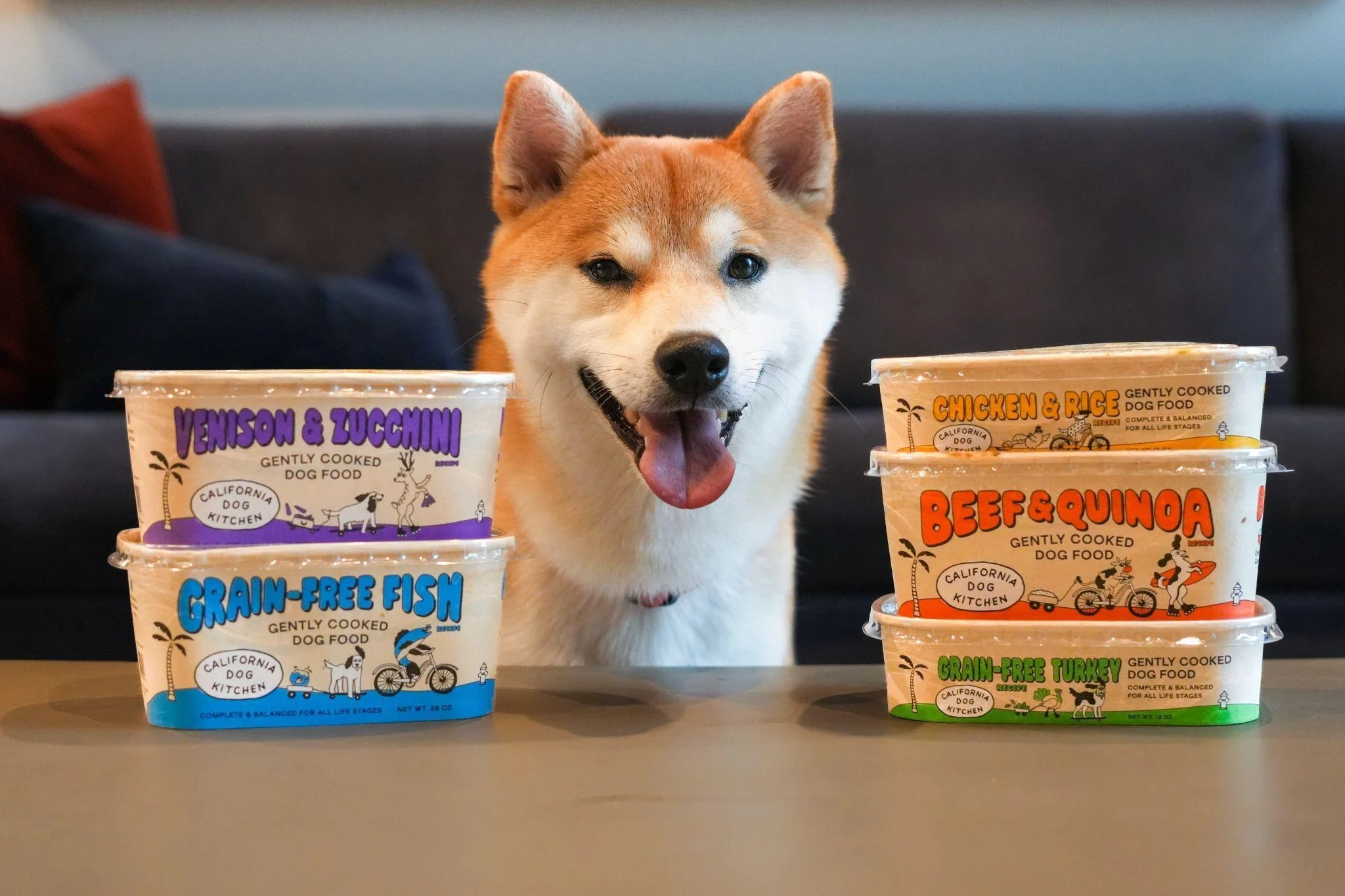
California Dog Kitchen is one example of a brand applying this standard to every recipe. The company uses proteins including wild-hunted venison, wild-caught fish, GAP-certified Organic chicken (USDA-certified), and Australian lamb — all prepared in their own commercial kitchen in San Diego and gently cooked to preserve nutritional integrity. Their food is formulated to meet the nutritional levels established by the AAFCO Dog Food Nutrient Profiles for all life stages, including the growth of large-sized dogs.
For dogs with allergies or sensitivities, the variety of proteins matters as much as the quality. Novel proteins like venison and fish are less commonly found in standard dog food, which means dogs who’ve developed reactions to chicken or beef are less likely to have been previously exposed to them.
How Novel Proteins Help with Allergies
Food allergies in dogs are more common than many owners realize. The most frequent culprits are proteins the dog has repeatedly eaten over time — chicken and beef are the most common. When a dog’s immune system begins reacting to a familiar protein, switching to a novel one the dog hasn’t encountered before can provide significant relief.
California Dog Kitchen’s lineup is particularly well-suited for allergy-prone dogs. Their formulas include grain-free and chicken-free options, and the use of proteins like venison and wild-caught fish provides genuine alternatives for dogs with common food intolerances. Since everything is prepared without the additives and fillers found in most commercial pet food, owners dealing with mystery allergies have fewer variables to rule out.
The key when managing food allergies is a genuine elimination approach — starting with a single protein source the dog hasn’t eaten before, then monitoring for changes. A fresh food diet with clearly sourced ingredients makes this process considerably easier than navigating the complex ingredient lists on most kibble bags.
How Fresh Food Fits Into Real Life
One of the most common hesitations around fresh dog food is convenience. Raw feeding, for example, requires careful handling and preparation that doesn’t fit into every household’s routine. Gently cooked fresh food addresses this concern more practically.
California Dog Kitchen’s food comes frozen in pre-portioned cubes, each weighing 4 ounces. The feeding guideline is straightforward: one cube per ten pounds of body weight per day. A 40-pound dog eats four cubes daily. Puppies and pregnant or nursing dogs need two to three times that amount. The brand also offers a feeding calculator on their website for owners who want more precise guidance. To serve, you simply defrost in the refrigerator and use within five days.
Each bag contains 14 to 16 frozen cubes. The food is available online with shipping on Mondays and Tuesdays — orders arrive by Friday in insulated boxes with dry ice — and in the frozen section of over 150 independent pet stores across the United States.
Sustainability as Part of the Package
The quality of what’s in a dog’s bowl is the primary concern, but how that food is packaged and produced is worth considering, too. Most pet food packaging is plastic-based, contributing significantly to landfill waste.
The brand uses compostable packaging made from kraft paper with a vegetable-based liner. It breaks down into soil within 180 days in an industrial composting environment — a meaningful contrast to plastic packaging that persists for thousands of years. The company also donates 1% of all sales to environmental nonprofits, typically with a focus on animal welfare organizations.
California Dog Kitchen is one of only two pet food companies accepted into the Good Food Guild, which recognizes producers committed to local sourcing, organic ingredients, and transparency in their supply chains. The application process includes verification that producers avoid GMO ingredients and source locally — a meaningful credential in an industry where marketing claims often outpace reality.
Final Thoughts
If you’re considering a food transition for your dog, the general guidance from veterinary nutritionists is to introduce new food gradually over one to two weeks — mixing increasing amounts of the new food with the old to give the digestive system time to adjust. Watch for changes in energy, coat quality, stool consistency, and any reduction in allergy symptoms.
The shift to fresher, higher-quality nutrition isn’t necessarily right for every dog or every household. But for dogs showing signs of food sensitivity, low energy, or simply poor response to conventional options, it’s a meaningful step worth exploring. What goes into the bowl matters more than most owners initially assume — and the evidence often shows up quickly once a change is made.