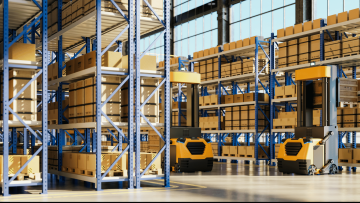
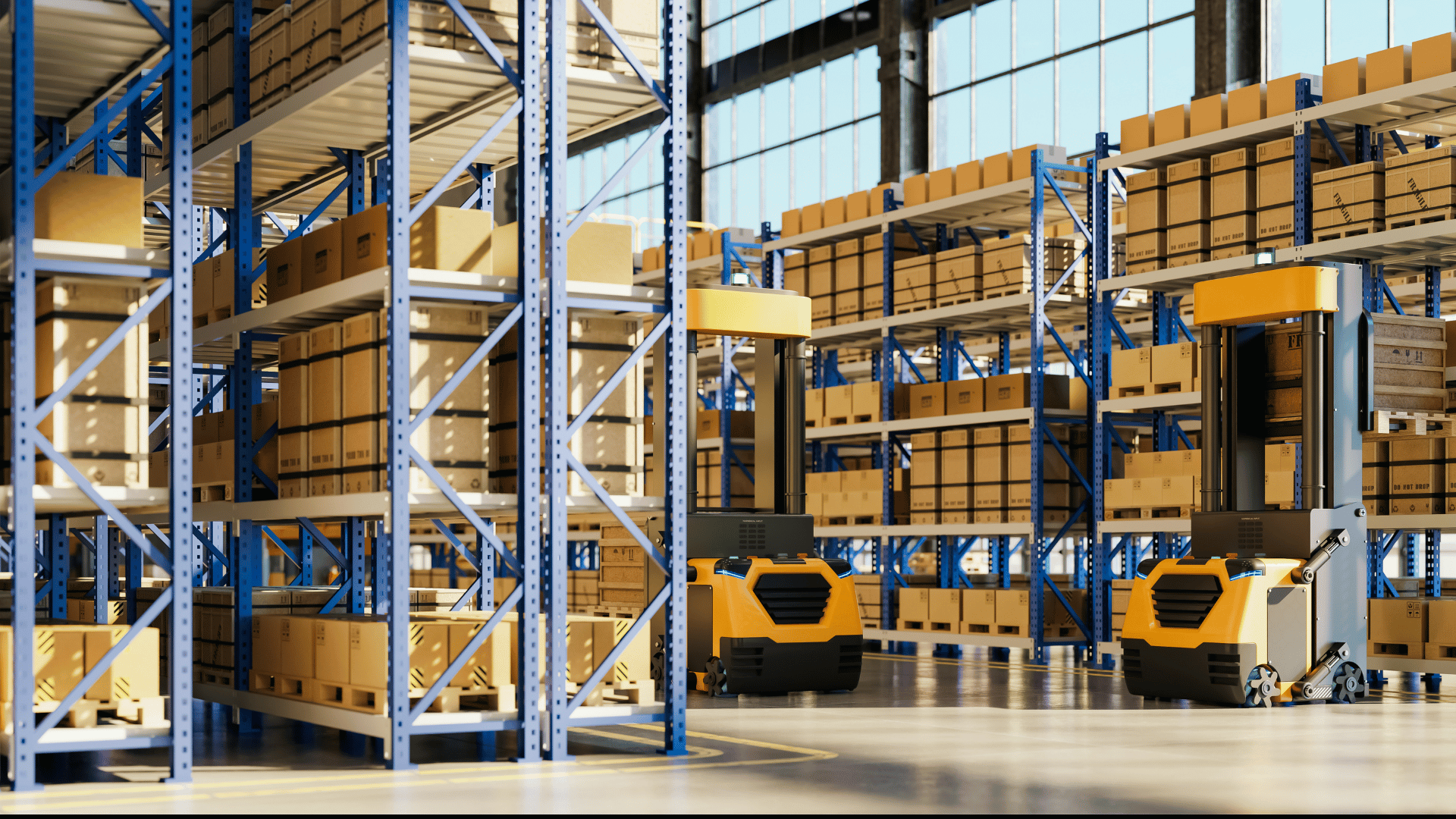
A distribution center approves a robotics project to speed up picking. Six months after go-live, pick rates have improved a little, but orders still ship late. The real delay sits at the dock, where trailers wait to be unloaded and received product takes hours to reach a storage location. The robots work exactly as designed. They were pointed at the wrong problem.
Choosing automation is a sequencing decision. The right first purchase is the system that removes the constraint costing the most each week, and the way to find that constraint is to measure before shopping. This article covers how to locate your constraint, match it to a category of automation, understand the software layers that hold a system together, and phase the investment so each win funds the next.
Why Automation Projects Underperform
Most disappointing projects go wrong before anything is installed, in how the project was defined. The same few causes show up again and again:
- Unclear requirements. Teams choose a technology before defining the use case and the metrics that will prove it worked.
- Under-scoped integration. The equipment is specified carefully, but the connection to inventory and order systems is treated as an afterthought. The gaps stay invisible until go-live.
- Designing for the average day. A system sized for typical volume struggles during peaks, promotions, and staffing swings.
- Skipping operator input. The people on the floor know exactly where real-world workarounds collide with the intended process, and they are often consulted last.
There is a simple underlying lesson. Automating a broken workflow makes the wrong process run faster.
Find the Constraint That Costs You the Most
Start by documenting how the warehouse runs today. The goal is a short list of numbers that show where time, labor, and space are being lost. Pull these first:
- Throughput by hour and by day, including how much higher peak days run than normal days.
- Walk time versus touch time. In many picking operations, a large share of labor goes to traveling between locations instead of handling product.
- Error, rework, and return rates. Mispicks and shorts create costs that rarely show up in a labor report.
- Space utilization. Note where storage is full, where it is underused, and how fast the SKU count is growing compared with the building.
- Dock-to-stock time. This is the elapsed time between a trailer arriving and the product being available to pick.
- Overtime and expediting. The process that generates the most of both is usually the best candidate for a first project.
Once the data is on the table, apply one rule. Start with the bottleneck that costs you the most every week, even if a more exciting technology is available for a different part of the building.
Match the Constraint to a Category of Automation
Different constraints respond to different tools. Use the list below as a starting map, then test it against your own numbers:
- Slow receiving and putaway. Inbound conveyor, barcode or RFID identification, directed putaway rules in the warehouse management system, pallet handling automation, and mobile robots or automated guided vehicles that move loads between receiving, storage, and replenishment zones.
- Running out of space or slow retrieval. Automated storage and retrieval systems, vertical lift modules, and goods-to-person setups that bring inventory to the picker. These raise storage density in the same footprint.
- Picking labor and travel time. Goods-to-person systems, mobile robots that bring work to associates, pick modules, and software that batches orders to reduce travel.
- Shipping congestion. Conveyor and sortation, automated routing, smart buffering, and weight and dimension capture to catch errors before a carton leaves the building.
- Returns that drain margin. Dedicated returns stations, quick triage rules, scan-and-grade steps, and sortation to restock, refurbish, or quarantine.
Two more questions refine the match. First, how variable are your product mix and volume? High variability favors flexible automation, such as mobile robotics and adaptable software, over fixed paths that are costly to change. Predictable, high-volume flow can justify fixed systems. Second, what are your handling units (each, case, tote, or pallet), and how skewed is demand across your SKUs? Fast movers and slow movers rarely belong in the same automated flow.
At this stage, ask for more than one viable path. Reviewing several warehouse automation solutions side by side, each with a layout of how it fits your building, quantified labor and space savings, and a plain-language list of pros and cons, guards against a single provider recommending the one system it happens to sell.
Know Who Decides What: WMS, WES, and WCS
Equipment does not run the warehouse. Software does. When robotics, storage systems, or sortation enter the building, three layers need clearly assigned roles:
- Warehouse management system (WMS). Manages inventory, directs core warehouse tasks, and connects to upstream and downstream systems such as enterprise resource planning and transportation.
- Warehouse execution system (WES). Orchestrates work in real time, balancing orders, labor, automation capacity, and priorities to keep flow even and reduce bottlenecks.
- Warehouse control system (WCS). Controls the equipment directly, including conveyors, sorters, and storage machines, and acts as the bridge between the WMS and the physical devices.
Decide in advance who sets task priorities, who sequences the flow, and who commands the machines. Then define what happens when product, equipment, or data does not match expectations. Exception handling is where many projects stumble, because the ideal workflow is easy to design and the off-script workflow is not.
Phase It So the First Win Pays for the Next
A phased approach lowers risk and builds proof. A good first phase does three things:
- Removes a clear constraint that limits throughput or accuracy.
- Delivers measurable ROI that the team can track and defend.
- Stays modular, so later phases connect cleanly without rework.
Go live under real production conditions and validate performance against the metrics you set at the start. Train operators on exceptions and recovery steps, not only the ideal path, so the system stays stable when something goes wrong.
After launch, track the numbers that show speed, accuracy, and stability:
- Cost per order or per line
- Order cycle time from release to shipped
- Pick accuracy and rework rate
- Touches per order, since fewer touches usually mean lower cost
- Travel time per associate and dock-to-stock time
- System uptime and recovery time
Use the results to tune the system and decide what the second phase should be. That is how a single project becomes a roadmap.
Back to the Dock
The team in the opening scene did not choose a bad technology. They skipped the step that would have shown them where the delay lived. A baseline of dock-to-stock time would have pointed to receiving as the first target, and the robots could have followed as a later phase once the inbound flow was fixed.
The most useful action is also the simplest one. Before talking to any provider, spend a few weeks measuring your own operation, and let the constraint you find decide what to buy first.