Google Cloud and NVIDIA confirm that Vera Rubin-powered A5X instances are scheduled for general availability in November 2026, with plans to expand into Europe. The infrastructure could scale to 960,000 Rubin GPUs across multiple sites, supporting agentic AI, reinforcement learning and enterprise applications.
Google Cloud and NVIDIA have confirmed that their next-generation Vera Rubin-powered A5X computing instances are scheduled to become generally available in November 2026, marking a significant step in the commercial deployment of NVIDIA’s latest accelerated computing architecture.
Announced during NVIDIA GTC Berlin 2026 on October 21, this includes plans to expand availability to European customers and scale Vera Rubin infrastructure to as many as 960,000 Rubin GPUs across multiple data-centre sites.
The companies originally outlined the A5X platform and its proposed GPU scale in April 2026. The latest announcement provides an updated commercial timeline and identifies early applications in reinforcement learning, autonomous AI agents and enterprise content production.
London-based Ineffable Intelligence, founded by AlphaGo creator David Silver, is the first customer identified as accessing A5X infrastructure. Global marketing and communications company WPP has also demonstrated agentic AI workflows on the platform.
The developments reflect growing demand for computing systems capable of supporting increasingly complex AI models and autonomous applications.
NVIDIA Vera Rubin Powers Google Cloud’s Next-Generation A5X Infrastructure
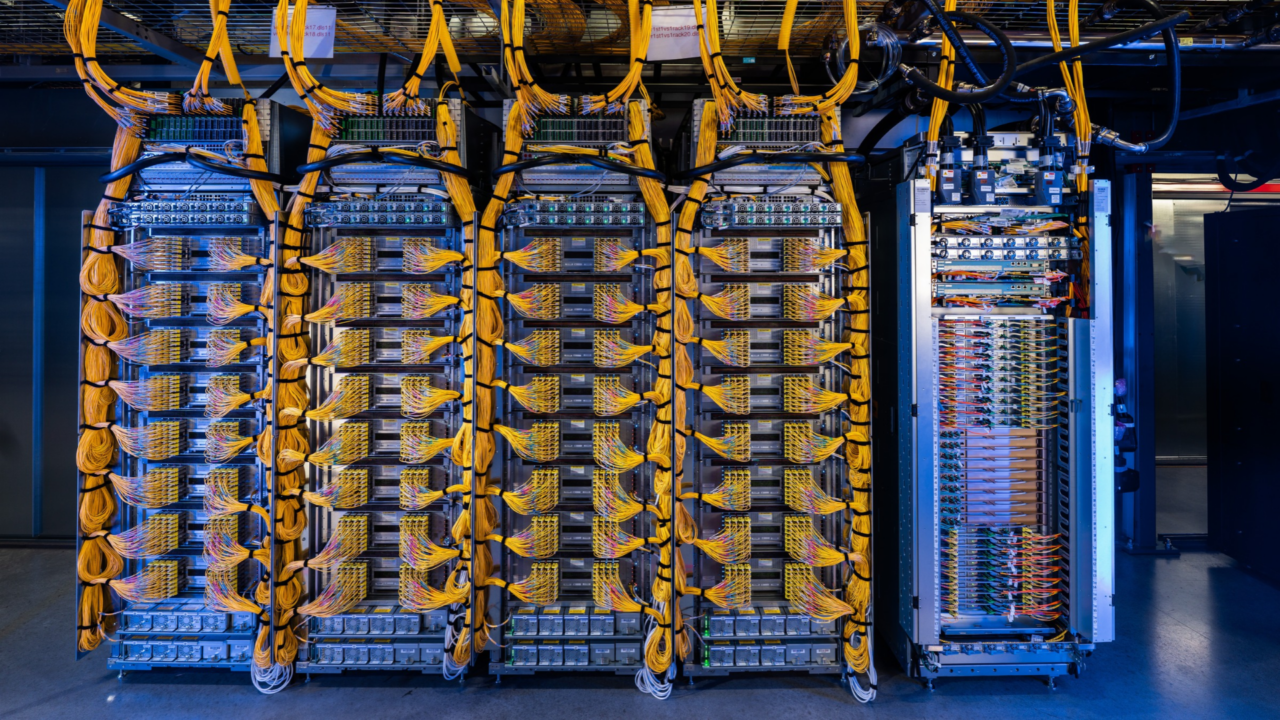
Google Cloud A5X instances are built around NVIDIA Vera Rubin NVL72, a rack-scale accelerated computing system designed for large AI training and inference workloads.
The platform combines NVIDIA Rubin GPUs with Vera CPUs and high-bandwidth connectivity, allowing multiple processors to operate together across demanding AI workloads.
Google Cloud’s implementation integrates NVIDIA ConnectX-9 SuperNICs, its proprietary Virgo networking technology and fourth-generation advanced liquid cooling.
Together, these components are designed to support the computing and communication requirements of large AI models, including systems that repeatedly generate information, evaluate results and update their behaviour.
NVIDIA and Google Cloud previously stated that the A5X architecture could support clusters containing up to 80,000 Rubin GPUs at a single site and as many as 960,000 GPUs across a multisite infrastructure.
These figures represent planned infrastructure scaling capabilities, rather than confirmation that the full number of processors has already been installed.
For enterprises, the development highlights how AI infrastructure is increasingly being designed as an integrated computing environment rather than a collection of individual servers.
General Availability Planned for November 2026
The latest announcement confirms that Google Cloud intends to make A5X instances generally available in November 2026, with expansion into Europe also planned.
This is an important distinction from earlier announcements, which introduced the platform and its technical capabilities but did not establish its latest commercial availability milestone.
General availability would provide cloud customers with broader access to Vera Rubin computing without requiring them to purchase and operate the underlying infrastructure themselves.
This could be particularly relevant for research laboratories, AI developers and enterprises working with computationally demanding models.
However, the planned European expansion does not establish that the instances will immediately become available in every European cloud region.
Actual customer access will depend on deployment schedules, regional capacity and Google Cloud’s service availability.
The announcement also illustrates the importance of cloud infrastructure providers in commercialising advanced AI hardware, as they combine processors, networking, cooling and operational software into services available to customers.
London’s Ineffable Intelligence Uses Vera Rubin for Reinforcement Learning
Among the earliest users of Google Cloud A5X infrastructure is Ineffable Intelligence, the London-based AI company founded by David Silver.
Silver is known for his work on AlphaGo and reinforcement learning, a machine-learning approach in which systems improve their behaviour by learning from experience and feedback.
Ineffable Intelligence is using A5X infrastructure to advance research into what it describes as superlearners: AI systems designed to improve continuously through experience.
Such research involves repeated cycles of generating experiences, evaluating outcomes and updating models.
These processes can place substantial demands on computing infrastructure because training and inference activities are closely connected.
Vera Rubin’s high-bandwidth communication capabilities are intended to support these workloads by reducing some of the bottlenecks associated with transferring information between processors.
The collaboration illustrates how reinforcement learning is becoming a major consideration in the design of next-generation AI infrastructure.
Rather than focusing exclusively on training a model once and deploying it, developers are increasingly exploring systems that can adapt through ongoing interaction and feedback.
WPP Demonstrates Creative AI Agents on NVIDIA A5X
Google Cloud’s Vera Rubin infrastructure is also being evaluated for enterprise creative applications.
WPP, the London-based marketing and communications company, has demonstrated a creative agent reference architecture using A5X instances, NVIDIA Nemotron models and NVIDIA OpenShell.
The system is designed to translate conversational requests into multistep creative workflows, including video generation, upscaling and visual restyling.
Human approval remains part of the process before actions are executed.
NVIDIA OpenShell provides controlled execution environments for the agents, helping organisations manage access to sensitive brand assets and creative applications.
According to NVIDIA, WPP’s initial evaluations showed that workloads typically requiring a multi-node computing cluster could operate on a single A5X instance.
The result suggests potential opportunities to simplify certain computing workflows, although performance will depend on the applications, system configurations and models involved.
For enterprise users, the demonstration highlights a broader shift towards AI infrastructure capable of supporting complex workflows rather than isolated model requests.
Confidential Computing Expands Across Google Cloud’s AI Portfolio
Alongside the Vera Rubin announcement, NVIDIA and Google Cloud are expanding their collaboration on confidential computing.
The companies say Google Cloud will be among the first providers offering NVIDIA Confidential Computing at rack scale on selected bare-metal systems powered by NVIDIA GB300 NVL72.
Google Cloud is also making confidential computing generally available on G4 virtual machines accelerated by NVIDIA RTX PRO 6000 Blackwell Server Edition GPUs.
These capabilities are designed to help protect sensitive information while it is being processed, addressing a critical requirement for enterprises deploying AI on shared infrastructure.
Organisations operating in regulated sectors may need stronger safeguards for proprietary models, confidential documents and customer information.
Confidential computing can provide hardware-backed protections, although it does not replace access controls, application security or organisational governance.
The distinction is particularly important as autonomous AI agents gain access to enterprise systems and sensitive business data.
AI Factory Efficiency Becomes Central to Cloud Expansion
The proposed scale of Google Cloud’s Rubin infrastructure also raises questions about electricity demand, cooling capacity and operational efficiency.
Large AI computing clusters require significant energy and physical infrastructure, making performance per watt an important metric for cloud providers.
NVIDIA and Google Cloud are exploring DSX MaxLPS capabilities to optimise power allocation across Vera Rubin deployments.
The objective is to increase useful computing output within available data-centre electricity budgets.
These developments complement NVIDIA’s wider efforts to improve the economics of AI factories through integrated computing, power management and infrastructure design.
In addition to processing performance, cloud providers must consider networking capacity, equipment availability, cooling systems and workload scheduling.
Higher computing efficiency can improve infrastructure utilisation, but it does not necessarily result in lower overall electricity consumption if demand for AI services continues to expand.
What the Expansion Means for Europe’s AI Economy
Google Cloud’s planned European expansion arrives as governments and businesses seek greater access to advanced computing infrastructure.
European organisations developing AI applications often face challenges involving access to high-performance GPUs, infrastructure costs and technical expertise.
Cloud-based Vera Rubin systems could provide additional options for companies that need significant computing capacity but do not intend to operate their own AI factories.
At the same time, access through a global cloud provider is not equivalent to owning sovereign computing infrastructure.
Organisations must still evaluate where their data is processed, which regulations apply and how much control they maintain over critical systems.
The expansion therefore reflects one component of Europe’s wider AI infrastructure development rather than a complete solution to digital sovereignty challenges.
For technology decision-makers, the choice between cloud infrastructure, privately operated AI systems and hybrid deployments will depend on workload requirements, economics and governance considerations.
From GPU Scale to Practical AI Outcomes
Google Cloud’s plans for up to 960,000 Rubin GPUs illustrate the scale of investment being directed towards advanced AI computing.
However, the commercial significance of the infrastructure will ultimately depend on what customers can accomplish with it.
Applications such as reinforcement learning, autonomous AI agents and complex creative workflows demonstrate the increasing diversity of computing requirements.
The examples from Ineffable Intelligence and WPP show how the infrastructure is already being tested for different purposes, from frontier AI research to enterprise operations.
As Vera Rubin A5X instances approach general availability, attention will increasingly turn towards actual deployment performance, customer access, operating costs and measurable business outcomes.
For NVIDIA and Google Cloud, the challenge is no longer simply demonstrating the performance of advanced processors. It is turning large-scale accelerated computing into reliable infrastructure that organisations can use to develop and operate the next generation of AI applications.
Sources
- NVIDIA — Google Cloud and NVIDIA Announce General Availability of NVIDIA Vera Rubin Infrastructure (21 October 2026)
https://blogs.nvidia.com/blog/google-cloud-vera-rubin-infrastructure/ - NVIDIA — NVIDIA and Google Cloud Collaborate to Advance Agentic and Physical AI (22 April 2026)
https://blogs.nvidia.com/blog/google-cloud-agentic-physical-ai-factories/ - NVIDIA — GTC Berlin 2026: Live Updates From NVIDIA CEO Jensen Huang’s Keynote (21 October 2026)
https://blogs.nvidia.com/blog/gtc-berlin-2026-keynote/ - IntelligentHQ — GPUs and Accelerated Computing: Blackwell, Rubin and Grace
https://www.intelligenthq.com/nvidia-ecosystem/solutions/gpus-accelerated-computing/