At GTC Berlin 2026, NVIDIA introduces new AI factory efficiency technologies that could reduce power consumption by up to 30% for the same AI output, while advanced liquid-cooling designs aim to dramatically reduce water use. European cloud providers, including Nscale, are already evaluating the technology.
NVIDIA has announced new developments in its DSX AI Factory Platform at GTC Berlin 2026, introducing technologies designed to improve the energy efficiency, water consumption and operational performance of large-scale artificial intelligence infrastructure. Announced on October 21 during CEO Jensen Huang’s keynote, this reflect the growing importance of managing electricity demand as AI computing capacity expands across Europe.
According to NVIDIA, its DSX MaxLPS software can help operators generate the same number of AI tokens using up to 30% less power. Meanwhile, reference designs incorporating closed-loop liquid cooling and dry coolers could reduce facility cooling-water consumption to near zero under suitable operating conditions.
The company estimates that a 2-gigawatt AI factory deployment using these cooling technologies could save approximately 54 million litres of water daily compared with conventional cooling-tower-based systems. NVIDIA says this is equivalent to the daily water consumption of 180,000 households.
The announcement comes as European cloud providers and infrastructure companies work to increase computing capacity while addressing constraints involving electricity availability, cooling infrastructure and the environmental impact of data-centre expansion.
NVIDIA DSX MaxLPS: Producing More AI Intelligence With Less Power
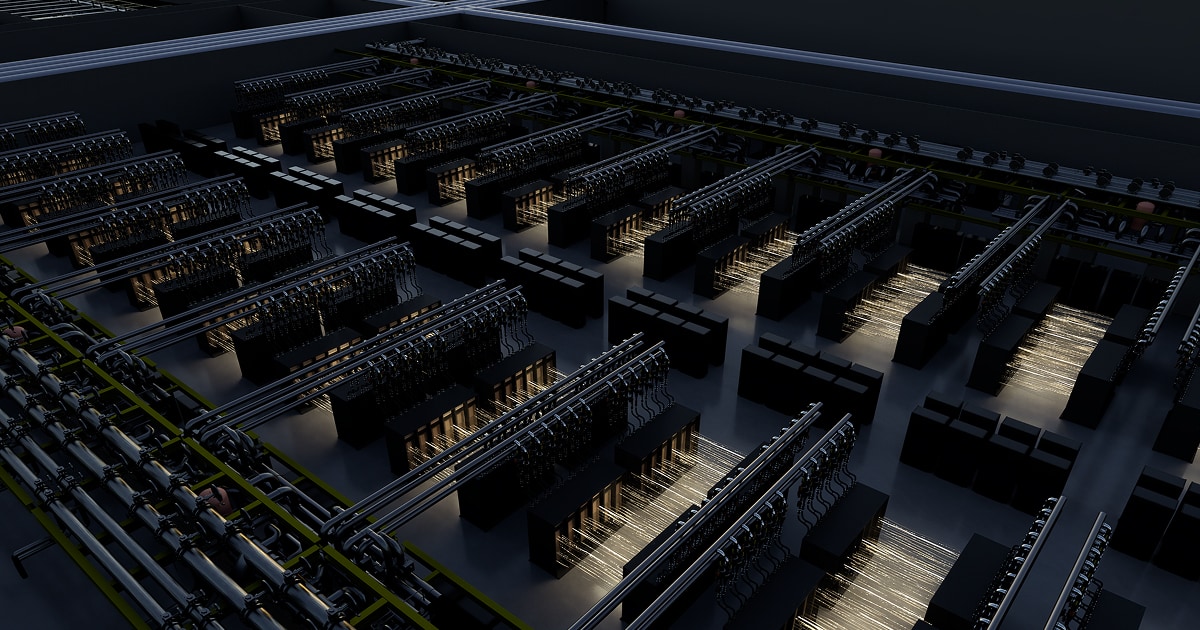
Energy efficiency is becoming a central consideration in the economics of artificial intelligence.
AI factories, which are purpose-built data centres optimised for AI workloads, depend on large concentrations of GPUs, high-speed networking, power infrastructure and cooling systems. As demand for advanced AI models and autonomous agents increases, these facilities require substantial computing resources.
NVIDIA DSX MaxLPS addresses this challenge through dynamic power allocation, allowing operators to manage computing workloads within an existing electricity budget.
Rather than allocating power uniformly across infrastructure, the software adjusts available resources according to workload requirements and operating conditions.
NVIDIA reports that the approach can deliver the same AI token output with up to 30% less power. Alternatively, operators may use the efficiency improvement to support additional GPU capacity or increase computing throughput without expanding their provisioned power supply.
The distinction matters because many infrastructure projects face electricity constraints before reaching their desired computing capacity.
For businesses, improved power efficiency could reduce operating costs, but the actual financial benefits will depend on energy prices, hardware utilisation, workload characteristics and deployment costs.
NVIDIA identifies CoreWeave, Firmus, Google Cloud, IREN, Lambda, Nebius, Nscale and Sharon AI among the cloud providers exploring DSX MaxLPS.
European Cloud Providers Demonstrate Efficiency Improvements
Several companies are testing NVIDIA’s infrastructure technologies to determine how computing output can be increased within existing power limits.
In a proof of concept involving NVIDIA HGX B200 systems, Lambda demonstrated a 24% improvement in cluster token throughput and 19% greater GPU capacity within a fixed power budget, according to NVIDIA.
Nscale also reported significant improvements during an evaluation conducted at its AI factory in Iceland.
Using DSX MaxLPS across four NVIDIA GB300 NVL72 racks, the company demonstrated 49% higher inference throughput and 37% more managed GPU capacity within the same 264-kilowatt provisioned power budget.
These results highlight the potential of dynamic power management to increase productive computing capacity without requiring an equivalent increase in electricity supply.
However, the figures reflect specific evaluations and system configurations. They should not be interpreted as independently verified performance guarantees for all AI factories.
For organisations evaluating infrastructure investment, the central question is whether such technologies can improve the cost of producing useful AI output over the lifetime of a facility.
The AI Factory Efficiency Lab developed by IntelligentHQ provides a practical way to examine how changing computing efficiency, token demand and infrastructure costs can affect operating economics.
NVIDIA Targets Near-Zero Facility Cooling Water Consumption
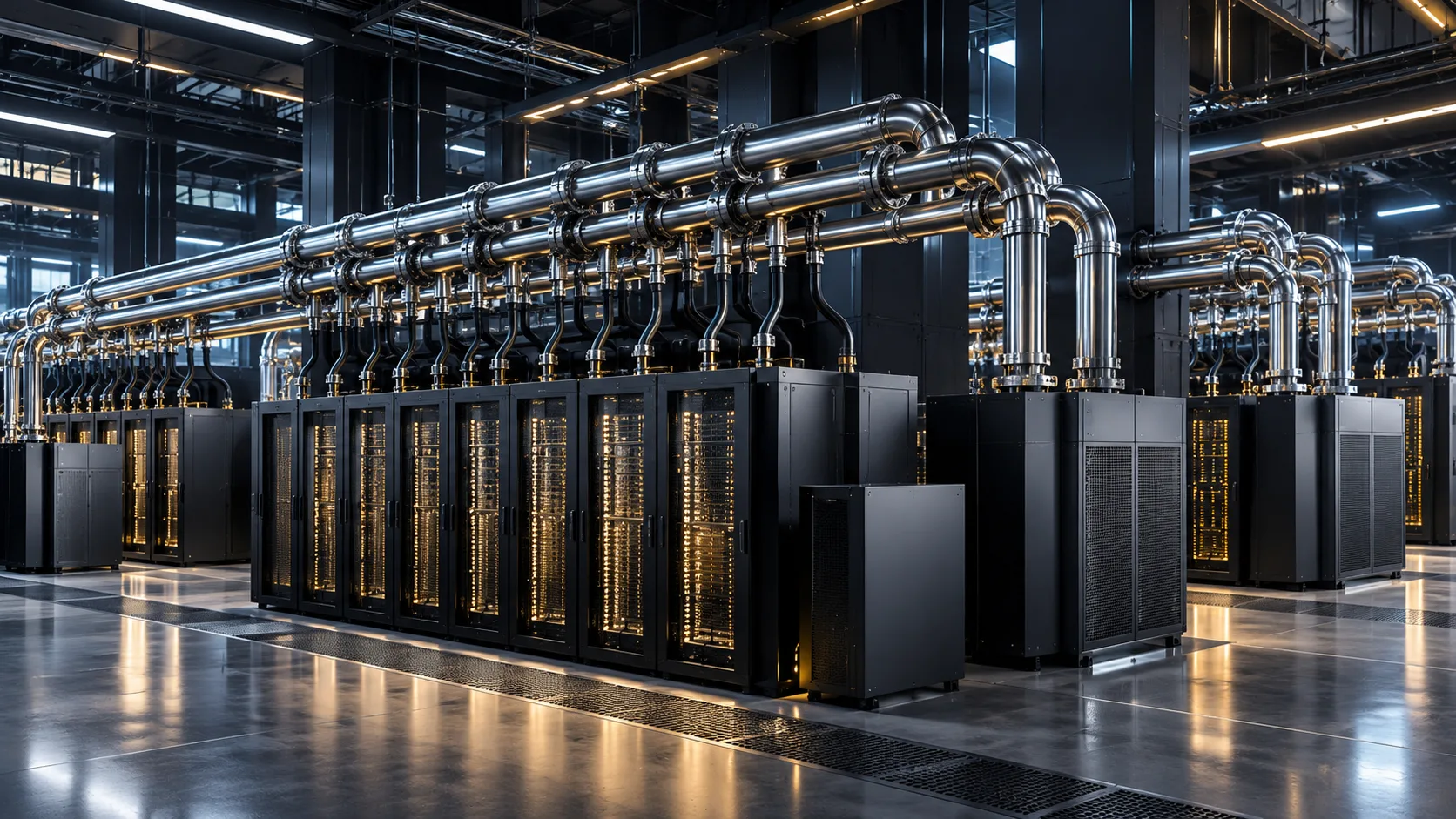
Alongside electricity demand, cooling is becoming an increasingly important challenge for AI infrastructure operators.
High-performance computing equipment generates considerable heat, requiring cooling technologies that maintain safe operating temperatures and support reliable performance.
Conventional evaporative cooling towers remove heat by evaporating water, which must be continuously replaced.
NVIDIA’s DSX reference designs use a different approach, combining closed-loop liquid cooling with dry coolers.
In this configuration, cooling liquid circulates through computing equipment and transfers heat to external systems that release it into the surrounding air without relying on continuous water evaporation.
NVIDIA states that its Vera Rubin infrastructure supports liquid cooling with coolant temperatures of up to 45 degrees Celsius, helping make dry-cooler-based configurations possible.
Under appropriate conditions, these designs can reduce facility cooling-water consumption to near zero.
The company estimates potential water savings of 54 million litres per day for a 2-gigawatt deployment when compared with conventional cooling towers.
However, local climate conditions remain important. Facilities operating in particularly hot environments may require supplementary mechanical cooling during periods of high temperature.
Near-zero cooling-water consumption also does not mean that an AI factory has no broader water footprint, as electricity generation and other supporting activities can have separate environmental impacts.
DSX Flex Connects AI Computing With Electricity Grid Conditions
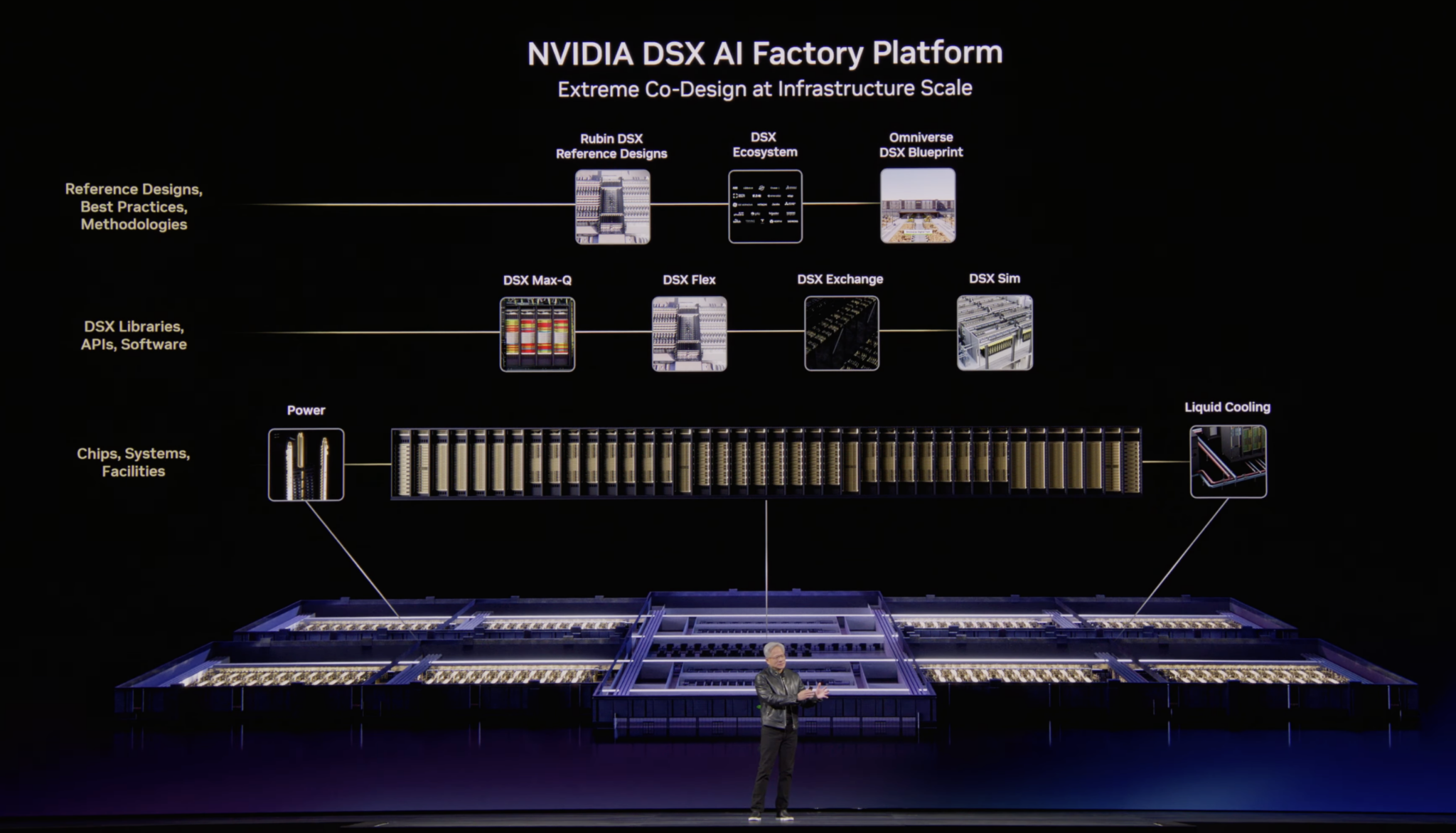
NVIDIA is also introducing technologies intended to make AI factories more responsive to electricity supply conditions.
DSX Flex allows infrastructure operators to adjust computing workloads according to grid requirements, energy prices and available power resources.
The technology is designed to coordinate electricity consumption with utility demand-response programmes and potentially integrate energy from renewable generation and on-site storage.
Rather than operating at a constant level of electricity demand, AI factories may be able to adjust selected workloads when the grid experiences pressure.
In an early trial involving Emerald AI, EPRI, Nebius, the UK’s National Grid and NVIDIA, researchers demonstrated reductions of up to 40% in cluster power draw during simulated grid events while critical workloads continued operating.
The findings suggest that flexible computing infrastructure could help large AI facilities respond to electricity constraints without necessarily shutting down essential services.
Nevertheless, the feasibility of this approach depends on the types of workloads running within a facility.
Tasks requiring immediate responses or continuous processing may offer less flexibility than workloads that can be scheduled or temporarily delayed.
As AI factories expand across Europe, coordination between infrastructure operators and electricity providers could become increasingly important.
Digital Twins Help Operators Design AI Factories Before Construction
Another major component of NVIDIA’s DSX strategy is the use of digital twins to improve infrastructure planning.
A digital twin is a virtual representation of a physical environment that allows engineers to test different designs, operating conditions and equipment configurations before implementing them.
NVIDIA DSX Sim provides simulation tools that can help operators evaluate power distribution, cooling infrastructure and computing layouts.
At GTC Berlin, NVIDIA also announced SimReady Central, a library hosted on Hugging Face containing validated digital models of physical equipment, including power and cooling assets.
These resources are designed to accelerate the creation of AI factory digital twins by providing reusable equipment models.
Nscale is using DSX Sim to develop digital twins for facilities in Portugal and Iceland, helping evaluate infrastructure configurations before deployment.
Industrial partners including Siemens, Schneider Electric, ABB, Dassault Systèmes and Vertiv are also contributing technologies and expertise to the wider DSX ecosystem.
For example, Siemens is using DSX Sim to model power, cooling and acoustic conditions, while Schneider Electric is working with AVEVA on digital twins spanning infrastructure design, construction and operations.
By identifying potential design conflicts before equipment is installed, these technologies could help reduce delays and improve project planning.
What NVIDIA’s Efficiency Developments Mean for Europe’s AI Economy
The announcements reflect the growing relationship between artificial intelligence development, energy infrastructure and industrial competitiveness.
European countries are investing in domestic computing capacity to support businesses, research institutions and government services. However, expanding AI infrastructure depends on more than purchasing advanced processors.
Operators must secure sufficient electricity, develop appropriate cooling systems, manage infrastructure costs and maintain reliable performance.
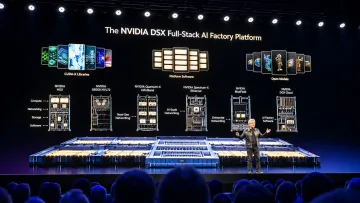
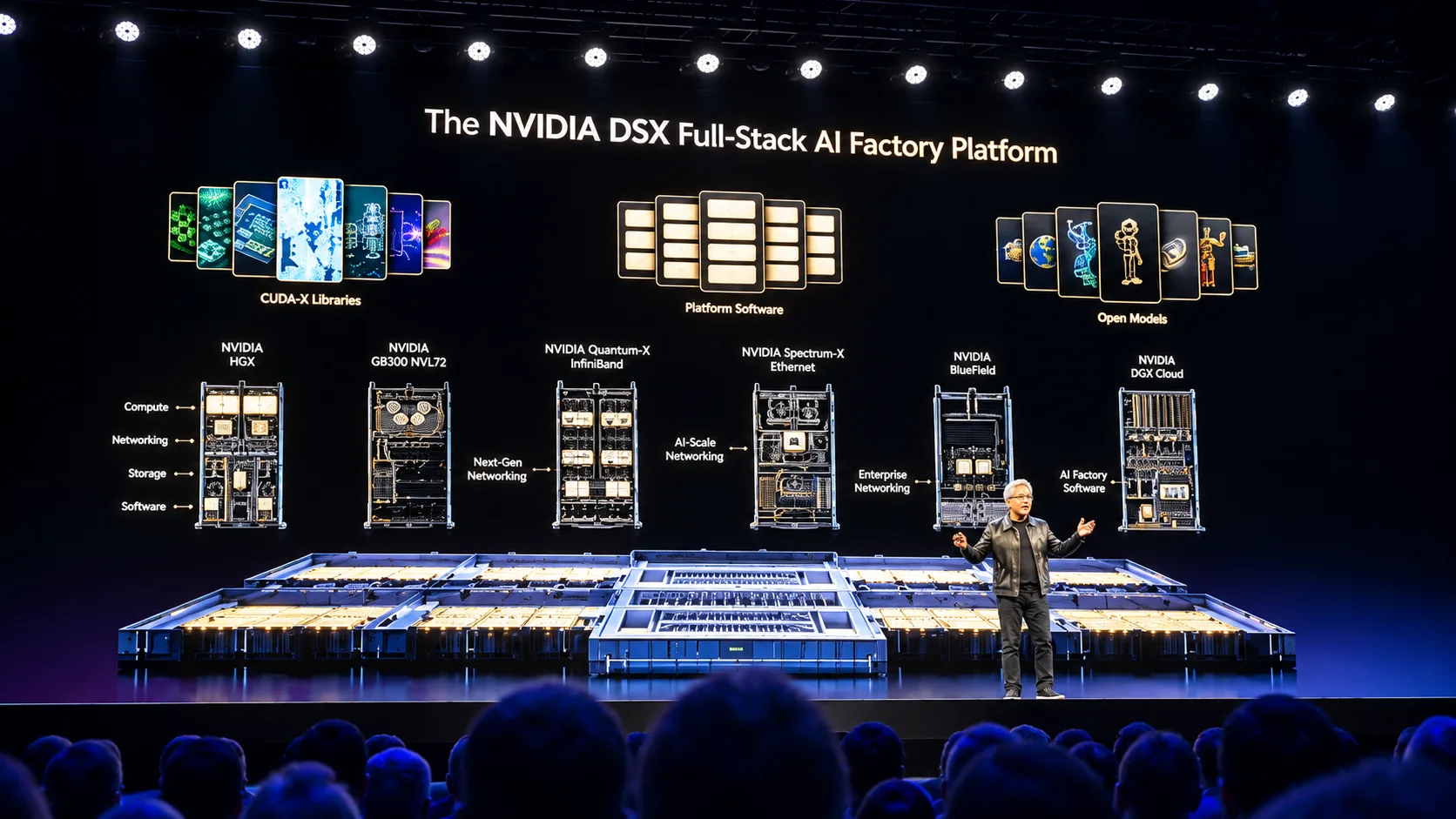
NVIDIA DSX aims to address these requirements through an integrated platform connecting computing, facility design, power management, simulation and operational software.
The potential benefits include improved computing output per megawatt, reduced dependence on water-intensive cooling systems and greater flexibility in managing electricity demand.
These developments could also create opportunities for companies specialising in energy management, industrial engineering, liquid cooling and digital infrastructure.
However, improvements in computing efficiency do not automatically translate into lower overall energy demand.
If AI applications become cheaper and more accessible, organisations may increase their usage, potentially offsetting some of the energy savings achieved per unit of computing output.
The economic and environmental impact of more efficient infrastructure will therefore depend on both technological improvements and the scale of future demand.
The Future of AI Factories Depends on Infrastructure Efficiency
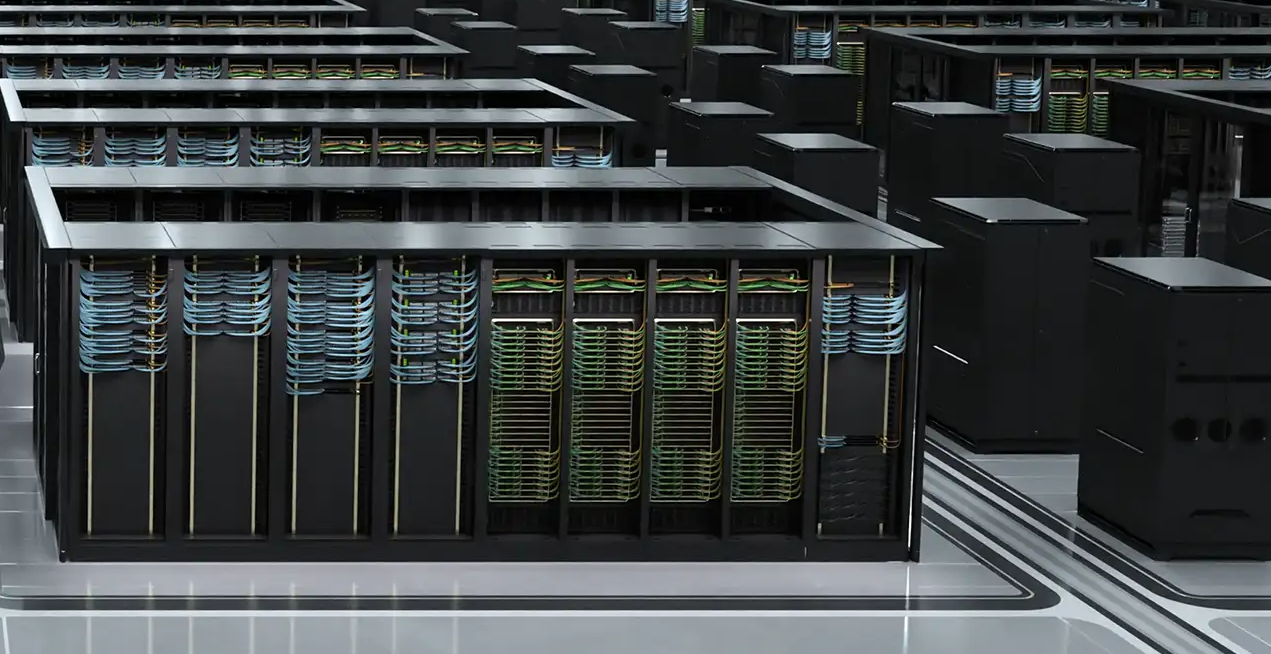
NVIDIA’s latest DSX developments highlight how the AI industry’s priorities are expanding beyond processor performance and model capabilities.
Electricity availability, cooling technologies, digital simulation and infrastructure management are becoming increasingly important factors in determining how quickly organisations can deploy advanced computing systems.
By targeting lower power consumption, reduced facility cooling-water use and more flexible interactions with electricity grids, NVIDIA is positioning DSX as a foundation for large-scale AI infrastructure.
For European enterprises and cloud providers, the opportunity is to increase computing capacity while managing the physical and economic constraints associated with AI expansion.
The results demonstrated by Nscale and Lambda provide early examples of how infrastructure optimisation may improve computing output within existing power budgets.
As AI factories become more important to industrial development, their competitiveness will increasingly depend on how efficiently they convert electricity, computing resources and infrastructure investment into useful intelligence.
Sources
- NVIDIA Newsroom — European Ecosystem Builds World’s Most Efficient AI Factories With NVIDIA DSX (21 October 2026)
https://nvidianews.nvidia.com/news/european-ecosystem-builds-worlds-most-efficient-ai-factories-with-nvidia-dsx - NVIDIA Blog — GTC Berlin 2026: Live Updates From NVIDIA CEO Jensen Huang’s Keynote (21 October 2026)
https://blogs.nvidia.com/blog/gtc-berlin-2026-keynote/ - IntelligentHQ — NVIDIA DSX AI Factory Platform
https://www.intelligenthq.com/nvidia-ecosystem/products/dsx/ - IntelligentHQ — AI Factory Efficiency Lab
https://www.intelligenthq.com/nvidia-ecosystem/ai-opportunity-lab/ai-factory/ - IntelligentHQ — Simulate an AI Data Center: Network, Power and Facility Twins
https://www.intelligenthq.com/nvidia-ecosystem/use-cases/simulate-ai-data-center/