Key Takeaways
- AI-powered SDLC automation extends beyond coding. Its value comes from reducing manual handoffs across planning, development, testing, security, deployment, and operations.
- Enterprise context determines automation quality. Agents need reliable information about services, dependencies, ownership, policies, and infrastructure to make appropriate engineering decisions.
- Vendors address different parts of the lifecycle. Some coordinate work across existing tools, while others concentrate on autonomous development, CI/CD, code quality, or application security.
- Delivery outcomes are the real measure of success. Teams should evaluate lead time, successful automation, rework, reliability, and engineering effort rather than AI-generated code volume.
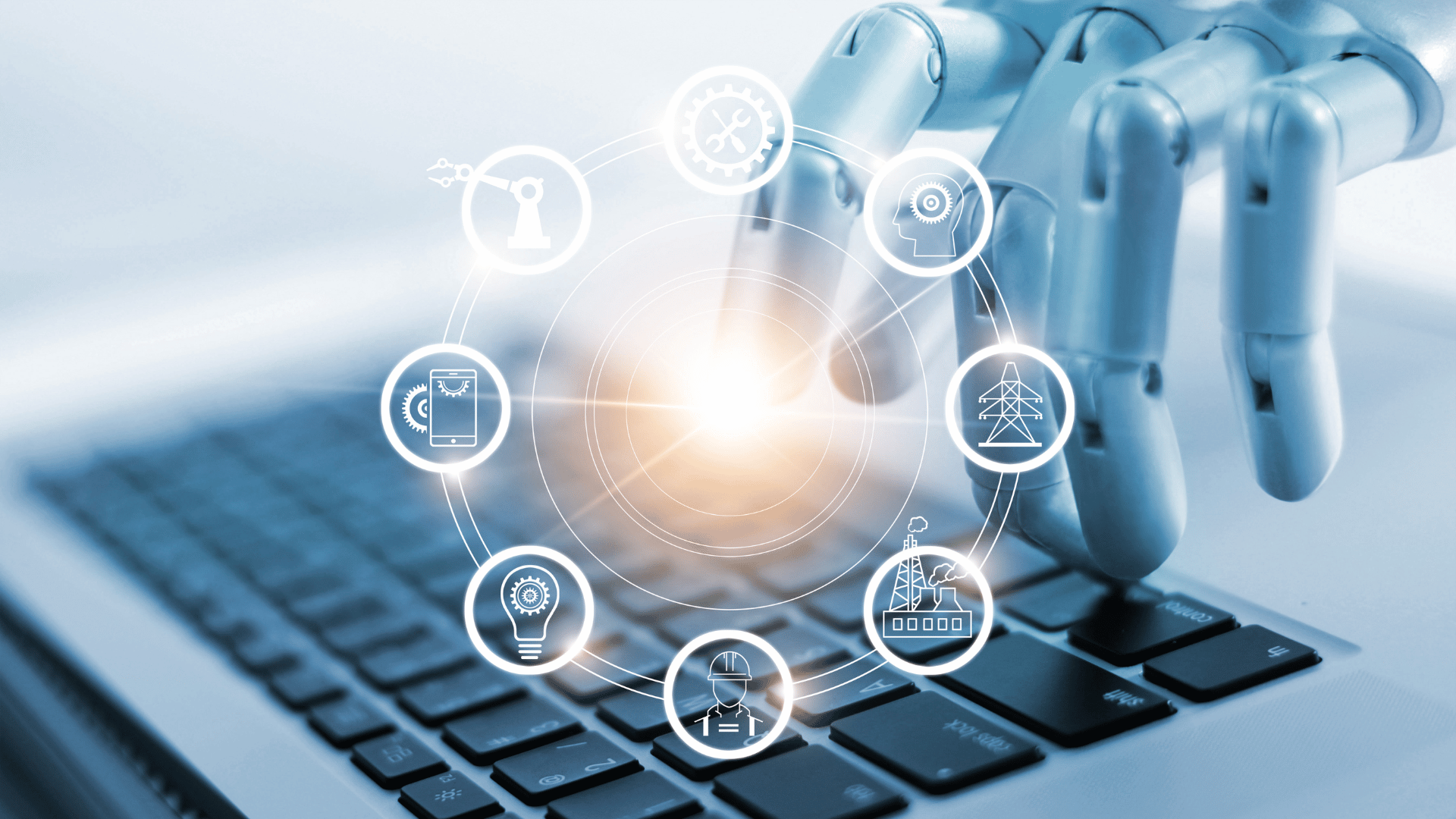
AI-powered SDLC automation is moving beyond code generation. Engineering teams are using AI agents to investigate issues, implement changes, review code, generate tests, remediate vulnerabilities, and automate operational workflows. The challenge is coordinating these capabilities across the software development lifecycle without creating fragmented tools, inconsistent processes, or new security risks.
Vendors approach this challenge differently. Some provide an orchestration layer across existing engineering systems, while others embed AI into DevSecOps pipelines, developer workflows, or autonomous coding environments. Choosing the right solution depends on how much of the SDLC an organization wants to automate and how much control it needs over execution.
The Top 8 AI-Powered SDLC Automation Vendors
1. Port — Best for Enterprise-Wide AI-Powered SDLC Automation
Port provides an Agentic SDLC platform for organizations that want to automate engineering work across existing tools, teams, and environments. Its approach addresses a problem that becomes increasingly important as AI adoption expands: individual agents can complete tasks, but enterprises need a common system for supplying context, coordinating execution, enforcing policies, and measuring results.
Port’s Context Lake brings together information from repositories, services, infrastructure, deployments, incidents, ownership records, and other engineering systems. This gives agents access to organizational knowledge that typically sits outside source code. An agent investigating a production issue, for example, can use service relationships, ownership information, and operational context rather than relying entirely on a repository or manually assembled prompt.
The platform connects this context to action through agentic workflows. Engineering teams can build custom agents, orchestrate multi-step processes, trigger automations from engineering events, and expose governed actions through MCP. Human approvals can be incorporated into workflows, while agent management provides visibility into agents, skills, prompts, and MCP servers used throughout the organization.
Port supports automation across ticket resolution, infrastructure provisioning, incident remediation, pipeline operations, developer self-service, and engineering standards. Its engineering intelligence capabilities also help organizations assess AI adoption and delivery outcomes.
Key Capabilities
- Context Lake for engineering knowledge and service relationships
- Agentic workflow orchestration across the SDLC
- Custom agents and external agent integration
- Agent, skill, prompt, and MCP governance
- Human-in-the-loop approvals and role-based access controls
- Engineering scorecards, standards, and performance measurement
2. GitLab
GitLab combines source code management, CI/CD, security, project management, and AI capabilities within an integrated DevSecOps platform. Its approach to AI-powered SDLC automation emphasizes reducing handoffs between development stages while keeping changes, security findings, approvals, and delivery activity within a connected environment.
GitLab Duo Agent Platform introduces agentic workflows that can support multi-step engineering tasks. Rather than limiting AI to suggestions inside an editor, teams can use agents and automated flows to address development and security work triggered by lifecycle events. GitLab has also introduced capabilities for custom flows and AI-assisted vulnerability remediation, expanding automation beyond implementation.
Key Capabilities
- GitLab Duo Agent Platform
- Custom agentic workflows
- AI-assisted software development
- CI/CD pipeline automation
- Application security scanning and remediation
- Merge request workflows and approval controls
- Integrated issue and project management
3. Harness
Harness focuses on software delivery automation, with capabilities spanning continuous integration, continuous delivery, feature management, testing, security, and engineering efficiency. Its AI capabilities build on these delivery processes, helping teams automate repetitive work and improve the reliability of changes moving toward production.
A major challenge in AI-assisted development is that faster code generation can increase pressure on downstream delivery systems. More pull requests create additional testing requirements, security checks, deployment decisions, and opportunities for failure. Harness addresses these later stages through automated pipelines, verification, deployment controls, and release workflows.
Key Capabilities
- Continuous integration and delivery automation
- AI-enhanced engineering workflows
- Automated deployment verification
- Feature flags and release management
- Software supply chain security
- Infrastructure and pipeline automation
- Engineering efficiency analytics
4. Factory
Factory focuses on autonomous software development through AI agents designed to perform substantial engineering tasks. Its approach emphasizes delegating work to agents that can interact with codebases, development environments, and engineering tools while producing outputs that developers can review and integrate.
Unlike traditional coding assistants that respond primarily to individual prompts, autonomous development agents can work through multi-step assignments. These may include investigating a reported defect, understanding the relevant code, implementing a change, running checks, and preparing the result for review.
Organizations evaluating this model should pay close attention to how agents receive context, interact with existing repositories and tools, report progress, and demonstrate that completed work satisfies the original requirements.
Key Capabilities
- Autonomous software engineering agents
- Multi-step development task execution
- Codebase exploration and modification
- Automated implementation and debugging
- Development tool integration
- Agent-generated work for human review
5. Devin by Cognition
Devin is an autonomous AI software engineering agent designed to work on development tasks with less continuous human prompting than conventional coding assistants. It can investigate codebases, modify files, execute commands, run tests, and work through implementation problems within a development environment.
Its value proposition centers on delegation. Engineers can assign bounded tasks and allow the agent to perform multiple steps before reviewing the outcome. This can be useful for routine maintenance, targeted bug fixes, migrations, testing improvements, and implementation work with well-defined requirements.
Devin can therefore be valuable when teams want to increase their capacity to complete development assignments without requiring engineers to supervise every implementation step.
Key Capabilities
- Autonomous coding and debugging
- Repository exploration
- Multi-step task execution
- Command execution and testing
- Code changes prepared for review
- Software maintenance and migration support
- Developer oversight and collaboration
6. Atlassian
Atlassian approaches AI-powered SDLC automation through the coordination layer connecting engineering work, project planning, documentation, and team collaboration. Its ecosystem includes Jira, Confluence, Bitbucket, and AI capabilities such as Rovo, making it relevant to organizations where development processes depend heavily on shared work management.
The platform’s strength lies in connecting engineering activity with the surrounding planning and collaboration processes. An automated development task is more useful when its requirements, status, dependencies, and decisions remain visible to the people responsible for delivery.
Atlassian also supports organizations that want AI assistance to operate within familiar project management and knowledge environments rather than introducing an entirely separate interface for every workflow.
Key Capabilities
- AI-powered knowledge search and assistance
- Jira workflow automation
- Issue classification and coordination
- Requirements and documentation support
- Engineering collaboration
- Development workflow integrations
- Cross-team work visibility
7. Amazon Web Services
Amazon Web Services provides AI development capabilities through Amazon Q Developer, agentic development offerings, and a broad collection of cloud-native engineering services. Its approach is particularly relevant to organizations whose applications, infrastructure, and deployment workflows already operate extensively on AWS.
However, cloud-native development automation is not automatically equivalent to enterprise-wide SDLC orchestration. Organizations using multiple clouds, repositories, or operational platforms may still need additional coordination and governance layers.
Key Capabilities
- Amazon Q Developer
- AI-assisted coding and development
- AWS-integrated engineering workflows
- Cloud infrastructure automation
- Build and deployment services
- Security and operational tooling
- Integration with AWS application environments
8. JetBrains
JetBrains brings AI-powered SDLC automation into the developer’s working environment through its IDE ecosystem, AI Assistant, and agentic development capabilities such as Junie. Its approach concentrates on improving how developers understand, modify, test, and maintain software within familiar development tools.
The limitation is architectural rather than functional. IDE-based automation primarily addresses the development experience; it does not independently provide all the organizational context, cross-team orchestration, governance, and operational controls associated with a full enterprise SDLC automation platform.
Key Capabilities
- JetBrains AI Assistant
- Junie coding agent
- Context-aware code generation
- Automated development tasks
- Code explanation and refactoring
- Test generation
- IDE-integrated developer workflows
Three AI-Powered SDLC Workflows Worth Automating First
Enterprises do not need to automate the entire development lifecycle simultaneously. Starting with repeatable workflows makes it easier to establish reliable context, define permissions, measure outcomes, and expand autonomy gradually.
- Ticket-to-pull-request automation
An agent receives a well-defined engineering ticket, retrieves repository and service context, identifies relevant files, prepares a change, runs appropriate tests, and submits the result for review. The objective is to reduce manual implementation effort without bypassing established code quality controls.
- Vulnerability remediation
A security finding triggers a workflow that identifies affected services, determines ownership, assesses dependencies, and prepares a remediation. Automated validation checks the proposed change before it enters the normal approval process. This can reduce repetitive security work while preserving traceability.
- Incident investigation and remediation
When an alert fires, an agent gathers telemetry, recent deployments, service dependencies, and incident history. It can summarize likely causes, recommend corrective actions, and execute permitted diagnostic steps. Production-impacting remediation remains subject to appropriate controls.
These workflows share an important characteristic: they have identifiable triggers, observable outputs, and measurable results. That makes them more practical starting points than open-ended attempts to automate every engineering decision.
How to Evaluate AI-Powered SDLC Automation Vendors
A vendor demonstration can show an impressive agent completing a task under favorable conditions. Enterprise evaluation needs to determine whether the same approach remains reliable across different teams, repositories, environments, and approval requirements.
Rather than evaluating vendors only on the number of AI features they advertise, engineering leaders should examine five operational questions.
- How much of the SDLC can the platform actually automate?
Some solutions focus on development, while others automate delivery, security, planning, or operations. Determine whether the platform executes cross-stage workflows or requires separate products and manual coordination to complete them.
- Where does the agent obtain trustworthy context?
An agent should be able to identify relevant services, owners, dependencies, standards, and operational conditions. Examine how that information is maintained, how fresh it is, and whether agents can distinguish authoritative engineering data from incomplete documentation.
- How are actions governed?
Permissions, tool access, human approvals, audit trails, and execution boundaries become critical when agents can modify code, infrastructure, or production systems. Organizations should understand how policies apply to both native and externally hosted agents.
- What evidence demonstrates successful execution?
A completed agent session does not necessarily mean a task is finished. Look for test results, validation records, security checks, acceptance criteria, and clear mechanisms for handling failures or requesting human intervention.
- Can the organization measure the results?
AI activity metrics should connect to engineering outcomes. A platform should help teams understand whether automation reduces lead time, remediation effort, review overhead, and operational friction without compromising quality.
These questions also help distinguish an AI coding product from a broader SDLC automation platform. Both can provide value, but they solve different organizational problems.
FAQs
What are the main benefits of AI-powered SDLC automation?
AI-powered SDLC automation can reduce repetitive engineering work, accelerate issue resolution, improve testing efficiency, and minimize delays between development stages. It can also help organizations standardize workflows and improve consistency across teams. The greatest benefits typically come from connecting automation across the lifecycle rather than optimizing isolated coding tasks.
What features should enterprises look for in AI-powered SDLC automation software?
Enterprises should prioritize engineering context integration, AI agent orchestration, workflow automation, role-based access controls, human approvals, and auditability. Support for existing repositories, CI/CD pipelines, security tools, and operational systems is also important. Platforms should provide independent verification mechanisms and analytics that connect AI activity with measurable software delivery outcomes.
How can organizations measure the ROI of AI-powered SDLC automation?
Organizations can measure ROI through reductions in lead time, manual engineering effort, remediation time, and cost per successfully completed workflow. Additional indicators include autonomous task completion rates, review overhead, deployment frequency, and change failure rates. Comparing these metrics before and after implementation helps distinguish genuine productivity improvements from increased AI activity that does not improve delivery.
Does AI-powered SDLC automation replace software engineers?
AI-powered SDLC automation changes how engineers spend their time rather than eliminating the need for engineering expertise. Agents can handle repetitive implementation, testing, investigation, and maintenance tasks, allowing engineers to focus on architecture, complex problem-solving, validation, and strategic decisions. Human accountability remains particularly important for security-sensitive changes, production operations, and business-critical systems.