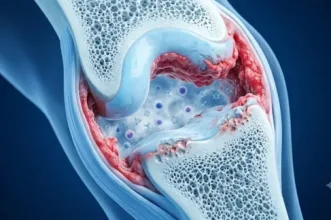
The immune system protects the body from harmful microorganisms and foreign substances. It uses immune cells and signaling molecules to recognize potential threats and trigger an appropriate response, such as inflammation.
However, the immune system can sometimes become overactive or mistakenly attack the body’s own tissues. When it starts to attack the joints, it leads to rheumatoid arthritis (RA).
Rheumatoid arthritis (RA) is a chronic autoimmune disease where the immune system mistakenly attacks the body’s own tissues, particularly the synovial lining, the thin layer of tissue surrounding the joints.
This abnormal immune response causes persistent inflammation. Over time, inflammation can damage cartilage, bone, and other structures around the joint.
RA commonly affects the hands, wrists, feet, knees, and other joints. It often affects joints symmetrically, meaning the same joints on both sides of the body may be involved.
In order to understand how RA develops and progresses, researchers study the biological processes inside affected joints. Here is where synovial fluid, a biological fluid, comes into play.
What is Synovial Fluid?
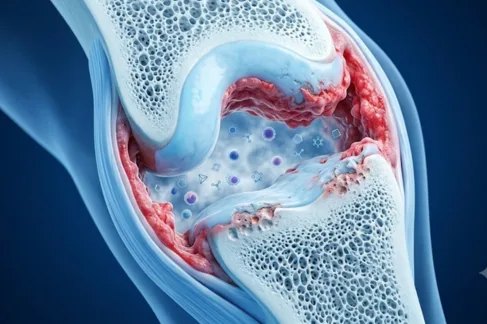
Synovial fluid is a thick, clear to pale-yellow biological fluid present in the cavities of freely movable joints. It is produced by the synovial membrane that lines the joint.
Under normal conditions, synovial fluid performs several important functions. It lubricates the joint, reduces friction between cartilage surfaces, helps absorb mechanical stress, and supplies nutrients to tissues that have limited blood supply.
In rheumatoid arthritis, however, the composition of synovial fluid can change considerably. As a result, inflammation increases the movement of immune cells and inflammatory molecules into the joint space.
So, researchers often study changes in synovial fluid to understand RA progression.
Role of Synovial Fluid in RA Research
Blood samples provide information about systemic inflammation, but synovial fluid can provide more localized information about what is happening inside an affected joint.
Researchers can analyze synovial fluid to investigate:
Study Inflammatory Cytokines
Cytokines are signaling proteins that regulate immune and inflammatory responses.
In rheumatoid arthritis, inflammatory signaling can become persistent and contribute to synovial inflammation and tissue destruction. Researchers measure cytokines in synovial fluid to understand how different inflammatory pathways are activated.
Commonly studied inflammatory mediators include tumor necrosis factor-alpha (TNF-α), interleukin-1 beta (IL-1β), interleukin-6 (IL-6), and other cytokines involved in immune regulation.
Researchers measure these molecules in synovial fluid to compare inflammatory profiles between disease states, investigate molecular pathways, and evaluate how experimental treatments influence inflammation.
Examine Immune Cells in the Joint
Synovial fluid also contains cells that can provide important information about the immune response occurring inside the joint.
So, researchers examine populations of neutrophils, macrophages, lymphocytes, and other immune cells present in synovial fluid. Changes in the number and characteristics of these cells help them understand how immune responses are established and maintained in rheumatoid arthritis.
For example, interactions between macrophages, T cells, B cells, and other immune cells can contribute to the production of inflammatory mediators. Researchers study these cellular interactions to understand mechanisms underlying chronic joint inflammation.
Investigate Autoimmune Activity
Rheumatoid arthritis is associated with abnormal immune responses against the body’s own tissues. So, synovial fluid can be used to investigate molecules associated with autoimmune activity.
Researchers examine antibodies, immune complexes, and other immune-related proteins in synovial fluid. These studies can help clarify how immune responses within the joint differ from those detected in systemic circulation.
This also helps researchers investigate why inflammation persists in specific joints and how local immune processes contribute to tissue damage.
Study Cartilage and Bone Damage
Chronic inflammation in rheumatoid arthritis can contribute to the destruction of cartilage and bone surrounding affected joints. Synovial fluid can contain molecules released during these tissue changes.
Researchers measure enzymes and structural proteins associated with extracellular matrix degradation, cartilage turnover, and bone remodeling.
For example, matrix metalloproteinases (MMPs) are enzymes involved in the breakdown of extracellular matrix components. Researchers study MMPs and related molecules in synovial fluid to understand the mechanisms contributing to joint destruction.
This helps investigate potential biomarkers associated with structural damage and disease progression.
Synovial Fluid in Biomarker Discovery
A biomarker is a measurable biological molecule that provides information about a disease process, biological response, or treatment effect.
Since synovial fluid is collected from the joint environment, it may contain other disease-associated molecules that are difficult to interpret from systemic samples alone.
So, researchers use techniques such as ELISA, multiplex immunoassays, mass spectrometry, and other analytical approaches to identify and quantify potential biomarkers.
This helps find the concentration of various cytokines, chemokines, enzymes, growth factors, antibodies, and tissue-derived proteins.
Evaluate Potential RA Treatments
Synovial fluid can also support preclinical and clinical research evaluating potential rheumatoid arthritis treatments.
Researchers compare synovial fluid samples before and after treatment to determine whether concentrations of inflammatory mediators or other disease-associated molecules change.
For example, a reduction in specific inflammatory cytokines after an experimental intervention may provide evidence that the treatment affects a particular inflammatory pathway. Such measurements can complement clinical observations and other laboratory assessments.
However, changes in an individual biomarker do not necessarily demonstrate treatment effectiveness by themselves. Researchers generally consider molecular findings alongside cellular, clinical, imaging, and other experimental data.
The Bottom Line
Now that you know why and how synovial fluid helps in RA research, what are you waiting for? Find a trusted source from which you can get the required synovial fluid for your experiment, and that helps you get accurate results.