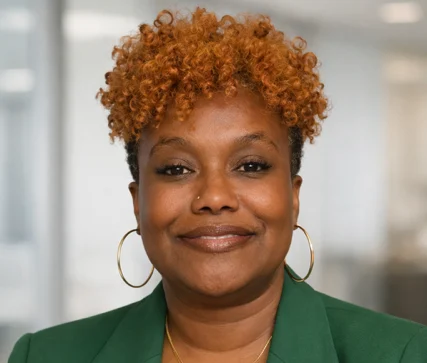
LaTosha Kerley does not approach human resources as theory. She approaches it as a system that has to work in real life. As an HR executive, her focus is simple: make workplaces clearer, more consistent, and easier to operate.
Her career is built on observation and execution. Not noise. Not trends. Just systems that work.
“HR isn’t just policy,” she says. “It’s how people actually move through those policies every day.”
That mindset has shaped how she brings ideas to life inside organizations.
Early Work Experience That Built Real-World Insight
Kerley’s understanding of workplace behavior started early. At fourteen, she worked as a kitchen server in a retirement home. It was a fast lesson in professionalism and communication.
“You learn quickly that work is about people,” she says. “Every situation is different, and you have to adjust without losing your standards.”
That experience gave her a practical lens. She learned to stay composed, observe behavior, and adapt in real time.
Those habits carried forward into her HR career.
Why LaTosha Kerley Built a Career in Human Resources
Kerley chose HR because it sits between structure and behavior. It is where business decisions meet human response.
“HR is the point where systems either work or break,” she explains. “You see everything there.”
Over time, she worked across employment-related matters, internal processes, and leadership support. Her role often involves identifying where systems are misaligned.
“I look for where people get stuck,” she says. “That usually tells you what needs to be fixed.”
Instead of focusing only on policy, she focuses on application. That is where many organizations struggle.
How She Turns HR Ideas Into Working Systems
Kerley does not rush solutions. She studies patterns first.
“I spend time observing,” she says. “You can’t fix what you don’t fully understand.”
Once she identifies a gap, she simplifies the solution. Her approach is not to add more layers, but to remove confusion.
“Most systems don’t need to be more complex,” she says. “They need to be clearer.”
For example, when communication breaks down, she does not start with new policies. She starts with how information is being shared and where it stops.
“Sometimes the issue isn’t the rule,” she says. “It’s how the rule is communicated.”
That focus on clarity has helped her improve workflows and reduce repeated issues across teams.
Education and Structure Behind Her Approach
Kerley later earned a master’s degree in Human Resource Management from Strayer University. The degree gave structure to what she had already learned through experience.
“It gave me a framework,” she says. “But the real learning came from applying it.”
Her education strengthened her understanding of policy, compliance, and organizational strategy. But she still relies on observation as her main tool.
“You can study systems,” she says. “But you have to see how they operate in real conditions.”
Leadership Style: Consistency Over Visibility
Kerley’s leadership style is steady and direct. She does not focus on being the loudest voice in the room.
“Consistency matters more than visibility,” she says. “People trust what they can rely on.”
She believes leadership is shown through follow-through. Not just ideas, but execution.
“As long as you’re good to the people around you, that’s what matters,” she says.
This approach has helped her build trust across teams. It also allows her to manage complex situations without creating unnecessary friction.
Big Ideas That Drive Her Career
Kerley’s career is built around a few core ideas. They are simple, but they scale.
First, communication drives performance. If people do not understand expectations, systems fail.
“Most problems start with communication gaps,” she says.
Second, systems should match reality. Policies should reflect how work actually happens.
“You can’t design systems in isolation,” she says. “They have to fit the environment.”
Third, clarity reduces friction. When processes are clear, teams move faster and with fewer errors.
These ideas are not theoretical. They are applied daily in her work.
What Makes Her Approach Different
Kerley does not chase trends. She focuses on fundamentals.
“Trends change,” she says. “But clear systems and good communication don’t.”
She also avoids overcomplicating solutions. Many organizations try to fix problems by adding more structure. She does the opposite.
“I simplify,” she says. “That’s where real improvement happens.”
Her ability to translate big ideas into practical systems is what sets her apart. She does not just identify problems. She builds solutions that people can actually use.
Long-Term Thinking and Career Direction
Kerley takes a long-term view of her career. She values stability and structure over quick results.
“I don’t rush decisions,” she says. “I focus on what will hold up over time.”
She is also a licensed realtor, though she keeps that work limited to personal use. For her, it represents flexibility and long-term planning.
“It’s about having options,” she says.
That same mindset applies to her work in HR. Build systems that last. Create clarity that scales.
A Career Built on Practical Execution
LaTosha Kerley’s career is not built on big promises. It is built on execution.
She studies systems. She identifies gaps. She simplifies processes. And she improves how organizations function.
“Every workplace can get better,” she says. “You just have to pay attention.”
Her work shows that big ideas do not need to be complex. They just need to work.