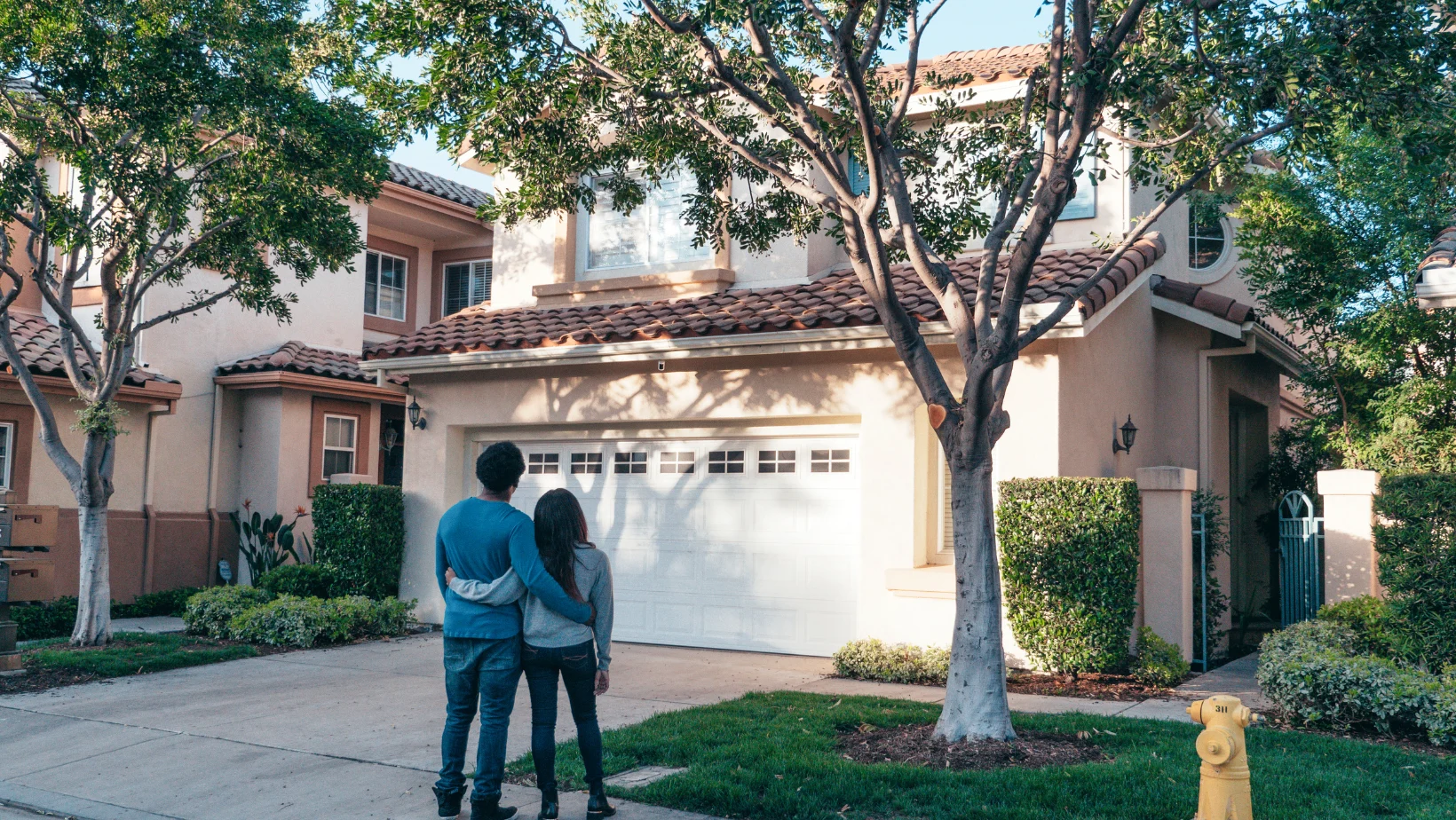
Millennials are the largest generation in the United States, and by 2024, their homeownership rate reached 47 percent, still trailing prior generations at comparable ages, according to Apartment List’s 2025 Millennial Homeownership Report. That figure represents millions of first-time buyers who entered a property market shaped by sustained price growth, elevated mortgage rates, and a housing stock that skews considerably older than the homes their parents purchased.
What that figure doesn’t capture is what these buyers brought with them when they crossed the threshold: a decade and a half of consumer experience built around on-demand services. Food delivery. Ride-sharing. Telehealth. Streaming. In each of those categories, the defining characteristic is the same: the service starts with a click, the provider handles the coordination, and the customer spends no time managing logistics.
The first time a millennial homeowner calls a plumber who can’t arrive for three weeks, the contrast is immediate. Choice Home Warranty, which processes over a million service calls per year through a highly automated platform, represents the home services industry’s operational answer to that friction.
The Service Expectation Gap
The traditional home repair market wasn’t built around speed. Contractors book based on availability. Scheduling involves phone calls, callback windows, and calendar negotiation. A homeowner dealing with a weekend HVAC failure who can’t get a technician before the following Thursday is managing the logistics of a repair the same way homeowners managed them in 1985.
That friction is a structural problem for a generation of buyers who grew up with same-day delivery as a baseline expectation. According to Apartment List’s research, millennials have been slower than prior generations to achieve homeownership at each age milestone, partly because the cost and complexity of the category was mismatched to their expectations. By age 30, only 33 percent of millennials owned homes, compared to 42 percent of Gen X and 48 percent of Baby Boomers at the same age.
As affordability pressures and inventory constraints gradually ease in some markets, the volume of millennial buyers is growing. What isn’t growing is their appetite for the logistical friction that has defined home services for decades. The companies that have built digital claims infrastructure, 24/7 customer support, and automated technician dispatch are the ones positioned to serve this buyer cohort on their own terms.
What On-Demand Home Services Actually Requires
Delivering home services on an on-demand model isn’t simply a matter of building a mobile app. The operational infrastructure required to match a qualified technician to a claim, in real time, across a national geography at all hours, is substantial.
For most of the home warranty industry’s history, a homeowner filing a claim entered a manual queue: a phone call, a follow-up, a contractor scheduled on a timeline driven by availability rather than an algorithm. The coordination overhead sat entirely with the homeowner. If the first appointment needed to be rescheduled, the homeowner managed that too.
Automated dispatch changes the underlying structure of that experience. A claim goes in. The system evaluates available technicians by geography, availability, and trade specialization. A match is generated in real time. The homeowner gets a confirmed appointment without navigating the coordination process that previously defined the category.
According to reporting in Markets Herald, Choice Home Warranty’s dispatch infrastructure routes service requests to the best available qualified technician in real time, with 24/7 operations that mean a homeowner who discovers a water heater failure on a Sunday evening isn’t waiting until Monday morning to enter the process. CHW’s automated dispatch system matched customers with the right technician 90 percent of the time in 2025, across 1.3 to 1.4 million annual service calls.
Choice Home Warranty and the Millennial Homeowner
Choice Home Warranty, founded in 2008 with a mission to make home ownership simple and affordable, built its operational model around removing coordination overhead from the homeowner’s side of the transaction. Claims are filed with a simple click or call. The company’s highly automated platform handles the matching, routing, and scheduling that would otherwise fall to the customer.
CHW lead the industry by distributing coverage plans directly to consumer through two primary plan options, Basic and Total, which gives homeowners a direct path from coverage decision to active protection. That model aligns with the purchasing preferences of a generation that expects digital access to services at every point in the process.
The scale of Choice Home Warranty reflects how broadly that model has been adopted across the country. The trust indicators that matter to a generation accustomed to peer reviews before any purchase decision are in place: CHW was named to USA TODAY’s Most Trusted Brands 2026 list and has earned more than 100,000 five-star reviews across BestCompany, ConsumerAffairs, and Trustpilot. CHW has also acquired Home Warranty of America and the Home Service Club, adding reach and network depth.
The Financial Context Behind the Purchase Decision
Millennial homebuyers entered the market later and under more constrained conditions than prior generations. The Apartment List data shows that Gen Z is tracking even further behind, with only 9 percent homeownership among a cohort whose oldest members were 27 in the most recent year of data. Home prices surged 53 percent since 2020, and elevated mortgage rates have compounded the affordability pressure.
Within that context, the financial logic of home warranty coverage is clear. First-time buyers purchasing older homes carry system risk they can’t yet fully assess. A buyer who purchased a home in 2022 at peak prices is now carrying an asset whose major systems are aging toward replacement on the same timeline. A service contract converts that risk from an open-ended liability into a predictable annual cost.
Bankrate’s 2025 hidden costs study put total annual homeownership costs at $21,400, with maintenance and repairs alone averaging $8,808. For a generation that has been financially stretched by the entry conditions of the housing market, an unexpected $8,000 HVAC replacement arriving two years into homeownership is a genuine financial threat to a household already carrying a large mortgage on a property purchased at elevated prices.
Coverage Built for the Current Moment
Home warranty coverage isn’t a new product. What’s new is the operational model behind it: digital claims filing, automated dispatch, a technician network broad enough to generate real-time matches across a national geography, and a quality feedback loop that improves routing precision over time.
The companies that compete on coverage breadth alone are exposed to a generation of homeowners who evaluate service quality the same way they evaluate every other consumer product: by experience, reviews, and response time. Choice Home Warranty has built the operational infrastructure to meet that evaluation on its own terms. A claim filed with a simple click or call, routed to a qualified technician in real time, managed through to resolution without the homeowner managing the logistics.
For buyers who have spent a decade getting exactly that from every other category of service they use, the product has fundamentally changed. Automated dispatch, digital claims filing, and a quality-filtered technician network have replaced what was once a manual, friction-heavy process.