The electronics field currently experiences rapid technological changes, which cause standard solutions to fail in delivering optimal results for advanced applications. Aerospace, medical electronics, and wearable devices engineers have to design custom circuits that can deliver compact systems, reliable operation, and adaptable mechanical capabilities. The custom rigid-flex PCB manufacturing and assembly has grown in demand as manufacturers are now able to create unique designs that incorporate both rigid and flexible circuit technologies.
To meet certain electrical, mechanical, and environmental requirements, engineers design tailored, rigid-flex PCBs. Their design of incorporating rigid and flexible components into one integrated system saves space and improves the durability of the PCBs, and enhances the performance of the systems.
The article examines the entire process of custom rigid-flex PCB manufacturing and assembly, which includes design requirements, material selection, production methods, assembly processes, and product benefits, and usage in various industries, while showing how custom rigid-flex PCB solutions address the needs of current electronic design work. Let’s start!
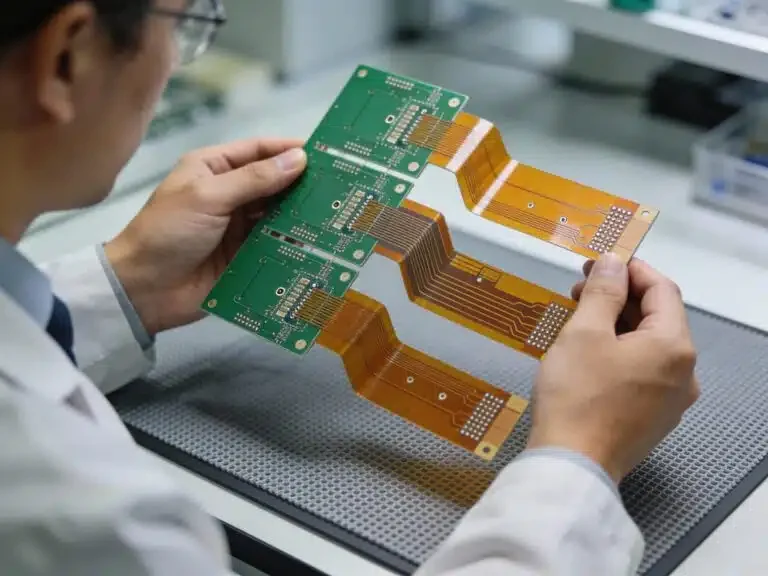
What is a Custom Rigid-Flex PCB?
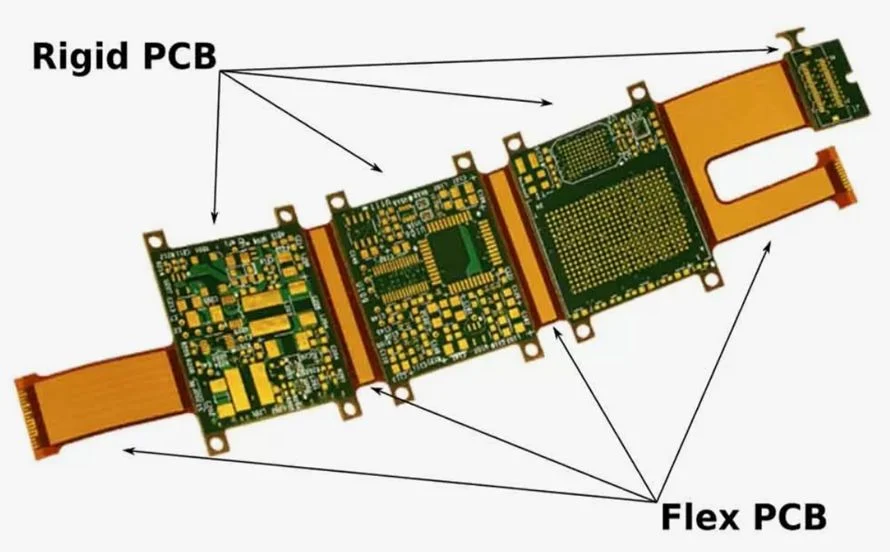
The custom rigid-flex PCB functions as a hybrid circuit board that engineers developed for specific use in particular applications. The system uses:
- Rigid sections that support component installation
- Flexible sections that enable bending operations and equipment connection
The design of custom rigid-flex boards differs from standard PCBs because they base their specifications on:
- Device geometry
- Electrical requirements
- Mechanical stress conditions
- Environmental factors
The system achieves peak performance through its custom design, which handles both intricate tasks and restricted operational areas.
Features of Custom Rigid-Flex PCBs

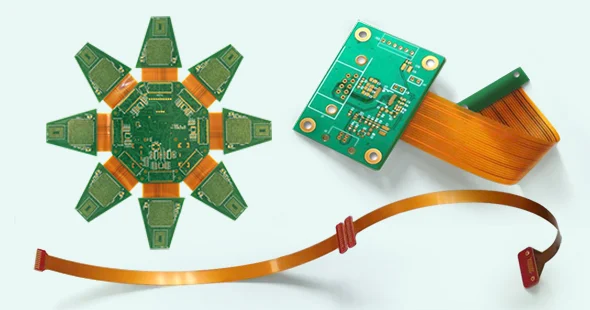
Application-Specific Design
The design of custom rigid-flex PCBs requires engineers to follow specific application needs, which define both their electrical specifications and mechanical requirements, and environmental conditions. The specialised system requires this customised design method to deliver its highest operational performance.
Integrated Multi-Board Functionality
The PCBs unify different circuit components into one complete system, which removes the requirement for multiple separate circuit boards. The system benefits from this unified design because it makes architectural design easier while achieving better efficiency.
Reduced Connectors and Wiring
The design of rigid-flex PCBs reduces electrical failure risks through its implementation of fewer connectors and cables. The design leads to better durability and creates more consistent electrical connections. Fewer connectors, though, is not the same as none. The interfaces that remain — board-to-board links, external ports, sensor connections — still rely on precision-turned contacts and connector pins machined to sub-millimetre tolerances, since a single poorly formed pin will undermine the very reliability the rest of the layout is built around.
Enhanced Mechanical Reliability
The flexible sections of the circuit board protect against mechanical stress from movement, vibration, and thermal expansion, which helps to extend its lifespan and reliability.
Compact and Lightweight Structure
The PCB design achieves its lightweight and compact form through the removal of unnecessary parts and an efficient design process.
Custom rigid-flex PCBs offer essential features that high-performance electronic systems need for their critical operations.
Materials Used in Custom Rigid-Flex PCBs
| Layer | Material | Properties | Function |
| Rigid Layer | FR4 / High Tg laminate | Structural strength | Component support |
| Flexible PCB Layer | Polyimide (PI) | Flexibility, heat resistance | Bending areas |
| Conductive Layer | Copper (RA/ED) | Electrical conductivity | Signal transmission |
| Adhesive | Epoxy/Acrylic | Bonding strength | Layer adhesion |
| Coverlay | Polyimide film | Protection | Insulation and durability |
Design Considerations for Custom Rigid-Flex PCBs
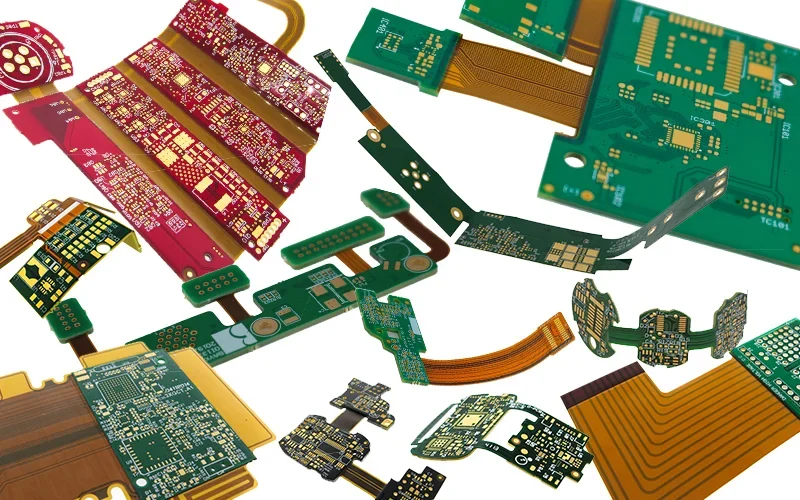 Custom rigid-flex PCB solutions achieve their performance and manufacturing efficiency through effective design work. When designers create optimal solutions, the design enables the product to flex mechanically while maintaining its electrical performance for long-term operation.
Mechanical Design
The mechanical design process ensures that the PCB functions through its ability to handle bending and physical force. The correct bend radius should remain between 6 and 10 times the board thickness because this measurement prevents both copper trace cracking and substrate damage.
The placement of components should avoid flexible areas because these regions create mechanical forces that result in performance failure during use. The use of smooth transitions between rigid and flexible parts provides better stress distribution, which strengthens the product’s capacity to withstand pressure.
Electrical Design
The electrical design process achieves optimal signal transmission through its design, which results in minimal signal loss. Designers need to execute precise trace routing optimisation procedures because they need to keep high-speed circuits functioning with complete signal integrity. The use of shorter trace lengths will lead to decreased resistance, which results in lower signal degradation. The proper application of grounding and shielding methods functions to decrease electromagnetic interference (EMI) while protecting stable circuit performance.
Layer Stack-Up Design
Layer stack-up design establishes the financial link between two critical product development elements that need to retain their essential electrical properties. The use of a symmetrical stack-up construction design enables the system to maintain its structural integrity by preventing both warping and uneven stress distribution.
The placement of copper layers should occur close to the neutral axis base because this design choice minimizes bending-related material strain. The PCB design achieves its electrical performance goals through interconnected layer optimization, which maintains its necessary flexible characteristics.
Manufacturing Process of Custom Rigid-Flex PCBs
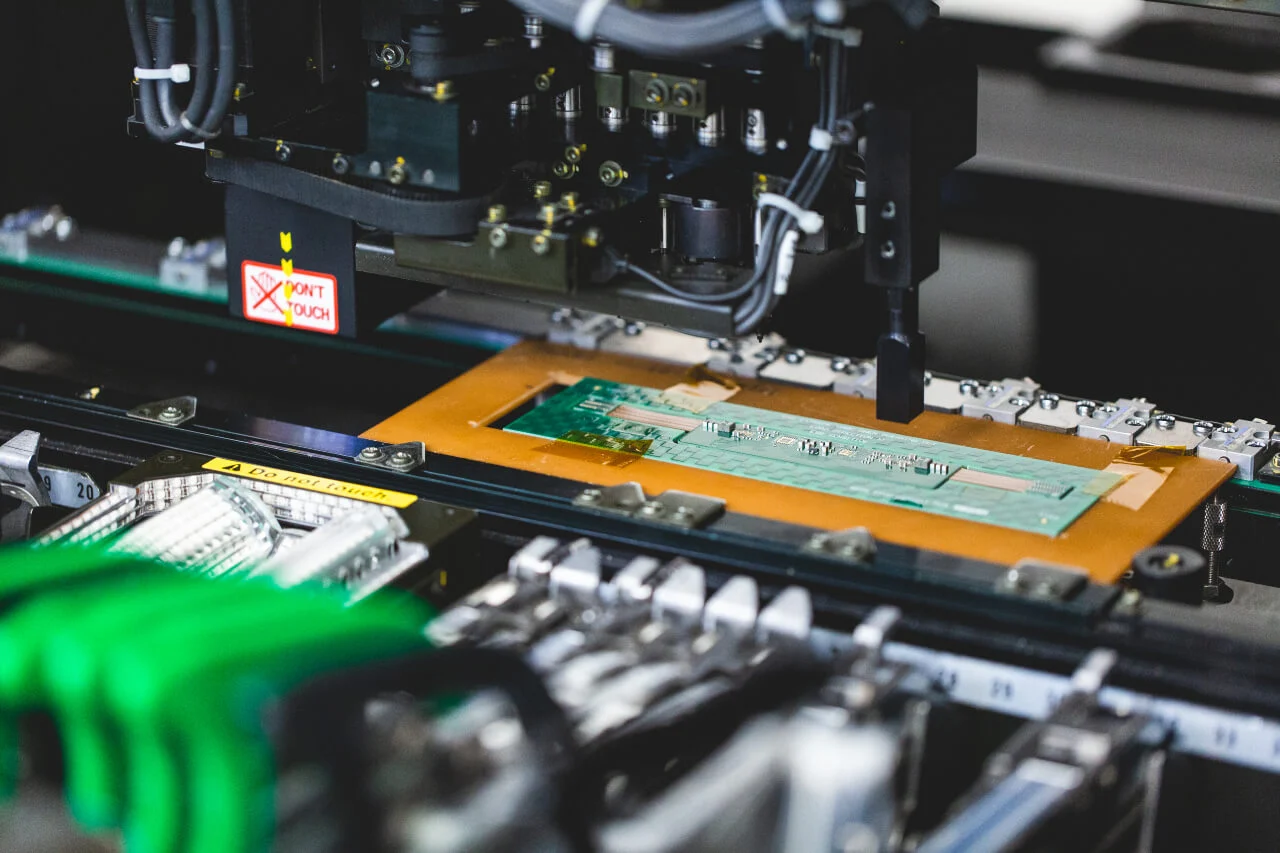
| Step | Process | Purpose |
| 1 | Material preparation | Ensure clean surfaces |
| 2 | Layer lamination | Combine rigid and flex layers |
| 3 | Circuit patterning | Define electrical paths |
| 4 | Drilling and vias | Layer interconnection |
| 5 | Plating | Conductivity enhancement |
| 6 | Surface finishing | Protection and solderability |
| 7 | Assembly | Component placement |
| 8 | Testing | Quality assurance |
Lamination
Heat and pressure control techniques create a unified structure through the lamination process of rigid and flexible materials.
Circuit Patterning
Circuit patterns receive their definition through photolithography, which engineers the patterns, and then etching removes the copper that exceeds the defined boundaries.
Drilling and Via Formation
Laser drilling creates microvias that enable high-density interconnection between circuits.
Assembly Process of Custom Rigid-Flex PCBs
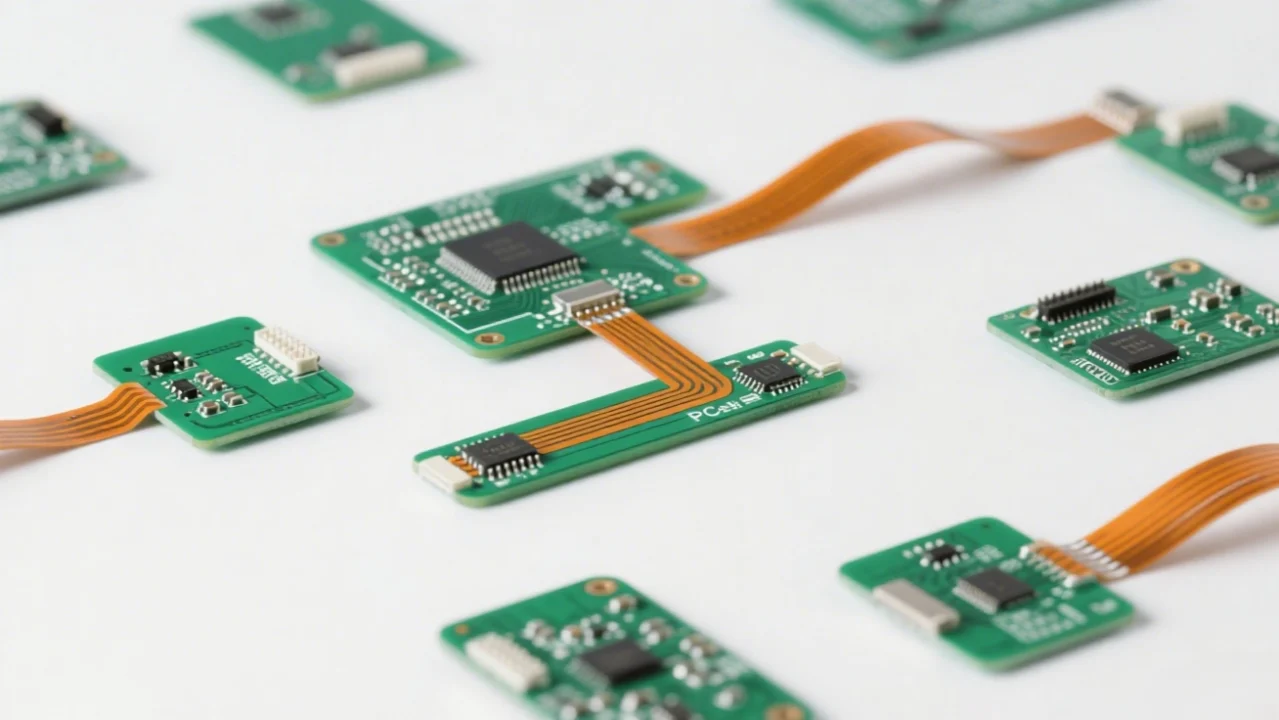 The assembly of custom rigid-flex PCBs is performed with exacting standards that produce dependable results while safeguarding fragile flexible components.
Component Placement
Surface Mount Technology (SMT) is used primarily on rigid sections where pick-and-place machines position components with high accuracy. The design maintains flexible areas without heavy components, which would create mechanical bending stress.
Soldering
The reflow soldering process uses temperature profile control, which creates secure electrical connections. Effective thermal management is necessary because it protects flexible materials from potential harm.
Inspection
Quality checks involve Automated Optical Inspection (AOI) to check for image defects and electrical testing on circuit continuity and flex testing to check on the durability of the parts under repeated bending conditions.
Advantages of Custom Rigid-Flex PCB Manufacturing

The method of custom rigid-flex PCB manufacturing delivers multiple advantages, which make it the optimal selection for electronic systems that need to be small in size, dependable, and have advanced operational capabilities.
Space Optimization
Efficient space utilisation is one of the largest benefits. Custom rigid-flex designs are also able to achieve higher space efficiency since they avoid unnecessary connectors and cables and multiple board assemblies, which leads to an improved space efficiency. This enables them to fit in small smart devices.
Improved Reliability
The reduction of interconnections and solder joints results in fewer points that can fail. This protection system provides better protection against long-term equipment failure, which occurs in conditions that involve equipment movement or vibration and equipment temperature variations.
Design Flexibility
Custom rigid-flex PCBs enable engineers to create complex three-dimensional shapes and layouts through their advanced design options. The ability to create unconventional product designs exists because this design option permits engineers to create product designs that cannot be developed with traditional rigid PCBs.
Weight Reduction
The combination of rigid and flexible elements into one board system minimizes the requirement for additional wiring and connectors, which results in a complete system that weighs less. This feature offers major advantages for electronic devices that people can wear or carry.
Enhanced Performance
Shorter electrical paths that connect directly between points create better signal integrity because they decrease electrical resistance, system noise, and external signal interference. This results in improved electrical performance and energy efficiency during high-speed operation.
Applications of Custom Rigid-Flex PCBs
Consumer Electronics
Through custom rigid-flex PCBs, consumer devices obtain their operational capacity for smartphones, tablets, and foldable devices. These components enable manufacturers to create thin products that optimize internal space while enabling advanced capabilities that encompass high-resolution camera operations and flexible display functionality.
Medical Devices
Their usage establishes fundamental requirements for implantable medical devices and diagnostic equipment, and wearable health monitoring systems. Medical applications depend on their small dimensions and dependable operation, which maintains accurate functionality throughout essential healthcare functions.
Automotive Systems
Automotive applications include ADAS systems, EV battery management systems, and various sensors. The PCB design improves operational strength and functional capabilities of devices that operate in conditions that involve vibration, heat, and continuous running.
Aerospace and Defense
Custom rigid-flex PCBs serve satellite, avionics, and military electronic systems, which need lightweight construction, dependable performance, and protection against harsh environmental conditions.
Industrial Equipment
Industrial systems use these components to support their functions in robotics and automation systems and control units. Their flexible design and durable construction enable systems to operate successfully in environments that involve complex operations and continuous movement.
Conclusion
The production and assembly of custom rigid-flex PCB products provide an essential innovation for contemporary electronic engineering because they combine rigid and flexible technologies into one specialized solution for particular applications. This hybrid design method enables engineers to create electronic systems that are both lightweight and compact while delivering exceptional performance to meet the requirements of modern smart devices that use miniaturised technology.
The high-performance industries of consumer electronics, medical devices, automotive systems, and aerospace and industrial automation make extensive use of these PCBs. The ability of these components to decrease space requirements while providing better reliability and increased design options makes them the ideal solution for complex electronic systems that need more than standard PCB solutions.
The benefits of the system exceed its design hurdles, which include increased expenses and complicated design and precise manufacturing needs. The development of connected systems that use intelligent miniature electronic equipment will depend on custom rigid-flex PCBs because material and fabrication technology continue to progress.