Every time a company in Luanda pays a supplier in Lisbon or settles an invoice in U.S. dollars, a chain of banks on different continents has to agree to carry that money. Those agreements are called correspondent relationships, and for a country like Angola, they decide how easily its businesses can trade with the rest of the world. That is why Banco BAI’s first stand at Sibos 2026 mattered far more than a booth on a convention floor.
From Sept. 28 to Oct. 1, 2026, more than 9,000 participants from over 150 countries filled the Miami Beach Convention Center. Banco BAI set up at Stand L058 in the East Hall, right beside SWIFT, the network that carries payment messages between banks worldwide. The spot drew steady, high-quality traffic all four days.
Teams from BAI Angola, BAI Cabo Verde and BAI Europa made the most of it — holding more than 50 bilateral meetings with financial institutions, correspondent banks, regulators and technology partners, according to the bank.
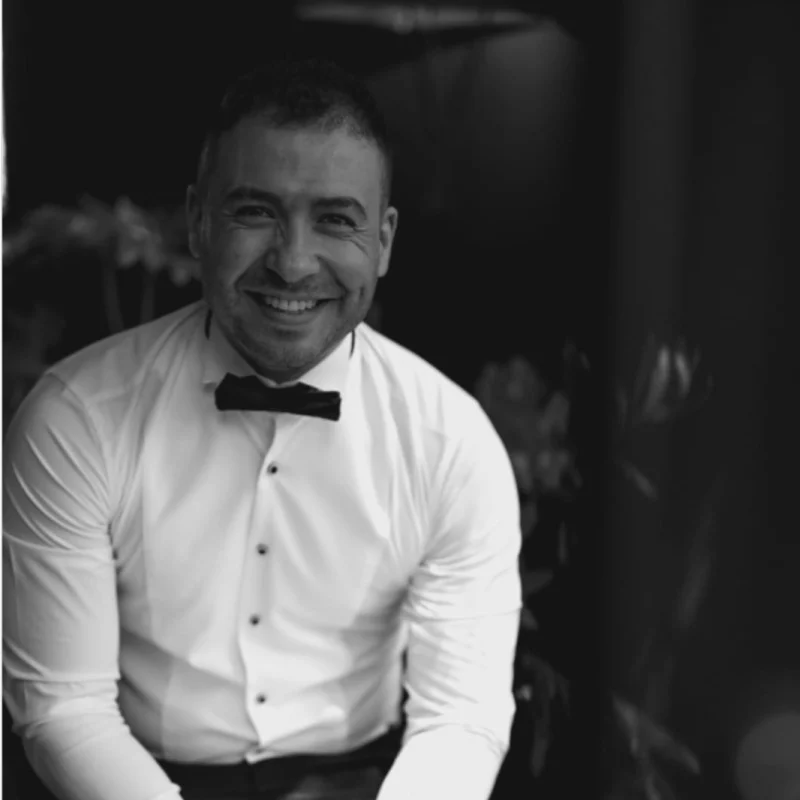
“Sibos 2026 Miami was Banco BAI’s first participation with an own-stand at the world’s leading financial services conference, a milestone in the Group’s international journey,” said Fábio Correia, Banco BAI’s communications and brand manager.
The milestone arrived in a meaningful year. Banco BAI turns 30 in 2026, and its story tracks closely with Angola’s own. Founded in 1996 as the country’s first private bank with exclusively national capital, it grew through the years of reconstruction and stabilization into what it describes as Angola’s leading money-center bank. Today, it serves about 3 million clients through roughly 1,000 service points and close to 2,000 employees, with approximately 5 trillion kwanzas in assets.
Its reach stretches across the Portuguese-speaking world, through BAI Europa in Portugal, BAI Cabo Verde in Cape Verde and a stake in BISTP in São Tomé and Príncipe. Banco BAI also became the first Angolan institution to be rated by both Fitch and Moody’s, which rate the bank B- and B3, respectively, each with a stable outlook.
“For a bank celebrating its 30th anniversary, Sibos 2026 was both the right stage and the right year,” Correia explained.
Getting to Miami was the first step. Turning four days of meetings into banking relationships that last is the work that began the moment the conference ended.
Inside the More Than 50 Meetings That Carried Banco BAI’s Agenda Across Six Continents
The conversations in Miami spanned a wide map, and Correia said the bank approached every one of them with the same intent.
“The agenda spanned six continents and included top-tier European and North American correspondents, leading African institutions, Middle Eastern partners, and counterparts from Latin America and Asia-Pacific,” Correia explained. “We also held conversations with fintech and infrastructure partners aligned with the Sibos 2026 theme, ‘Digital Finance for AI-driven Economies.’ Each meeting was treated with the same strategic care. Our ambition at Sibos was to listen as much as to present.”
The discussions centered on five areas where an Angolan bank’s international reach is tested most directly: correspondent banking, international trade finance, cross-border payments, regulatory compliance and digital transformation. Some meetings focused on strengthening relationships already in place, while others identified new opportunities for collaboration.
“Our presence at Sibos 2026 allowed us to strengthen the BAI Group’s international visibility, deepen strategic relationships, and identify concrete opportunities for cooperation,” Verdades said.
The opportunities identified in Florida have now moved into due diligence and terms discussion across correspondent banking, trade finance, cross-border payments, compliance and digital transformation. Banco BAI is keeping the names of its counterparts private while those talks progress, and its leadership left the conference confident about the work ahead.
“We left Miami with a clear follow-up agenda and encouraging prospects for developing new partnerships,” Verdades said.
Why Banco BAI Believes Infrastructure, Not Any Single Relationship, Earns a Correspondent’s Trust
International banks do not open their books to a new counterparty on goodwill. Before a correspondent agrees to clear payments for a bank in another country, it wants evidence that the institution is sound, well governed and quick to answer when something needs checking. Banco BAI’s view is that this kind of trust comes from systems rather than handshakes.
“What has been more important than any single relationship, in our view, is the infrastructure that makes those relationships credible and operational,” Correia said.
The bank points to three pieces of that infrastructure. The first is public credit ratings. As the first Angolan institution rated by both Fitch and Moody’s, Banco BAI gives a correspondent in New York, London or Frankfurt an independent, familiar benchmark for assessing risk, rather than asking it to take the bank’s word.
The second is a mature compliance and financial-crime function. That work includes the Wolfsberg Correspondent Banking Due Diligence Questionnaire, the standardized document banks worldwide use to evaluate one another’s anti-money-laundering controls before opening accounts. It gives a prospective partner a common reference point for its review.
The third is speed. Correspondent relationships stall when questions sit unanswered, whether a compliance team needs details on a transaction or a partner wants clarity on a client.
“When a correspondent asks a question, we answer in hours, not days,” Correia said.
Together, those three pieces support Banco BAI’s correspondent banking network, which already covers the main reserve currencies, U.S. dollars, euros and British pounds, along with the key corridors its clients rely on to trade and invest across borders.
Corridors First, Footprint Second, and a Measured Map for Banco BAI’s Next Moves
Plenty of banks equate international ambition with planting flags in new countries. Banco BAI has chosen a different logic, one that starts with where its clients’ money actually needs to go.
“We think in terms of corridors first, physical footprint second,” Correia said.
In practice, the corridors-first strategy unfolds in three steps. The bank aims to consolidate the markets where it already operates. It plans to deepen correspondent partnerships in places where a strong relationship delivers more efficiency than opening a subsidiary would. And it will evaluate Southern African Development Community markets, along with lusophone and Africa-facing financial hubs, selectively rather than all at once.
“The ambition is to be present where it creates measurable value for Angolan and lusophone capital flows, not everywhere for the sake of it,” Correia said.
BAI Europa, the Portugal-based subsidiary in which the group holds an 81.63% stake, gives that strategy a natural anchor on the other side of the Atlantic. It serves as a bridge for European and transatlantic correspondents looking to connect with Angola and the wider Portuguese-speaking world, and it was part of the group delegation in Miami.
The corridors-first approach also keeps the bank disciplined. Every new corridor has to justify itself through the value it creates for clients moving goods and capital, not through the prestige of a new address.
What an Appearance in Miami Means for Angola’s Businesses and Lusophone Capital Flows
The meetings at Sibos may sound like back-office business, but their effects reach well beyond a convention hall. Stronger correspondent relationships mean Angolan companies can pay foreign suppliers faster, finance imports and exports more reliably and reach international markets with fewer obstacles. Better cross-border payment rails also make it easier for capital to flow into Angola’s economy, not just out of it.
Those international connections tie directly to the bank’s ambitions at home. Banco BAI has set a goal of serving every Angolan, extending accessible and affordable banking to the full breadth of the population through advanced mobile and digital platforms. Positioned between public-sector development goals and private-sector dynamism, it also aims to finance the real economy, from agriculture to industry, support the country’s entrepreneurs and channel capital toward green transition and sustainable growth. Each of those goals depends on a bank that can move money confidently between Luanda and the rest of the world.
Thirty years after opening its doors, Banco BAI used one of global finance’s most watched stages to show partners on six continents that an Angolan institution can be a credible and operational counterparty. Correia said the real measure of the trip lies in what happens now.
“What we take back from Miami is a concrete follow-up agenda across correspondent banking, trade finance, cross-border payments, compliance and digital transformation, now moving to due diligence and terms discussion,” Correia said.