The world of artificial intelligence and robotics is moving fast, and it’s not just in science fiction anymore. We’re seeing real, physical machines with advanced AI capabilities showing up in more places than ever before. From self-driving cars to robots helping in hospitals, the technology is changing how we live and work. This article will cover some of the biggest recent advancements and what they mean for the future.
Key Takeaways
- AI is giving robots better ways to see and understand the world around them, letting them recognize objects and navigate complex spaces on their own.
- Robots are becoming more useful for physical tasks, with improved dexterity for handling objects and performing delicate operations.
- Autonomous AI robots, like robotaxis and delivery bots, are starting to appear in cities, and humanoid robots are being developed for many different jobs.
- AI is helping robots work more closely with people in factories, warehouses, and even in healthcare, making processes more efficient.
- New hardware and software are making AI robots faster and more capable, with advanced algorithms and processing power enabling quicker decision-making and operations.
Advancements in AI Robot Capabilities
Robots are getting a serious upgrade thanks to ongoing developments in artificial intelligence. These aren’t just clunky machines anymore; they’re becoming more aware, more capable, and better at interacting with the world around them. It’s pretty exciting to see how AI is making robots more useful in all sorts of ways.
Enhanced Computer Vision for Object Recognition
Think about how we see. We look at something, and our brain instantly tells us what it is – a chair, a cup, a person. AI is giving robots a similar ability. Through advanced computer vision, robots can now identify and classify objects with much greater accuracy. This means they can distinguish between different items on a shelf, recognize tools needed for a specific job, or even spot a person in a crowded room. This improved visual understanding is key for robots operating in dynamic environments. It allows them to make better decisions about how to interact with their surroundings, whether it’s picking up a delicate item or navigating around an unexpected obstacle.
Improved Manipulation for Dexterous Tasks
Robots have often struggled with tasks that require a gentle touch or precise movements. AI is changing that. By learning from data and using sophisticated algorithms, robots are developing better ‘hand-eye’ coordination and fine motor skills. This allows them to perform tasks that were previously too complex, like assembling small electronic components, handling fragile materials, or even performing delicate surgical procedures. The goal is to give robots the dexterity to handle a wide variety of objects without damaging them, opening up new possibilities for automation in manufacturing and healthcare.
AI-Powered Navigation and Motion Control
Gone are the days when robots needed constant human guidance to move around. AI is enabling robots to navigate complex spaces on their own. They can now map their environment, plan efficient routes, and adjust their movements in real-time to avoid collisions. This is especially important for autonomous vehicles like robotaxis and delivery bots, but it’s also vital for robots working in warehouses or factories. The ability to move intelligently and safely without human intervention makes them far more versatile and efficient. This technology is also being applied to software robots, helping them manage workflows and avoid bottlenecks Citiesabc.
The progress in AI is making robots more adaptable and intelligent, moving them from controlled factory settings into the unpredictable real world. This shift means robots can now perform a wider range of tasks with greater autonomy and precision than ever before.
The Rise of Autonomous AI Robots
The idea of robots operating without direct human control is rapidly moving from science fiction to everyday reality. This shift is largely powered by significant leaps in artificial intelligence, allowing machines to perceive their surroundings, make decisions, and act autonomously. We’re seeing this unfold in several key areas.
Robotaxi Services Scaling Globally
Autonomous vehicle technology is maturing, with companies pushing to deploy robotaxi services on a larger scale. These services aim to provide on-demand transportation without human drivers, using AI to navigate complex urban environments. While regulatory hurdles and public acceptance are still factors, the progress is undeniable. Companies are accumulating vast amounts of real-world driving data, which is then used to refine their AI systems, making them safer and more efficient. This data-driven approach is key to scaling these operations.
AI-Driven Delivery Bots in Urban Areas
Beyond passenger transport, AI is also powering a new generation of delivery robots. Small, autonomous bots are beginning to appear on sidewalks and in designated lanes in cities worldwide, handling everything from food delivery to package transport. Their AI allows them to:
- Identify and avoid obstacles like pedestrians and street furniture.
- Navigate complex routes using GPS and sensor data.
- Communicate with traffic signals and other infrastructure where available.
- Safely pick up and drop off packages.
These bots are particularly useful for last-mile delivery, offering a potentially faster and more cost-effective alternative to traditional methods in dense urban settings.
Humanoid Robots for Diverse Applications
Humanoid robots, designed to resemble and move like humans, are also becoming more capable thanks to AI. These robots are being developed for a wide range of tasks, from assisting in warehouses and factories to providing support in healthcare settings or even performing household chores. Their AI allows them to:
- Understand and respond to human commands.
- Manipulate objects with increasing dexterity.
- Adapt to new environments and tasks.
While still in development, the potential for these robots to work alongside humans in various roles is a significant aspect of the rise of autonomous AI robots.
AI Robot Integration in Industries
Collaborative Robots in Manufacturing
Robots working alongside people, often called "cobots," are becoming more common in factories. These machines use AI to understand their surroundings and the tasks they need to do. This allows them to work safely and efficiently next to human workers, helping with things like assembly and quality checks. The AI helps them adapt to changes on the production line, making manufacturing processes more flexible.
AI for Logistics and Warehouse Automation
Warehouses are seeing big changes thanks to AI-powered robots. These robots can sort packages, move inventory, and manage stock levels with great accuracy. AI helps them plan the quickest routes within the warehouse and avoid obstacles, speeding up operations. Some systems can even predict when certain items will be needed, helping to manage stock proactively.
Robots in Healthcare and Precision Medicine
In healthcare, AI robots are making a difference in areas like surgery and patient care. Surgical robots, guided by AI, can perform complex procedures with high precision, often through minimally invasive techniques. This can lead to faster recovery times for patients. AI also helps robots assist with tasks like dispensing medication or providing support in rehabilitation, improving the efficiency of healthcare services.
The Future of AI Robot Interaction
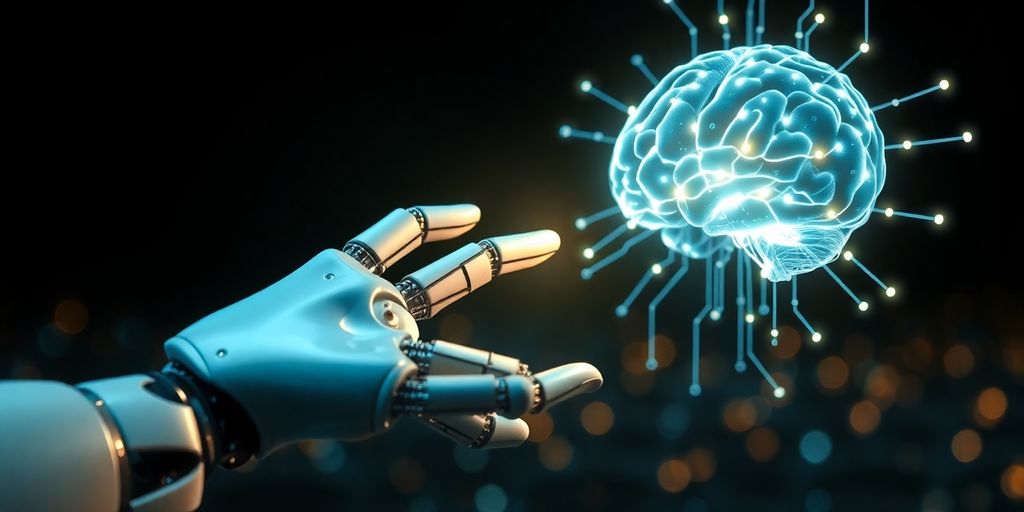
As AI continues to advance, the way we interact with robots is changing dramatically. It’s moving beyond simple commands to more natural, intuitive exchanges. This shift is making robots more useful and easier to work with in many different settings.
Natural Language Processing for Human-Robot Communication
One of the biggest steps forward is in how robots understand and use language. Natural Language Processing (NLP) allows robots to grasp spoken or written human language, not just keywords. This means you can talk to a robot more like you would a person, asking complex questions or giving detailed instructions.
- Robots can now understand context and nuance in conversations.
- This allows for more fluid dialogue, reducing the need for precise phrasing.
- Think of asking a robot assistant to "find the report I was working on yesterday" instead of needing to know the exact file name.
Mimicking Human Behavior for Better Integration
Robots are also getting better at acting more like humans. This isn’t about making them conscious, but about making their actions more predictable and relatable. When robots can mimic human movements and reactions, they fit better into environments designed for people.
This development helps bridge the gap between human workers and robotic counterparts, making collaboration smoother and more efficient.
This can include things like:
- Subtle gestures: A robot might nod to acknowledge a command or tilt its head when processing information.
- Predictable movements: Robots can learn to move around obstacles in a way that humans would, avoiding sudden or jerky motions.
- Expressive feedback: Using lights or simple sounds to indicate status or understanding, similar to how a person might react.
AI Enhancing Robot Perception of Surroundings
AI is also improving how robots
Innovations in AI Robot Hardware and Software
This section looks at the actual building blocks and the smarts behind modern AI robots. It’s not just about what they can do, but how they do it, focusing on the hardware and software that make these advancements possible.
Lightning-Fast Motion Planning Algorithms
Getting a robot to move smoothly and efficiently from point A to point B, especially in cluttered or dynamic environments, is a big challenge. Traditional methods for figuring out a robot’s path, or motion planning, could take a long time. Think minutes for a complex task. But now, researchers are developing algorithms that can plan thousands of intricate movements in just seconds. This speed-up is a game-changer for robots that need to react quickly, like those in busy warehouses or even in emergency response situations.
GPU Acceleration for Real-Time Robot Operations
Graphics Processing Units (GPUs), originally designed for video games, are now powering many AI tasks. For robots, this means they can process vast amounts of data from sensors – like cameras and lidar – much faster. This allows for real-time decision-making, such as identifying an object, calculating the best way to pick it up, and executing the movement, all happening almost instantly. This parallel processing capability is key to making robots more responsive and capable in complex, real-world scenarios.
AI Agents Automating Business Processes
Beyond physical robots, AI agents are software programs designed to perform tasks autonomously. These agents can handle a wide range of business operations, from managing customer inquiries and scheduling appointments to analyzing data and generating reports. They act like virtual employees, working around the clock to streamline workflows and improve efficiency. Think of them as the software brains that can manage many of the repetitive or data-intensive tasks that currently take up human time, freeing people up for more strategic work.
Global Developments in AI Robot Technology
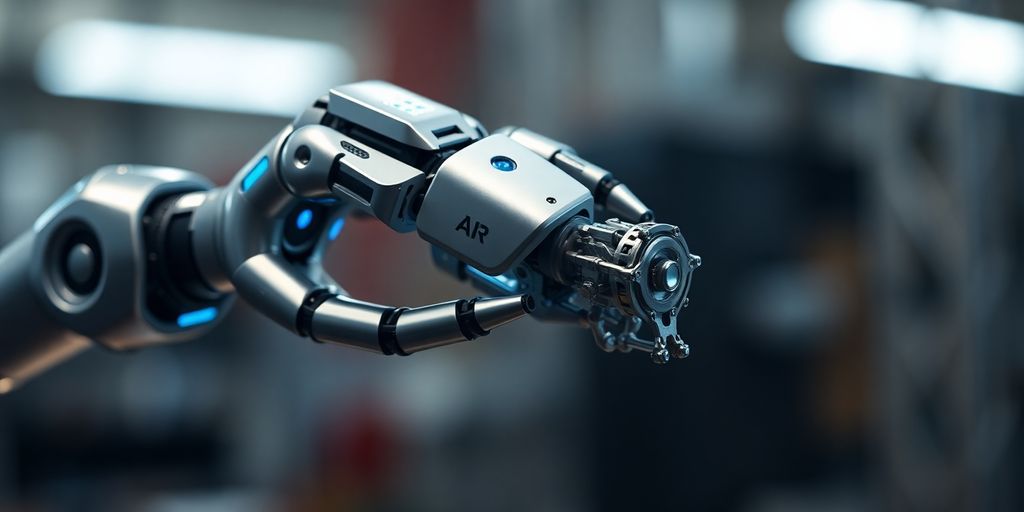
Across the globe, significant strides are being made in how AI is shaping the world of robotics. Different regions are focusing on distinct areas, from autonomous transport to military applications and industrial integration.
China’s Rapid Deployment of Robotaxis
China is making notable progress in autonomous vehicle technology, particularly with robotaxi services. The country’s approach involves large-scale testing and deployment, aiming to integrate driverless ride-hailing into urban transportation networks. This push is supported by substantial investment and a regulatory environment that is adapting to new mobility solutions. Companies are working to refine the AI systems that control these vehicles, focusing on safety and efficiency in complex city environments.
US Army’s Focus on AI-Integrated Roles
The United States Army is actively incorporating AI into its operations by creating specialized roles and career paths for soldiers. This initiative aims to build a workforce skilled in developing, managing, and deploying AI technologies across various military functions. The goal is to improve combat readiness and operational effectiveness by leveraging AI for tasks ranging from data analysis to autonomous systems control. This strategic move signals a broader trend of militaries worldwide investing in AI for future defense capabilities.
European R&D in Enterprise AI Robots
In Europe, research and development efforts are heavily concentrated on AI robots for enterprise and industrial applications. The focus is on creating collaborative robots (cobots) that can work alongside human employees in manufacturing and logistics. These robots are designed to improve productivity and safety in workplaces. European nations are investing in AI research to drive innovation in automation, aiming to maintain a competitive edge in the global market by developing smarter, more adaptable robotic solutions for businesses.
Looking Ahead: The Evolving Landscape of AI Robotics
It’s clear that AI robotics is moving beyond the lab and into our daily lives. From self-driving cars to smarter factory arms and even household helpers, the pace of innovation is picking up. We’re seeing AI give robots new abilities, like better vision, more precise movements, and the capacity to learn and adapt. This means robots can do more complex tasks, work more closely with us, and navigate the world more independently. As these technologies continue to develop, they’re set to change how we work, travel, and interact with the world around us. It’s an exciting time to watch this field grow and see what new possibilities emerge.
Frequently Asked Questions
How are robots improving their ability to ‘see’ and understand things?
Robots are getting much better at seeing and understanding the world around them. This means they can identify objects more accurately, understand what they are seeing, and even learn how to move around obstacles. Think of it like giving robots super-powered eyes and brains!
Can robots now handle objects with more precision?
Yes, robots are becoming much more capable of doing tasks that require careful handling, like picking up delicate objects without breaking them. This is thanks to advancements in AI that give them finer control over their movements, similar to how human hands work.
What does it mean for a robot to be ‘autonomous’?
Autonomous robots are robots that can move and make decisions on their own without needing a person to guide them. Examples include self-driving cars (robotaxis) that navigate city streets and delivery bots that bring packages to your door.
Where are robots being used in the real world?
Robots are being used in many different jobs. In factories, they work safely alongside people. In warehouses, they help sort and move goods quickly. They are also starting to be used in hospitals to help doctors with operations and patient care.
How is AI helping robots communicate and interact with people?
AI is helping robots understand and use human language, making it easier for us to talk to them and give them instructions. They are also learning to copy human actions and understand our surroundings better, which helps them work with us more smoothly.
What are the latest improvements in how robots plan their actions and move?
New AI software allows robots to plan their movements very quickly, even for complicated tasks. This speed, often boosted by special computer chips, helps robots operate much faster and more efficiently in real-time.