You’ve done it before. You set up the reaction, run the cycler, and get nothing. No band, no signal, just a blank result staring back at you.
It’s frustrating. And the worst part? It’s not always obvious what went wrong.
What matters is that most PCR failures are predictable. They follow patterns. Once you know what to look for, you can fix them fast and avoid them next time.
Let’s go through the most common reasons your polymerase chain reaction kit may not be delivering results.
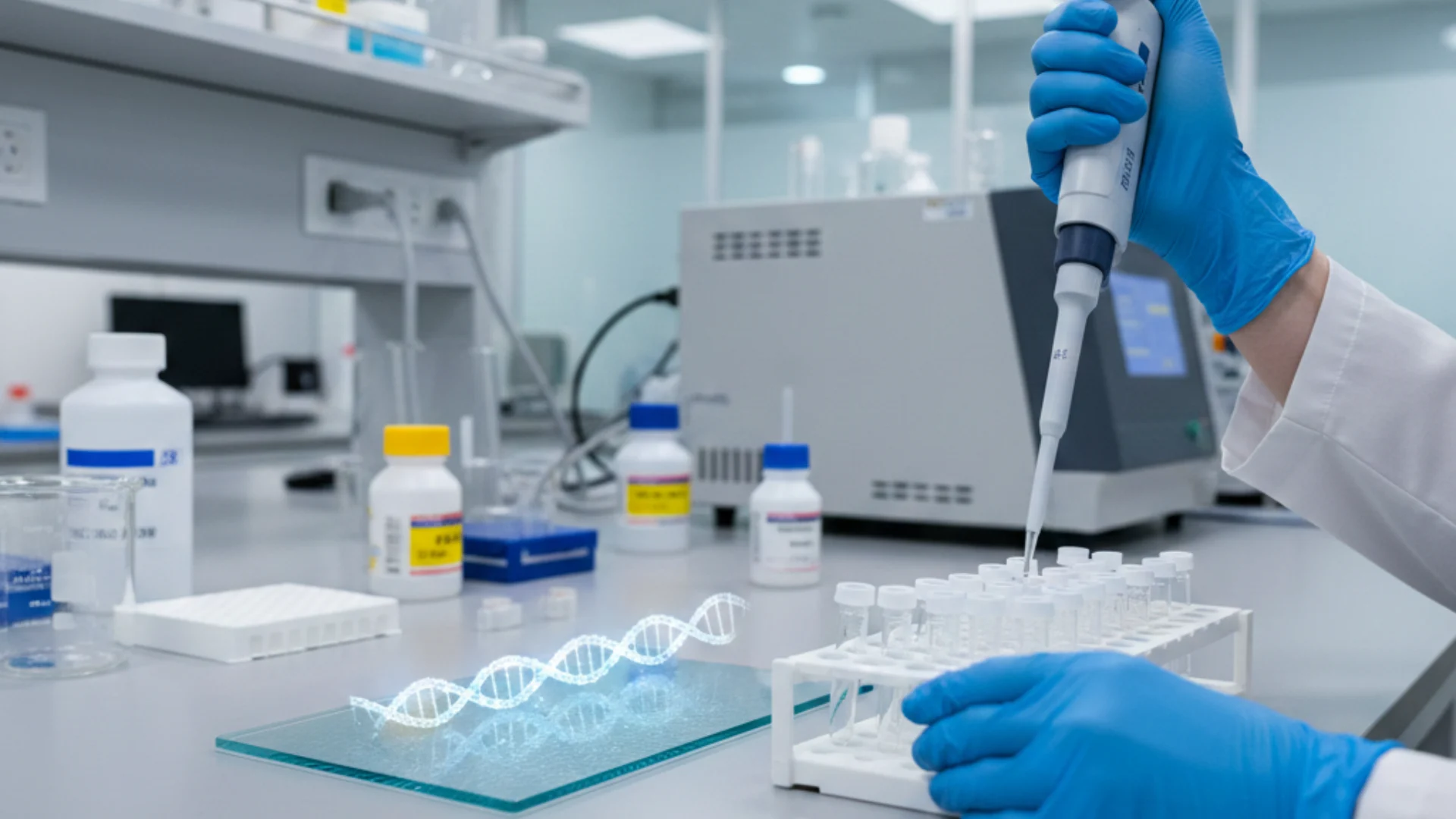
6 Factors That Can Affect Your PCR Results
1. DNA: Quality and Quantity
Have you ever seen weak or no bands even when everything else looks fine?
If your DNA is degraded or has leftover impurities such as, proteins, salts, or chemicals from extraction, the polymerase may not work properly. This can lead to weak signals or no amplification at all.
How can you make sure your template DNA doesn’t ruin your PCR results?
Check the purity and amount of your DNA. Impurities or leftover chemicals can stop the polymerase from working. Cleaning your DNA and using the right concentration is the first step to a successful PCR.
2. Primer Design and Concentration
Poor primers are one of the fastest ways that can ruin a PCR run. If your primers bind to the wrong region, form hairpins, or stick to each other instead of the template, you won’t get clean results.
But following simple steps can help you solve this problem:
Well-designed primers
Always make sure they are specific to the target sequence. Run them through a design tool and check for self-complementarity or hairpin structures before you order.
Optimize primer concentration
Too high and you risk primer-dimers. Too low and amplification suffers. So, try a small range first to see what gives the best amplification.
3. Annealing Temperature
While running a PCR, did you get a blank result?
This usually happens when the annealing temperature is too high, and stops the primer from binding to the target DNA. Annealing temperature basically controls how your primers bind to the DNA.
If you want a stable anealing temperature, you can try these steps:
- Check the Tm of your primers (most design tools give this).
- Set your starting annealing temperature about 5°C below the Tm.
- If results are messy, increase the temperature by 1–2°C at a time.
- If there’s no amplification, lower the temperature slightly.
- If available, run a gradient PCR to test multiple temperatures at once and find the best one.
4. Contamination
Why is PCR showing a positive result even without the target DNA?
“False-positive results” is one of the major concerns among researchers, and this happens when contamination takes place in PCR.
PCR is extremely sensitive, which means even a tiny amount of contamination can affect your results. This could come from previous PCR products, pipetting errors, or contaminated reagents.
How can you prevent contamination and ensure your PCR results are reliable?
Make sure you work carefully and keep the setup clean. Use fresh tips, separate work areas if possible, and always include controls to catch contamination early.
5. Magnesium Chloride (MgCl₂) Concentration
Magnesium is essential for PCR because it helps the polymerase enzyme function. Without enough magnesium, the reaction may give a very low yield or no product at all.
How can you fix the concentration of MgCl₂ in the PCR experiment?
You can fix the MgCl₂ concentration in a PCR experiment by adjusting in small steps:
- Start with the manufacturer’s recommended MgCl₂ amount.
- If your PCR yield is low, increase the concentration slightly.
- Decrease the concentration if you see non-specific bands.
- Test multiple concentrations at once to quickly find the optimal amount for your reaction.
6. Cycle Conditions (Time and Temperature)
Your PCR cycles need the right balance. During denaturation, if the temperature is too low or the time is too short, the DNA strands may not fully separate.
How can you adjust PCR cycle conditions?
- Stick to the recommended cycling times and temperatures for your PCR kit.
- Slightly increase the denaturation time or temperature if the DNA isn’t separating well.
- Adjust the annealing temperature up or down if primers bind incorrectly.
- Increase the extension time for weak amplification.
Now that you know the common factors that can affect PCR, making small, careful adjustments can make a big difference.