Organizations often say they want community input. They hold meetings, create advisory groups, distribute surveys, and invite people to comment on proposed programs or policies. Those efforts can be useful, but their value depends heavily on timing. If an organization waits until a program has already been designed, funded, and scheduled for implementation, there may be very little left for the community to influence.
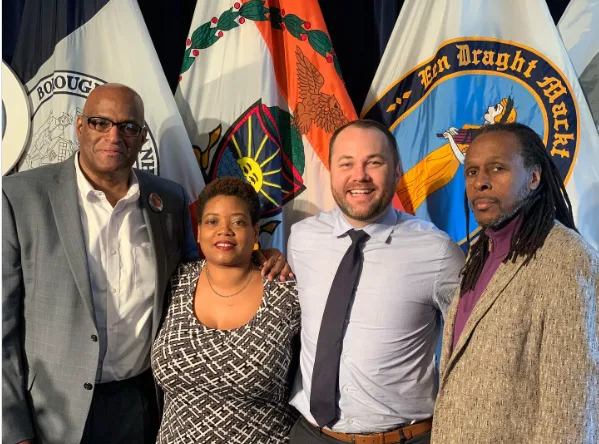
Longtime New York City community advocate Manuel Rivera believes meaningful participation needs to begin much earlier. Rivera has decades of experience involving affordable housing, homelessness, LGBTQ advocacy, HIV/AIDS advocacy, coalition building, and community representation. Manuel Rivera GMHC currently serves as Chairperson of the Consumer Advisory Board at GMHC and as a member of its Board of Directors. His broader civic experience has also included serving as Parliamentarian on Manhattan Community Board 10 and helping lead the NYC Black/Latina LGBTQ Coalition.
“Community input is most useful when people still have the ability to influence the outcome,” Rivera says. “If everything has already been decided, you are not really asking people to help shape something. You are asking them to react to it.”
For Rivera, that distinction is important. Community engagement should not simply confirm a decision that an organization has already made. It should provide information that can influence what gets built, how a program operates, and whether the proposed solution addresses the problem people are actually experiencing.
Asking for Feedback After the Important Decisions Are Made
One of the most common problems with community engagement is timing. An organization may spend months developing a new initiative internally. Staff members identify the problem, establish goals, determine how the program will operate, allocate resources, and create an implementation plan. Once most of that work is complete, the organization invites community members to provide feedback.
At that point, the organization may technically be listening, but the community has limited ability to influence the most important decisions. Rivera believes organizations should begin those conversations while there is still room for the answers to change the plan.
“Start the conversation before you think you have the answer,” Rivera says. “Ask people what they are seeing. Ask what they need. Ask what has already been tried and why it did or did not work.”
This principle appears in formal planning structures. New York City’s Continuum of Care, which coordinates efforts related to homelessness, includes people with lived experience within its governance structure. Its 17-member Steering Committee includes four representatives with lived experience of homelessness, and dedicated committees also give people who have experienced homelessness opportunities to participate in discussions about policies, priorities, and services.
The underlying idea is simple. People who have experienced a problem firsthand have information that can improve decisions about how to address it.
Being Invited Into the Room Is Not the Same as Having Influence
Representation matters, but Rivera argues organizations need to look beyond attendance. A community representative can be invited to every meeting without having meaningful influence over a single decision.
Organizations should instead consider what participants are actually being asked to do. Community representatives should have opportunities to question assumptions, identify problems, suggest alternatives, and understand how their recommendations are being considered.
“There is a difference between being present and participating,” Rivera says. “You can invite someone to every meeting and still not listen to them. The question is whether their experience has a real place in the decision-making process.”
This approach is particularly relevant in areas such as public health, housing, and social services, where the people designing programs may have very different experiences from the people using them. New York State’s HIV Advisory Body, for example, includes community participation in its structure and provides recommendations concerning service needs, affected populations, prevention, healthcare, supportive services, and emerging issues.
Creating a seat at the table matters. Giving the person sitting in that seat a meaningful opportunity to contribute matters even more.
Professional Expertise Cannot Replace Lived Experience
Professional knowledge remains essential. Organizations need people who understand budgets, regulations, research, operations, healthcare, housing, and public policy. Rivera does not see community participation as a replacement for that expertise. He sees it as another source of information that professionals cannot always obtain from reports or meetings.
His own experience with an affordable housing project demonstrated why this matters. Earlier in his career, Rivera worked to gain local support for a proposed affordable housing project. The initial effort was rejected. Instead of simply continuing to push the same proposal, he reconsidered how he had approached the community.
“I realized my approach was seriously flawed,” Rivera says. “I needed to start with a conversation about what local leaders needed and wanted. Once I understood those realities, we could work on a plan that addressed them.”
That change in approach eventually helped the project gain approval. The experience reinforced an important lesson for Rivera: believing that a project will benefit a community does not necessarily mean the organization proposing it understands everything that community needs.
People living in a neighborhood may know concerns that aren’t visible in a planning document. People using a service may recognize barriers that its administrators rarely encounter. Someone with lived experience may notice a practical problem that an expert approaching the issue from a professional perspective could easily overlook. The strongest approach is often to bring those different forms of knowledge together.
Objections Can Provide Useful Information
Community engagement becomes more difficult when people disagree with the proposed solution. It can be tempting to view objections as resistance, particularly when an organization has already invested significant time and resources into a project.
Rivera recommends treating disagreement as information first. An objection may expose a practical weakness, a communication problem, a lack of trust, or a concern that planners have not considered.
“An objection gives you information,” Rivera says. “You have to find out what is behind it. Is there a problem with the idea? Is there a trust issue? Is there something about the community that you have misunderstood? You cannot know unless you ask.”
Listening does not mean every objection must result in a change. Communities are not monolithic, and residents can disagree strongly with one another. Organizations may also face financial, legal, or operational constraints that make some requests impossible. The purpose of engagement is not to produce unanimous agreement. It is to understand the disagreement well enough to make a better-informed decision.
Rivera’s experience in coalition leadership has made that distinction especially important to him. Organizations can share a broad goal while disagreeing about how to achieve it. Effective leadership requires acknowledging those differences and identifying where cooperation is still possible.
Organizations Need to Explain What Happened Afterward
Another common weakness appears after organizations collect feedback. Residents attend meetings, consumers participate in advisory groups, and community members spend hours describing problems and suggesting improvements. Then they hear nothing about what happened next.
Rivera believes organizations should make closing that communication loop standard practice.
“If you ask people to participate, they should understand what happened with their input,” Rivera says. “Maybe you cannot implement every recommendation. Be honest about that. Explain what changed, what did not change, and why.”
That follow-up serves several purposes. It shows that participation was taken seriously, helps people understand the constraints facing an organization, and creates accountability for the decisions ultimately made. Even when a recommendation cannot be implemented, explaining why can be more constructive than allowing participants to wonder whether anyone considered it.
This principle is reflected in established approaches to consumer participation in health services. New York State standards for HIV-related programs include mechanisms for consumer input on program planning, implementation, and quality management. These structures recognize that people’s experiences receiving services can provide useful information about how those services operate in practice.
Earlier Conversations Can Prevent Later Problems
Meaningful community engagement can complicate the start of a project. More people are involved, assumptions may be challenged, and an organization may discover that part of its original plan needs to change. From a short-term perspective, that can appear inefficient.
Rivera sees it differently. Discovering a serious problem before implementation is generally more useful than discovering it after significant resources have already been committed. Listening early can reveal concerns while an organization still has the flexibility to address them.
His advice is practical. Identify the people who will be affected by a decision and involve them while meaningful choices are still available. Ask specific questions rather than simply asking whether people like an idea. Listen carefully to objections. Explain the constraints surrounding the project. Track recommendations, then return to participants to explain what changed and what did not.
Organizations also need to accept that meaningful participation may alter the original plan. That is not necessarily evidence that the planning process failed. In some cases, it may be evidence that community engagement worked exactly as intended.
“I have learned that being determined does not mean refusing to adjust your plan,” Rivera says. “Sometimes listening changes the plan. That can be exactly what makes the plan work.”
For Rivera, effective community engagement is ultimately less about asking people whether they approve of a finished solution and more about understanding the problem with them before the solution is finalized. When organizations wait until the end to ask for input, they may miss the information that would have been most useful at the beginning.