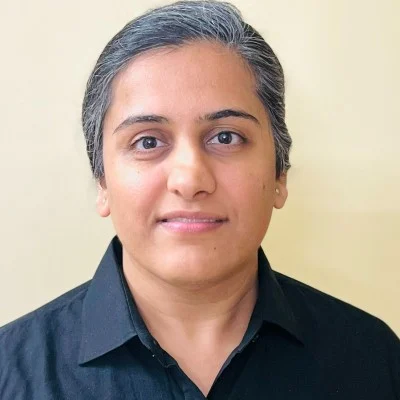
One of the most persistent misconceptions in wealth management, according to Michael Gold, is the belief that ultra-high-net-worth advice is simply traditional wealth management at a larger scale. Michael Gold, the founder and CEO of Gold Family Wealth in Westport, Connecticut, says that framing misses the point entirely. “In reality, it is a discipline of its own,” he says.
For families with assets above $30 million, the complexity is structural rather than quantitative. Concentrated ownership, illiquid assets, cross-border tax exposure, and succession planning for both wealth and leadership all can create problems that a standard advisory relationship cannot reliably solve. Gold argues that the non-financial dimensions, namely governance, communication, the education of rising generations, and alignment on shared values, often determine whether family wealth becomes a source of resilience or a source of strain.

When Families Become Enterprises
Private wealth authority Russ Alan Prince, co-author of Making Smart Decisions: How Ultra-Wealthy Families Get Superior Wealth Planning Results, has observed that “significant wealth turns families into enterprises, whether they acknowledge it or not. And enterprises without governance rarely fail all at once; they fragment over time.” Gold says that observation captures what he sees in practice.
The fragmentation risk is real. Many UHNW families work with multiple credentialed professionals, attorneys, accountants, investment managers, and philanthropic advisors, each operating independently. Advice that is technically sound in one silo can conflict with decisions being made in another. Gold says the result is not dramatic failure but gradual erosion: confidence weakens over time, not because of a single mistake, but because the advisory relationship never grows alongside the family itself.
That structural mismatch is compounding. The largest intergenerational wealth transfer in history is currently underway, with an estimated $84 to $120 trillion projected to move between generations over the next two decades. Much of that capital sits within UHNW families managing operating companies alongside diversified investment portfolios, often across multiple jurisdictions and entities. Decisions made today about ownership and succession will shape outcomes for family members not yet fully involved.
The Selectivity Shift
UHNW families, Gold says, have grown more deliberate about who they bring into their advisory circle. Access to capital is no longer a constraint for this cohort. Access to good judgment is. The questions these families now ask before committing to an advisory relationship have sharpened: who has managed this level of complexity before? Who will stay engaged through ownership transitions, generational handoffs, and governance disputes? Who is ultimately accountable when the picture is unclear?
Those questions are reshaping the advisory industry. More firms are building dedicated UHNW practices, recognizing that this segment requires an operating model designed for complexity rather than efficiency. Gold, based in Westport, says that without specialized teams capable of integrating legal, tax, philanthropic, and succession planning, even technically skilled firms tend to deliver fragmented results. “UHNW advice cannot be improvised or tacked on,” he says. “Families can tell when planning is superficial or when coordination is disjointed.”
When the model works, its effects can extend well beyond investment returns. Governance frameworks can improve how families make decisions together. Thoughtful education programs prepare the next generation for stewardship rather than entitlement. Scenario planning can allow families to anticipate change rather than simply absorb it. Gold says that over time, this can build resilience not just in balance sheets but in relationships.
For Michael Gold, the discipline required to serve UHNW families well is not optional or aspirational. It is the minimum condition for doing the work at all. The families asking the most pointed questions, he says, are also the ones most worth serving.
Investment advisory services offered through CWM, LLC, an SEC Registered Investment Advisor. Russ Alan Prince is not an affiliate of CWM, LLC. Opinions expressed by Russ may not be representative of CWM, LLC.