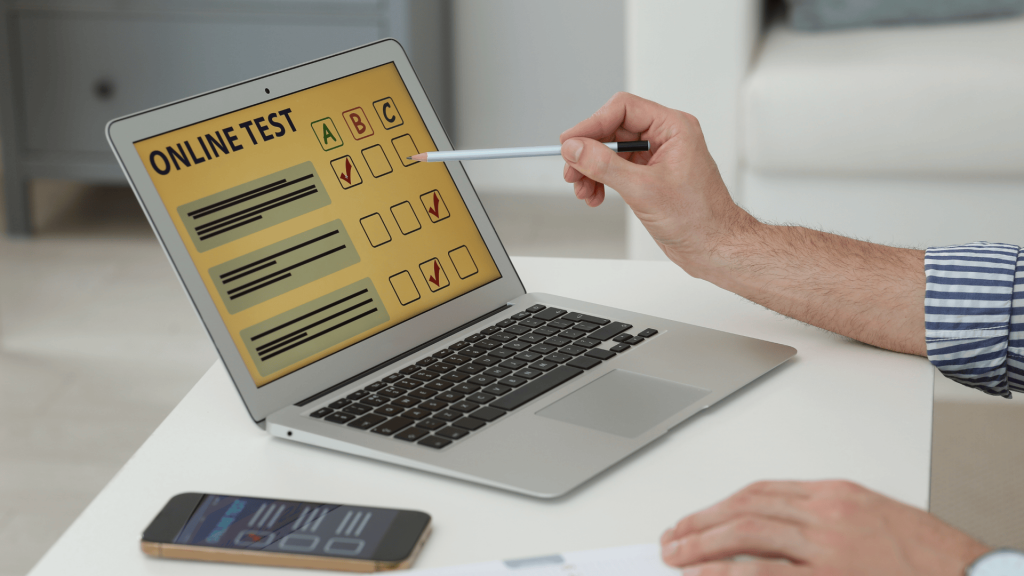
Imagine sitting in a dimly lit exam hall, pencil in hand, while your grader—perhaps nursing a headache or biased by your handwriting—decides your fate. Now contrast that with clicking through an online quiz at testizer.com from the comfort of your couch, where algorithms score your answers instantly and impartially. Which sounds more fair? If you’re like most people, you might dismiss online tests as gimmicky or unreliable, riddled with subjectivity. But here’s the twist: that perception is the real illusion. In reality, online tests often outperform traditional methods in reliability, consistency, and accuracy. Let’s unpack why, backed by evidence, and debunk the myths holding you back.
Understanding Subjectivity in Traditional Testing
Subjectivity creeps into assessments when human judgment takes center stage. Think about essay grading: one teacher might reward creativity, while another prioritizes structure. Even multiple-choice tests aren’t immune—proctors can influence the environment, and manual scoring invites errors. Traditional assessments, while time-tested, rely heavily on the grader’s mood, experience, and unconscious biases, leading to inconsistencies. This human element, often romanticized as “personal touch,” can actually undermine fairness and reliability.
Online tests flip the script. By automating scoring and standardizing questions, they minimize these variables. Adaptive algorithms adjust difficulty in real-time based on your responses, ensuring a tailored yet objective evaluation. No more worrying if your professor had a bad day—data drives the results.
The Science Behind Online Reliability
Skeptical? Studies consistently show that online assessments hold their own against—or even surpass—traditional ones. For instance, research comparing online and paper-based tests found them equally effective in evaluating student performance, with online versions sometimes yielding higher reliability scores due to reduced human error. A 2023 study from Iowa State University revealed that unsupervised online exams produced scores remarkably similar to proctored in-person ones, proving they can deliver valid assessments without the need for oversight.
Visual data reinforces this: Graphs from comparative studies illustrate how online and traditional methods yield similar outcomes, with online testing often edging out in consistency thanks to built-in analytics. In fields like psychology, online questionnaires have demonstrated superior reliability over paper-and-pencil versions, as seen in evaluations of tools like the SCL-90-R symptom checklist.
Moreover, online platforms leverage big data to refine questions continually, weeding out ambiguities that plague static paper tests. This iterative process ensures greater accuracy over time, making online assessments not just reliable, but evolving.
Debunking Common Misconceptions
Despite the evidence, myths persist. One big one: “Online tests are unreliable and glitchy.” In truth, modern proctoring tools use AI to flag anomalies without invading privacy more than necessary, and studies confirm they maintain fairness comparable to in-person settings. Another fallacy? “They’re easier or less rigorous.” Actually, adaptive online tests can challenge users more dynamically, leading to more precise measurements of ability.
Privacy concerns? Often overstated—reputable platforms comply with strict data regulations, and the trade-off is worth it for unbiased results. And no, online learning isn’t “isolated” or “low-quality”; it’s designed for interaction and depth, just in a digital format. These misconceptions stem from early tech limitations, but today’s systems are robust and user-friendly.
Beyond Reliability: The Added Perks
Reliability is just the start. Online tests offer accessibility—take them anytime, anywhere—democratizing education and hiring. They provide instant feedback, accelerating learning cycles. For employers, psychometric online assessments streamline recruitment with data-backed insights, reducing bias in hiring decisions.
In education, the shift to online has shown no drop in efficacy; if anything, it enhances it through multimedia and interactive elements. The illusion of subjectivity fades when you see how technology levels the playing field.
Embracing the Digital Shift
So, why cling to outdated notions? Online tests aren’t perfect—no assessment is—but they shatter the myth of inherent subjectivity by prioritizing objectivity through design. As research mounts, it’s clear: they’re more reliable than you think, and ignoring them means missing out on fairer, faster evaluations. Next time you face a quiz, whether for fun or fortune, remember—the real test is questioning your assumptions. Dive in digitally; the results might surprise you.
FAQs
1. What types of online tests are most commonly used today?
Online assessments include multiple-choice quizzes, adaptive tests, essay-based evaluations with AI-assisted scoring, gamified learning assessments, and psychometric evaluations used in recruitment.
2. How do adaptive online tests determine difficulty levels?
Adaptive testing systems use algorithms that analyze each response in real time. If a question is answered correctly, the next one becomes slightly harder; if it’s answered incorrectly, the system adjusts downward. This creates a personalized difficulty curve that measures ability more precisely than static tests.
3. Are online tests suitable for all subjects and disciplines?
While they excel in objective fields like math, languages, or aptitude testing, online platforms are increasingly effective in evaluating creative and analytical skills through multimedia responses, project uploads, and scenario-based questions.
4. How can institutions ensure fairness in online testing?
Fairness is maintained through standardized question banks, randomized item delivery, encrypted data storage, and AI-driven monitoring that detects irregularities without breaching privacy.
5. What happens if a technical issue occurs during an online exam?
Modern systems have autosave features and cloud-based recovery tools that preserve progress. Many platforms also allow rescheduling or re-entry under verified technical failure conditions.
6. How do online proctoring systems respect user privacy?
Ethical proctoring solutions collect only necessary data, use temporary video storage, and comply with regulations such as GDPR. Transparent consent policies allow participants to understand what’s being monitored.
7. Do employers and universities accept online assessments as valid measures of ability?
Yes. Many organizations now rely on standardized online testing platforms because their data-driven analytics provide consistent and comparable results, often more defensible than manual grading.
8. How do online tests prevent cheating?
They use randomization of questions, time limits, AI monitoring for suspicious patterns, and plagiarism detection tools. Some even incorporate behavioral biometrics like typing rhythm or facial recognition.
9. Can online tests assess collaboration or soft skills?
Yes, through scenario-based simulations, video responses, and group digital projects. These tools evaluate communication, leadership, and problem-solving abilities in a structured environment.
10. What trends are shaping the future of online testing?
Emerging directions include immersive VR-based assessments, emotion recognition to gauge engagement, blockchain-secured certification, and gamified testing experiences that make evaluation more interactive and fair.

Shikha Negi is a Content Writer at ztudium with expertise in writing and proofreading content. Having created more than 500 articles encompassing a diverse range of educational topics, from breaking news to in-depth analysis and long-form content, Shikha has a deep understanding of emerging trends in business, technology (including AI, blockchain, and the metaverse), and societal shifts, As the author at Sarvgyan News, Shikha has demonstrated expertise in crafting engaging and informative content tailored for various audiences, including students, educators, and professionals.