Corporate learning is undergoing a significant transformation as businesses rethink how they develop employee skills, manage training programs, and prepare their workforce for emerging challenges. Traditional training methods, often built around classroom sessions, standardized courses, and manual administration, are increasingly being complemented by digital technologies that offer greater flexibility and efficiency.
With artificial intelligence, automation, and advanced analytics becoming more accessible, organizations have new opportunities to make employee development more responsive to changing business needs. Rather than treating training as an occasional activity, companies can integrate continuous learning into their broader workforce development strategies.
The future of corporate learning is not simply about delivering more online courses. It is about creating connected learning environments where technology reduces administrative burdens, data informs decisions, and employees receive development opportunities that reflect their responsibilities, capabilities, and career ambitions.
How Automation Is Transforming Corporate Training Operations
One of the biggest challenges facing learning and development teams is the administrative complexity of managing training across departments, locations, and employee groups. Scheduling sessions, enrolling participants, monitoring attendance, maintaining certification records, and preparing compliance reports can consume considerable time and resources.
Automation offers a practical solution by reducing the manual effort associated with these responsibilities. Modern training technologies can automatically assign courses based on employee roles, issue reminders for upcoming sessions, monitor certification deadlines, and generate reports for managers.
For organizations coordinating multiple training programs, a training management system can centralize administrative processes and provide greater visibility into training activities. Instead of relying on disconnected spreadsheets, emails, and manual records, learning teams can manage schedules, registrations, resources, and training histories through a more structured digital environment.
The benefits become particularly apparent in businesses with geographically dispersed employees or complex compliance requirements. Automated workflows can help ensure that relevant training is assigned consistently while allowing administrators to focus on improving learning content and supporting employee development.
However, successful automation requires more than implementing software. Organizations must establish clear processes, maintain accurate employee information, and regularly review automated decisions to ensure training remains relevant and accessible.
Using Learning Analytics to Make Better Workforce Decisions

As corporate training becomes increasingly digital, organizations can collect more information about how employees engage with learning materials and develop new capabilities. This creates opportunities to evaluate training effectiveness beyond basic attendance and course completion.
Learning analytics can help organizations understand assessment performance, identify frequently missed concepts, and recognize where employees may need additional support. When combined with appropriate workplace performance indicators, these insights can inform decisions about future training investments.
For example, a customer service department might compare training assessment results with subsequent changes in service quality, while a manufacturing business could evaluate whether safety training is associated with improved compliance practices. Such comparisons require careful interpretation because employee performance can be influenced by many factors beyond training.
As discussed in IntelligentHQ’s article on measuring the effectiveness of employee training, organizations need meaningful evaluation methods to determine whether their learning initiatives are delivering practical value.
Advanced analytics can also help identify emerging skills gaps. If employees consistently struggle with particular competencies, learning teams can revise course materials, introduce additional coaching, or develop targeted training programs.
Nevertheless, organizations should avoid treating every measurable activity as evidence of meaningful learning. Completing a module or spending more time on a platform does not necessarily demonstrate that an employee can apply new knowledge effectively.
The greatest value of learning analytics comes from connecting reliable data with thoughtful human evaluation and clearly defined business objectives.
Personalization Is Replacing the One-Size-Fits-All Learning Model
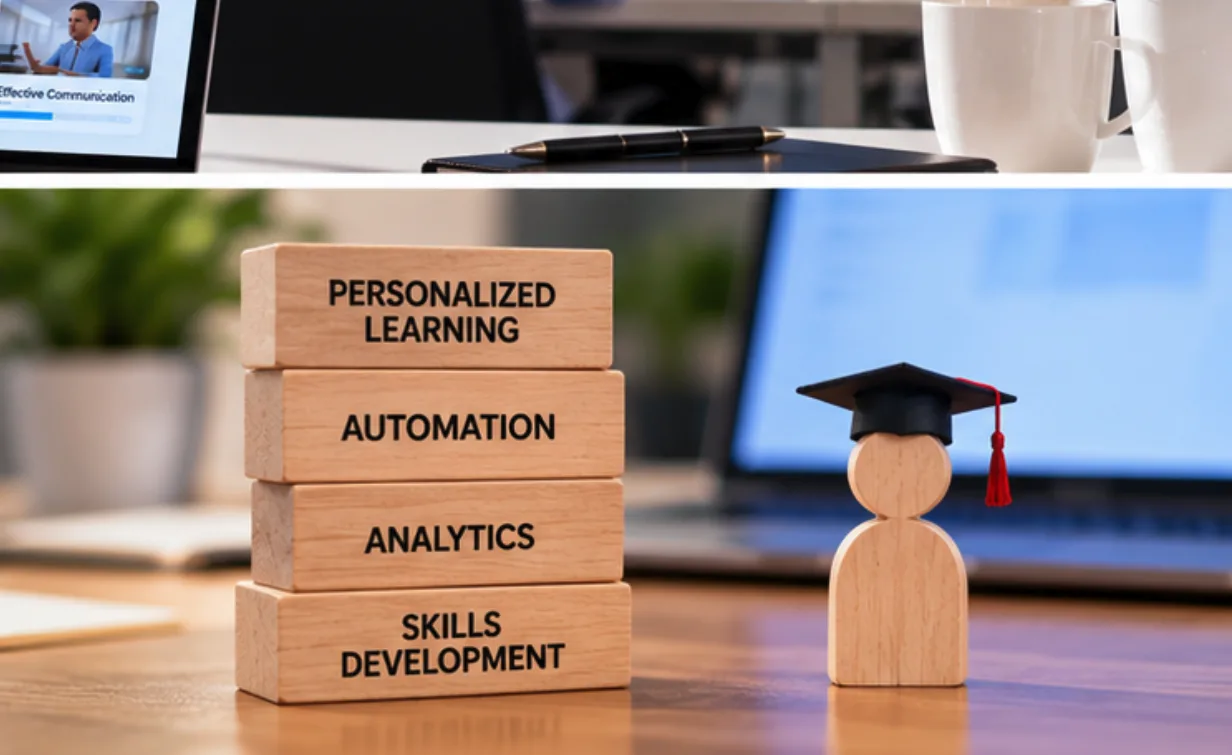
Traditional corporate training often assumes that employees with similar job titles require identical learning experiences. In practice, individuals enter organizations with different levels of experience, existing knowledge, career ambitions, and preferred ways of engaging with educational content.
Personalized learning seeks to address these differences by adapting training recommendations and development pathways to individual requirements. Rather than requiring every employee to complete the same sequence of courses, organizations can provide more targeted opportunities based on demonstrated competencies and identified development needs.
Artificial intelligence can support this process by analyzing assessment results, job requirements, and learning histories to recommend relevant materials. An experienced employee might be directed toward advanced technical training, while someone entering a new role could receive foundational lessons and practical guidance.
Adaptive learning technologies can also adjust the difficulty or sequence of content according to an individual’s progress. Employees who demonstrate proficiency may move more quickly through familiar topics, while those requiring additional support can receive supplementary explanations and exercises.
This approach reflects the broader role of learning management systems in supporting digital transformation, particularly as businesses seek more flexible ways to distribute knowledge and develop workforce capabilities.
Personalization should not, however, eliminate shared learning experiences. Collaborative workshops, mentoring relationships, and group discussions remain valuable for developing communication, leadership, and problem-solving skills.
An effective corporate learning strategy combines individualized development with opportunities for employees to exchange knowledge and learn from one another.
The Growing Role of Artificial Intelligence in Employee Development
Artificial intelligence is expanding the possibilities of corporate learning beyond automated course recommendations. AI-assisted tools can support content development, generate practice questions, summarize complex materials, and provide employees with interactive learning assistance.
For learning and development professionals, these capabilities may reduce the time required to prepare introductory materials or update existing courses. AI-powered assistants can also help employees locate relevant information when they encounter unfamiliar tasks.
Consider a company introducing a new software platform across several departments. Instead of relying entirely on lengthy training manuals, employees could access interactive guidance tailored to their responsibilities. AI-supported tools might explain common processes, provide practice scenarios, and direct users toward approved training resources.
Simulation-based learning is another promising area. Employees can practice responding to customer complaints, managing difficult conversations, or making operational decisions in controlled environments before applying those skills in real situations.
However, the quality of AI-generated training depends heavily on the accuracy of its underlying information and the oversight applied during development. Incorrect instructions, biased recommendations, and outdated materials can undermine learning outcomes.
Organizations must therefore establish appropriate review processes, protect employee information, and ensure that human experts remain involved in important training decisions.
AI is most useful when it strengthens the capabilities of trainers, managers, and employees rather than attempting to replace their judgment.
Balancing Digital Innovation With Human-Centered Learning
Although technology can improve training administration and content delivery, corporate learning ultimately depends on human motivation, organizational culture, and opportunities to apply knowledge.
Employees are more likely to value development programs when they understand how the training relates to their responsibilities and future opportunities. Managers also play an important role by encouraging participation, providing feedback, and helping employees apply newly acquired skills.
Digital platforms should support these relationships rather than create additional barriers. Complicated interfaces, excessive notifications, and poorly designed learning pathways can discourage engagement even when the underlying technology is sophisticated.
Accessibility is another important consideration. Employees may have different levels of digital confidence, language proficiency, and access to suitable devices. Organizations should ensure that training materials accommodate these differences and provide alternative support where necessary.
Data privacy also deserves careful attention. Learning platforms may collect information about employee participation, assessment results, and professional development. Businesses should communicate how this information will be used, restrict unnecessary access, and avoid using learning analytics for intrusive employee monitoring.
The most sustainable approach combines technological efficiency with transparent policies, supportive management, and a workplace culture that encourages continuous improvement.
Conclusion
The future of corporate learning will increasingly be shaped by the combined influence of automation, analytics, and personalization. These technologies offer organizations new ways to simplify training administration, understand workforce development needs, and provide more relevant learning experiences.
Automation can reduce repetitive tasks, analytics can support better decisions, and personalized learning can help employees develop capabilities that align with their individual needs and organizational priorities. Artificial intelligence adds further possibilities by making training content and support more adaptable.
Yet technology alone cannot create an effective learning culture. Businesses must continue investing in knowledgeable trainers, engaged managers, reliable educational content, and meaningful opportunities for employees to apply what they learn.
Organizations that successfully balance digital innovation with human-centered development will be better positioned to build adaptable workforces and respond to the evolving demands of modern business.