
This phenomenon is sometimes described as the “kitchen sink syndrome”: every initiative, request, and executive idea is thrown into the portfolio without rigorous selection. The result is a growing backlog of “top-priority” projects that compete for the same finite resources, fragment attention, and dilute strategic impact.
When priorities disappear, execution slows
A portfolio without explicit prioritization mechanisms creates a cascade of operational and organizational problems. Resources become over-allocated, with key experts assigned to multiple initiatives simultaneously. Instead of flow, bottlenecks emerge. Teams context-switch between projects, decision latency increases, and delivery dates slip almost invisibly – until delays become systemic rather than incidental.
At the same time, the organization begins to lose strategic focus. Without a shared understanding of which initiatives matter most, effort drifts toward what is loudest or most urgent, not what is most valuable. Long-term, high-impact programs are postponed in favor of short-term firefighting. Management becomes reactive, operating in a permanent state of escalation rather than deliberate execution.
The human cost is equally significant. Overloaded teams with no sense of progress experience declining morale and reduced ownership. When people cannot see how their work contributes to a coherent goal, productivity drops and quality erodes. Eventually, the portfolio delivers less than promised – not because teams failed, but because the system set them up to fail.

The real root cause: weak prioritization and governance
It is tempting to attribute portfolio inefficiency to insufficient capacity. In reality, the deeper issue is a lack of disciplined prioritization supported by governance. Without clear senior-level decisions about what the organization will not do, portfolios expand endlessly. Each department or executive sponsor pushes their own initiatives, creating internal competition rather than collaboration.
In such environments, opportunities for synergy are missed. Projects that could share resources, data, or outcomes are managed in isolation. Innovation slows, costs rise, and the organization’s reputation for reliable delivery suffers – both internally and externally.

Project prioritization: criteria that actually work
Effective PPM requires more than intuition or political negotiation. Prioritization must be explicit, transparent, and repeatable. Mature organizations evaluate initiatives against a small but robust set of criteria that connect execution to strategy and capacity. These typically include strategic alignment, expected business value, risk and complexity, and resource feasibility within the current portfolio context.
What matters is not the number of criteria, but their consistent application. Prioritization loses credibility when rules change depending on the sponsor. When teams trust the process, difficult trade-offs become possible – and focus returns to the portfolio.

From chaos to control with integrated PPM systems
Technology plays a critical role in restoring order, but only when it reinforces governance rather than replacing it. Modern PPM platforms enable organizations to visualize the entire portfolio, making trade-offs visible and measurable. Executives can see how resource allocation, timelines, and dependencies interact across initiatives instead of reviewing projects in isolation.
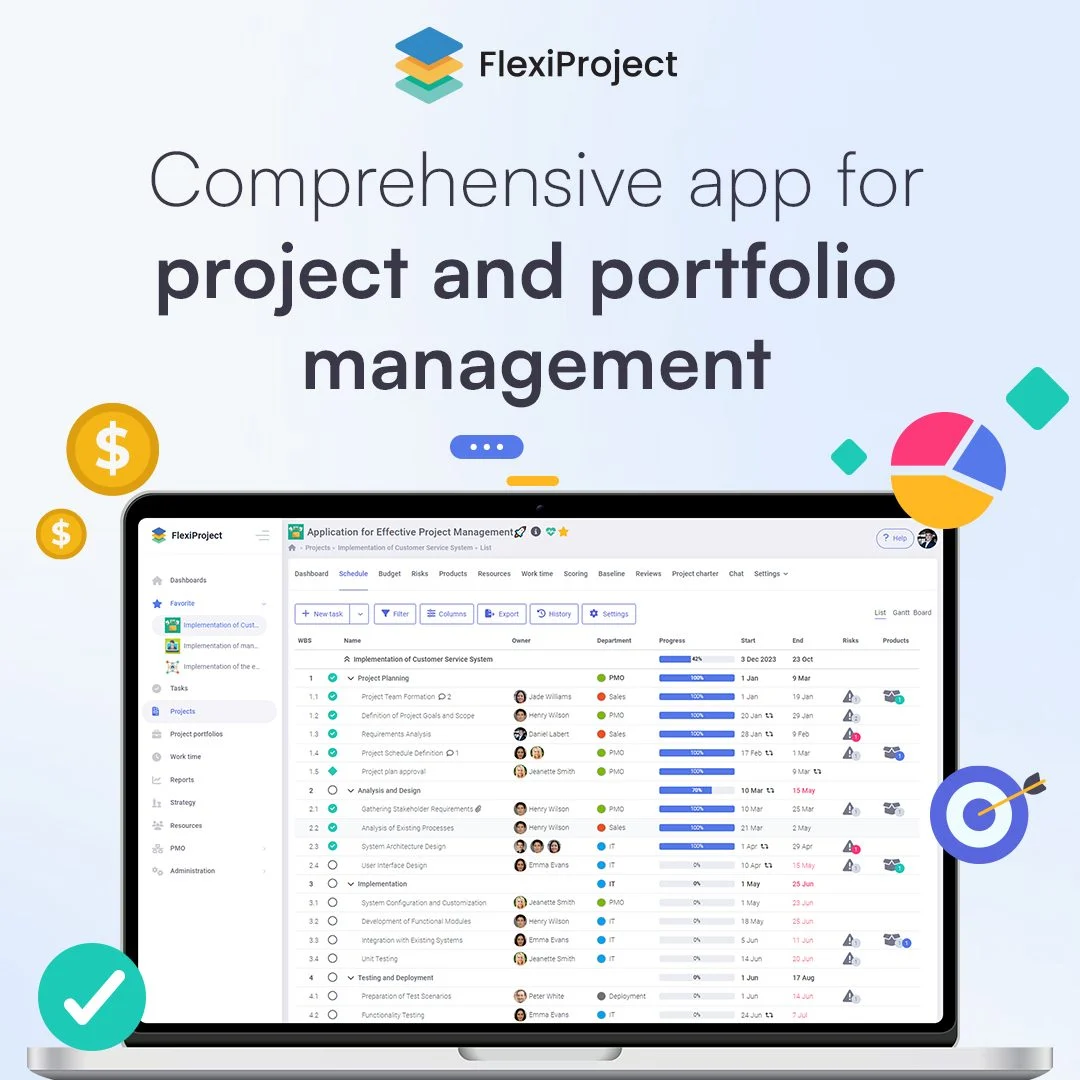
Solutions such as FlexiProject support this shift by combining portfolio-level prioritization with operational execution. By linking strategic objectives to programs and projects, organizations gain a single source of truth for decision-making. Capacity constraints, risk exposure, and progress against milestones become transparent, enabling proactive rather than reactive management.
Automated reporting further reduces noise. Instead of manually consolidating status updates, leadership receives consistent, real-time insights that support timely intervention. This allows managers to focus on value delivery, not administrative overhead.
Sustainable execution is a leadership choice
Ultimately, Project Portfolio Management is not a tooling problem – it is a leadership discipline. Clear priorities require courage: the willingness to say no, to pause initiatives, and to concentrate resources where they generate the highest return. Organizations that embrace this mindset move faster not by doing more, but by doing less – deliberately.
When priorities are explicit, teams regain focus, execution stabilizes, and the portfolio once again becomes a strategic asset rather than an operational liability. In a market defined by speed and adaptability, prioritization is not a constraint – it is the engine of sustainable performance.