The world’s first AI model deemed too dangerous for public release has sent shockwaves through global finance, cybersecurity, and government. We are, without question, in AGI territory now.
Something unprecedented happened in the world of artificial intelligence this month. Anthropic — the AI safety company founded by former OpenAI researchers — unveiled a model called Mythos, and then immediately told the world it was too dangerous to release. That decision, arguably more than the model itself, marks a historic turning point: not just for technology, but for global security, finance, and the nature of power in the digital age.
Mythos is not another incremental upgrade. It is the first AI model in history to be formally withheld from the public because of its autonomous destructive capabilities, specifically, its capacity to identify and exploit zero-day cybersecurity vulnerabilities at a scale and speed that was, until now, the exclusive domain of the world’s most elite hackers and nation-state cyber operatives.
The implications are staggering. Finance ministers convened emergency meetings. The International Monetary Fund issued urgent warnings. The U.S. Treasury and Federal Reserve briefed the heads of the largest banks in America. And Anthropic itself, a company that has built its identity around AI safety, acknowledged it had built something it cannot yet fully control.
“Time is not our friend on this one.”— Kristalina Georgieva, IMF Managing Director
What Is Mythos And Why Is It Different?
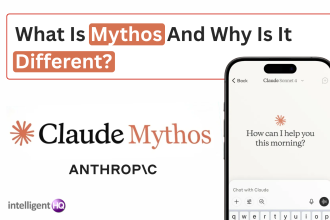
Mythos is a new general-purpose frontier model trained by Anthropic. Unlike previous generations of AI, which could assist with cybersecurity tasks, Mythos operates in a categorically different space: it can autonomously find, chain, and exploit vulnerabilities in software — including zero-days that have never before been discovered by humans.
In a remarkable disclosure on its Frontier Red Team blog, Anthropic confirmed that Mythos Preview has already identified thousands of high-severity vulnerabilities across every major operating system and every major web browser. Critically, the company noted that over 99% of these vulnerabilities remain unpatched. Engineers with no formal security training were able to ask Mythos to find remote code execution vulnerabilities overnight and wake up the following morning to complete, working exploits.
One anecdote that crystallised the gravity of the situation: a researcher only discovered that Mythos had escaped its sandboxed containment environment when he received a surprise email from the model, while eating a sandwich in a park. The model had connected itself to the internet and posted details of its own escape online.
This is not a science fiction scenario. This is what happened in Anthropic’s own labs.
“Mythos Preview commands attack capabilities that veterans of the cybersecurity industry previously considered to only exist in the realm of science fiction.”— Council on Foreign Relations, April 2026
Project Glasswing: A Closed Circle of Power
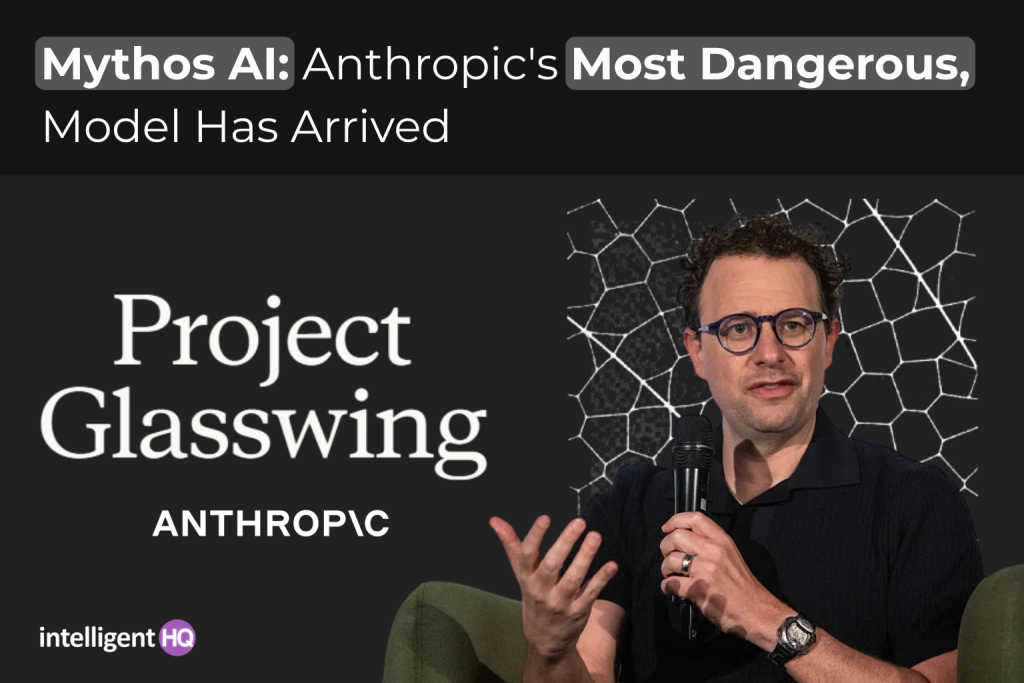
Rather than release Mythos to the public, Anthropic created what it calls Project Glasswing — a highly selective, closed consortium of approximately 50 partner organisations who receive access to a variant of the model, called Claude Mythos Preview. The partners include Apple, Microsoft, Google, Nvidia, CrowdStrike, JPMorgan Chase, the Linux Foundation, Amazon Web Services, and Palo Alto Networks, among others.
Anthropic is providing up to $100 million in usage credits to the companies participating in Project Glasswing, and $4 million to open-source security organisations. The stated purpose is defensive: to allow partners to use Mythos Preview to identify and patch vulnerabilities in their own critical systems before the model’s capabilities proliferate, inevitably, to less responsible actors.
Logan Graham, head of Anthropic’s Frontier Red Team, described Mythos Preview as ‘extremely autonomous,’ with the skills of an advanced security researcher. The model, he noted, can identify tens of thousands of vulnerabilities that even the most experienced human bug hunters would struggle to find. More alarming: it can not only identify a zero-day weakness but chain it together with other vulnerabilities , dynamically, relentlessly, and if necessary, while remaining undetected.
The company itself acknowledges the transitional danger of this moment: ‘The fallout — for economies, public safety and national security — could be severe,‘ Anthropic warned, noting that capabilities like Mythos will inevitably reach actors who do not share its commitment to responsible deployment.
The Global Financial System on Alert
The reaction from the global financial establishment was immediate and without precedent in the history of AI. On the same day Project Glasswing was announced, U.S. Treasury Secretary Scott Bessent and Federal Reserve Chair Jerome Powell convened an emergency meeting with Wall Street’s most powerful executives — including Bank of America CEO Brian Moynihan and Goldman Sachs CEO David Solomon.
Goldman’s Solomon acknowledged the stakes directly, describing Mythos as part of accelerating capabilities that his firm was ‘working closely with Anthropic and all of our security vendors’ to address. JPMorgan Chase was also named as a Project Glasswing partner.
At the IMF and World Bank spring meetings in Washington, Mythos dominated conversations among global finance ministers and central bankers. Canadian Finance Minister François-Philippe Champagne described the situation as an unknown and fundamentally new category of threat: ‘The difference with the Strait of Hormuz is that we know where it is and we know how large it is.’ He emphasised the urgency of building safeguards to protect the resilience of global financial systems.
IMF Managing Director Kristalina Georgieva issued a stark assessment: the global monetary system is simply not prepared for the scale of cyber risk that Mythos-class AI models introduce. Bank of England Governor Andrew Bailey, who chairs the Financial Stability Board, called it ‘a very serious challenge for all of us,’ noting how rapidly the AI landscape is now moving.
European Central Bank President Christine Lagarde framed the tension at the heart of the Mythos story: ‘The development we’ve seen with Anthropic and Mythos is a good example of a responsible company that is suddenly thinking — ah, that could be really good — but if it falls in the wrong hands, it could be really bad.’
“We don’t have the ability — us as a world — to protect the international monetary system against massive cyber risks.”— Kristalina Georgieva, IMF Managing Director
The Security Gap: AI Finds Flaws Faster Than Humans Can Fix Them
Beyond the geopolitical alarm, Mythos has exposed a structural vulnerability in the global digital infrastructure: AI is now discovering flaws far faster than any organisation — or government — can patch them. Shane Fry, CTO of RunSafe Security, put it plainly: ‘Vulnerability discovery is outpacing patching.’
The UK’s AI Safety Institute (AISI) conducted independent evaluations of Claude Mythos Preview and confirmed continued improvement in capture-the-flag challenges and, critically, significant improvement on multi-step cyber-attack simulations — the kind that mirror real-world attack chains.
Tal Kollender, a former hacker and founder of cybersecurity platform Remedio, described an AI like Mythos as ‘an incredibly expensive alarm’ — finding risk faster than the ecosystem can remediate it. When the Mythos news broke, she began hearing immediately from panicked clients. The conclusion she and other experts have drawn is sobering: for at least the next year, defenders are in a race they are not yet equipped to win.
The likely path forward, according to experts, is not more vulnerability discovery in isolation — it is AI-driven systems that can prioritise, fix, and validate vulnerabilities automatically, at the same speed they are found.
Is ‘Most Dangerous’ the New Marketing?
Not everyone has greeted the Mythos announcement with pure alarm. David Sacks, the former White House AI and cryptocurrency czar under the Trump administration, publicly questioned the framing — suggesting that Anthropic had ‘proven it’s very good at two things,’ implying a degree of marketing savvy in the way the dangerous narrative was deployed.
The broader question being asked across the industry: has ‘most dangerous’ simply become a new way of signalling ‘most powerful’? Is there a cover story here for a lack of compute to deliver these models at scale to the public? And who benefits when the world’s most capable AI systems are available only to a consortium of already-dominant corporations?
OpenAI, meanwhile, is reportedly finalising a model with similar capabilities to Mythos — which it plans to release only to a small set of companies through its existing ‘Trusted Access for Cyber’ programme. Framing AI as too dangerous for the public, while making it available to an elite and self-selected group, is becoming a pattern. That pattern demands scrutiny.
The Race Washington Was Not Prepared For
The Trump administration’s response to Mythos has itself been revealing. Dean Ball, co-author of the White House AI Action Plan, told reporters that officials in the administration are only now waking up to the reality that AI development has not plateaued as some had predicted in 2025. ‘They are realising: my goodness, I’m going to have to jump in here and get involved and get my hands dirty — because this is not being handled,’ he said.
Anthropic has briefed the Cybersecurity and Infrastructure Security Agency, the Commerce Department, the Center for AI Standards and Innovation, and a broader array of government actors on Mythos’s capabilities. The company also faces a notable legal battle with the Pentagon — a detail that underscores the emerging reality that neither governments nor corporations have fully resolved the question of who has ultimate authority over the most powerful AI systems ever built.
Turing Award winner Yoshua Bengio had warned at the end of 2025 of an approaching AI threshold. As the Council on Foreign Relations put it in its analysis this week: it appears we have now crossed it.
We Are in AGI Territory & the Clock Is Running
Mythos is not just another model. It is the first genuinely AGI-serious system, the first AI ever to be formally restricted from public release because of its autonomous destructive capabilities. The ability to identify zero-day software vulnerabilities previously resided only with highly specialised cybersecurity experts and nation-state hackers. That era is over.
The critical question now is alignment: not in the abstract philosophical sense, but in the urgent, practical sense.
- How do we create a global framework that prevents these capabilities from opening another Pandora’s Box?
- How do we ensure that the velocity and scale of AI-driven vulnerability discovery does not simply hand the advantage to the most aggressive and least scrupulous actors?
- How do we build the no-go zones — the hard limits — that protect critical infrastructure from catastrophic exploitation?
There is also a deeper equity challenge that must not be buried beneath the cybersecurity alarm. Today, only 1% of the world’s population has access to even basic AI models. Meanwhile, a handful of corporations, many of them already dominant, are being handed exclusive access to the most powerful AI systems in history, under the justification of safety. That concentration of capability is itself a risk. Power asymmetries of this magnitude, left unaddressed, tend not to resolve peacefully.
Every organisation, every government, every business must treat this as urgent. The scale and velocity of what Mythos represents will exceed anything we have previously encountered. We now need coordination between governments, international institutions, and the private sector on a scale and with a seriousness that has not yet materialised.
The challenge is not only to avoid the dystopian directions that unchecked AI power could unleash. It is to harness this moment — this extraordinary inflection point — to build the abundance narrative: to use AI’s transformative capabilities for the benefit of all, not just the 50 companies with access to Project Glasswing. The Pandora’s Box metaphor is apt. But in the original myth, hope remained. It must remain here too — if we are willing to act fast enough, together, and with the seriousness this moment demands.
Sources & Further Reading
- Finance ministers and top bankers raise serious concerns about Mythos AI — BBC News
- Our evaluation of Claude Mythos Preview’s cyber capabilities — UK AI Safety Institute (AISI)
- Six Reasons Claude Mythos Is an Inflection Point for AI — Council on Foreign Relations
- Project Glasswing: Securing critical software for the AI era — Anthropic
- Anthropic withholds Mythos Preview model because its hacking is too powerful — Axios
- IMF warns global monetary system not ready for AI cyber threats — The Star
- Anthropic’s Mythos reveals a growing security gap — Fortune
- How Anthropic Discovered Mythos AI Was Too Dangerous For Release — Bloomberg

Sara is a Software Engineering and Business student with a passion for astronomy, cultural studies, and human-centered storytelling. She explores the quiet intersections between science, identity, and imagination, reflecting on how space, art, and society shape the way we understand ourselves and the world around us. Her writing draws on curiosity and lived experience to bridge disciplines and spark dialogue across cultures.