Digital tools like Discord and e-voting are revolutionising democracy now. How technology is dismantling traditional politics, empowering citizens to vote directly on laws and even choose leaders online. Is this the rise of true digital direct democracy?
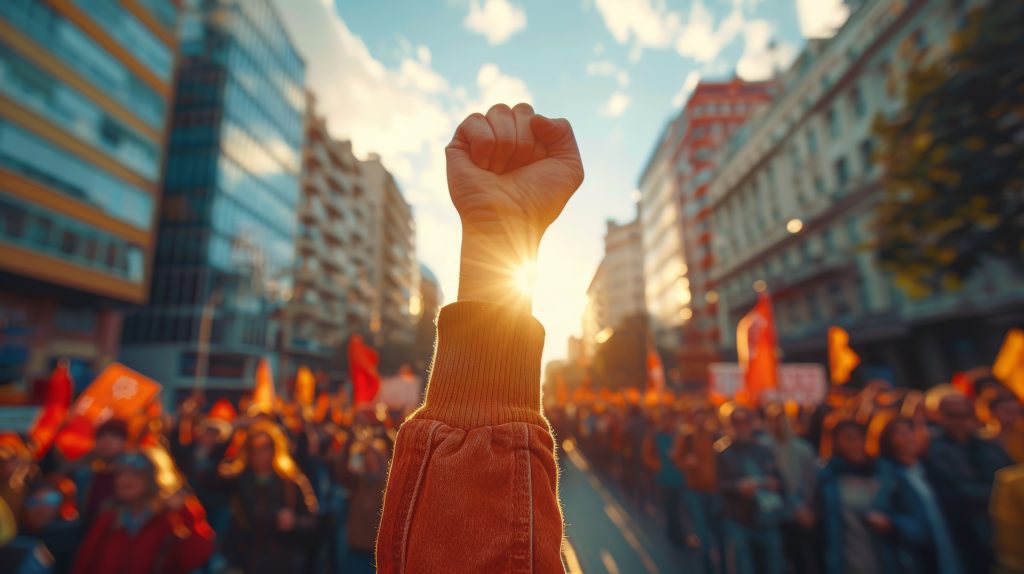
The concept of direct democracy has long been heralded as the most authentic form of political governance. In a direct democracy, citizens have the power to directly decide on policies, laws, and leaders, without the mediation of elected representatives.
This form of democracy promises an ideal where the people’s will is fully represented in governance. However, in the modern world, the practical implementation of direct democracy is complex and fraught with challenges, especially in large, diverse nations. Today, in the digital age, technology is opening new avenues for the practical implementation of direct democracy.
But the question remains: Can technology truly bring people closer to power in the way that direct democracy envisions?
What is direct democracy?
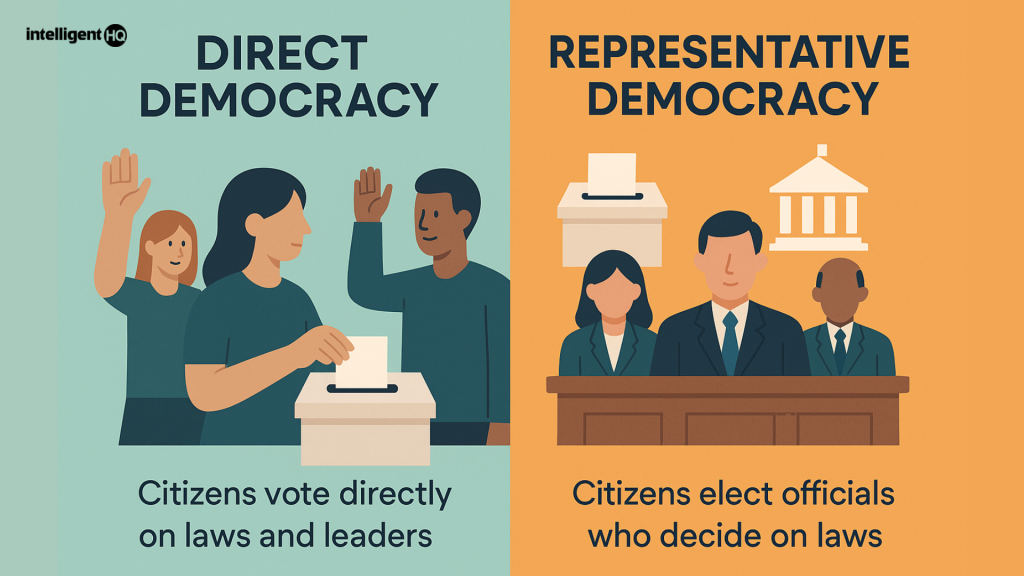
Before delving into the role of technology, it is important to first understand the concept of direct democracy. In a traditional direct democracy, citizens do not vote for representatives to make decisions on their behalf. Instead, they themselves directly vote on laws, policies, and even executive decisions.
This is distinct from the representative democracy that dominates most modern democracies, where elected officials enact policies that reflect the public’s will.
Historically, direct democracy has been practised in various forms, most notably in ancient Athens, where male citizens gathered to vote on decisions affecting the state. Though this Athenian democracy was far from inclusive by modern standards, it laid the groundwork for future discussions on direct participation.
The modern form of direct democracy is often exemplified by referendums, initiatives, and recalls, where citizens have the power to vote on specific issues or remove elected officials from office before their term ends.
The case for direct democracy
Advocates of direct democracy argue that it enhances political engagement, ensures that policies reflect the true will of the people, and holds officials more accountable. In systems where representatives often act in their own interests or those of a select few, direct democracy is seen as a mechanism that can counterbalance elitist tendencies. Proponents also point to the transparency and inclusiveness that direct democracy can offer, allowing citizens to directly influence the laws that govern their lives.
The rise of digital democracy
In the 21st century, technology is rapidly transforming how we engage with politics. Social media, online voting systems, and e-petitions are all making it easier for individuals to influence political decisions. The introduction of the internet, particularly through social media platforms, has revolutionised how we participate in political discourse.
Citizens can now organise, debate, and mobilise on issues with greater ease than ever before. Technology has the potential to make direct democracy more accessible and practical, even in large, diverse nations where traditional methods of direct participation may seem impractical.
But how far can technology really bring us in the pursuit of direct democracy?
E-democracy: The digital infrastructure for direct democracy
E-democracy refers to the use of digital tools to engage citizens in the democratic process. This can take many forms, from e-voting to online petitions, as well as virtual town halls and debates. The goal is to create an environment where citizens can easily voice their opinions and directly influence policy.
E-Voting:
One of the most significant technological developments that could facilitate direct democracy is e-voting. Traditional voting systems are time-consuming, require physical presence, and often come with high costs. E-voting, however, allows individuals to vote online from the comfort of their homes, making it easier to participate in referendums and elections.
Countries such as Estonia have already implemented successful e-voting systems, enabling citizens to vote online in national elections. The process is secure, transparent, and convenient, and it has been heralded as a model for other nations to follow. However, while e-voting can increase participation, it also raises concerns about security and the potential for cyberattacks. Ensuring the integrity of digital elections is paramount, and trust in the technology must be built through rigorous testing and transparency.
Online Petitions and Referendums
In many countries, online petitions and e-referendums have become powerful tools for citizens to influence policy. Platforms like Change.org allow people to create petitions that can quickly garner thousands, or even millions, of signatures. These petitions can then be used to push governments to take action on various issues. Similarly, e-referendums allow citizens to vote on specific pieces of legislation, similar to the traditional referendum process but without the logistical constraints.
For instance, in Switzerland, one of the most prominent examples of direct democracy, citizens have the right to propose new laws through referendums and initiatives. Imagine if such a process could be digitised, enabling people to vote directly on national issues without needing to gather in physical locations. Digital referendums could lead to a more fluid and immediate democratic process, allowing for a more responsive and engaged electorate.
Social Media:
Social media platforms like Twitter, Facebook, and Instagram have become key tools for political engagement. They allow citizens to engage in real-time discussions, share opinions, and organise protests or campaigns. The Arab Spring is a prime example of how social media was used to mobilise people for political change. While not a direct form of democracy, social media can amplify the voices of the people, pushing politicians to act on issues that are important to the public.
Moreover, social media can serve as a valuable platform for deliberative democracy, where citizens can engage in debates and discussions before making a decision. Through moderated platforms, people can present arguments, counterarguments, and come to a collective consensus on important issues. This type of discourse can promote informed decision-making and foster greater participation in democratic processes.
Case study: Nepal’s Gen Z chooses a leader via Discord
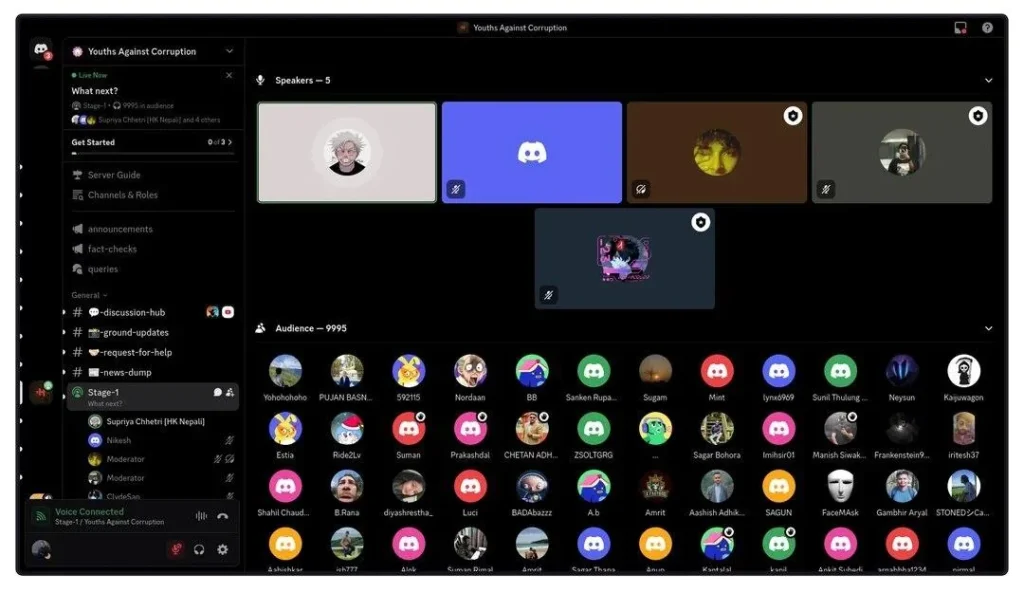
In September 2025, Nepal plunged into crisis after corruption scandals led to massive youth-led protests. Waves of unrest forced the resignation of the sitting government, leaving a political vacuum at a critical juncture. Traditional politics had alienated much of the younger generation, who felt their voices were drowned out in conventional decision-making.
Amid internet bans and social media crackdowns, thousands of young Nepalis found a digital refuge in Discord, an app more often associated with gaming than governance. A server dubbed “Youth Against Corruption,” rapidly swelled to over 130,000 members, becoming a virtual parliament for frustrated citizens.
Deliberation & debate
Discord’s blend of chat, voice, and video functionalities allowed for energetic debate on everything from job creation to government accountability. Moderators kept discussions on track, created fact-checking sub-channels to dispel misinformation, and spotlighted pressing topics, mirroring many elements of a legislative assembly in a uniquely digital format.
The Election
As demands grew for an interim leader to oversee fresh elections, the Discord community took an unprecedented leap: holding a live, server-wide poll. Nominees ranged from grassroots activists to former government officials. After several rounds of discussion and voting, participation was open, direct, and transparent, former Chief Justice Sushila Karki emerged as the clear consensus choice, making her both Nepal’s first woman Interim Prime Minister and the first major national leader chosen in such a fashion.
Impact and Lessons
The experiment was not without controversy. Critics noted the potential for outside influence, the anonymity of digital participation, and the technical challenge of ensuring votes represented Nepalis rather than global netizens. Nevertheless, the symbolism was profound. Disconnected from traditional institutions, Nepal’s youth proved it was possible to push beyond street protests and directly shape the nation’s leadership—using a gamers’ chatroom as a makeshift but powerful tool of democracy.
The challenges of digital direct democracy
While technology holds immense promise for enhancing direct democracy, it is not without its challenges.
Digital divide:
One of the most significant challenges facing the digitalisation of democracy is the digital divide. Not everyone has equal access to the internet or digital tools. In rural areas or less developed regions, limited access to the internet can prevent certain populations from participating in online voting or digital referendums. This disparity could lead to unequal representation, where certain groups are underrepresented in decision-making processes.
Moreover, older generations or those who are not tech-savvy may find it difficult to engage with digital platforms. While the younger generations are more likely to be comfortable with digital tools, it is crucial to ensure that these platforms are accessible to everyone, regardless of age, background, or location.
Security and privacy concerns
Digital platforms are vulnerable to hacking, manipulation, and misinformation. The risk of cyberattacks is a significant concern for digital democracy. If voting systems are compromised, the legitimacy of elections and referendums could be called into question. Similarly, privacy is a concern; citizens may hesitate to vote on digital platforms if they fear that their personal data will be exploited or used against them.
To mitigate these risks, it is essential for governments and organisations to implement strong security protocols and ensure that voters’ personal data is protected. Transparency is also vital: the public must trust that the digital tools used for voting and engagement are secure, unbiased, and free from manipulation.
Misinformation and disinformation
The rise of social media has also brought with it an increase in misinformation and disinformation. False information can spread quickly online, potentially swaying public opinion and influencing political decisions. In a digital direct democracy, the risks of misinformation could be even more pronounced. False claims, fabricated news stories, or targeted disinformation campaigns could distort the democratic process.
To combat this, governments and tech companies must work together to create systems that verify the information being shared. Media literacy education is also essential to equip citizens with the tools they need to critically evaluate the information they encounter online.

The potential of a digital direct democracy
Despite these challenges, technology has the potential to make direct democracy more accessible, inclusive, and transparent. By leveraging the power of the internet, social media, and e-voting, we can empower citizens to directly engage with the political process, ensuring that their voices are heard.
In the digital age, we can imagine a world where direct democracy is no longer a utopian ideal, but a practical reality. With the right safeguards in place, technology can bring people closer to power, allowing them to actively shape the policies that affect their lives. However, for this vision to become a reality, we must address the challenges of access, security, and misinformation, and ensure that digital tools are used responsibly and equitably.
Final thoughts
The idea of direct democracy, where citizens directly influence political decisions, is an ideal that has existed for centuries. With the rise of technology, there is a new opportunity to bring this ideal into the digital age. E-voting, online petitions, and social media platforms can facilitate greater participation, making it easier for citizens to engage in decision-making processes.
However, to realise the full potential of digital direct democracy, we must ensure that technology is accessible, secure, and free from manipulation. By overcoming these challenges, we can create a system where technology truly brings people closer to power, making democracy more inclusive, participatory, and responsive.

Himani Verma is a seasoned content writer and SEO expert, with experience in digital media. She has held various senior writing positions at enterprises like CloudTDMS (Synthetic Data Factory), Barrownz Group, and ATZA. Himani has also been Editorial Writer at Hindustan Time, a leading Indian English language news platform. She excels in content creation, proofreading, and editing, ensuring that every piece is polished and impactful. Her expertise in crafting SEO-friendly content for multiple verticals of businesses, including technology, healthcare, finance, sports, innovation, and more.