In the UK, all employers have a legal duty to protect their staff against harm in the workplace. There are also good ethical and financial reasons to take accident prevention seriously: a workforce can quickly become demoralised and unproductive when it doesn’t feel safe – and that’s before we even consider the risk of absenteeism.
It’s worth focusing our attention on the threats that are most likely to cause us harm. Let’s take a look at some of the more common accidents at work.
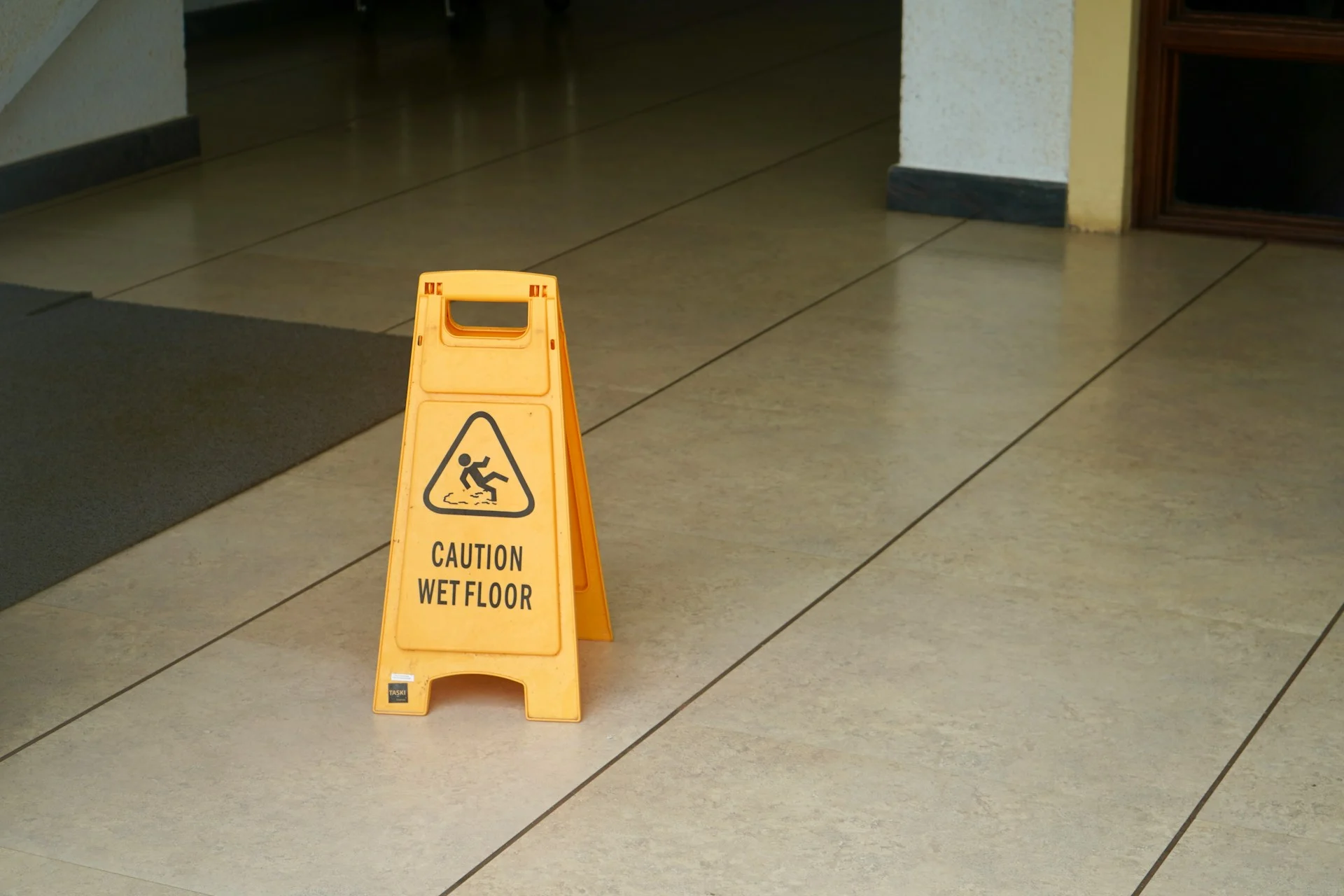
Slips, Trips, and Falls: The Most Common Culprits
According to data from the Health and Safety Executive, the most common causes of injury at work are ‘slips, trips, and falls’. These are injuries caused by the surface underfoot. These include wet or icy floors, loose cables and clutter, and stepladders.
Often, a hazard only becomes dangerous when it isn’t visible. As such, clear lighting throughout the workplace is essential. Staff should be trained to spot and deal with slip or trip hazards – with spillages being a common culprit.
Lifting Injuries: A Strain on the Body
The second most common category of injury are those that involve lifting and carrying heavy objects. Often, these injuries stem from a lack of proper risk assessment. An employee might try to lift a load that’s beyond their capabilities. In other cases, the injury stems from a lack of proper technique.
Training often makes a key difference. You might lift a load using special machinery, rather than your bare hands. Or, you might enlist others to help you lift a load.
Cuts, Burns, and Other Contact Injuries
If you’re working with sharp objects, or hot ones, then there’s a risk of you being harmed by them. This danger is particularly pressing in workshops and factories, but it’s also worth considering on a construction site.
The right techniques and tools are often essential. Workers should be trained to reduce the risk of things like table saw kickback, for example. They should also have access to safety equipment, like gloves, hard hats, and goggles.
Creating a Culture of Safety: A Shared Responsibility
The most effective piece of safety equipment in any given workplace, of course, is the human brain. When workers are provided with the skills they need to spot dangers and deal with them, rates of accidents will naturally decline.
Getting everyone into the right habits when it comes to precautions, safety briefings, and reporting near-misses often means instilling the right culture. Lead by example, incentivise safe practices, and disincentivise the dangerous ones!