Running two or more ABA clinic locations means software gaps get expensive fast, inconsistent data, billing errors across sites, scheduling conflicts that eat clinical hours. The best ABA software for multi-location practices holds all of that together without forcing staff to juggle five different tools. Below are five platforms worth considering, ranked by overall fit for practices managing clinical and operational demands across sites.
Managing multiple ABA locations demands the right tools
Coordinating care across clinics isn’t just a scheduling headache. It touches credentialing, billing, supervision ratios, data integrity, and compliance, all at once. Practices that get this right tend to share one trait: they picked software built for the operational weight of ABA, not repurposed from general healthcare or, worse, generic project management tools. Whether a practice runs two sites or twelve, the right platform needs to handle real-time data synchronization, multi-site billing, and supervision workflows without requiring a full-time IT team to hold it together.
1. Theralytics
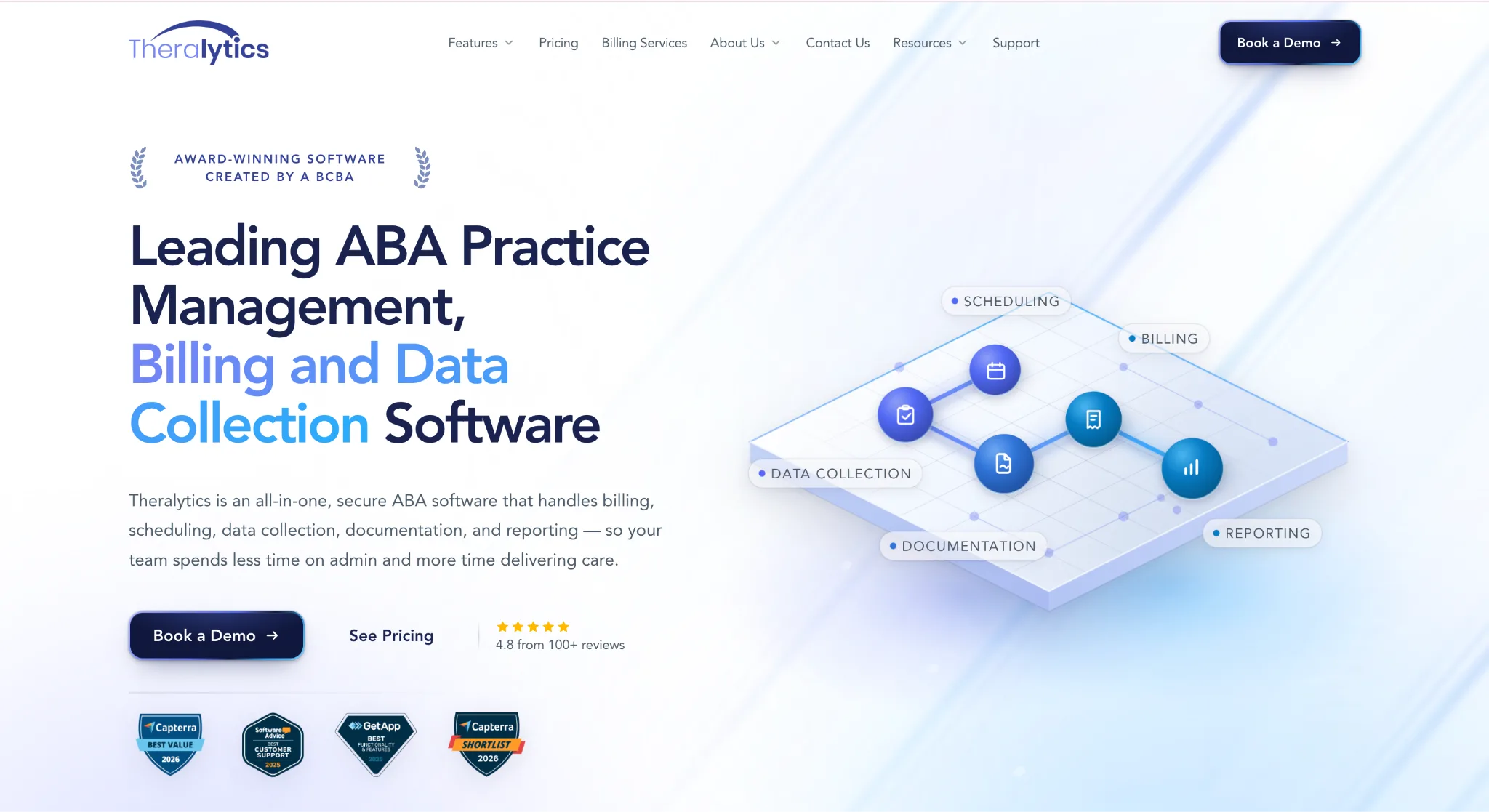
What Makes Theralytics Well Suited to ABA Practices? Theralytics , ABA billing software is designed around the clinical and operational requirements of ABA practices, bringing scheduling, data collection, billing, and parent portals into one platform. Session-level data and operational information update in real time, giving BCBAs and supervisors access to current information without relying on disconnected systems. Automated graphing and progress monitoring reduce manual documentation, while AES-256 encryption and SOC 2 Type II certification support the security of data at rest and in motion.
What Makes Theralytics Stand Out for ABA Data Collection Software? Theralytics addresses the separation of clinical and administrative data that can make it difficult for ABA practices to maintain consistent records and monitor progress. By connecting session documentation, billing, and progress data within one platform, practices can reduce redundant documentation and access the information needed to support clinical and operational decisions.
The Verdict from Users: Feedback highlights the connection between clinical and administrative workflows as a key strength of the platform. Third-party integrations may require custom API work, but Theralytics provides a centralized environment for managing ABA data collection, billing, scheduling, and progress monitoring.
2. Raven Health
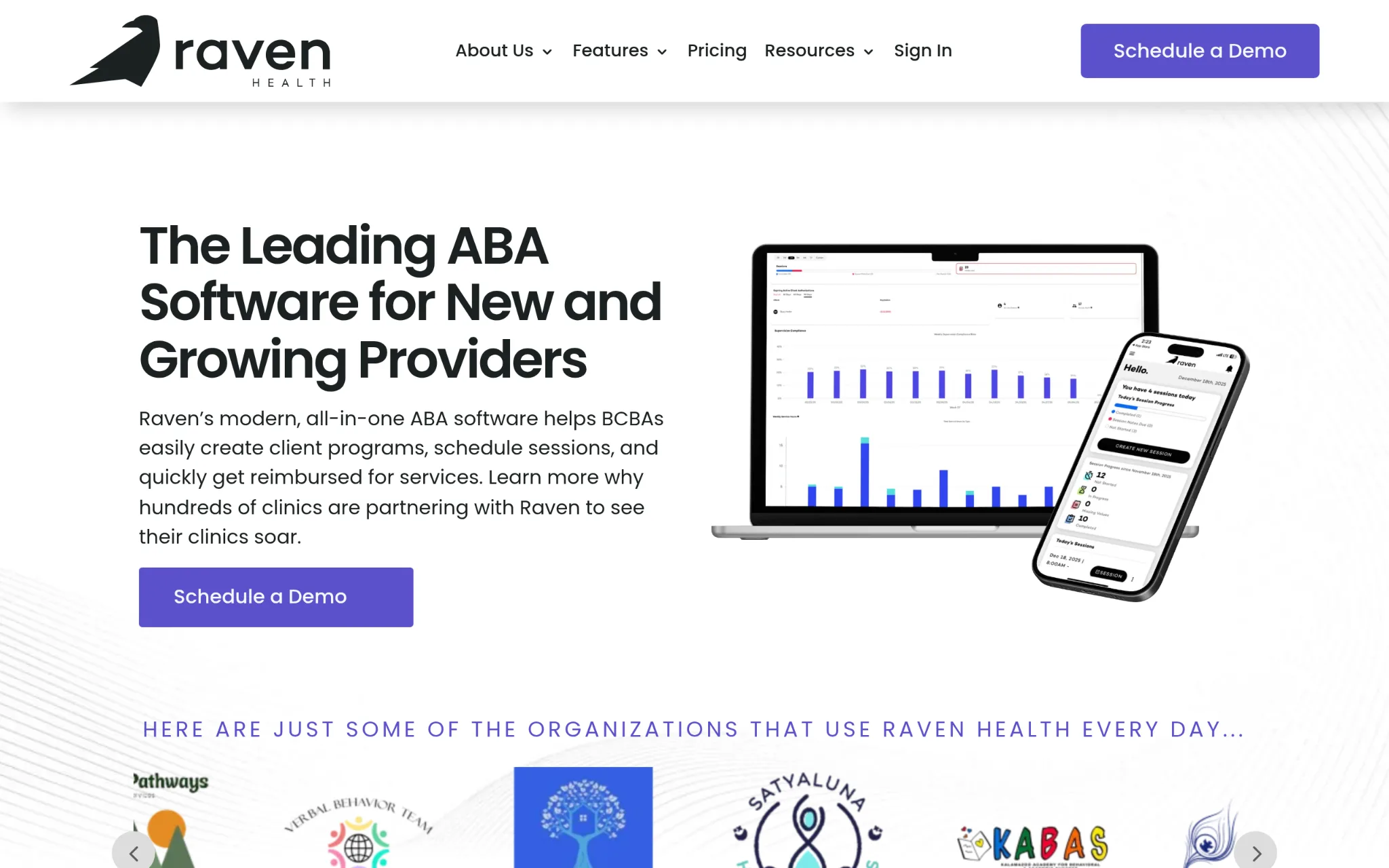
What Competencies Help Raven Health Grow?
Founded in 2020, Raven Health has moved quickly to build a platform that clinicians actually want to use. Their design philosophy starts with healthcare provider requirements, not technology assumptions, and the result is an interface most users pick up in under 15 minutes (which matters a lot when you’re training new RBTs). The platform supports offline data collection, which solves a real problem for providers working in home or community settings without reliable internet. Their Managed Billing Bundle charges only a percentage of collected claims, so the revenue model works with client success.
What Makes Raven Health Stand Out for ABA Data Collection Software?
Raven Health tackles the steep learning curve that typically slows software adoption in ABA clinics by building mobile-first and keeping the interface genuinely intuitive for frontline staff. That design choice has a direct effect on how consistently RBTs complete session notes on time.
The Verdict from Users:
Client implementations like Crescent Bloom and Pair Tree Autism Services give a real-world picture of what the platform delivers operationally. The mobile-first approach and fast staff training come up repeatedly as reasons practices choose Raven over older platforms. That kind of practical usability is hard to fake when the reviews are this consistent.
3. Ensora Health
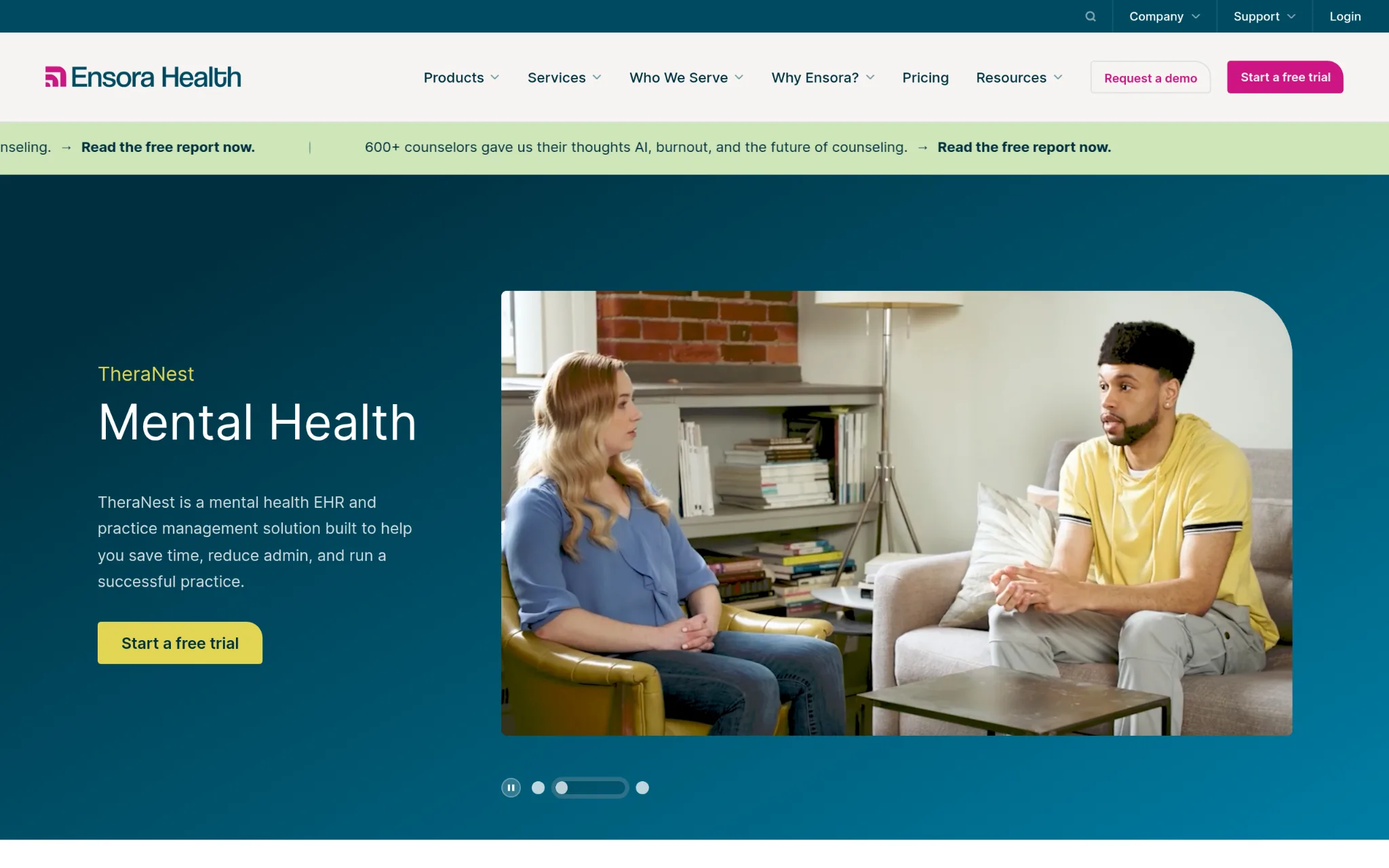
What Problem Does Ensora Health Solve?
Ensora Health runs two separate platforms, TheraNest for mental health and Fusion for rehabilitation therapy, which is a smart structural choice for serving two genuinely different clinical workflows. They cover EHR, practice management, and revenue cycle management across both, serving over 200,000 individual providers and 28,000-plus practices. Pricing starts at $29 per month with no setup fees, which puts them in a different category from enterprise-first tools. For solo practitioners or smaller practices, that entry point matters a lot.
What’s Ensora Health’s Edge in Top ABA Practice Management Platforms?
Ensora Health solves the challenge of providers needing specialty-specific EHR workflows without paying enterprise-level pricing or dealing with a one-size-fits-all system. Their dual-platform approach means mental health and rehabilitation practices each get tools shaped around their actual clinical needs, not a repurposed general platform.
The Verdict from Users:
Ensora Health holds a G2 Leader position in mental health software, and Fusion earned G2 Top 50 Healthcare Software recognition for rehabilitation therapy. Providers trust both platforms for handling the administrative side cleanly so clinical work stays front and center. The transparent pricing also gets strong mentions from smaller practices that need predictable monthly costs.
4. ABA Matrix
What Competencies Help ABA Matrix Grow?
ABA Matrix takes an all-in-one approach without the enterprise-level pricing that usually comes with it. Their platform covers data collection, scheduling, billing, progress notes, assessments, graphing, reporting, compliance alerts, and payroll in one place. The unit-based pricing model is a real differentiator (not cheap at the high end, but genuinely fair for smaller practices). Running as an independent, bootstrapped company means they’re not chasing investor timelines, which tends to translate into steadier product development focused on what clinicians actually need.
What Makes ABA Matrix Stand Out for ABA Data Collection Software?
ABA Matrix handles the challenge of finding a platform that serves a solo practitioner just as well as a large private practice, without forcing either one into a pricing tier that doesn’t fit. That kind of scalability is rare in a space where most tools are built for one size of operation.
The Verdict from Users:
ABA Matrix was named the Top ABA Therapy Data Collection and Practice Management Platform 2026 by Healthcare Tech Outlook Magazine, which adds real credibility to the user praise. Case studies point to improvements in assessment accuracy and day-to-day operational flow. For practices that need compliance coverage without paying enterprise prices, this one comes up consistently.
5. Passage Health
What Makes Passage Health Stand Out?
Founded in 2022 and built in direct collaboration with more than 100 ABA practices and advisors, Passage Health takes a different approach than legacy platforms. They focused on getting the design right before adding feature complexity, and it shows. The platform covers data collection, treatment plan building, supervision tools, and progress monitoring, with real-time syncing and offline capability for RBTs working in home or community settings.
What Makes Passage Health Stand Out for ABA Software?
Passage Health addresses one of the most practical problems in ABA fieldwork: RBTs losing session data when connectivity drops, which then delays documentation and creates billing gaps. The offline-capable design means clinicians capture accurate data regardless of where sessions happen, and that reliability feeds directly into cleaner claims downstream.
The Verdict from Users:
Ease of learning is the most common theme in reviews. Users say the interface can be picked up in minutes rather than the weeks some legacy platforms require. The setup support gets called out as a differentiator compared to larger, more hands-off vendors.
Capabilities that matter across locations
Multi-location ABA practices should measure any software against a short list of non-negotiable capabilities. Offline data collection with accurate sync matters, internet reliability varies across clinic settings, and a platform that drops data during connectivity gaps creates both compliance and clinical risk. Real-time data access for supervisors means BCBAs can make treatment decisions without waiting for end-of-day reports trickling in from each site.
Billing infrastructure has to handle multi-site claims without manual workarounds. So practices operating across states need to confirm that a platform’s billing rules are configurable by state Medicaid and payer requirements, since those vary significantly. Role-based access control matters too, clinicians at Site A shouldn’t automatically see client records at Site B unless the supervision structure requires it. And enterprise-grade security (MFA, encryption at rest and in transit, audit logging) becomes harder to negotiate away as a practice grows.
Bottom Line
No single platform fits every practice configuration. The best ABA software for multi-location practices depends on how a practice weighs clinical depth against operational breadth. Dedicated ABA platforms tend to handle behavior-specific documentation and billing more precisely than general therapy tools; practices with a mix of service lines may find broader platforms worth the trade-off. Either way, the strongest move before signing a contract is running a live pilot with real workflows – not a demo – and confirming how billing handles multi-site claim submission in every state where the practice operates.