It’s getting harder and harder to tell what’s real online these days. With AI getting so good at making pictures, we’re facing a big problem with trusting what we see. This is where ai image detectors come into play. They’re like digital detectives, helping us sort through the noise and figure out if an image is genuine or if it’s been faked. This article takes a look at how these tools work and why they’re becoming so important.
Key Takeaways
- The rise of AI-generated images has created a significant challenge in verifying online content, leading to an “information trust crisis.”
- AI image detectors are tools designed to identify manipulated or synthetic images, acting as a defense against digital deception.
- Specialized servers for AI image detection offer deep analysis and accuracy, which is crucial for applications like content moderation and fact-checking.
- These detectors have practical uses in automated content moderation, assisting journalists with verification, and protecting brands from misuse.
- The field of AI image detection is rapidly evolving, with ongoing development focused on expanding capabilities and improving accuracy in the face of new AI advancements.
Understanding The Need For AI Image Detectors
In today’s digital landscape, distinguishing between authentic and fabricated visual content has become increasingly challenging. The rapid advancement of artificial intelligence has made it possible to create highly realistic, yet entirely synthetic, images that can be difficult for the human eye to identify. This capability, while impressive, presents a significant hurdle for maintaining trust and accuracy online.
The Growing Challenge Of Digital Deception
We are living in an era where digital images can be manipulated with unprecedented ease and sophistication. AI-powered tools can now generate entirely new images or alter existing ones to create convincing falsehoods. This means that a picture shared online might not depict reality at all, leading to widespread confusion and misinformation. The ease with which AI can generate deceptive visuals necessitates new methods for verification. This isn’t just about spotting a poorly photoshopped image anymore; it’s about identifying content that has been crafted from scratch to deceive.
Why Verifying Online Content Matters
Verifying online content is more important than ever. Whether it’s news articles, social media posts, or even personal communications, the information we consume shapes our understanding of the world. When that information is based on fabricated images, it can lead to:
- Misinformed Decisions: People may make choices based on false visual evidence, impacting everything from personal beliefs to public opinion.
- Erosion of Trust: Repeated exposure to deceptive content makes individuals skeptical of all online information, damaging the credibility of legitimate sources.
- Spread of Disinformation: Fabricated images can be used to spread propaganda, incite conflict, or promote fraudulent activities.
The Information Trust Crisis In The Digital Age
We are currently facing what can be described as an “information trust crisis.” The sheer volume of digital content, combined with the sophisticated tools available for creating fake visuals, has created an environment where discerning truth from fiction is a constant struggle. This situation impacts individuals, businesses, and society as a whole. For instance, in the fashion industry, AI is being used to combat counterfeits by analyzing product details, but the same technology can be used to create fake product images. Protecting intellectual property is becoming more complex. This crisis underscores the urgent need for reliable tools that can help us navigate the digital world with greater confidence and certainty.
The digital realm is awash with visual information, and the line between what’s real and what’s generated is blurring. This makes it difficult to rely on what we see, creating a significant challenge for anyone trying to understand events or make informed judgments based on online content.
Introducing AI Image Detectors: A New Frontier
In today’s digital landscape, the line between reality and fabrication is becoming increasingly blurred. With the rapid advancement of artificial intelligence, creating convincing fake images is no longer a niche skill but a readily accessible capability. This surge in AI-generated content presents a significant challenge to our ability to trust what we see online. AI image detectors are emerging as a critical technology to help us navigate this complex information environment.
What Are AI Image Detectors?
At their core, AI image detectors are sophisticated tools designed to identify images that have been generated or significantly altered by artificial intelligence. Think of them as digital detectives, trained to spot the subtle, and sometimes not-so-subtle, tells that betray an image’s artificial origin. They go beyond simple metadata checks, employing advanced analytical techniques to scrutinize the very pixels of an image.
How Do AI Image Detectors Work?
These detectors operate by analyzing various characteristics within an image. This can include looking for inconsistencies in lighting, unnatural patterns in textures, or artifacts left behind by generative algorithms. Different detectors might focus on specific aspects:
- Pixel-level analysis: Examining the raw data of the image for statistical anomalies that AI generation can leave.
- Feature extraction: Identifying common patterns or ‘fingerprints’ left by specific AI models.
- Contextual understanding: While more advanced, some systems attempt to understand if the elements within an image make logical sense together.
The development of these tools is an ongoing process, constantly adapting to keep pace with the evolving capabilities of AI image generation. It’s a continuous cycle of innovation on both sides.
The Role Of Specialized Servers
To perform these complex analyses efficiently and reliably, specialized servers play a vital role. These aren’t just any servers; they are purpose-built environments optimized for the intensive computational demands of AI image detection. Using a dedicated server, like the Proofly MCP Server, allows for:
- High-performance processing: Handling large volumes of images quickly.
- Consistent analysis: Providing reliable results every time.
- Integration ease: Acting as a standardized interface for AI agents to access detection capabilities, much like USB-C for AI.
This specialized infrastructure is what enables AI image detectors to move from theoretical concepts to practical, real-world applications, helping to restore a measure of trust in our digital interactions.
Key Features And Capabilities Of AI Image Detectors
AI image detectors are built with a set of specific functions designed to identify artificial or manipulated visual content. These tools go beyond simple pattern matching, employing sophisticated techniques to analyze images at a granular level.
Image Analysis And Manipulation Detection
At its core, an AI image detector examines an image for tell-tale signs of digital alteration. This involves looking for inconsistencies that might not be obvious to the human eye. These can include:
- Pixel-level anomalies: Subtle variations in noise patterns, compression artifacts, or color gradients that suggest an image has been edited or generated.
- Geometric inconsistencies: Checking for unnatural alignments, impossible perspectives, or distortions that don’t follow the laws of physics or typical camera behavior.
- Lighting and shadow mismatches: Identifying areas where light sources don’t logically align or where shadows are cast incorrectly, indicating a composite image.
- Generative artifacts: Recognizing patterns or textures that are characteristic of specific AI image generation models, which can sometimes leave subtle, repeatable flaws.
The primary goal is to distinguish between authentic photographs and those that have been synthetically created or significantly altered.
Face Detail Extraction For Deeper Insights
When analyzing images containing human faces, AI detectors can perform a more specialized form of analysis. This involves extracting detailed information about each detected face to assess its authenticity. This capability is particularly important for identifying deepfakes, which often focus on manipulating facial features.
- Facial landmark analysis: Mapping key points on a face (like the corners of the eyes, mouth, and nose) to check for unnatural symmetry or movement.
- Texture and skin analysis: Looking for inconsistencies in skin texture, pores, or blemishes that might appear too smooth or too uniform, suggesting digital smoothing or generation.
- Eye and mouth synchronization: In video contexts (though this detector focuses on images), checking if eye movements and mouth shapes align naturally with speech or expression.
This detailed facial examination allows for a more precise determination of whether a face has been digitally manipulated or entirely synthesized.
Session Status Monitoring For Workflows
Many AI image detection processes, especially those involving complex analysis, are not instantaneous. To manage these operations efficiently, AI detectors often include features for monitoring the status of an ongoing analysis. This is particularly useful in automated systems where an AI agent needs to track the progress of a task without getting stuck waiting for it to complete.
- Asynchronous processing: The detection job runs in the background, allowing the AI agent to perform other tasks.
- Status updates: The system provides regular feedback on whether the analysis is pending, in progress, completed, or if an error occurred.
- Result retrieval: Once complete, the status monitoring system facilitates the retrieval of the final detection report.
This ability to track ongoing tasks is vital for building responsive and efficient automated content moderation pipelines or fact-checking tools that need to process many images quickly.
Practical Applications Of AI Image Detectors
Automated Content Moderation For Platforms
Social media platforms and online forums face a constant influx of user-generated content. AI image detectors can act as a first line of defense, automatically scanning uploaded images for signs of manipulation. This helps in identifying and flagging potential impersonations, fake accounts, or misleading visuals before they gain traction. For instance, an AI agent could monitor an image upload queue. Upon receiving a new image, it could submit it for analysis. If the detector returns a high probability score indicating manipulation, the image is automatically sent to a human moderation team for a closer look. Conversely, images with very low manipulation scores could be approved automatically, significantly reducing the workload for human reviewers and allowing them to focus on the most suspicious content.
Empowering Journalists With Fact-Checking Tools
In the fast-paced world of news, journalists often deal with sensitive images from various sources. AI image detectors can serve as a vital tool for initial verification. When a journalist receives a potentially significant image, especially during breaking news events, they can use a detector to perform a quick analysis. An immediate result indicating a high likelihood of facial manipulation, for example, would prompt a more thorough forensic investigation. This acts as a critical safeguard against the rapid spread of misinformation, helping to maintain journalistic integrity and prevent the publication of false narratives.
Proactive Brand Protection Strategies
Companies and public figures are increasingly targets of digital deception. AI image detectors can be employed to protect brand reputation and prevent fraudulent activities. For example, a company might want to ensure its CEO’s image isn’t used in fake advertisements or scam promotions. An AI system could continuously scan the web and social media for new images featuring the CEO. If a manipulated image is detected, an alert can be automatically generated for the legal and public relations teams, complete with a link to the content and the analysis report. This allows for a swift response to mitigate reputational damage and protect the public from deceptive content.
The ability of AI image detectors to quickly assess visual content for authenticity is becoming indispensable. They provide a scalable solution to a growing problem, allowing organizations to manage vast amounts of data and respond to threats more effectively than ever before.
Here’s a look at how these applications can be structured:
- Content Moderation:
- Scan new uploads for manipulation.
- Flag suspicious images for human review.
- Auto-approve clearly authentic content.
- Journalism:
- Provide rapid initial verification of sources.
- Identify potential deepfakes in breaking news.
- Inform further investigative steps.
- Brand Protection:
- Monitor online presence for unauthorized image use.
- Detect fraudulent or misleading advertisements.
- Enable quick response to reputational threats.
Navigating The AI Image Detector Landscape
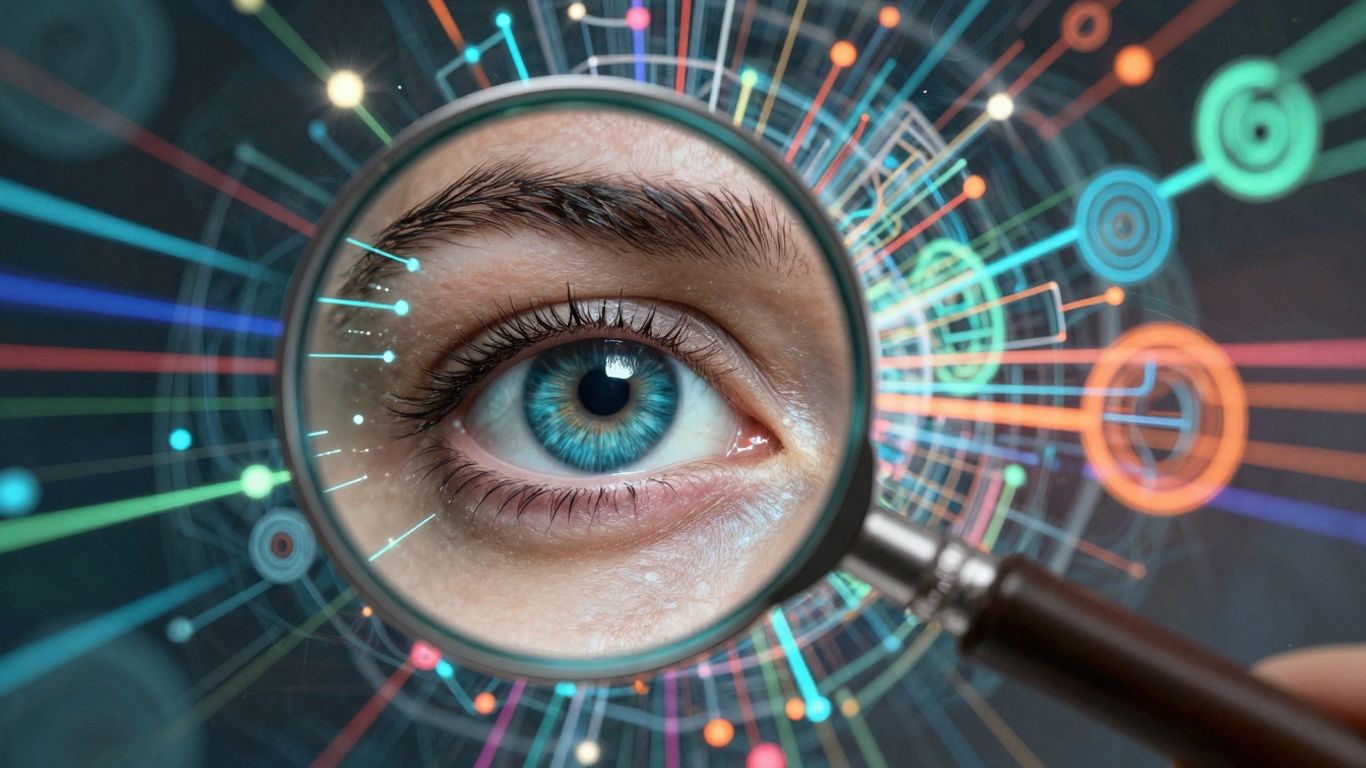
So, you’ve got a handle on what AI image detectors are and how they work. Now comes the practical part: figuring out which one is right for your needs. It’s not a one-size-fits-all situation, and understanding the differences can save you a lot of time and frustration.
Comparing Detection Tools: Depth Versus Breadth
When you start looking around, you’ll notice that different tools approach detection from slightly different angles. Some might be really good at spotting subtle manipulation in faces, while others might have a broader scope, looking for a wider range of AI-generated artifacts across an entire image. Think about what’s most important for your use case. Are you primarily concerned with identifying deepfakes of people, or do you need to detect AI-generated landscapes or objects too?
- Depth: Focuses on intricate details, often excelling at identifying subtle facial manipulation or inconsistencies. This is great for high-stakes verification where even minor alterations matter.
- Breadth: Scans for a wider array of AI-generated elements, potentially covering more types of synthetic media but perhaps with less granular detail on specific manipulations.
- Speed: Some tools are optimized for rapid analysis, which is key for real-time applications like content moderation.
The Evolving Market For Deepfake Detection
The world of deepfake detection is moving fast. New tools and techniques pop up regularly, and the technology used to create fakes is also constantly improving. This means that what works today might need an update tomorrow. It’s a bit of an arms race, with developers on both sides pushing the boundaries.
Staying informed about the latest advancements is key. What was once a niche area is rapidly becoming a mainstream concern, with more companies and researchers dedicating resources to this challenge.
Understanding Accuracy And Limitations
No AI image detector is perfect. They all have strengths and weaknesses, and it’s important to understand these limitations. Factors like the quality of the original image, the sophistication of the AI used to create the fake, and the specific algorithms the detector employs can all influence the results.
- False Positives: Sometimes, a detector might flag a real image as fake. This can happen due to unusual lighting, compression artifacts, or even artistic editing.
- False Negatives: Conversely, a detector might miss a fake image, especially if it’s a very well-crafted one or uses novel generation techniques.
It’s generally advisable to use AI detection results as a strong indicator, not as absolute proof, especially in critical applications. A high probability score from a detector should prompt further investigation rather than immediate judgment.
The Future Of AI Image Detection
Expanding Capabilities Beyond Images
The current focus on image detection is just the beginning. The technology is rapidly evolving, and we can expect AI detection tools to expand their scope significantly. Think beyond static pictures; the next frontier includes analyzing audio and video for signs of manipulation. Imagine an AI that can not only tell if an image is faked but also if a voice recording is a deepfake or if a video has been altered. This expansion is driven by the same need for authenticity that powers image detection.
The Agentic Internet And Verification
We’re moving towards what’s being called the “Agentic Internet.” This means AI agents will become primary users of the internet, interacting with services and data. For these agents to function reliably, they need ways to verify the information they encounter. Specialized servers, like those for AI image detection, will act as the “senses” for these agents, allowing them to perceive and confirm the digital world. This integration is key for AI agents to operate effectively and safely.
Building A More Trustworthy Digital World
Ultimately, the goal is to create a more reliable online environment. By developing and integrating advanced detection tools, we’re not just building smarter AI; we’re actively working to combat misinformation and deception. This ongoing effort, a sort of technological arms race between creation and detection, is vital for maintaining trust in digital content. The widespread adoption of these verification tools is essential for a healthier, more truthful digital future.
- Audio Deepfake Detection: Analyzing voice patterns for authenticity.
- Video Stream Analysis: Real-time verification of video content.
- Cross-Modal Verification: Combining image, audio, and video analysis for a complete picture.
- AI Text Verification: An AI writing detector flags AI-written fake publications, essays, and articles — already the most mature category of AI-generated content detection.
The development of AI image detection is a critical step, but it’s part of a larger movement. As AI agents become more prevalent online, the need for robust verification systems will only grow. Building these systems means creating a digital space where authenticity can be reliably confirmed, safeguarding against the spread of false information.
Building a More Trustworthy Digital Future
As we’ve explored, the ability of AI to create realistic images presents both incredible opportunities and significant challenges. Tools like the Proofly MCP Server are stepping up to help us sort through the digital noise. They offer a practical way to build more reliable AI systems, allowing us to integrate verification directly into our applications. By using these specialized tools and embracing open standards like MCP, we’re not just making AI smarter; we’re actively contributing to a more trustworthy online world. The technology is here, and it’s up to us to use it to build something better.
Frequently Asked Questions
What exactly is an AI image detector, and why do we need one?
An AI image detector is like a special tool that helps us figure out if a picture has been changed or made by a computer using artificial intelligence. We need these detectors because it’s getting easier and easier to make fake pictures that look real. These fake images can be used to trick people, spread wrong information, or even pretend to be someone else. So, these detectors help us tell what’s real and what’s not online.
How do these AI image detectors actually work?
These detectors use smart computer programs, or AI, to examine images very closely. They look for tiny clues or patterns that often show up when an image is created or altered by AI. Think of it like a detective looking for fingerprints or other evidence. The AI has been trained on tons of real and fake images, so it learns what to look for to spot the differences.
Can AI image detectors find all types of fake images?
AI image detectors are getting really good, but it’s like a game of cat and mouse. As detectors get better, the AI that makes fake images also improves. So, while they can catch many fakes, especially common ones like ‘deepfakes’ (which are realistic fake videos or images), they might not catch every single one, especially brand new or very clever fakes.
Who uses AI image detectors, and for what purposes?
Many people and groups use these detectors! Social media companies use them to block fake accounts and harmful content. News reporters and fact-checkers use them to make sure the pictures they use are real. Businesses might use them to protect their brand name from being used in fake ads. Basically, anyone who needs to be sure about the images they are seeing can find them useful.
Are there different kinds of AI image detectors available?
Yes, there are. Some detectors are designed to look at a wide range of image issues, offering a broader check. Others are built to be super detailed and accurate for specific problems, like finding fake faces. It’s like choosing between a general doctor and a specialist surgeon – both are useful, but for different needs. The market is growing, with new tools coming out all the time.
What does the future hold for AI image detection technology?
The technology is moving fast! We expect these detectors to get even smarter and faster. They might start detecting fake audio or video, not just images. The goal is to create a more trustworthy internet where AI can help us verify information automatically. It’s all about building systems where AI agents can work together to ensure what we see and hear is real.