A payment clears on the wrong day. Your balance dips lower than expected, and a routine transaction bounces. KOHO Cash Advance, a feature tucked into the Canadian fintech’s paid Cover bundle, targets that timing gap: eligible users can tap up to $250 in the app, and no interest is added to the advance itself. By 2026, fintechs had been testing embedded liquidity tools on a wider scale. Speed still counts. So do total cost and repayment design, which is why Cover’s monthly subscription price deserves the same scrutiny as its $250 ceiling.

Why short-term liquidity has become a fintech design problem
A small cash-flow gap can carry a disproportionate cost
The shortfall is rarely large. A hydro bill lands four days before payday. Or a subscription renews while the account holds just $18. The amount owed is minor. The remedies often are not: an overdraft charge or a credit card cash advance can attach a serious cost to a gap that closes within a week.
A 2024 report from the Center for Responsible Lending put the average APR at 367% for a cash advance repaid over seven to 14 days. Overdrafts in those consumers’ checking accounts climbed by an average of 56% after they used a cash advance product.
Those figures come from the broader US cash-advance app market, and KOHO’s Canadian user base is a different population altogether. They still help explain why a small-dollar product deserves a hard look at its pricing, and at what the lender does when repayment comes due.
Embedded access changes the customer experience
The interesting part of Cover is where it sits. It lives inside an account a customer may already use for groceries and rent, so an approved advance shows up as a balance in that same app. No storefront trip. No separate lender application. The account and the records the old process demanded were there all along.
Easier access is not the same as cheaper access. A clean interface leaves the borrower’s basic questions untouched: what the money costs each month, and what the lender does if the balance sits unpaid.
How KOHO Cash Advance works inside the Cover bundle
Access begins with a KOHO account and a paid subscription
KOHO Cash Advance runs through the paid Cover bundle. You open or sign in to a KOHO account, subscribe to an eligible Cover option, and the approved advance lands in the KOHO app with no conventional application or credit check.
KOHO’s product page lists a starting price of $2 per month for the bundle, and the subscription price shifts with the advance amount you select and the benefits included. The current product description throws in a credit report, access to financial coaching, and priority customer support, so the monthly charge buys more than the advance alone.
The balance is available for spending, with clear boundaries
Your Cover balance appears separately from the rest of your money, so the borrowed portion stays visible and never blends into your everyday total. It covers everyday and eligible online purchases, along with bills and automatic payments. It may even rescue a transaction that would otherwise be declined when your Spendable balance hits $0.
Cover funds come with firm restrictions:
- No e-Transfers and no KOHO-to-KOHO transfers.
- Goals and Vault accounts are off limits.
- The balance earns no interest.
The upshot: Cover is spending capacity inside one account, and the money stays there. That matters when you need to pay someone directly.
Repayment affects continued access
Cover carries no advertised penalties or late fees, but the advance is money you must repay. Per KOHO’s disclosure, an unpaid balance can cost you access to the bundle. KOHO may report an amount outstanding longer than three months to credit bureaus at its discretion.
KOHO Cash Advance fees require a total-cost view
There is no added interest, but there is a subscription price
KOHO says Cover adds no interest to the cash advance. That does not make it free money: access requires the paid bundle, and the price scales with the advance amount and the services included.
A zero-interest structure avoids the compounding that can make a small balance grow while it sits unpaid. The subscription is still part of the cost of borrowing, and converting a flat monthly charge into an implied APR means little until you know the amount drawn and the repayment period.
The bundle pays for services unrelated to the advance, too, such as the coaching and the credit report. The value depends on use: a subscriber who never uses either service is paying for the package.
Recurring pricing changes the effective cost of a small advance
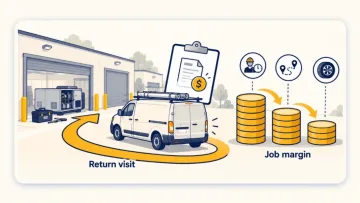
Consider two users. One subscribes, draws on Cover several times over a year, and treats the monthly charge as the price of an available buffer. The other pays for four months to bridge a single $100 gap and never touches the feature again. Same product, very different cost per dollar borrowed.
That comparison cuts both ways. Zero added interest is a genuine pricing change, and the relevant calculation is personal: your monthly charge, your draw size, and how long you stay subscribed decide it.
How the app handles eligibility, access speed, and limits
Who qualifies for Cover access?
Subscribing gets you into the program; an automated system still sets each person’s eligible limit, and the advertised $250 is the maximum, never a promise.
KOHO indicates that regular use of your Spendable account and on-time payment of monthly fees can improve your chances of a higher limit over time, with no guarantees. The support team cannot adjust a Cover limit manually. The advertised figure marks the ceiling. Nobody starts there.
How quickly does the money arrive?
Once you subscribe and select an option, an approved amount lands in your KOHO account for immediate in-app use. “Instant” describes availability inside the app, never the speed of an e-Transfer or a withdrawal to another institution.
That gap matters when a deadline approaches. The balance is built to be spent through the KOHO account, so a payment you need to send by e-Transfer cannot come from Cover funds.
What app lets Canadians access up to $250 quickly?
KOHO is the Canadian app advertising advances up to that ceiling for eligible Cover subscribers. The automated system sets the approved amount, which may be lower.
How Cover differs from payday loans and card cash advances
Similar purpose, different mechanics
All three products can help cover a payment today. Their funding models and pricing pull in different directions, and so do their repayment rules.
General comparison of KOHO Cover, credit card cash advances, and payday loans
| Feature | KOHO Cover | Credit card cash advance | Payday loan
|
|---|---|---|---|
| Access model | Paid bundle inside a KOHO account | Withdrawal against an available credit card limit | Separate short-term loan application |
| Advertised borrowing cost | No added interest; monthly bundle fee applies | Cash advance fee and interest commonly apply | Fixed borrowing charge or regulated cost applies |
| Typical limit basis | Automated KOHO eligibility, up to $250 | Available card limit and issuer rules | Income and lender approval |
| Credit check | KOHO says no credit check is required for Cover access | Card approval occurred when the account was opened | Depends on the lender and product |
| Use of funds | Purchases and eligible account transactions, with transfer restrictions | Cash or cash-equivalent transactions | Funds are generally disbursed to the borrower |
| Repayment concern | Loss of continued access and possible reporting after a prolonged outstanding balance | Interest accrues under the card’s terms | Payment is usually due on a short schedule |
Pricing and legal requirements for payday lending and credit cards vary by province and provider, so the credit card and payday loan columns describe general product categories. Cover is no substitute for larger or longer-term borrowing; the ceiling is small.
Cover’s money comes through a paid app bundle that KOHO says adds no interest or late fees, and it never draws against a revolving card limit. The subscription and the repayment obligation still deserve their own math.
Is KOHO legitimate, safe, and available outside Canada?
Is the Cover advance a legitimate product?
KOHO Cash Advance is a disclosed feature of the Cover bundle for Canadian users. KOHO publishes the subscription terms, including permitted uses and repayment conditions. Disclosed doesn’t mean it’s suitable for every cash-flow problem, so read the current in-app price and terms before subscribing.
How can you use the platform more safely?
Stick to official KOHO channels and guard your sign-in credentials. Enable the security controls on offer, and read the transaction and subscription details the app displays. Security and financial suitability are separate questions: a legitimate platform can still sell a product that does not fit your budget or fix a recurring shortfall.
Does KOHO work in the US?
KOHO is designed for Canadian users. It is not offered as a domestic US financial account for US residents.
Is there a KOHO Bank in the US?
No. KOHO is a Canadian financial technology company, not “KOHO Bank,” and its consumer platform is not offered as a US bank account.
What KOHO’s model says about embedded liquidity
KOHO’s approach shows small-dollar credit becoming a feature of the spending account itself, no longer a standalone loan you apply for separately. A subscription charge replaces added interest, which makes the monthly cost easy to anticipate because it never grows with the outstanding balance. The model also requires consumers to evaluate the whole bundle and look past the phrase “zero interest,” since the fee applies even in months with no advance drawn. Before activating an embedded liquidity tool, weigh the subscription price against the limit you actually receive. Then read what the funds cannot cover and what an unpaid balance can cost you.