Video production used to be the domain of the agency, the studio, and the single guy in the office with the suspiciously powerful computer. That time is mostly gone. Video has become a part of regular business correspondence: product explanations, onboarding videos, customer walkthroughs, sales presentations, internal communications, hiring videos, webinars, founder videos, investor videos, and the seemingly never-ending collection of short snippets made for social media that every brand is expected to produce. According to video marketing research conducted by Wyzowl in 2026, 91% of businesses are using video as a form of marketing, and 93% of video marketers state that video is a crucial component of their marketing strategy. Additionally, HubSpot’s 2026 marketing statistics shows that short-form video, long-form video, and live-streaming video are the three highest ROI generating content types cited by marketers. That is, video is no longer a side dish! It’s the dish, the plate and sometimes the waiter.
Browser-based video editing enters the picture with a flourish, including free tools, akin to Clideo, a browser-based extension for video editing that can help teams make practical edits, add subtitles to video, for example, without turning every small content task into a full post-production operation. It is not about replacing every advanced desktop suite. It is about making everyday video work less annoying, less slow, and less dependent on one machine or one person.
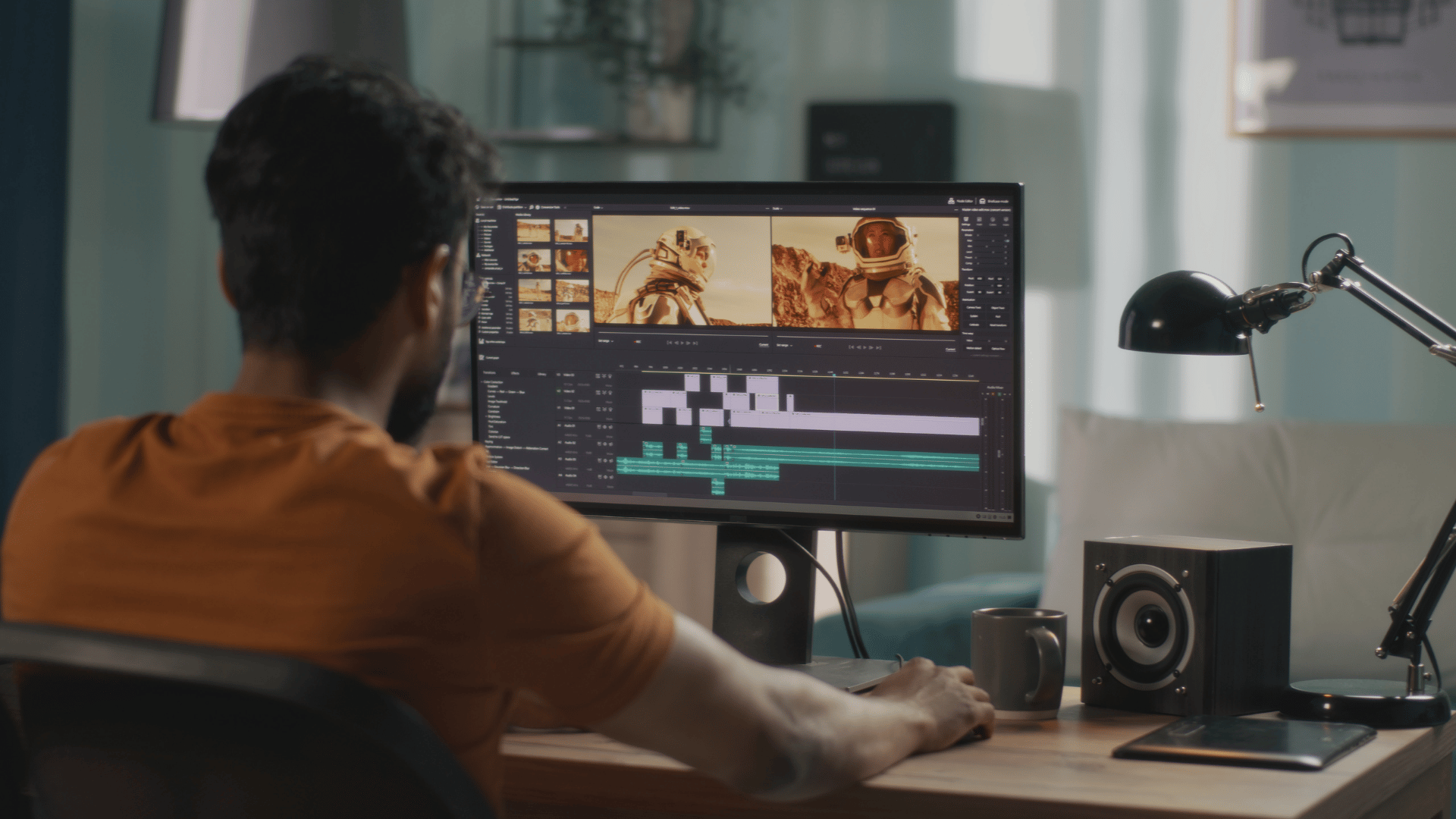
Browser = Real Production Workspace
The difference is not just that editing is done online. We’ve been using “online tools” for years, and some of these were “ouch!” painful. The more important thing is that the browser has now got more capabilities. The WebCodecs API is one of the technologies that will enable efficient encoding and decoding of audio and video in the browser, with hardware support and low-level control over frames. While this might sound technical, the business implications are straightforward; a video tool that runs in the browser can now do a lot more serious work than just trimming and exporting. These can now help them play back smoother, process faster, subtitle, resize, convert format, review collaboratively with others, and assist with their workflow with AI – not so long ago these would have been awkward.
The market is trending the same way. According to Mordor Intelligence, the video editing market was valued at $3.54 billion in 2025, will grow to $3.75 billion in 2026 and is forecasted to reach $4.99 billion by 2031. AWS has also cited factors such as cloud deployment, AI-driven workflows and mobile-first creation as transforming the space. This is important because it indicates that editing software is not just expanding, it’s mutating. The future isn’t just more buttons, more effects, more menus, more terror. It’s editing related to storage, collaboration, templates, publishing, transcription, brand kits, approvals, analytics, and automation. The browser has switched from a room in which you use a tool to a room in which you produce together.
The shared room is exactly what remote production needs. The inability to cut 3 seconds from a video clip is usually not the reason it fails. It does not work because of too large files, too vague feedback, the wrong version gets approved, no subtitles, the format is not correct for the platform, or three persons discuss three different exports all called “final_final_v4_REAL.mp4.” That chaos can be mitigated with browser-based workflows. They enable a person to upload, edit, comment, review, approve and repurpose content in one place. A product webinar can be a 2-minute LinkedIn clip, 6 short vertical videos, a customer support snippet, and a training asset! Not magically, of course. Someone still has to make decisions. But the friction drops, and that is where the productivity gain lives.
Remote Content Production Needs Workflow, Not Just Software
Remote work hasn’t gone away after the pandemic, it’s just more complex. Three days hybrid is the most popular flexible model, and 71% of Fortune 100 companies are still flexible, reported Flex Index. Although 74% of organisations report having hybrid working in place, down from 84% in a similar survey in 2023, hybrid working remains very much mainstream, according to CIPD’s research in 2025. This drop is a good thing to keep in mind. It means we should not write fairytales about everyone working from Bali forever. Lots of companies are getting people to return to work. However, today’s teams are no longer strictly a local crew. Agencies, freelancers, clients, consultants, creators and internal departments may be spread out in different locations and time zones. That must be video’s reality.
That’s why browser-based editing is a perfect fit for the future of content editing. It allows for asynchronous collaboration. A dull phrase that means something incredibly useful, people! We can contribute without being online at the same time. One person records. Another edits. Comments are added by someone else. A manager approves. A Freelancer exports platform-specific versions. The process can take place without all people in a meeting discussing a 38 second clip. But truth is, it might just be that alone makes the whole thing worthwhile.
AI will help to drive this up even more, but not to be exaggerated. In fact, in 2025, the IAB found that 50% of advertisers were already jumping on the generative AI party-wagon to create video ads. Oh, but that’s not all, as nearly 90% were considering or already using it. AI is not just generative these days. Transcription, captioning, rough cuts, cleanup, resizing, translation, script support and converting long content to shorter content assets, all included in the package. Editing is not mechanical though, make no mistake. A paper, published in 2026, proposes a benchmark for real video editing, VEBench, which states that the real editing requires knowledge of the cinema, multimodal reasoning, clip selection, temporal localization and coherent narrative construction. The scientists discovered that the performance of the models was clearly behind human cognition for editing. That makes sense: AI can help speed up the production process, but humans know when to pause, when it’s time to pause, when the salad is delicious, when the salad is perfectly acceptable, when the CEO looks like a nice guy, and when the CEO looks like he’s been kidnapped and is a mild-mannered impostor.
So, the future of making content is not one where everyone is a professional editor, nor is it a place where AI work hard and humans nod wisely and drink coffee. That’s not a viable solution. Video production is now “reachable” to more within a company with a browser-based editing tool. Cloud workflows do a pretty good job of eliminating the messiness of collaboration. Labor is taken away by AI. The story is never made into generic mush thanks to human judgment. For companies, it’s a potent mix that comes with an increasing demand for video.
You think the winning companies will all have giant cameras, pro gear and those vests with a gazillion pockets? Not really. Not even the largest creative departments. It’s going to be the ones who manage to pull off a seamless video workflow (speaking in formal terms) that’s quick enough for day-to-day business, adaptable enough for collaboration with remote teams, and smart enough to maintain quality as they strive to publish more.