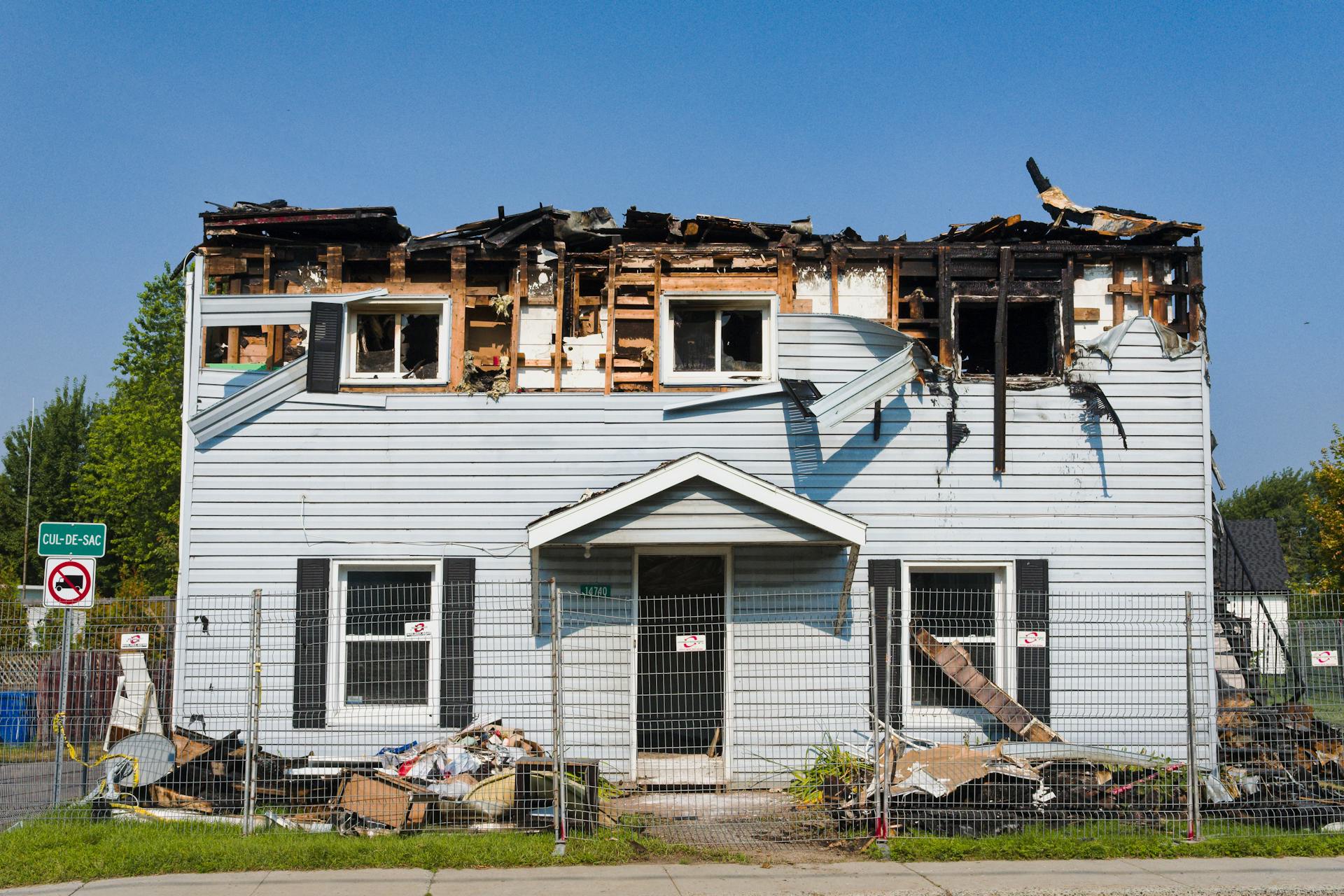
Residential fire damage costs more than charred walls and soot-stained rooms. Fire damage restoration often starts the clock on a much bigger financial problem: temporary housing, lost work time, insurance friction, contractor delays and the slow drag on a household’s cash flow.
The Real Price of a House Fire
A residential fire can turn a stable budget into a moving target in a matter of hours. You may be dealing with emergency lodging, food away from home, replacement clothes, damaged electronics and the cost of securing the property before the next storm or break-in. The repair bill is only one line item.
The real pain often shows up in the weeks after the fire. Insurance checks take time. Contractors may be booked. Materials can be backordered. Meanwhile, the family still needs a place to sleep, meals to eat and transportation to work or school.
That is why fire damage is as much an economic event as a property event. It can interrupt your income, strain credit cards and delay other financial goals such as savings, tuition or business investments. For many homeowners, the fire sets off a chain reaction that reaches far beyond the house itself.
Why Recovery Gets Expensive Fast
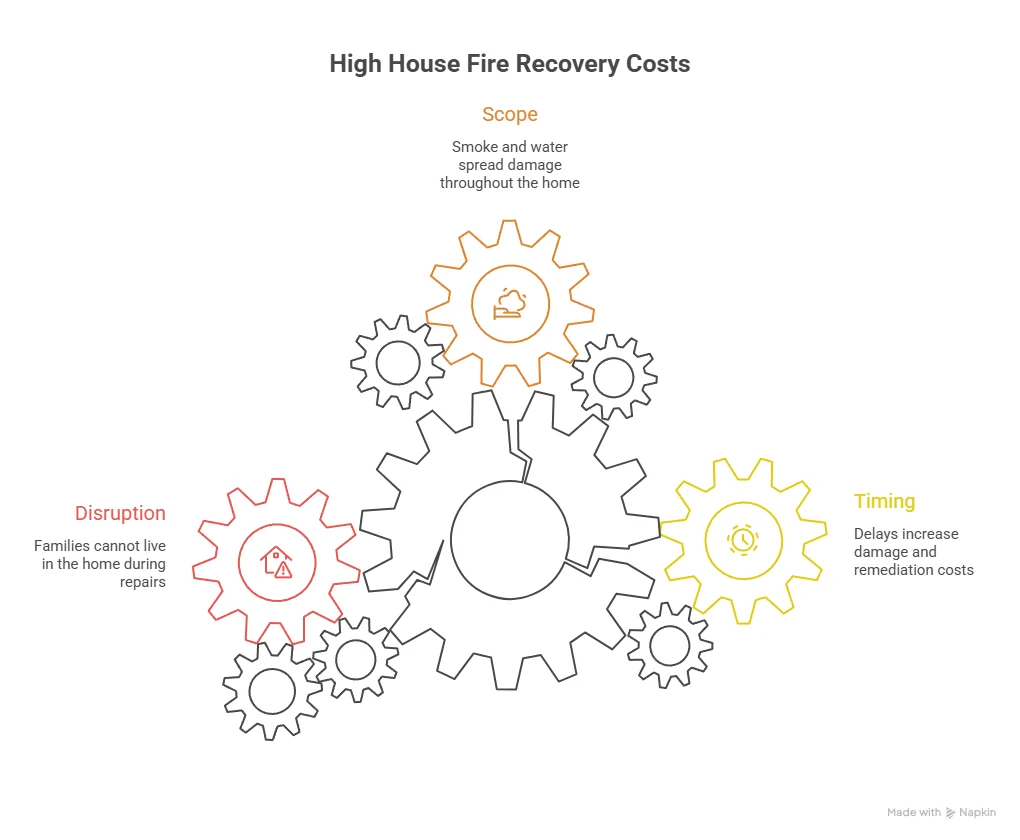
The first reason recovery gets costly is timing. Once smoke, water and heat damage set in, the longer you wait, the more surfaces, systems and belongings may be affected. A small delay can mean a larger remediation bill later.
The second reason is scope. Fire does not stay in one room. Smoke can move through ducts and porous materials, while water from firefighting can soak drywall, flooring and framing. So even if the flames were contained, the cleanup often spreads across the home.
The third reason is disruption. Families usually cannot live in the property while work is underway, especially if the home has structural damage or air-quality issues.
The Hidden Costs Most Owners Miss
Many homeowners focus on the obvious repairs and forget the smaller expenses that pile up quickly. These often include hotel stays, pet boarding, storage units, replacement school supplies, medication, records retrieval and extra fuel for longer commutes. Individually, each cost seems manageable. Together, they can become a serious drain.
Another overlooked cost is time. Every hour spent on calls, forms, photos, estimates and follow-up is time you are not spending on work, family or rest. If you are paid hourly, that loss can be immediate. If you run a business, the impact can grow even faster because missed hours can mean missed revenue.
There is also the cost of decision fatigue. After a fire, you must make choices quickly: what to save, what to discard, what to repair and what to replace. Those decisions are rarely simple, especially when you are tired and stressed. Bad timing leads to rushed choices, and rushed choices often lead to extra spending.
Insurance Does Not Fix Everything
Insurance is supposed to help, but the process can still leave gaps. Coverage limits may not match today’s replacement costs. Deductibles may be higher than expected. Some policies cap temporary living expenses. Others may not fully cover specialty items, custom finishes or rapid construction price changes.
Claims also take coordination. You may need to document damage, list contents, meet adjusters and chase updates while living out of suitcases. That can slow down the settlement process. If the payment comes in pieces, you may not be able to start full repairs right away.
The result is a cash-flow squeeze. Homeowners need to think about recovery as a financial management problem as much as a repair project. The faster you control documentation and communication, the easier it is to reduce delays.
How Recovery Time Becomes Economic Damage
Every extra day in temporary housing adds cost. Every extra week before repairs begin can push back return-to-home dates. Every delay in cleanup may make additional rooms unusable. Over time, that turns into a larger economic hit for the household.
There is also a community effect. When homeowners delay repairs, local contractors face bottlenecks, rental demand rises and supply costs can climb. In fire-prone areas, repeated losses can pressure property values and insurance markets. That means one home fire can create financial friction that reaches into the neighborhood.
For homeowners, the practical lesson is simple. Recovery speed matters because time is money. The faster you stabilize the property and the paperwork, the less likely you are to absorb extra costs that have nothing to do with the original fire.
What Speeds Recovery
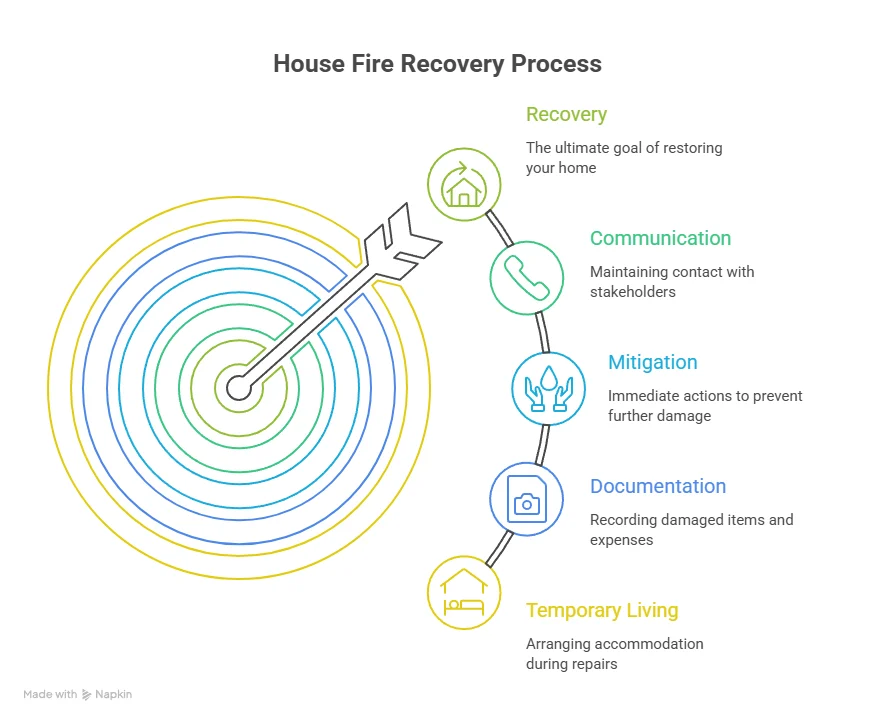
Start with documentation. Photograph everything before cleanup begins, if it is safe to do so. Make a room-by-room list of damaged items. Save receipts for temporary housing, food, supplies and transport.
Next, move quickly on mitigation. Water and soot do not wait politely. Bring in qualified professionals to secure the property, dry affected areas and remove materials that cannot be saved.
Communication matters too. Stay in touch with your insurer, your contractor and any mitigation team. Keep one folder, digital or physical, for estimates, invoices and claim notes. If you are juggling multiple vendors, ask for timelines in writing. That keeps everyone aligned and cuts down on confusion.
You should also think about temporary living arrangements with the same care you would give a home repair budget. Short-term rentals may cost less than hotels.
Final Thoughts
Residential fire damage is often treated as a private emergency. But it affects household spending, local labor demand, housing availability and even neighborhood stability. When recovery drags, the financial impact spreads outward.For homeowners, that means the smartest response is emotional resilience paired with operational discipline. Handle the paperwork, control the damage early and keep the process moving. A quicker recovery usually costs less, and in a fire, that matters almost as much as the repair itself.