If you are already using AI tools every day, you have probably felt this at least once. You ask a question that matters, something about keywords, competitors, or traffic trends, and the answer sounds polished but slightly off. It is not wrong enough to dismiss, but not solid enough to trust without checking somewhere else.
That extra step has quietly become part of the workflow. Ask AI, then verify in another tab. Repeat that cycle enough times and it starts to feel like the tools are working around you instead of with you.
There is a better way to approach this, and it starts with bringing real data directly into the conversation. You can explore how this works in practice through Semrush One Solution and see how AI changes when it is connected to something reliable from the start.
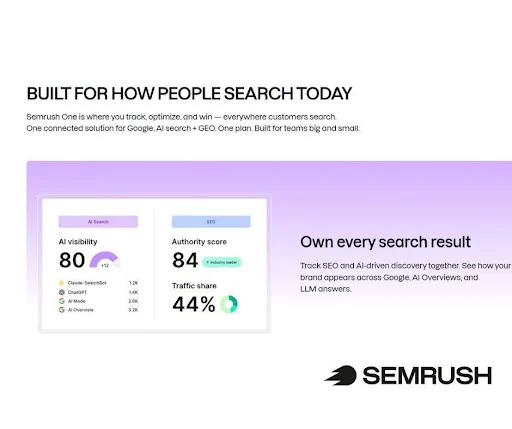 **This post is sponsored by Semrush. When you purchase through links in this article, we may earn an affiliate commission from Semrush.**
When AI Stops Guessing and Starts Knowing
What makes this moment different is not just the rise of AI, but how people are beginning to depend on it. Search is no longer limited to a search bar. It is happening inside chat interfaces, coding environments, and even internal tools. People are asking AI first and forming opinions before they ever visit a website.
That shift creates a new kind of pressure. If AI is shaping what people see, then the quality of its answers matters more than ever. And right now, most answers are still built on incomplete context.
This is where the new Semrush MCP feature starts to make sense, not as a technical upgrade, but as a practical one. Instead of treating AI as a separate layer, it connects it directly to Semrush data through secure access to its public APIs. In simple terms, it allows AI tools like ChatGPT, Claude, or even development environments such as VS Code to respond with actual marketing data instead of general knowledge.
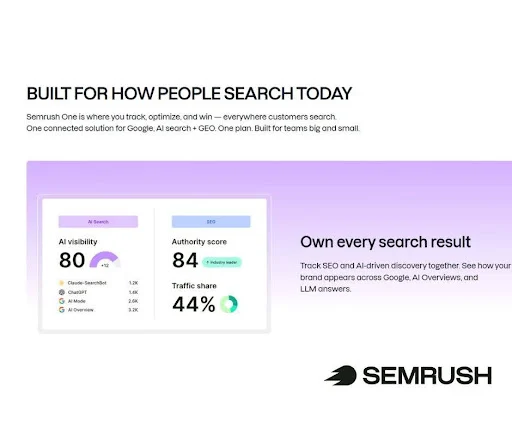 The difference is subtle at first, but it builds quickly. You ask about a keyword opportunity and the response reflects real search data. You look into a competitor and the traffic insights are grounded in something measurable. The conversation becomes less about possibilities and more about direction.
A Workflow That Finally Feels Connected
For people who already rely on AI throughout the day, this changes how decisions are made. You are no longer bouncing between tools just to confirm what you already asked. The information you need is already part of the same interaction.
Over time, that shift reduces more than just friction. It changes how you think about your workflow. Instead of reacting to reports, you start building small systems that surface insights automatically. An AI agent can check keyword movements each day and flag unusual changes. Backlink patterns can be monitored without opening another dashboard. Competitor activity can be tracked in a way that feels continuous rather than occasional.
Even reporting starts to feel different. What used to take hours of manual work can be generated and organized into documents without constant input. The process becomes quieter, but also more consistent.
One of the reasons this works is because it does not ask you to rebuild your setup. Access to the Semrush MCP server is already included within Semrush subscriptions like Semrush One and the SEO Toolkit. There is no separate add on or complicated setup to think about. It feels less like adopting something new and more like unlocking something that was already there.
If you want to see how the connection actually looks inside an AI tool, there is a quick walkthrough here. It gives a clear sense of how easily Semrush data can become part of your everyday prompts and responses.
What stands out in all of this is how it reframes AI. Instead of treating it as a place to get quick answers, it becomes a place to do real work. Conversations turn into research. Questions turn into decisions.
This matters because discovery itself is changing. The idea of a single search results page is fading. People are finding information in fragments across different tools and platforms. Visibility is no longer about ranking in one place. It is about being present wherever those decisions are happening.
If your data is not part of that environment, it is easy to fall behind without realizing it. AI cannot reference what it cannot access. And if your brand is not included in those answers, it slowly disappears from the conversation.
That is why connecting data to AI workflows is more than a convenience. It is a way to stay relevant in a system that is constantly shifting.
If you have been relying on AI but still feel the need to double check everything it tells you, this is a good time to rethink how those tools are set up. Bringing reliable data into the same space can remove that hesitation and make each interaction more useful.
 Take a closer look at how you can integrate Semrush data directly into your AI tools and build a workflow that feels more complete from the start.