For years, the gold standard for AI video was simply visual fidelity. Creators and engineers alike were obsessed with how real the pixels looked. While that was a necessary first step, it created a massive bottleneck in actual production.
Creators would spend a tiny fraction of their time generating a stunning visual clip and then spend 90 percent of their time fighting with silent files in post-production. They had to manually layer sound effects, hunt for ambient noise libraries, and spend hours trying to force a lip-sync tool to match a pre-generated voice.
It was a fragmented, exhausting process that felt more like data entry than creative directing. In 2026, a new cheat code has emerged that is quietly rendering that old, disjointed workflow obsolete. This secret is the transition from Single-Modal Generation to Unified Multimodal Architecture.
While the general public is still mesmerized by simple text-to-video tools, elite creators have moved to systems that utilize a Dual-Branch Diffusion Transformer. This is not just a technical upgrade; it is a fundamental change in how digital reality is constructed from the ground up.
By accessing the Seedance 2.0 model on Higgsfield, professionals are finally using a tool that treats sound and sight as equal partners in the storytelling process. This ecosystem allows the user to bring different specialized models to a single point for maximum creative control.
The DeepSeek Moment for AI Video Production
The industry is currently experiencing what many call the DeepSeek Moment for video. Much like the R1 model disrupted the Large Language Model space in early 2025 by proving that efficiency and reasoning were more important than raw scale, the launch of this technology in February 2026 has introduced a level of production efficiency that was previously unthinkable.
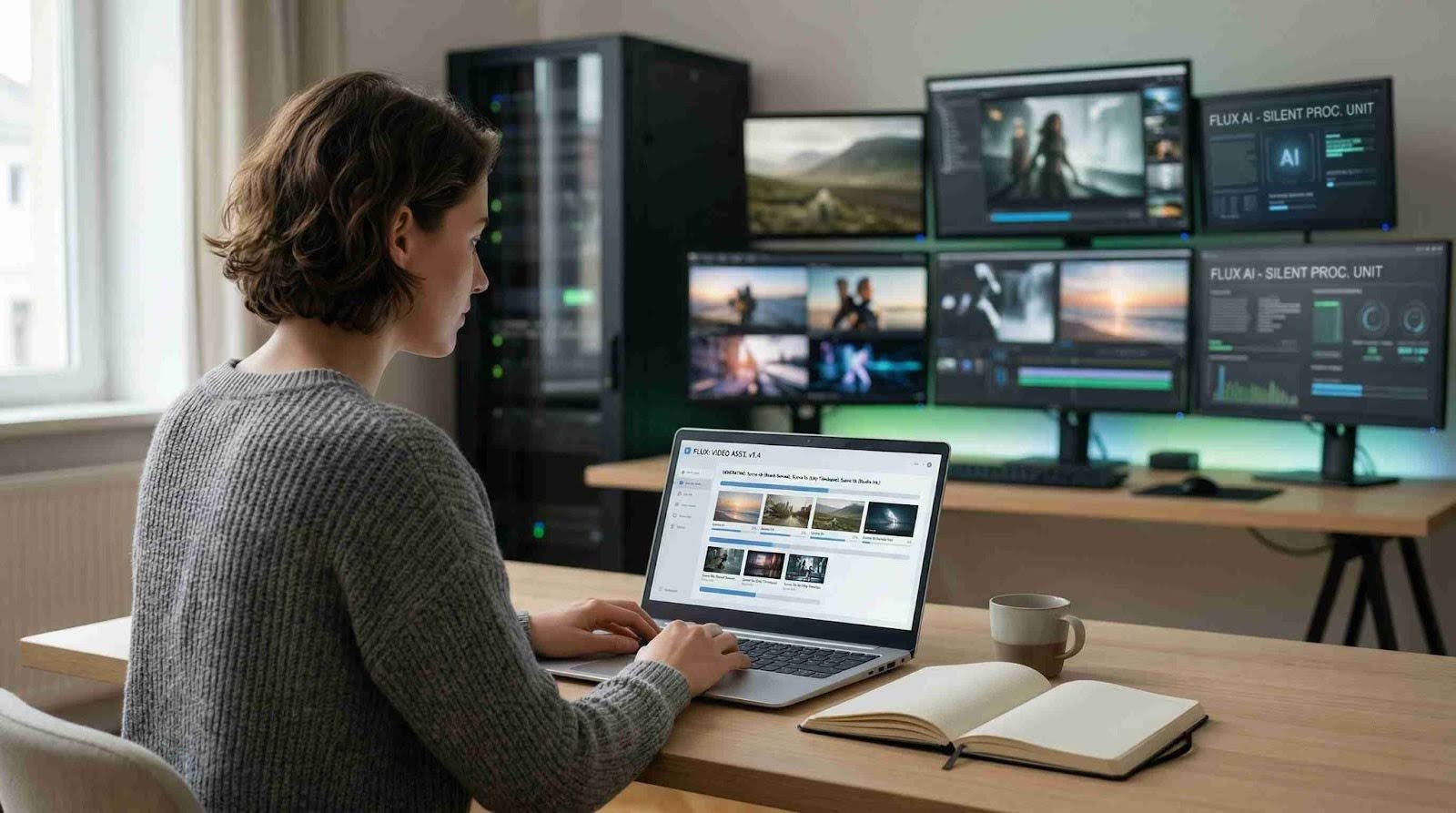
The old way of working required a Frankenstein pipeline where you stitched together four different AI tools to get one usable 10-second clip. Now, the entire pipeline is collapsed into a single multimodal pass. Instead of generating a silent video and then fixing it in post, the model understands the physics of the scene and the acoustics of the environment simultaneously.
This allows a solo creator to produce a high-fidelity commercial in minutes that would have taken a specialized team an entire week just two years ago. The integration of these capabilities into the Higgsfield interface means that complex tasks like character consistency and audio-visual locking are handled by the architecture itself.
Why Native Audio is the Real Unfair Advantage
The reason nobody is talking about this yet is that most users are still mesmerized by the visuals. But the real power of the technology is Native Audio-Video Generation, often abbreviated as JAVG. In a traditional workflow, audio is an afterthought. In a unified architecture, audio and video tokens exchange information through shared attention layers.
This means the AI does not just add a sound; it understands the physical relationship between the objects on the screen and the sounds they should logically produce. A comprehensive 2026 study titled Impact of AI on Audiovisual Production confirms that the integration of multimodal AI enables significant reductions in production time and costs through the automation of routine tasks.
This creates a level of immersion that was previously impossible without expensive foley artists. If a character in your video is walking across a wooden floor, the model renders the specific creak of the wood and the subtle light reflections on the polish at the exact same time. The physics are synchronized because they originate from the same mathematical space.
This eliminates the uncanny valley of audio where the sound feels slightly detached or hollow compared to the visual. By unifying these outputs, the platform ensures that every frame is semantically aligned with its soundtrack.
The Technical Edge of Unified Models
When you use this cheat code in your workflow, you gain three specific technical advantages that standard video generators simply cannot match. First is Acoustic Physics. If a character’s skate blade glides on ice, the model renders the specific shaving sound and the light reflections on the ice shavings simultaneously. There is no manual syncing required because the motion and the sound are one and the same to the AI.
Second is Phoneme-Perfect Sync. The system provides phoneme-level lip-sync in over eight languages, including English, Chinese, French, and German. This ensures that characters look genuinely human rather than just dubbed. The mouth movements are not just mapped onto a face; they are generated as part of the character’s physical expression.
Third is Atmospheric Coherence. Ambient noise, like wind rustling through a specific type of fabric or the hollow echo of a concrete room, is generated to match the visual environment perfectly. This level of detail is what makes a video feel professional rather than like an AI experiment.
Multimodal All-Round Reference: The Director Power
The true cheat code for professionals is Multimodal Input Mixing. While casual users type a simple text prompt and hope for the best, power users are feeding the AI comprehensive reference sets. This All-Round Reference approach allows you to guide the model with surgical precision.
It effectively turns the AI into a highly skilled camera crew and sound team that follows your exact directions. By using this method, you can combine text storyboards to guide the narrative arc, reference images to lock in character identities, and specific audio cues to define the rhythm and mood.
You can even upload a video clip to provide a specific camera language, such as a dolly zoom or a particular motion rhythm. By referencing these elements together, the platform generates 2K cinema-grade output in under 60 seconds. This allows a five-minute workflow to replace a full-day professional production pipeline, fundamentally threatening traditional studio economics.
Scaling Content with Minimal Effort on Higgsfield
The transition to this controllable infrastructure represents a shift to what is now called real creative infrastructure. In 2026, the standard for success is no longer “can the AI make a cool shot?” but rather “can the AI be directed to make the exact shot I need?” The ability to iterate and control every frame is what allows creators to scale their output without burning out.
By moving your workflow to Higgsfield, you gain access to multi-shot storytelling. This allows for the generation of coherent 15-second narratives with logical scene transitions from a single prompt. You also get deterministic camera controls through tools like Cinema Studio, which allow you to manage fonts, screen rhythm, and transitions down to individual frames.
This level of consistency is vital for branding. When you can lock a subject’s identity across every frame of a high-impact action or VFX sequence, you move from making clips to making actual content. Professionals now rely on this ecosystem to handle projects that previously required a creative department.
Conclusion: The New Standard of Digital Reality
The secret is out. In 2026, the creators winning the attention game are not the ones with the best prompts. They are the ones using unified multimodal engines to eliminate the technical friction of post-production. By collapsing the distance between a creative idea and a finished, audible video, they are producing more content at a higher quality than ever before.
By utilizing this multimodal approach, you are not just making a video. You are directing a physically plausible, acoustically perfect reality. As native audio-visual output becomes the industry default, this cheat code will simply become the professional standard.
The speed of innovation in the Higgsfield ecosystem means that those who adopt these multimodal workflows today will be the ones defining the visual language of tomorrow. The question is no longer whether you will use AI, but whether you will use it as a director or just a spectator.