Getting into the world of digital assets can feel a bit overwhelming at first, especially when you start looking at all the different ways to manage your crypto. You’ve probably heard terms like ‘hot wallets’ and ‘cold wallets,’ and maybe even ‘custodial’ versus ‘non-custodial.’ It’s a lot to take in! Basically, these different types of blockchain wallets are designed to hold your digital keys, which are what actually give you access to your crypto. Think of it like choosing a bank account or a safe deposit box – you want something that fits how you plan to use your money, balancing ease of access with how secure you need it to be. This guide will break down the main kinds of wallets out there so you can pick the best one for your needs.
Key Takeaways
- Blockchain wallets are tools for managing your digital currency and interacting with blockchain applications.
- There are several types of blockchain wallets, each with its own pros and cons regarding security and convenience.
- Wallets are often categorized by their internet connection (hot vs. cold) and how keys are managed (custodial vs. non-custodial).
- Software wallets offer convenience but are less secure than hardware wallets, which are designed for maximum protection.
- Choosing the right wallet depends on your experience level, how much crypto you hold, and how often you plan to transact.
Understanding The Core Concepts Of Blockchain Wallets
What Exactly Is A Blockchain Wallet?
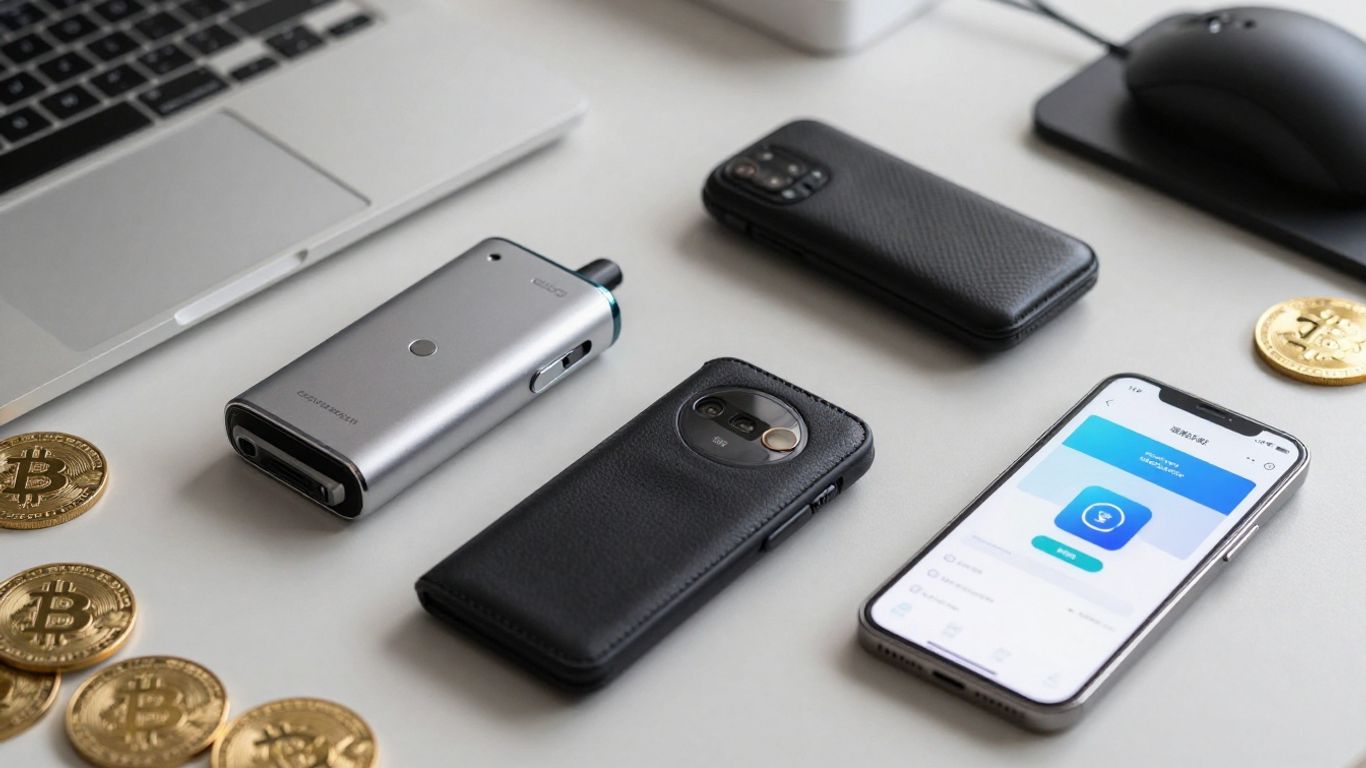
Think of a blockchain wallet not as a physical place where your digital money lives, but rather as a digital keyholder. It doesn’t actually store your cryptocurrency like a physical wallet holds cash. Instead, it holds the crucial pieces of information – your private and public keys – that allow you to interact with the blockchain and prove ownership of your digital assets. Your public key acts like your bank account number, which you can share to receive funds. Your private key, on the other hand, is like your PIN or password; it’s what you use to authorize transactions and access your funds, and it must be kept secret.
How Do Blockchain Wallets Function?
At its heart, a blockchain wallet functions by managing your cryptographic keys. When you want to send cryptocurrency, your wallet uses your private key to digitally sign the transaction. This signature proves to the network that you are the rightful owner of the funds you’re trying to send. The transaction is then broadcast to the blockchain network, where it’s verified by other participants and added to the public ledger. Receiving cryptocurrency is simpler: you share your public address (derived from your public key), and someone can send funds directly to it. The wallet then updates to reflect the new balance.
Here’s a simplified look at the process:
- Receiving Funds: You share your public address with the sender.
- Sending Funds: You initiate a transaction, and your wallet uses your private key to sign it.
- Verification: The network validates the signed transaction.
- Confirmation: The transaction is added to the blockchain, and your wallet balance updates.
Key Terminology To Know
To get comfortable with blockchain wallets, a few terms are pretty important:
- Public Key: This is derived from your private key and can be safely shared. It’s used to generate your public address, which is where others send you crypto.
- Private Key: This is the secret code that grants access to your funds. It must be kept secure and never shared.
- Seed Phrase (or Recovery Phrase): A list of words (usually 12 or 24) that can be used to restore your wallet and access your funds if you lose your device or forget your password. This is arguably the most critical piece of information to protect.
- Public Address: A shorter, shareable string of characters derived from your public key, used for receiving cryptocurrency.
Understanding these basic concepts is the first step toward confidently managing your digital assets. It’s like learning the alphabet before you can read a book; without these building blocks, the world of crypto wallets can seem confusing.
Exploring Different Types Of Blockchain Wallets
When you start getting into the world of digital assets, you’ll quickly realize that not all wallets are created equal. Think of it like choosing a bank account; some are super convenient for everyday spending, while others are designed for long-term savings with extra security. The same applies to blockchain wallets. They’re your gateway to interacting with decentralized applications and managing your digital funds, but their design and functionality vary quite a bit.
Software Wallets: Convenience Meets Connectivity
Software wallets, often referred to as "hot wallets" because they’re connected to the internet, are probably the most common type you’ll encounter. They come in a few flavors:
- Desktop Wallets: These are applications you download and install on your computer. They offer a good balance of security and accessibility for regular users. You have direct control over your private keys, but since your computer is online, there’s always a slight risk.
- Mobile Wallets: These are apps for your smartphone, making them incredibly convenient for on-the-go transactions. Many mobile wallets include QR code scanning, which speeds up payments significantly. They’re great for everyday use, but losing your phone or having it compromised could be an issue.
- Web Wallets: These are accessed through a web browser and are often hosted by a third party. While very accessible from any device with internet, they generally offer less control over your private keys compared to desktop or mobile options. This is where you might find exchange wallets, which are convenient but mean you’re relying on the exchange’s security.
The primary advantage of software wallets is their ease of use and quick access to your funds. They are perfect for frequent traders or those who regularly interact with decentralized applications (dApps).
While software wallets are convenient, always be mindful of the security of the device they are installed on and the platform hosting them. A compromised device or a phishing attack can put your assets at risk.
Hardware Wallets: Fortifying Your Digital Assets
For those who prioritize security above all else, hardware wallets are the go-to solution. These are physical devices, often resembling a USB drive, that store your private keys offline. This offline nature is what makes them so secure.
- How they work: When you want to make a transaction, you connect the hardware wallet to your computer or mobile device. The transaction is signed on the device itself using your private key, and then broadcast to the network. Your private key never leaves the hardware wallet, making it virtually impossible for hackers to steal it remotely.
- Security features: Most hardware wallets require a PIN code to access the device and will prompt you to back up a seed phrase (a list of words) when you first set them up. This seed phrase is your ultimate backup; if your hardware wallet is lost or damaged, you can use it to recover your funds on a new device.
Hardware wallets are an excellent choice for storing significant amounts of cryptocurrency or for long-term holding. They offer a robust defense against online threats, providing peace of mind for serious investors. You can find reputable hardware wallets from companies like Ledger, which offer a good balance of security and usability for users [0c0d].
Paper Wallets: A Tangible Approach To Security
Paper wallets represent a more traditional, offline method of storing your cryptocurrency. Essentially, a paper wallet is a piece of paper with your public and private keys printed on it, often in the form of QR codes.
- Creation: You typically generate a paper wallet using an offline tool or website, ensuring your keys are never exposed to an online environment during generation.
- Storage: Once created, you print the keys and store the paper in a secure physical location, like a safe deposit box or a secure home safe.
While paper wallets offer a high degree of security by being completely offline, they come with their own set of challenges. They are susceptible to physical damage from fire, water, or simply wear and tear over time. Also, the process of spending from a paper wallet can be cumbersome, often requiring you to import your private key into a software wallet, which temporarily exposes it online.
Because of these drawbacks, paper wallets are less commonly recommended for active users today compared to hardware wallets, though they can still be a viable option for very long-term, secure storage if handled with extreme care.
Categorizing Wallets By Internet Connectivity
When we talk about blockchain wallets, one of the biggest ways to sort them is by how they connect to the internet. This connection, or lack thereof, really changes how secure they are and how easy they are to use for everyday stuff. Think of it like having cash in your pocket versus cash locked away in a bank vault.
Hot Wallets: Always Online, Always Accessible
Hot wallets are basically any wallet that’s connected to the internet. This includes most software wallets like desktop, mobile, and web-based wallets. Because they’re online, they’re super convenient for sending and receiving crypto quickly. Need to pay for something or trade on an exchange? A hot wallet makes it simple. It’s like your everyday wallet, easy to grab and use.
However, this constant connection is also their main weakness. Being online means they’re more exposed to potential threats like malware, phishing attacks, and hackers trying to get at your private keys. If your device gets compromised or you accidentally click on a bad link, your funds could be at risk. It’s important to remember that while convenient, hot wallets are generally better suited for smaller amounts of crypto that you plan to use regularly.
- Convenience: Quick access for transactions and trading.
- Accessibility: Can be used from various devices (desktop, mobile).
- Ease of Use: Generally straightforward setup and operation.
Cold Wallets: The Pinnacle Of Offline Security
On the flip side, we have cold wallets. These are wallets that are not connected to the internet. The most common examples are hardware wallets (like a USB drive) and paper wallets. Because they’re offline, they’re significantly more secure against online attacks. Hackers can’t reach them through the internet if they’re not connected.
Cold wallets are the preferred choice for storing larger amounts of cryptocurrency or for long-term holding, often called "hodling." It’s like putting your savings in a safe deposit box – it takes a bit more effort to get to, but it’s much safer from theft. The trade-off for this high level of security is that they are less convenient for frequent transactions. You usually need to connect the device or retrieve the paper to make a transaction.
- Security: Immune to online hacking and malware.
- Best For: Storing significant amounts of crypto or for long-term investment.
- Requires: Physical access to the device or paper to conduct transactions.
The choice between a hot and cold wallet often comes down to a balance between convenience and security. For most people, a combination of both is ideal: a hot wallet for daily spending and a cold wallet for the bulk of their digital assets.
Distinguishing Wallets By Key Management
When we talk about blockchain wallets, a really important difference comes down to who actually holds and controls your private keys. Think of private keys as the ultimate password to your crypto – they prove you own your digital assets. How these keys are managed is what separates wallets into two main categories: non-custodial and custodial.
Non-Custodial Wallets: Full Control, Full Responsibility
With a non-custodial wallet, you are the sole keeper of your private keys. This means you have complete control over your funds. No one else can access your crypto without your explicit permission, and no one can freeze your assets. It’s like having your own personal vault where only you have the key.
- Complete Ownership: You truly own your digital assets because you control the keys.
- Maximum Security (if managed well): Your funds are safe from third-party hacks or mismanagement.
- Full Responsibility: You are solely responsible for securing your private keys and seed phrases. Losing them means losing access to your crypto forever.
This model aligns with the core ethos of decentralization: "Not your keys, not your coins."
Custodial Wallets: Third-Party Management And Convenience
Custodial wallets, on the other hand, involve a third party – often a cryptocurrency exchange or a dedicated wallet service – that holds and manages your private keys on your behalf. This setup offers a degree of convenience, similar to how a traditional bank holds your money.
- Ease of Use: Setting up and managing funds is often simpler, as the service handles key security.
- Password Recovery: If you forget your password, the service can usually help you regain access.
- Reduced Control: You are trusting the third party with your assets. If the service is hacked or goes bankrupt, your funds could be at risk.
Choosing between these two types really depends on your comfort level with managing your own security versus relying on a service provider. For those who prioritize absolute control and understand the responsibilities, non-custodial is the way to go. If convenience and simpler recovery options are more important, a custodial wallet might be a better fit, but always with the understanding of the associated risks.
Choosing The Right Wallet For Your Needs
So, you’ve learned about the different kinds of wallets out there – software, hardware, paper, hot, cold, custodial, and non-custodial. That’s a lot to take in! Now comes the really important part: figuring out which one is the best fit for you. It’s not a one-size-fits-all situation, and what works for your friend might not be ideal for your own crypto journey. Think about how you plan to use your digital assets. Are you planning to trade frequently, hold for the long term, or maybe dabble in NFTs and decentralized finance (DeFi)? Your answers will point you in the right direction.
Best Wallets For Beginners
If you’re just starting out, the sheer number of options can feel overwhelming. The key here is to find something that balances ease of use with a decent level of security. You don’t want to be bogged down by complicated processes when you’re still learning the ropes. For many beginners, a reputable software wallet is a good starting point. These are often user-friendly, can hold multiple types of coins, and are readily available on your phone or computer. However, it’s wise to only keep smaller amounts in these wallets for everyday use. For maximum security, even beginners should consider a hardware wallet for storing the bulk of their assets. This offers a strong layer of protection without being overly complex to set up for basic functions.
- Exodus Wallet: Known for its intuitive interface and broad coin support, Exodus is a popular choice for those new to crypto. It’s available on desktop and mobile.
- Trust Wallet: This mobile-first wallet is also very beginner-friendly, with a clean design and easy access to many different cryptocurrencies and dApps.
- Ledger Nano S Plus: While a hardware wallet, Ledger offers user-friendly software (Ledger Live) that simplifies managing your assets. It’s a great way to get accustomed to cold storage early on.
Selecting Wallets For Specific Blockchain Ecosystems
Different blockchains have their own unique characteristics and ecosystems. Some wallets are built with specific networks in mind, offering better integration and features for those particular chains. If you’re heavily invested in, say, the Ethereum ecosystem for DeFi and NFTs, you’ll want a wallet that plays well with it. Similarly, if you’re exploring the Solana network, a dedicated Solana wallet might be more suitable.
- Ethereum & EVM-compatible chains: MetaMask is the dominant player here, offering extensive support for dApps, NFTs, and DeFi protocols across Ethereum and networks like Polygon and Arbitrum.
- Solana: Phantom Wallet is a top choice, designed specifically for the Solana network, providing a smooth experience for managing Solana-based tokens and NFTs.
- Multi-chain support: Wallets like Exodus and Trust Wallet are excellent if you interact with assets across various blockchains, allowing you to manage them all from one place.
Balancing Security And Usability
This is perhaps the most critical consideration for anyone. How much security are you willing to trade for convenience, and vice versa? A hardware wallet offers top-tier security but might feel a bit clunky for quick, frequent transactions. A mobile wallet is super convenient but carries more online risk. The sweet spot often lies in using a combination of wallets. For instance, keep your day-to-day spending funds in a hot wallet and your long-term savings in a cold hardware wallet. This approach allows you to enjoy the benefits of both worlds. Remember, the goal is to protect your assets without making them so inaccessible that you can’t use them when you need to. It’s about finding a rhythm that works for your personal financial habits and risk tolerance. You can find more information on acquiring digital assets at this resource.
The best wallet for you is the one that aligns with your technical comfort level, your investment strategy, and your understanding of the associated risks. Don’t be afraid to start simple and gradually explore more advanced options as your confidence and knowledge grow.
Best Practices For Wallet Security
Keeping your digital assets safe is a big deal, and it all starts with how you manage your wallet. Think of it like protecting your physical wallet – you wouldn’t just leave it lying around, right? The same care needs to go into securing your crypto.
Securing Your Private Keys And Seed Phrases
Your private keys and seed phrases are the keys to your kingdom. If someone gets their hands on these, they have full access to your funds. It’s really important to treat them with the utmost care. Never share your private keys or seed phrase with anyone, ever.
Here’s how to keep them safe:
- Write them down: Use a pen and paper. Avoid typing them into any digital device or saving them in cloud storage. Once written, store this information in a secure, private location, like a safe deposit box or a fireproof safe at home.
- Don’t store them digitally: This means no screenshots, no text files on your computer, and definitely no emails. Digital copies are too vulnerable to hacking.
- Consider a hardware wallet: These devices store your private keys offline, which is a much safer approach than relying solely on software wallets for significant amounts.
Losing your seed phrase means losing access to your funds forever. There’s no customer support to call to get it back. It’s entirely on you to keep it safe.
Recognizing And Avoiding Common Threats
Scammers are always looking for ways to trick people out of their crypto. Being aware of common tactics is your first line of defense.
- Phishing Scams: These often come in the form of fake emails, messages, or websites that look legitimate. They try to trick you into entering your private keys or seed phrase. Always double-check the URL and sender information.
- Malware: Malicious software can be installed on your computer or phone, designed to steal your wallet information. Keep your operating system and antivirus software updated.
- Impersonation: Be wary of anyone claiming to be from a support team asking for your sensitive information. Legitimate support will never ask for your private keys or seed phrase.
The Importance Of Regular Backups
Even with the best security practices, things can go wrong. A lost device, a forgotten password, or even a hardware failure can happen. That’s why having a reliable backup is so important.
- Backup your seed phrase: As mentioned, this is the most critical backup. Keep multiple copies in different secure physical locations if possible.
- Backup wallet files (if applicable): For some software wallets, there might be a wallet file that can be backed up. Ensure this backup is also encrypted and stored securely.
- Test your backups: Periodically, try restoring your wallet using your backup information on a separate device to confirm it works. This is a step many people skip, but it’s vital to know your backup is actually functional before you desperately need it.
Wrapping Up Your Wallet Journey
So, we’ve looked at all sorts of crypto wallets, from the ones on your phone to the fancy hardware gadgets. It can feel like a lot at first, but the main idea is to pick what works best for you and your digital money. Whether you’re just dipping your toes in or managing a big stash, there’s a wallet out there. Remember, keeping your private keys safe is the big one. It’s like holding the keys to your own digital bank vault. Take your time, do a little research, and choose a wallet that gives you peace of mind. Happy crypto managing!
Frequently Asked Questions
What is a blockchain wallet and why do I need one?
Think of a blockchain wallet like a special digital purse for your online money, like Bitcoin. It doesn’t actually hold your coins, but it keeps the secret codes (called private keys) that prove you own them. You need one to send, receive, and manage your digital money, and to use cool online apps that work with blockchain.
What are the main differences between hot and cold wallets?
Hot wallets are like your everyday wallet – they’re connected to the internet, making them easy to use for quick buys and sells. But because they’re online, they’re more easily targeted by hackers. Cold wallets are like a safe deposit box; they’re kept offline, making them super secure for storing lots of digital money, but a bit slower to access.
What does ‘non-custodial’ mean for a wallet?
When a wallet is ‘non-custodial,’ it means you are the only one in charge of your secret codes (private keys). This gives you total control over your digital money, but it also means you’re completely responsible for keeping those codes safe. If you lose them, your money could be gone forever.
Are hardware wallets really the safest option?
Yes, hardware wallets are generally considered the safest way to store your digital money. They are small devices, like a USB stick, that keep your secret codes completely offline, making it extremely difficult for hackers to get to them. They’re a great choice if you have a lot of digital money you want to keep super secure.
What is a ‘seed phrase’ and why is it so important?
A seed phrase is a list of 12 or 24 random words that acts as a master key for your wallet. It’s like a super-password that can unlock all your digital money. You must write it down and keep it extremely safe and secret, because if someone else gets it, they can take all your funds.
Which type of wallet is best for someone just starting out?
For beginners, a good starting point is often a user-friendly software wallet, like a mobile or desktop app. These are easier to set up and use for small amounts. However, as you get more comfortable and want to store more value, moving to a hardware wallet is a smart step for better security.