In today’s world, two big technologies are making waves: Artificial Intelligence (AI) and blockchain. On their own, they’ve changed a lot of industries. But when you put them together, it’s like they make each other even better, promising to change how we do things by making them more secure, efficient, and open. This article looks at how these two powers combine, what they can do, and what the future might hold. The focus is on artificial intelligence in blockchain.
Key Takeaways
- AI and blockchain work well together because blockchain can provide trustworthy data for AI, and AI can make blockchain systems smarter and more efficient.
- Combining artificial intelligence and blockchain creates stronger security by using AI to spot problems and blockchain to keep records safe.
- This partnership can make things like financial services and supply chains work better, with more trust and less manual work.
- However, putting AI and blockchain together isn’t always easy; there are technical challenges, issues with speed, and the need for good data and ethical AI.
- The future looks bright for systems that use both AI and blockchain, leading to more decentralized and intelligent ways of managing data and making decisions.
Understanding The Core Technologies: AI and Blockchain
Artificial Intelligence: Simulating Human Intelligence
Artificial Intelligence, or AI, is basically about teaching machines to think and act in ways that seem human. This means getting computers to learn from what they experience, figure out problems, spot patterns, and make choices. Think of it like training a very smart assistant, but one that’s really good at specific jobs. We see AI all the time in things like recommendation systems on streaming sites, which learn what you like to watch, or in virtual assistants that understand what you’re asking. These systems get better the more information they process. AI can be broken down into a few types:
- Narrow AI: This is the kind of AI we use every day. It’s built for one particular job, like recognizing faces in photos or translating languages.
- General AI: This is a more theoretical type of AI that could perform any intellectual task a human can. We’re not quite there yet.
- Superintelligent AI: This is even further out, imagining AI that’s smarter than humans in every way.
AI technologies are becoming a big part of how we use computers and the internet. They help us make sense of huge amounts of information, automate tasks, and even guess what might happen next. It’s all about making machines more capable of handling complex jobs.
The core idea is to replicate cognitive functions, allowing machines to process information, adapt to new inputs, and perform tasks that previously required human intellect.
Blockchain Technology: A Foundation of Trust
Blockchain is a bit like a digital notebook that’s shared among many computers. Instead of one person being in charge, everyone involved has a copy, and new entries are added only when most people agree. This makes it very hard to cheat or change things after they’ve been written down. It’s designed to be secure and open.
Here’s what makes it special:
- Decentralized: No single company or person controls it. This spreads the power and makes it more reliable.
- Immutable: Once information is recorded, it’s extremely difficult to change or delete. This keeps records honest.
- Transparent: Everyone on the network can see the transactions, which builds trust and accountability.
Originally, blockchain was created for digital money like Bitcoin, but its uses have grown a lot. Now, it’s being explored for tracking goods in supply chains, managing medical records, and making financial transactions smoother. It provides a way to record information that everyone can trust without needing a middleman. You can find out more about how this technology works by looking into decentralized ledgers.
The Complementary Nature of AI and Blockchain
When you look at AI and blockchain separately, they’re impressive. But when you put them together, they can do even more. Think of it this way: blockchain can provide AI with really trustworthy and secure data to learn from. This is important because AI models need good data to make accurate predictions and decisions. If the data is bad or has been tampered with, the AI won’t work well.
On the other hand, AI can help make blockchain systems smarter and more efficient. AI can analyze the vast amounts of data on a blockchain to find patterns, predict future trends, or even help manage the network more effectively. This partnership means we can build systems that are not only secure and transparent but also intelligent and adaptable. It’s a combination that’s opening up new possibilities for how we handle information and make decisions in the digital world.
Synergistic Power: How AI Enhances Blockchain
Optimizing Blockchain Scalability and Efficiency
Think of blockchain as a very secure digital ledger, great for keeping track of things reliably. But sometimes, when lots of people are trying to add information at once, it can get a bit slow. This is where Artificial Intelligence comes in handy. AI can look at the patterns of how the blockchain is being used and predict when things might get busy. By doing this, it can help manage the flow of transactions more smoothly, making the whole system faster and able to handle more activity without getting bogged down. It’s like having a smart traffic controller for your digital highway.
- Predicting transaction volumes to manage network load.
- Identifying and rerouting congested pathways.
- Automating resource allocation for smoother operations.
Reducing Energy Consumption in Blockchain Operations
Many blockchain systems, especially those using a method called ‘proof-of-work’, require a lot of computing power and, consequently, a lot of electricity. This can be a significant drawback. AI can help by making the processes that use this energy much smarter. For example, AI can optimize the way mining operations are run, finding more efficient ways to solve the complex puzzles needed to add new blocks to the chain. This means less wasted energy and a more environmentally friendly blockchain.
AI algorithms can analyze energy usage patterns and identify areas for optimization within blockchain networks, leading to substantial reductions in power consumption.
Leveraging AI for Advanced Blockchain Data Analytics
Blockchains store a vast amount of data, but it’s not always easy to make sense of it all. AI is brilliant at sifting through large datasets to find hidden patterns, trends, and insights that humans might miss. By applying AI to blockchain data, we can gain a much deeper understanding of network activity, detect fraudulent transactions more effectively, and even predict future market movements. This turns the blockchain from just a record-keeper into a source of valuable, actionable intelligence.
| Data Type Analyzed | Potential AI Insight |
|---|---|
| Transaction History | Anomaly detection, fraud identification |
| Network Activity | Performance bottlenecks, usage trends |
| Smart Contract Data | Efficiency improvements, potential exploits |
Strengthening AI Through Blockchain’s Immutable Ledger
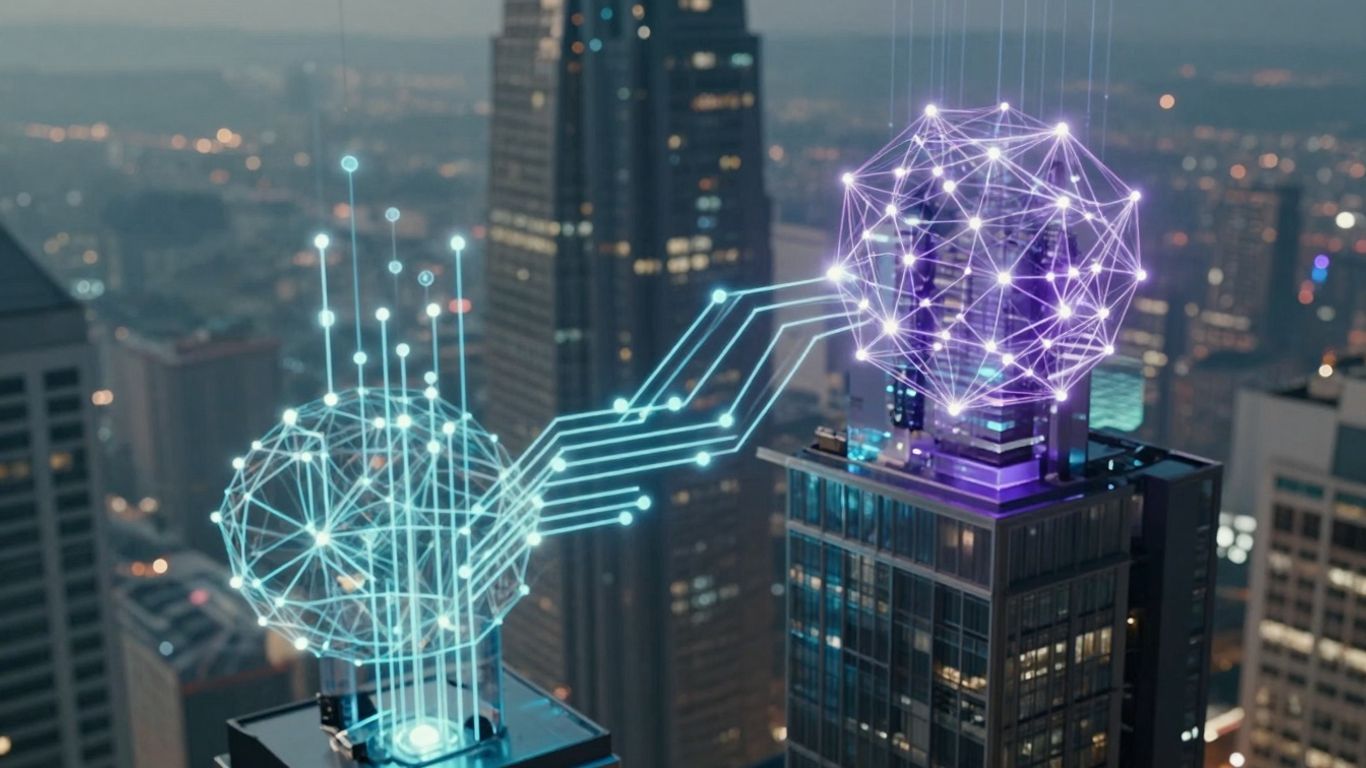
Artificial intelligence, while incredibly powerful, has a significant dependency: data. The quality and integrity of the data used to train AI models directly impact their performance and reliability. If the data is flawed, biased, or has been tampered with, the AI’s outputs can be inaccurate, leading to poor decisions. This is where blockchain technology steps in, offering a robust solution to bolster AI’s data foundation.
Ensuring Data Integrity for Reliable AI Models
Blockchain’s core feature is its immutable ledger, meaning once data is recorded, it cannot be altered or deleted. This characteristic is a game-changer for AI training data. By storing training datasets or references to them on a blockchain, we create a permanent, verifiable record. This ensures that the data AI models learn from is consistent and hasn’t been manipulated. This tamper-proof nature of blockchain data provides a solid foundation, leading to more accurate and dependable AI outcomes. It’s like having a digital notary that guarantees the authenticity of the information.
Enabling Auditable and Transparent AI Decision-Making
Beyond just training data, blockchain can also bring transparency to the AI’s decision-making process itself. Every step an AI takes, from processing input to reaching a conclusion, can be recorded on the blockchain. This creates a clear, step-by-step audit trail. Imagine an AI making a financial recommendation or a medical diagnosis; having this auditable record is incredibly important for accountability, especially in regulated industries. It allows us to trace exactly why an AI made a particular decision, making the system more trustworthy and easier to debug.
Facilitating Secure and Decentralized Data Sharing for AI
AI often requires access to vast amounts of data, which can be challenging to collect and share securely. Blockchain can facilitate this by providing a decentralized and secure platform for data sharing. Individuals or organizations can grant controlled access to their data, with all access and usage logged on the blockchain. This not only protects privacy but also allows AI to access diverse datasets without compromising security. This approach can also enable new models where individuals can monetize their data for AI training in a transparent and controlled manner, a concept explored in areas like product authentication.
- Immutable Record: All data entries are permanent and verifiable.
- Data Provenance: Clear tracking of data origin and history.
- Tamper Resistance: Protection against unauthorized modification.
- Decentralized Access: Secure sharing of data without a central point of failure.
The convergence of AI and blockchain creates a powerful synergy. Blockchain provides the secure, verifiable data infrastructure that AI needs to operate reliably, while AI brings intelligence and automation to blockchain systems. This partnership addresses critical issues of trust, transparency, and data integrity, paving the way for more robust and dependable AI applications.
Mutual Benefits: Enhanced Security, Efficiency, and Innovation
Bolstering Security Through Data Provenance and Threat Detection
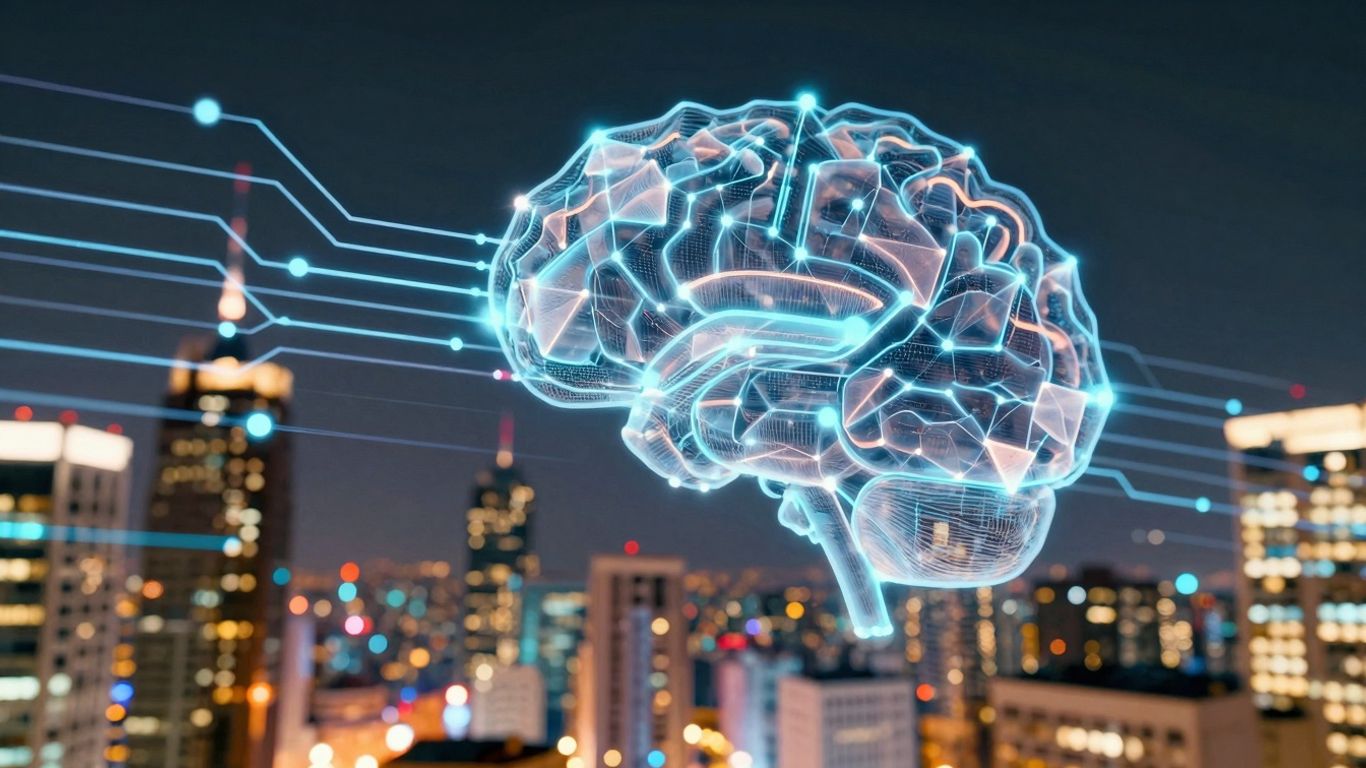
The combination of AI and blockchain brings a significant boost to security. Blockchain’s core feature, its unchangeable ledger, means that data recorded on it cannot be altered or deleted. This is incredibly useful for AI because it guarantees the origin and integrity of the data used to train AI models. When AI learns from data that is known to be trustworthy and hasn’t been tampered with, its predictions and decisions become much more reliable. Think about it: if an AI system is making important choices in finance or healthcare, you want to be absolutely sure the data it’s using is correct.
Beyond just data integrity, AI can actively watch over blockchain networks. AI algorithms are really good at spotting unusual patterns. They can monitor transactions and network activity to identify potential threats or fraudulent behavior much faster than humans can. This means that security breaches can be flagged and addressed before they cause significant damage, making the entire blockchain system more robust.
Streamlining Operations for Increased Efficiency
When AI and blockchain work together, they can make processes run much more smoothly. Blockchain provides a clear, shared record of all transactions and activities. AI can then analyze this information to find bottlenecks or areas where things are slowing down. For example, in a supply chain, blockchain can track every step a product takes from creation to delivery. AI can look at this data to figure out the most efficient routes, predict potential delays, and even suggest ways to reduce waste.
This kind of optimization leads to real cost savings and faster operations. Instead of manual checks and reconciliations, which are prone to errors and take time, automated systems powered by AI and blockchain can handle these tasks. This frees up people to focus on more complex problems.
Unlocking New Applications and Driving Innovation
The real excitement comes from the new possibilities that emerge when these two technologies are combined. They create a foundation for applications that weren’t really feasible before.
- Smarter Contracts: AI can make smart contracts, which are self-executing agreements on the blockchain, much more dynamic. They can adapt to changing real-world conditions automatically, without needing manual intervention.
- Personalized Services: In areas like healthcare or education, AI can analyze secure, blockchain-verified data to offer highly personalized experiences and treatments.
- Improved Decision-Making: By providing trustworthy data and advanced analytical capabilities, the AI-blockchain partnership can lead to better, more informed decisions in business and research.
This synergy isn’t just about fixing existing problems; it’s about building entirely new systems and services that are more secure, efficient, and intelligent. It opens doors to innovations that can reshape industries and create new markets.
Technical Integration: AI and Blockchain Techniques
Optimizing Smart Contracts with Artificial Intelligence
Smart contracts are the backbone of many blockchain applications, acting as self-executing agreements. However, their static nature can sometimes limit their adaptability. This is where Artificial Intelligence steps in, offering ways to make these contracts smarter and more efficient. AI can analyze the code of smart contracts before they are even put to use, looking for potential bugs or weak spots. This pre-deployment check helps prevent issues down the line. Think of it like having a super-powered proofreader for your digital agreements.
Dynamic Adaptation of Smart Contracts
Beyond just checking code, AI can also help smart contracts adapt on the fly. Imagine a contract that manages supply chain logistics. If an AI system detects a delay due to weather, it could automatically trigger a clause in the smart contract to adjust delivery timelines or reroute shipments, all without human intervention. This dynamic capability means contracts can respond to real-world changes in real-time, making them far more practical for complex operations. This ability to adjust based on external data is a significant step forward for automated agreements.
Intelligent Optimization of Transaction Costs
One of the well-known challenges with blockchain technology is the cost associated with transactions, often referred to as ‘gas fees’. These costs can fluctuate based on network activity. AI algorithms can be trained to predict these fluctuations. By analyzing historical transaction data and current network conditions, an AI can suggest the optimal time to execute a transaction or even adjust the gas price offered to minimize costs. This intelligent approach to transaction management can make blockchain operations much more economical, especially for high-volume applications. It’s about making blockchain more accessible and affordable for everyday use, which is a big deal for widespread adoption. The synergy between AI and blockchain offers significant potential for innovation and enhanced functionality within the cryptocurrency space.
Navigating Challenges in Artificial Intelligence in Blockchain
Bringing together artificial intelligence (AI) and blockchain isn’t as simple as just plugging them in. It’s a complex process with several hurdles that need careful attention. Think of it like trying to connect two very different, high-tech machines that weren’t originally designed to work together. We need to figure out how to make them communicate and operate smoothly.
Addressing Blockchain’s Scalability Bottlenecks
Many current blockchain networks, especially older ones, can be slow and struggle to handle a huge number of transactions quickly. This is a problem for AI, which often needs to process data in real-time or near real-time. Imagine an AI system trying to make split-second decisions, but it’s waiting for a blockchain to confirm a transaction. It just won’t work well. We need solutions that can speed up blockchain transactions without sacrificing security or decentralization. This might involve using newer blockchain designs or ‘layer-2’ solutions that handle transactions off the main chain.
Managing AI’s Demand for Large Datasets on Blockchain
AI is only as good as the data it’s trained on. If the data is flawed, biased, or incomplete, the AI’s decisions will be too. When we combine this with blockchain, we need to make sure the data being put onto the blockchain is accurate and reliable from the start. Storing and processing these massive datasets directly on a blockchain can strain the system’s capacity and increase delays, making it difficult for AI to access the information it needs efficiently.
Overcoming Standardization and Technical Complexities
One of the main issues is that AI and blockchain technologies often use different languages and structures. AI systems are built for processing vast amounts of data and making predictions, while blockchains are designed for secure, transparent record-keeping. Making these two talk to each other requires creating special bridges or middleware. This involves figuring out how to get AI models to securely access and use data stored on a blockchain, and how to record AI-driven decisions or outcomes back onto the ledger in a way that’s both efficient and trustworthy. The lack of universal standards across different blockchain networks and AI frameworks adds another layer of difficulty, making interoperability a significant challenge.
Establishing clear guidelines for both data integrity and ethical AI behavior is a must. As AI makes more decisions that are recorded on a blockchain, we have to think about fairness, transparency, and accountability. How do we ensure the AI isn’t making biased choices, and who is responsible if it does?
Successfully merging AI and blockchain requires a unique blend of skills. You need people who understand AI algorithms, data science, and machine learning, as well as blockchain architecture and cryptography. This interdisciplinary approach is key to building robust and effective integrated systems.
Looking Ahead: The Integrated Future
So, we’ve talked about how AI and blockchain are pretty amazing on their own, but when you put them together, it’s like they make each other even better. Think of it this way: blockchain gives AI a solid, trustworthy place to work with data, and AI makes blockchain smarter and more efficient. This combination is already starting to change things in areas like keeping our money safe, tracking where our stuff comes from, and even how we manage our health records. It’s not just about new tech; it’s about building systems that are more secure, more open, and just plain work better. As these technologies keep growing, figuring out how they fit together will be key for anyone wanting to stay on top of what’s next in the digital world. It’s an exciting time, and the possibilities for what we can build are really just beginning.
Frequently Asked Questions
What exactly is Artificial Intelligence (AI)?
Think of Artificial Intelligence, or AI, as teaching computers to be really smart, almost like people. It’s about helping machines learn from information, figure out problems, and make choices, much like our own brains do. This allows computers to handle tasks that normally need human thinking.
Can you explain what blockchain technology is in simple terms?
Blockchain is like a digital notebook that’s shared among many people. Instead of one person keeping records, everyone in the group has a copy. When a new entry is made, everyone checks and agrees it’s correct. This makes it very difficult to cheat or change things later, creating a super secure and open way to keep track of information.
Why are AI and blockchain considered a good team?
AI is fantastic at understanding information, but it needs good, trustworthy data to work its best. Blockchain provides that trustworthy data because it’s secure and hard to tamper with. In return, AI can help make blockchain systems smarter and work more efficiently by analyzing data and making better decisions.
How does AI help make blockchain better?
AI can help blockchain systems work faster and handle more information. For example, AI can predict when lots of people will be using the blockchain at once and adjust things to keep transactions smooth. It can also help find ways to use less energy, which is important for some blockchain systems.
How does blockchain help make AI better?
Blockchain makes AI more reliable by ensuring the data used to train AI models is accurate and hasn’t been changed. This means AI can learn from trustworthy information, leading to more dependable results. Blockchain also makes AI’s decision-making process more open and understandable.
What are some challenges when combining AI and blockchain?
Putting AI and blockchain together isn’t always easy. One big challenge is that blockchains can sometimes be slow when dealing with a lot of information, which AI often needs. Also, making sure the data stored on the blockchain is good enough for AI and that both technologies work well together requires careful planning and new technical solutions.