Blockchain technology is more than just the engine behind cryptocurrencies like Bitcoin. It’s a powerful system for recording information that makes it very hard or impossible to change, hack, or cheat. Think of it as a shared digital ledger that’s spread across many computers, making it super transparent and secure. This article looks at some of the many ways this technology is being used today, showing how it’s helping industries beyond just finance.
Key Takeaways
- Blockchain offers transparency and traceability in supply chains, helping track goods and reduce counterfeits.
- Healthcare data management can be improved with blockchain for better security, privacy, and patient control.
- Digital identity verification and KYC processes are made more secure and efficient using blockchain.
- Financial services can benefit from faster, borderless transactions and automated compliance through blockchain.
- Creators can protect intellectual property and automate royalty payments using blockchain’s transparent ledger and smart contracts.
Streamlining Supply Chains With Enhanced Transparency
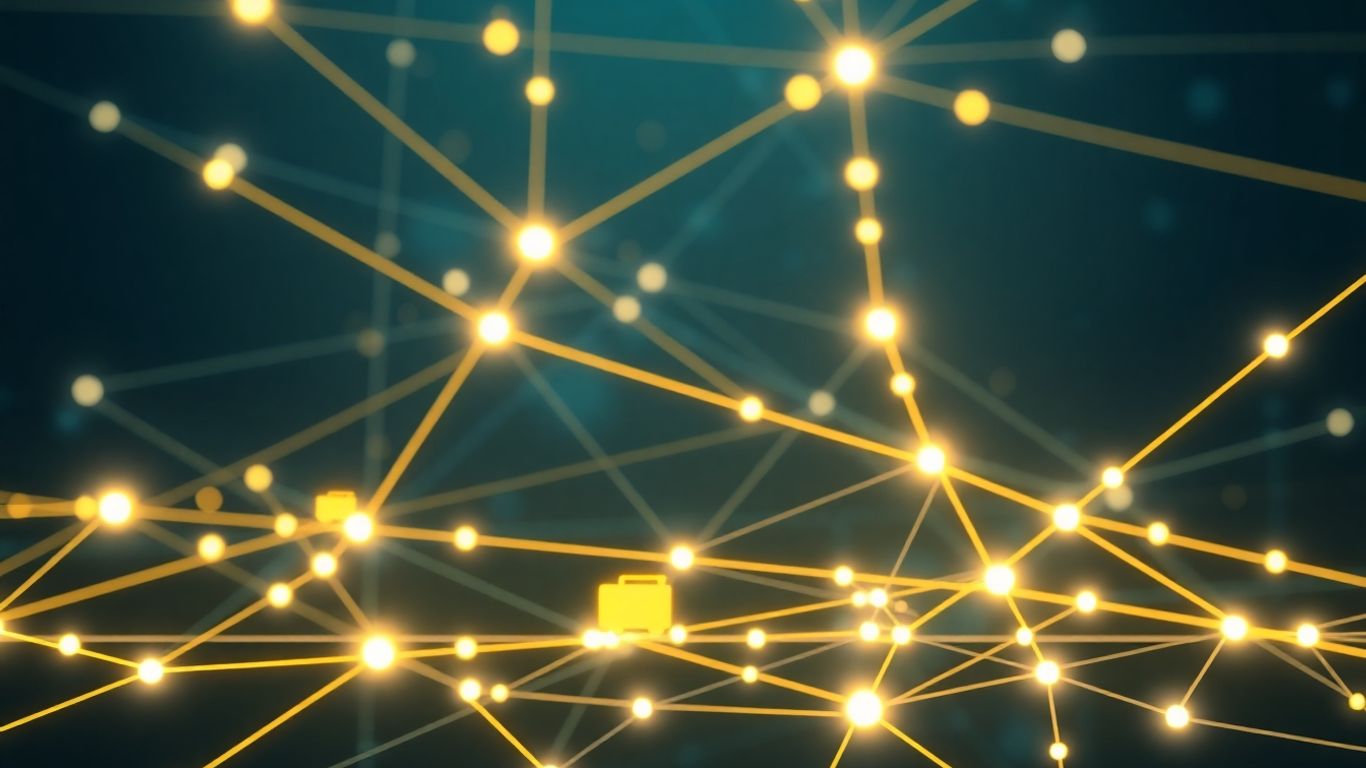
Think about how products get from where they’re made all the way to your doorstep. It’s a long and often complicated journey, right? Blockchain technology is like giving that journey a super-clear, unchangeable map. It’s essentially a shared digital ledger, spread across many computers, that records every single step a product takes. Because this ledger is shared and incredibly difficult to alter, everyone involved can trust the information it holds.
Tracking Goods From Origin To Consumer
This technology lets us follow a product from its very beginning all the way to the person buying it. Imagine a box of fresh produce. Blockchain can record when it was picked, where it was processed, how it was shipped, and when it arrived at the store. This means if there’s ever a question about where something came from or how it got here, the answer is readily available and verifiable. It’s like having a detailed history book for every item, offering a clear view of its path.
Ensuring Product Authenticity And Reducing Counterfeits
Counterfeit goods are a big problem across many industries, costing businesses billions and potentially harming consumers. Blockchain offers a powerful way to combat this. By creating a unique, verifiable digital record for each item, it becomes much harder for fake products to enter the supply chain undetected. Consumers can often scan a QR code to see the product’s journey, confirming its legitimacy. This level of transparency helps build trust and protects both brands and buyers. AI-powered blockchain traceability systems are enhancing transparency in the fashion industry, significantly reducing the risk of counterfeit products entering the market.
Improving Food Safety And Quality Assurance
Ensuring food safety and quality is a growing concern for everyone. Blockchain technology provides a robust solution by offering end-to-end traceability and transparency in the food supply chain. Each step in food production, processing, and distribution is recorded on the blockchain. This allows consumers to track the journey of food products from farm to table, viewing detailed information about the food’s source, production methods, and quality certifications. It also facilitates real-time monitoring of food safety parameters, like temperature, to make sure everything meets standards.
The ability to trace a product’s history immutably builds confidence and accountability throughout the entire supply chain, benefiting producers, distributors, and consumers alike.
Revolutionizing Healthcare Data Management
The healthcare industry is swimming in data, from patient charts and X-rays to research notes and information from your smartwatch. Traditionally, keeping all this information organized and secure has been a real headache. Systems often don’t talk to each other, making it tough to share information safely or for patients to really control their own health details. Blockchain technology is stepping in with a new approach to handle this sensitive information.
Securing Patient Information With Immutability
Think of a blockchain as a shared digital notebook that everyone can see but no one can erase or change once something is written. When patient data is added, it’s linked to the entry before it using complex math, creating a chain. This makes it incredibly difficult for anyone to mess with or delete records without leaving a clear sign. Because this information isn’t stored in just one place but is spread across many computers, it’s much harder for hackers to attack. It’s not like a single database that can be breached; the data is distributed, which really boosts security.
Enhancing Interoperability Between Providers
Getting a full picture of someone’s health can be tricky when their records are spread out across different hospitals, clinics, and labs. Blockchain can act like a bridge between these different systems. By creating a standard, secure way to access and share data, it helps various healthcare systems communicate better. This means doctors can get a more complete view of a patient’s history, which can lead to more accurate diagnoses and better-planned treatments. It helps break down the walls between different data systems, making sure the right information gets to the right person when they need it.
Streamlining Administrative Processes
Blockchain can also simplify the paperwork and behind-the-scenes work in healthcare. Imagine a system where patient consent for data sharing is automatically recorded and verified. This could speed up processes like getting referrals approved or sharing information with insurance companies. Smart contracts, which are like self-executing agreements on the blockchain, can automate many of these tasks. This means less manual work, fewer errors, and potentially lower costs for everyone involved. Patients can also gain more control over who sees their information and for how long, simply by managing permissions through their digital wallet, much like they would manage their cryptocurrency.
The shift towards patient-centric data management not only respects privacy but also builds greater trust between individuals and the healthcare systems that serve them.
Here’s a look at how patients can manage their data:
- Granting Access: Patients can give specific healthcare providers permission to view their medical history.
- Revoking Access: These permissions can be taken back at any time, giving patients ongoing control.
- Data Sharing: Records can be securely shared with specialists or for research purposes with explicit consent.
Transforming Financial Services Beyond Cryptocurrency
When most people hear "blockchain," they immediately think of Bitcoin or other digital coins. But this technology is doing so much more, especially in the world of finance. It’s quietly changing how we handle money, credit, and even the paperwork involved in financial dealings, often making things quicker and more straightforward.
Facilitating Borderless Payments And Remittances
Sending money across countries used to be a real headache. You’d deal with multiple banks, currency conversions, and fees at every turn. Blockchain offers a different way. It lets people send value directly to each other, anywhere in the world, without needing a bunch of middlemen. This means transactions can be finalized faster and with fewer charges. It’s like skipping the toll booths on a highway.
- Reduced transaction fees: Cutting out intermediaries lowers the costs associated with international transfers.
- Faster settlement times: Transactions can be confirmed and settled in minutes or hours, not days.
- Increased accessibility: It can provide financial services to people who don’t have access to traditional banks.
The ability to move value globally with greater speed and lower cost is a significant shift, opening up new possibilities for individuals and businesses alike.
Enabling Decentralized Finance (DeFi) Innovations
Decentralized Finance, or DeFi, is a major part of this shift. Blockchain platforms are making it possible for people to lend and borrow directly from each other. Instead of going through a bank, individuals can connect with lenders or borrowers. This can lead to better interest rates for everyone involved and more ways to fund projects. Crowdfunding also gets a boost, as platforms can use blockchain to manage contributions and share profits more openly.
Automating Compliance Processes With Smart Contracts
Keeping up with financial rules, like "Know Your Customer" (KYC) and "Anti-Money Laundering" (AML) requirements, is a big job for financial companies. Blockchain can help automate many of these tasks. By creating secure, verifiable digital identities and recording transactions in a way that can’t be changed, compliance checks can become more efficient and less likely to have mistakes. This not only saves companies time and money but also makes the accuracy of these checks better.
Securing Digital Identity And Verification
In our increasingly digital lives, managing who we are online has become a major concern. Traditional methods often mean handing over personal details to various companies, which can feel a bit risky. Blockchain offers a different approach, putting you more in control of your digital self. This technology allows for the creation of tamper-proof, verifiable digital identities that individuals can manage.
Creating Tamper-Proof Digital Identities
Think of blockchain as a super secure digital vault for your identity. Instead of relying on a single company to vouch for you, blockchain lets you create and manage your own digital credentials. These are like digital certificates that prove who you are or that you have certain qualifications, like a driver’s license or a university degree. These credentials are cryptographically signed, making them incredibly hard to fake. When you need to prove something, you can share just the specific credential needed, without revealing more personal information than necessary. This is a big step up from showing a physical ID or sending scanned documents.
Streamlining Know Your Customer (KYC) Processes
Remember filling out the same identity forms over and over for different banks or services? Blockchain can change that. With a blockchain-based digital identity, you can verify your identity once and then reuse that verified information across multiple services. This means less paperwork for you and a more efficient process for businesses. It cuts down on the time and resources spent on repetitive checks, making onboarding much smoother. This shift towards patient-centric data management not only respects privacy but also builds greater trust between individuals and the healthcare systems that serve them.
Empowering Users With Data Control
Your digital identity is increasingly valuable and vulnerable in today’s digital landscape. Blockchain technology presents a robust solution for managing your digital identity securely and efficiently. With blockchain-based identity management systems, you can create a tamper-proof and verifiable decentralized digital identity. Your identity information is encrypted and stored on the blockchain, accessible only through cryptographic keys that you control. This eliminates the need for centralized identity repositories prone to breaches and theft. Additionally, blockchain enables selective disclosure of identity attributes, allowing you to share specific information with trusted parties while maintaining privacy. This approach is a significant step forward in how we manage personal information online, offering a more secure and user-controlled alternative to current systems. It’s about giving individuals the reins to their own digital presence, much like how one might manage their personal style and presentation in fashion.
Because blockchain records are tamper-proof and transparent, they are excellent for preventing identity fraud. When your identity information is stored and verified on a blockchain, it’s much harder for someone to steal and misuse it. This decentralized approach reduces the reliance on single points of failure that are common in traditional systems, which are often targets for hackers. It builds a more trustworthy system for managing who is who in the digital world.
Enhancing Real Estate Transactions
Buying or selling property can feel like a maze of paperwork and waiting. Blockchain technology is stepping in to simplify this whole process, making it more secure and efficient for everyone involved. Think of it as a digital upgrade for how we handle property.
Digitizing Property Titles and Deeds
Traditionally, property records are kept on paper, often in local government offices. This method is slow, prone to errors, and can even lead to fraud. Blockchain offers a way to create digital, tamper-proof records of who owns what. Each property’s title and deed can be recorded on a distributed ledger, creating a clear and permanent history of ownership. This means less chance of disputes and a much easier way to verify ownership. It’s a big step towards making property records more reliable and accessible.
Automating Escrow and Contract Execution
When you buy property, there’s usually an escrow process to hold funds until all conditions are met. Blockchain can automate this using smart contracts. These are self-executing agreements where the terms are written into code. For example, a smart contract could automatically release funds from escrow once the property title is officially transferred on the blockchain. This speeds things up, reduces the need for intermediaries, and cuts down on the potential for mistakes or delays. It brings a new level of trust and speed to property deals.
Enabling Fractional Ownership and Tokenization
Blockchain also opens doors to new ways of investing in real estate. Through a process called tokenization, a property can be divided into digital tokens. Each token represents a share of ownership. This allows multiple people to invest in a property, even with smaller amounts of money. It makes real estate investment more accessible to a wider range of people and can increase the liquidity of property assets, meaning they can be bought and sold more easily. This innovation could change how people think about property ownership and investment opportunities, making it more like trading stocks. You can learn more about how blockchain is changing various industries at blockchain and DeFi projects.
The shift towards digital property records and automated transactions promises to reduce administrative burdens, minimize processing times, and significantly lower the risk of fraud and disputes in real estate dealings.
Protecting Intellectual Property And Royalties
The digital age has opened up new avenues for creators, but it has also presented significant challenges in safeguarding their work and ensuring fair compensation. Blockchain technology offers innovative solutions to these issues, extending its utility far beyond financial applications.
Creating Immutable Records Of Ownership
For creators, whether they are artists, musicians, writers, or developers, proving ownership of their work can be complex. Blockchain provides a way to establish a permanent, unalterable record of intellectual property. When a piece of work is registered on a blockchain, it receives a unique digital identifier and a timestamp. This makes it substantially more difficult for others to falsely claim ownership or dispute the original creator’s rights. This immutable record serves as a verifiable proof of creation and ownership, accessible to anyone who needs to confirm authenticity.
- Permanent Record: Ownership details, once recorded, cannot be changed or deleted.
- Public Verification: The blockchain allows for transparent checking of ownership claims.
- Timestamping: Provides definitive proof of when a work was registered, which is important for copyright purposes.
Automating Royalty Payments With Smart Contracts
Smart contracts, which are self-executing agreements with terms written directly into code, can revolutionize how royalties are managed and distributed. Imagine a scenario where a song is streamed online. A smart contract could be programmed to automatically distribute a predetermined percentage of the revenue to all involved parties – the songwriter, producer, performers, and even the record label – with each transaction. This automation bypasses the need for manual processing and intermediaries, reducing delays and the potential for errors in payment distribution.
This automated system can handle complex royalty structures, ensuring that all contributors receive their rightful share of income without the need for a central administrator to oversee every single payment.
Facilitating Decentralized Autonomous Organizations (DAOs)
While not directly about IP protection, Decentralized Autonomous Organizations (DAOs) can play a role in managing and governing intellectual property collectively. DAOs allow groups of individuals to pool resources and make decisions collectively through smart contracts. In the context of IP, a DAO could be formed to collectively own, manage, and license a piece of intellectual property, with all decisions and revenue distribution governed by transparent, on-chain rules. This model can foster collaboration and ensure that all stakeholders have a voice and a stake in the IP’s success.
Improving Governance And Voting Systems

When we talk about blockchain, most people immediately think of cryptocurrencies. But the technology has a lot more to offer, especially when it comes to how we run elections and manage our governments. Traditional voting systems, as we know them, have some pretty big issues. They can be slow, hard to audit, and sometimes, people just don’t trust the results. Blockchain offers a way to make things better.
Securing Democratic Elections With Blockchain
Think about a voting system built on blockchain. Every vote cast would be recorded as a transaction on a distributed ledger. This ledger is shared across many computers, making it incredibly difficult for anyone to go back and change a vote without everyone else noticing. This immutability means that once a vote is recorded, it’s pretty much set in stone. It creates a clear, unchangeable history of every vote, which is a huge step up from current systems where records can sometimes be altered or lost.
Preventing Fraudulent Voting Practices
Because the ledger is distributed and shared, any attempt to tamper with a vote would be immediately apparent to all participants. This transparency helps build confidence. People can see that the process is happening as it should, and that their vote is being counted. It’s like having a public notary for every single vote, but on a massive, digital scale. This makes it much harder to cheat or tamper with election results, so everyone can trust the outcome more.
Enhancing Transparency In Public Records
Beyond just security, blockchain can bring a new level of openness to elections. Authorized observers or even the public could potentially view the voting records (without seeing who voted for whom, of course). This transparency helps build confidence. When people believe that elections are fair and that their government is operating transparently, democracy works better. Blockchain can help achieve this by:
- Making vote counting more reliable.
- Allowing voters to verify their vote was cast as intended.
- Reducing the chances of fraud or manipulation.
Ultimately, the goal here is to increase trust. When people believe that elections are fair and that their government is operating transparently, democracy works better. Blockchain can help achieve this by making vote counting more reliable, allowing voters to verify their vote was cast as intended, and reducing the chances of fraud or manipulation.
The Expanding World of Blockchain
So, we’ve seen that blockchain is much more than just the technology behind cryptocurrencies. It’s a powerful tool that can make many different kinds of operations more secure, open, and efficient. From keeping track of food in the supply chain to managing important health records, blockchain is quietly working behind the scenes. As this technology continues to develop, we can expect to see even more innovative uses that will likely change how we do business and interact with information in the years to come.
Frequently Asked Questions
What is blockchain technology, and how is it different from what we see with Bitcoin?
Think of blockchain as a super secure digital notebook that’s shared among many computers. Every time something new happens, like a record being added, it’s like writing a new page in the notebook. This page is then linked to the previous one, creating a chain of pages (blocks). Because it’s shared and very hard to change once written, it’s trustworthy. Bitcoin uses this technology to keep track of who owns what digital money, but blockchain can be used for many other things besides just digital money, like tracking products or keeping important records safe.
How can blockchain help make sure products are real and not fake?
Imagine you buy a special pair of sneakers. Blockchain can create a digital history for those sneakers, showing exactly where they were made, when they were shipped, and how they got to the store. Because this history is very hard to fake or change, you can be more sure that the sneakers are the real deal and not copies. This helps companies stop fake products from being sold.
Can blockchain really make healthcare better and safer?
Yes, it can! Your health information is very private. Blockchain can help keep this information safe and secure, making sure only the right doctors or you can see it. It can also help different hospitals or clinics share your health records more easily and safely when needed, so you get the best care possible without your private details getting lost or misused.
How does blockchain help with sending money to other countries?
Sending money overseas can be slow and cost a lot because of many middlemen. Blockchain lets people send money directly to each other, like sending a message. This can be much faster and cheaper. It’s like having a global digital post office for money that doesn’t need lots of stops along the way.
What is ‘digital identity,’ and how does blockchain help with it?
Your digital identity is like your online ID card – it proves who you are. Blockchain can create a secure and unique digital ID for you that you control. This means you don’t have to keep giving out the same personal information over and over again to different websites or services. You can share only what’s needed, and it’s much harder for someone to steal your identity.
Can blockchain help artists and musicians get paid fairly for their work?
Absolutely. When an artist creates something, like a song or a piece of art, blockchain can create a permanent record of who owns it. It can also be used to automatically send payments (like royalties) to the artist every time their work is used or sold. This makes sure creators get the money they deserve without complicated paperwork.