Construction projects involve many layers of responsibility. Owners, contractors, architects, engineers, consultants, facility managers, and individual trades may all be involved at different stages. On a straightforward project with experienced teams and a clearly defined scope, those existing layers may provide all the oversight that is needed. Other projects are more complicated, and having another experienced set of eyes on the work can provide useful context for the owner.
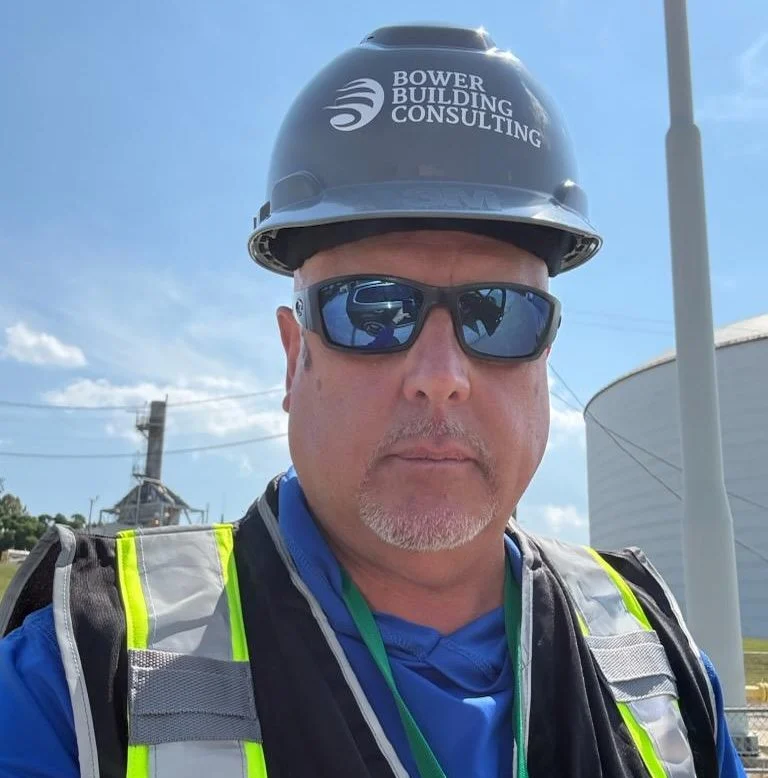
Mark Siegwald has more than 24 years of experience across insurance, restoration, property damage, and building consulting. A Senior Consultant with Bower Group, his work includes Clerk of the Works assignments in restoration and industrial settings. His career has given him experience looking at projects from the perspectives of claims, restoration, estimating, auditing, and construction oversight.
Siegwald does not believe every construction project automatically needs additional oversight. Instead, he recommends looking at the circumstances surrounding the project and asking whether the owner has enough visibility into what is happening in the field.
“Adding another person to a project just for the sake of having another person there does not necessarily accomplish anything,” Siegwald says. “The question I would ask is whether there is a reason the owner would benefit from someone consistently observing and documenting the work.”
Complexity Can Change the Oversight Equation
Project size alone does not determine whether additional oversight makes sense. A relatively modest project can become complicated when several trades are working in the same areas, the building remains occupied, unexpected conditions are discovered, or construction must happen within narrow operational windows.
A larger project may have extensive management resources already in place. A smaller restoration project, meanwhile, could involve an existing building with limited documentation and conditions that are not fully understood until demolition begins.
According to Siegwald, complexity is often more important than the dollar value of the project.
“I would look at how many moving pieces there are and how much of the work depends on something else happening correctly first,” he explains. “Once you have several trades working around each other, changing conditions, or areas that are going to become inaccessible, consistent observation can become much more useful.”
That does not mean an observer should begin managing those trades. In a Clerk of the Works role, the value comes from independently observing progress, documenting conditions, asking questions, and helping the owner understand what is happening.
Existing Buildings Can Bring More Unknowns
New construction has its own challenges, but restoration and renovation projects often begin with something new construction does not have: an existing building with a history.
Walls may conceal previous repairs. Original construction may differ from available plans. A fire or water loss can expose conditions nobody expected to find. Materials and building systems may have been changed several times over the property’s life.
Siegwald has spent much of his career around damaged properties and restoration work, and that experience has made him cautious about assumptions.
“Existing buildings have a way of reminding you that what you expected to find and what is actually there can be two different things,” he says. “When something unexpected is uncovered, I think the first step is understanding what you are looking at and making sure the right people know about it.”
These situations can make regular observation particularly useful because the project may change as new conditions are discovered.
Active Facilities Present a Different Challenge
Industrial projects can create another reason for additional project visibility. Construction may be only one of many things happening inside the facility.
Employees still need to work. Equipment may need to remain available. Production schedules can affect access to certain areas. A construction sequence that appears efficient on paper may be difficult to execute without interfering with the owner’s operations.
“When you are working inside an operating facility, the construction project is not necessarily the only priority in the building,” Siegwald says. “You have to recognize that the owner has a business to operate at the same time.”
In these environments, regular observation can help provide context about how the construction work is interacting with the facility around it. It can also help identify questions involving access, sequencing, changing site conditions, or communication before they create greater disruption.
Some Work Will Only Be Visible for a Short Time
Another consideration is how much of the work will eventually be concealed.
Mechanical systems, electrical work, insulation, structural components, and other construction may disappear behind walls, ceilings, finishes, or equipment as the project progresses. If a question arises afterward, answering it can become more difficult.
This is one area where documentation and timely observation can have lasting value.
Research demonstrates why catching concerns early deserves attention. A 2025 study published in the Journal of Construction Engineering and Management examined actual field rework costs and found average precompletion rework costs of 0.38% of contract value. When estimated postcompletion corrections were included, the average increased to 0.76%, with substantial variation between projects. The researchers also found that rework costs had been significantly underreported.
Earlier research involving 359 construction projects found that direct rework costs alone often reached about 5% of total construction costs, illustrating how widely the impact can vary depending on how rework is defined and the type of project being studied.
Siegwald sees the practical lesson as straightforward.
“If you have a question about something that is visible today and will be behind a wall next week, today is probably the better time to ask it,” he says. “That does not mean there is a problem. It means you still have an opportunity to understand and document the condition without undoing finished work.”
Owners Should Consider How Much Visibility They Actually Have
Owners do not necessarily need to be construction experts, but they do need reliable information about their projects.
Progress meetings, schedules, contractor reports, photographs, and invoices all provide information. The question is whether those sources give the owner enough context to understand what is happening between meetings and throughout the different phases of construction.
This becomes especially relevant when an owner does not have internal staff available to visit the project regularly. Additional observation can provide continuity by creating a record of what changed from one visit to another and whether previously raised questions were addressed.
Siegwald cautions that more oversight should not automatically mean more interference.
“There is a balance,” he says. “You do not want somebody onsite creating unnecessary questions or getting in the way of experienced people doing their jobs. At the same time, you do not want legitimate questions left unanswered because everyone assumes somebody else is watching.”
More Eyes Should Create Clarity, Not Conflict
Perhaps the most important consideration is what additional oversight is expected to accomplish.
A Clerk of the Works or other independent observer should not be introduced simply to find mistakes. That approach can quickly create an adversarial environment and undermine communication among people who ultimately need to work together.
Instead, Siegwald believes the objective should be greater visibility.
“There are plenty of projects where the existing team has the experience, communication, and resources to provide the oversight that is needed,” he says. “There are other projects where the owner may benefit from another experienced person consistently seeing what is happening. I would make that decision based on the project rather than assuming one approach fits everything.”
Restoration work with uncertain existing conditions, construction inside operating industrial facilities, projects involving extensive concealed work, and situations where owners have limited onsite representation can all make additional observation worth considering.
Ultimately, the question is not whether every construction project needs another set of eyes. It is whether the people responsible for the property have enough information to recognize important questions while there is still time to answer them.