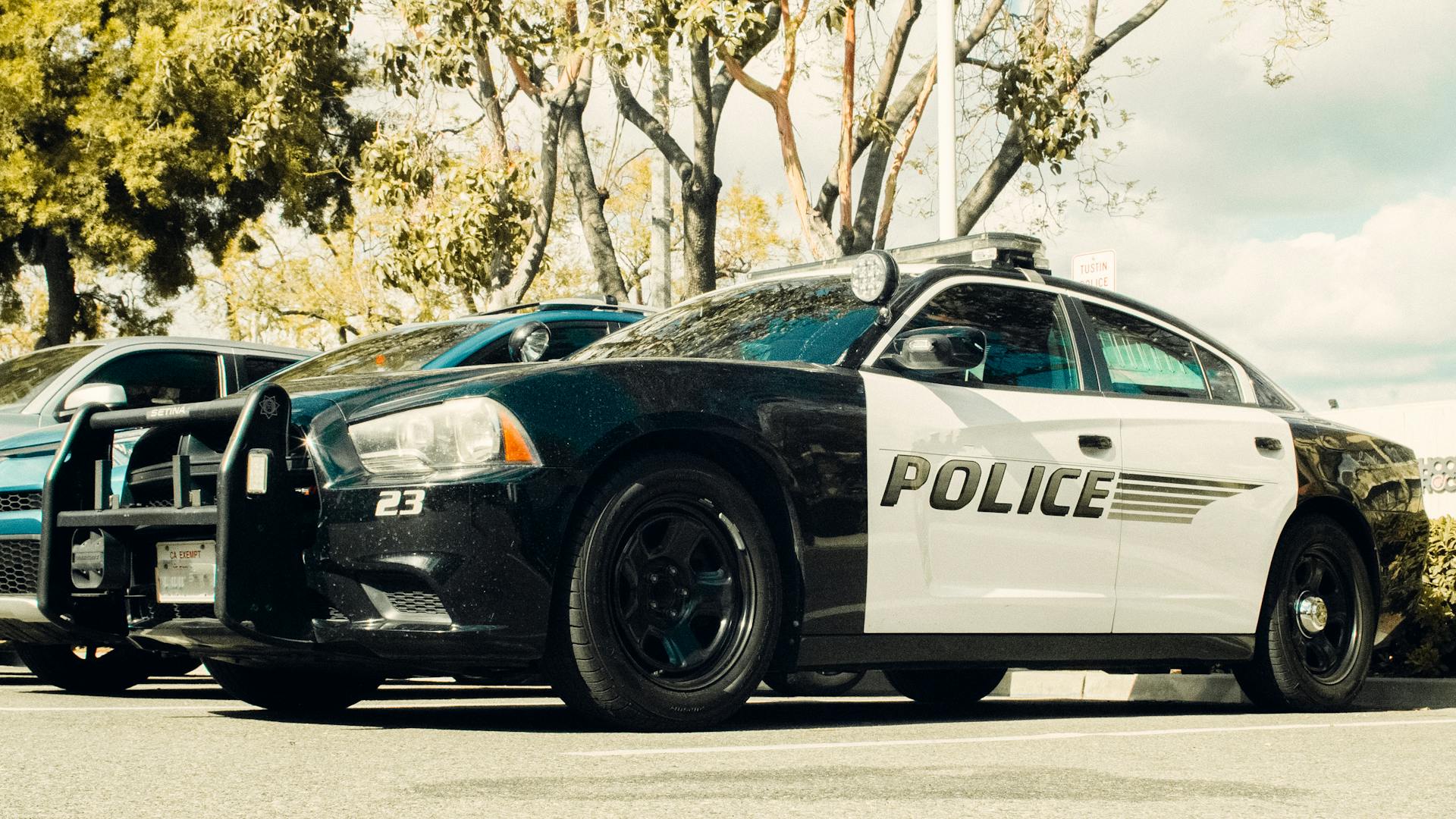
Policing has entered a period of pressure and rapid change. Departments across the United States face staffing shortages, public scrutiny, and rising expectations from communities. A 2024 national survey found that 70% of law enforcement agencies report that recruiting officers is more difficult than it was five years ago, while many departments remain below pre-2020 staffing levels. Another report shows 65% of agencies receive too few applicants to meet hiring goals, leaving existing officers stretched thin.
In this environment, leadership inside police organizations matters more than ever.
Few leaders understand that challenge as clearly as Wade Lyons, a former Austin Police Department commander who spent nearly two decades overseeing training, recruiting, investigations, and operational units before founding the security firm Black Onyx Investigations. His experience managing major training programs, reviewing critical incidents, and managing large teams gives him a unique perspective on what separates strong police leaders from ineffective ones.
“People think leadership in policing is about giving orders,” he says. “It’s actually about building systems that help officers make good decisions when you’re not in the room.”
Below are several traits and practices that define effective police leadership in the modern era.
1. Clear operational standards
Modern policing runs on precision. When expectations are vague, officers are forced to improvise under pressure.
Strong leaders eliminate that ambiguity.
Lyons recalls one moment early in his command career that shaped his approach.
“I remember reviewing a use-of-force incident where the officer technically followed policy, but the situation escalated faster than it needed to,” he says. “When we looked at the policy, and training records, the guidance was vague. That was a leadership problem, not an officer problem.”
Effective police leaders translate values into specific actions. That includes:
- Clear use-of-force guidelines
- Scenario-based training
- Documented procedures for common incidents
Officers should know exactly what success looks like before they leave the station.
When standards are consistent, accountability becomes fair and predictable.
2. Training that reflects real situations
The pace of modern policing demands constant skill development.
Leaders who treat training as a routine requirement miss the opportunity to improve performance.
Lyons spent years running police training programs. One lesson stood out quickly.
“Watching slides for eight hours isn’t training,” he says. “The best programs put officers in realistic, high-stress scenarios where they have to think, communicate, and move.”
Many departments are moving toward scenario-based training exercises that simulate complex calls. These programs train officers to evaluate threats, communicate with citizens, and make decisions under stress.
Effective leaders recognize that attendance is a vanity metric, proficiency is the only outcome that matters.
Critical Performance Indicators:
- Did officer decision-to-action time improve?
- Did communication remain tactical and controlled during high-stress incidents?
- Are we seeing a downward trend in citizen complaints?
Training should be dictated by the realities of the street, not the convenience of the classroom.
3. Recruitment that focuses on character
Recruiting police officers has become one of the biggest challenges in public safety.
A national report found that many large police departments shrank by 10% or more in recent years, while resignations remain higher than before 2020.
Strong leaders treat hiring as a strategic function rather than a simple intake process.
Lyons recalls reviewing hundreds of background investigations while overseeing recruitment operations.
“One applicant had excellent physical test scores and polished interview answers,” he says. “The background check, however, revealed a pattern of workplace dishonesty. That disqualified him immediately. Skill can be taught. Integrity cannot.”
Effective police leaders emphasize:
- thorough background investigations
- structured interviews
- psychological evaluation
- Emotional intelligence (EQ)
We need candidates who can navigate high-stress incidents without losing their moral compass or their connection to the community. Emotional intelligence is critically important.
Hiring mistakes create long-term problems for departments and communities.
4. Communication with the public
Police leaders today must operate in a public environment where information spreads quickly, and trust can shift overnight.
Good communication is no longer optional.
Effective leaders speak with communities early and often. They explain decisions clearly. They also listen.
Lyons points to community meetings as one of the most valuable tools available.
“I recall standing in a neighborhood meeting where residents were angry about crime and frustrated about response times,” he says. “Instead of defending the department, we walked through how calls were prioritized and what resources were available. Once people understood the system, the conversation changed.”
Police leaders should build regular channels for communication such as:
- community forums
- neighborhood partnerships
- transparent updates after major incidents
Trust grows when people understand how decisions are made.
5. Leaders who stay engaged with the work
Another common mistake in law enforcement leadership is distance.
As officers move up the ranks, some stop engaging with day-to-day operations. That disconnect weakens credibility.
Lyons believes leaders should remain close to the work.
“When officers know you’ve handled the same calls they’re handling, they listen differently,” he says. “You don’t need to prove authority. They already know you understand the job.”
Leaders who stay engaged can:
- Identify operational problems faster
- Mentor younger officers
- Evaluate training gaps
That involvement also improves morale.
Officers tend to trust leaders who show up during difficult situations.
6. Data-driven decision making
Modern policing generates large amounts of operational information.
Effective leaders use that information to guide strategy.
For example, crime trends can inform patrol assignments. Response time data can identify staffing problems. Training records can reveal skill gaps.
Lyons explains the value of this approach with a simple example.
“We once noticed a pattern of traffic accidents at the same intersection,” he says. “Instead of writing more tickets, we worked with city planners to adjust traffic flow. Accidents dropped almost thirty percent.”
Leaders who analyze patterns can allocate resources more effectively and move from reactive to proactive policing.
7. Leadership built on service
The final quality may be the most important.
Policing is fundamentally a service profession.
Effective leaders remind their teams of that mission.
Lyons often tells young officers that authority is not the purpose of the badge.
“The badge gives you responsibility, not power,” he says. “Your job is to protect people and solve problems. If you keep that focus, the rest of the work makes sense.”
This mindset shapes how leaders train officers, interact with communities, and manage crises.
Departments led by service-oriented leaders tend to build stronger internal culture and stronger public trust.
The path forward
The landscape of policing is in a state of constant evolution. Rising expectations, staffing shortages, and a spotlight of public scrutiny are now the standard operating environment.
In this climate, the difference between a department that survives and one that thrives is leadership.
The most effective police leaders today focus on operational clarity, disciplined training, character-first hiring, open communication, and data-guided strategy.
Those practices create organizations that are resilient under pressure.
And as Lyons puts it, the mission remains straightforward.
“At the end of the day, the goal is simple,” he says. “Prioritize officer safety, uphold community trust, and advance the profession for the next generation.”