For decades, contact service and sales teams have relied on a familiar rhythm: agents take calls, conversations end, and the analysis begins. In some cases, managers aren’t able to review recordings until several days after they are made. By then, the moment had passed or the mistake was repeated across numerous subsequent calls.
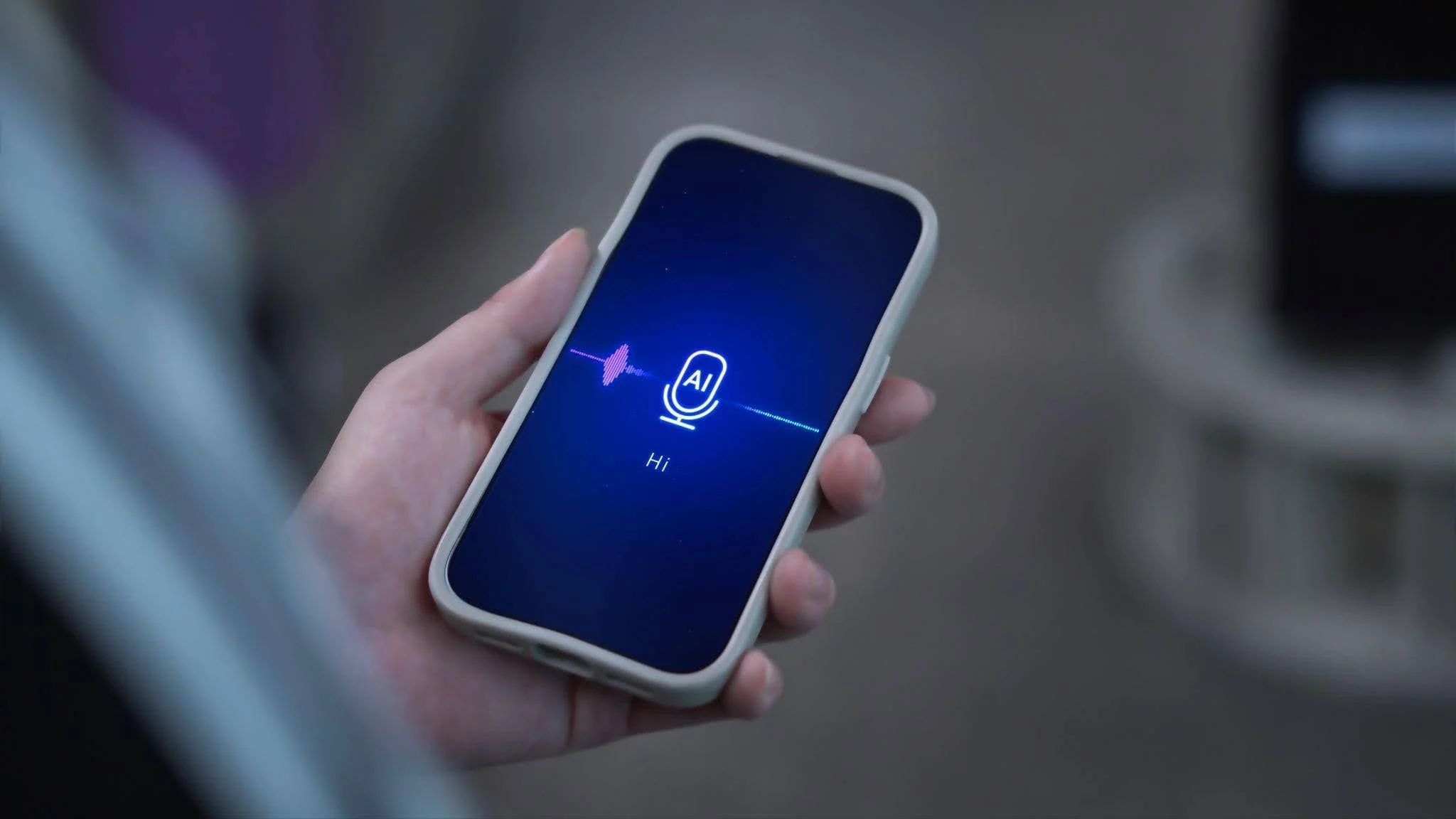
That era is ending. Real-time voice AI platforms now capture, transcribe, and analyze customer conversations as they happen, surfacing insights and recommendations while there’s still time to act. Sales reps receive live coaching cues. Voice agents handle routine inquiries autonomously. Human agents get instant answers to customer questions. Leaders gain visibility into sentiment, compliance issues, and performance trends across all customer interactions before they escalate. The result is a fundamental shift in how teams compete: not on reaction, but on real-time responsiveness.
What makes modern voice intelligence increasingly powerful is the compounding effect of conversation data. Every recorded interaction adds to a structured knowledge layer that intelligent virtual agents can draw from when assisting on future calls. Real-time coaching improves not just because the technology is sophisticated, but because the platform grows smarter with every conversation it captures.
What Is Voice Intelligence?
Voice intelligence goes beyond simple speech-to-text transcription. It is a system that captures spoken interactions, converts them to searchable text in near real-time, and applies AI to extract meaning from what was said and how it was said. At its core, voice AI uses speech recognition to process audio streams in milliseconds, applying natural language processing to identify intent, emotion, and context within the conversation flow.
Modern voice AI platforms detect emotional tone, identify keywords and competitive mentions, flag compliance risks, and suggest next steps. This differs from traditional speech analytics, which focuses narrowly on content. Voice intelligence adds context: is the customer frustrated or engaged? Did the agent pick up on a buying signal? What was the sentiment trajectory during the call? These qualitative dimensions matter because they shape outcomes that spreadsheets alone don’t capture.
The technical foundation is streaming speech recognition with sub-300-millisecond latency, paired with AI models trained on millions of customer interactions. Conversation intelligence platforms store this unstructured call data in an accessible, structured format so that IVAs can draw on accumulated interaction history to deliver guidance that becomes more precise over time. When deployed effectively, voice AI platforms can recognize intent, surface relevant knowledge, and flag risks before agents have to scramble for answers or supervisors intervene on escalations.
Conversation Intelligence in Sales: Use Cases & Benefits
Voice intelligence for sales teams centers on two core applications: real-time guidance during live calls and post-call analytics that inform coaching, forecasting, and strategy.
Use Cases
Real-time guidance during live calls. Modern voice AI platforms act like a coach in your rep’s ear, surfacing battle cards when objections arise, competitor intel when rivals are mentioned, and prompts to slow down when the AI detects hesitation. This live intervention works because it happens at the moment of maximum impact, not days later in a training email. AI agents monitor conversation flows continuously, recognizing objection patterns and surfacing the right playbook at the right moment. Critically, the quality of these real-time prompts improves as the platform accumulates more call data. Each conversation the system captures adds nuance to the knowledge layer IVAs draw from, making guidance sharper and more context-aware with every interaction. These AI agents operate without disrupting the rep’s natural rhythm, acting as silent collaborators rather than interruptions.
Post-call analytics and trend spotting. Voice intelligence platforms automatically summarize calls, extract topics, update CRM records, and surface trends across the team. Sales leaders get dashboards showing win themes, loss reasons, and coaching gaps instead of manually reviewing call recordings. This voice data becomes a continuous source of insight for improving the sales process across every rep on the team. It also feeds directly back into the real-time assist layer, ensuring that patterns discovered in post-call analysis translate into better in-call guidance going forward.
Benefits
Faster rep ramp time. New hires get real-time guidance from the first call, allowing them to handle objections confidently before they have built up years of experience. As the platform learns from senior rep call patterns over time, the guidance it delivers to newer reps reflects proven approaches rather than generic scripts. Teams using voice intelligence consistently report shorter time-to-productivity for new reps.
Reduced post-call admin. Automatic call transcripts and CRM logging can cut post-call administrative work significantly, giving reps more time for actual selling and letting them spend time closing rather than on documentation.
Smarter coaching at scale. Managers can coach on patterns across hundreds of calls rather than anecdotes from a handful of spot-checked recordings. This shifts coaching from reactive to systematic and supports continuous optimization of sales conversation flows. The platform’s growing conversation library makes this coaching progressively more precise, as pattern detection improves with a larger and more varied dataset.
Earlier deal risk detection. When sentiment analysis flags a shift in tone, engagement drops, or key stakeholders go quiet, voice intelligence surfaces those signals before they show up as a lost deal in the CRM.
Conversation Intelligence in Customer Service: Use Cases & Benefits
For service teams, voice intelligence addresses a distinct set of challenges: managing call volume, improving agent efficiency, and maintaining quality and compliance at scale. AI agents and AI voice agents are changing what’s possible across all three, handling routine conversation flows automatically while escalating complex issues to human agents with full context intact.
Use Cases
Knowledge surfacing at point of need. When a customer describes an issue, AI voice agents recognize it and surface the relevant FAQ, ticket template, or troubleshooting guide directly in the agent’s interface. This surface-level speed is valuable from day one. Over time, as the conversation intelligence platform builds a richer picture of how customers describe problems and what resolutions work, the knowledge it surfaces becomes more accurate and more specific to the organization’s actual call patterns. This reduces average handle time and improves first-contact resolution because human agents have better information faster, even during peak call volume periods.
Sentiment monitoring and escalation prevention. Sentiment analysis runs continuously during live calls. When the system detects escalating frustration, supervisors receive an alert and can intervene before a difficult customer interaction becomes a formal complaint. This prevents resolution failures from becoming recurring patterns and reduces the need for human intervention on calls that could have been resolved earlier.
Compliance and quality without manual overhead. Voice intelligence automates compliance monitoring by flagging regulatory language violations, missed required disclosures, and prohibited sales tactics. Call transcripts are generated automatically, reducing post-call paperwork and creating searchable records for regulatory reporting. AI-powered quality assurance replaces the manual sampling that traditionally covered only 1–2% of calls.
Benefits
Higher first-contact resolution. When human agents have the right information surfaced in real time, they resolve customer support issues on the first call rather than scheduling callbacks or escalating unnecessarily.
Reduced agent training time. Real-time guidance from AI voice agents shortens the learning curve for new staff significantly. Instead of memorizing every policy and procedure before taking calls, agents can rely on live prompts while they build experience. As the platform’s conversation library grows, those prompts increasingly reflect how the organization’s own top performers handle specific situations — a meaningful advantage for contact centers managing high call volumes and frequent onboarding cycles.
Automated quality assurance. Traditional QA requires auditors to manually sample calls. Voice intelligence can analyze 100% of customer interactions automatically across every channel, flagging issues at scale without adding headcount and enabling continuous optimization of service quality.
Improved agent and customer satisfaction. When agents feel supported and equipped during difficult calls, both job satisfaction and customer satisfaction improve. Contact centers using voice AI consistently report higher sentiment scores across both agent and customer interactions.
Top Voice Intelligence Tools for Sales and Customer Service
Choosing between voice intelligence solutions depends on your team’s size, use case, and existing tech stack. Key features to evaluate include speech recognition accuracy, the depth of AI-powered analytics, real-time agent assist capabilities, conversation flow configuration, and how well the platform integrates with your CRM and contact center infrastructure.
RingCentral AI Conversation Expert (ACE). RingCentral’s voice intelligence tool analyzes conversations after they occur, supporting both sales and customer support teams. ACE delivers transcription, summaries, customer insights, and coaching recommendations. It transforms calls, meetings, and emails into structured insights that help improve performance over time.
ACE is built into RingCentral’s business communications platforms and integrates with CRMs such as Salesforce to automatically capture key conversation details and keep records up to date.
It works alongside RingCentral AI Virtual Assistant (AVA), which supports agents during live interactions with real-time transcription and coaching. While AVA enhances in-the-moment performance, ACE focuses on post-conversation analysis to drive continuous improvement.
Gong. The most widely adopted revenue intelligence platform for enterprise sales teams, combining call recording with deal inspection, pipeline analytics, and forecasting. Strong for sales organizations of 50 or more reps that want voice intelligence and pipeline visibility in one place. Less focused on customer support, contact center operations, or deploying voice agents for self-service.
Cresta. Cresta deploys AI voice agents alongside real-time agent assist in a unified platform built for service teams. A notable strength is post-handoff continuity—when an AI agent escalates to a human, full context carries forward and agent assist continues without interruption. Best for enterprise contact centers deploying voice agents at scale and managing high call volume across both automated and human interactions.
Chorus.ai (by ZoomInfo). A proven sales-focused voice AI platform now integrated with ZoomInfo’s B2B database, automatically enriching call participants with org charts, buying signals, and technographics. Well suited for enterprise sales teams already using ZoomInfo.
CallMiner. Built specifically for compliance-heavy contact centers, CallMiner’s Eureka platform uses AI-powered speech recognition and natural language processing to analyze 100% of voice and text customer interactions. Pre-built compliance scores, PCI DSS auto-redaction, and real-time regulatory alerts make it a natural fit for financial services, healthcare, and other regulated industries.
Avoma. A full-suite option combining real-time coaching, live answer cards for objection handling, AI call scoring, and deal risk alerts at a more accessible price point than Gong or Chorus. A strong fit for growing mid-market sales teams that want comprehensive voice AI and voice intelligence without enterprise-level cost or complexity.
Building a Voice Intelligence Strategy
Deploying voice intelligence effectively requires more than buying software. Teams need to think about three dimensions below and consider how AI agents will fit into each one.
Integration and workflow. Voice AI platforms only deliver value when they connect to the systems where teams already work. That means CRM integration for automatic call recording and deal updates, knowledge base connections for real-time surfacing, and supervisor dashboards for visibility into call volume and performance trends. Before selecting a platform, audit your existing stack: Salesforce, Zendesk, your contact center system, your knowledge management tool. Ensure the platform can pass voice data seamlessly across conversation flows without friction, and that AI agents can trigger downstream workflows without manual steps.
Team adoption and change management. Real-time coaching changes how reps work. Some embrace live guidance from AI voice agents; others feel interrupted. Successful deployments include clear communication about why the platform is in place, training on how to use suggestions without disrupting a natural conversation flow, and supervisor coaching on how to reinforce recommendations in post-call debriefs. Start with pilot groups, gather feedback, and refine agent operating procedures before enterprise rollout.
Measurement and continuous optimization. Define success metrics before launch. For sales: Is the goal shorter ramp time, higher close rates, or faster deal velocity? For customer support: Is it reduced average handle time, improved first-contact resolution, or better customer satisfaction scores? Track baseline metrics, measure impact after three months, and adjust playbooks based on real time data from the voice data the platform surfaces. Voice intelligence platforms also improve on their own metrics over time — as the system captures more interactions, the conversation data it stores makes real-time assist more accurate and post-call analytics more actionable. The compounding returns are strongest for organizations that treat deployment as a long-term investment rather than a one-time configuration.
Gain Competitive Advantage Through Real-Time Insight
The shift from post-call review to real-time voice intelligence mirrors broader transformations in how businesses operate. Data that arrives days late can’t drive decisions. Insight that comes after the customer has left can’t change the outcome of that interaction. Teams with access to live AI voice intelligence move faster, adapt quicker, and resolve issues before they escalate.
For sales teams, voice AI is a force multiplier for new reps and a way to surface call data that drives deal velocity. For service teams, it is a way to deliver consistent, faster resolutions through AI-powered workflows and AI-powered agent assist while reducing manual overhead. Platforms that combine conversation intelligence with real-time assist create a compounding advantage: the more calls they capture, the richer the knowledge base IVAs draw from, and the better the guidance they deliver on future calls.