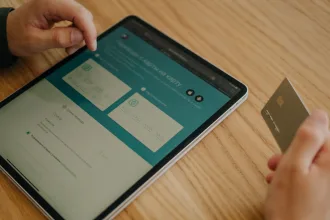
App-based business calling has changed how companies connect with customers, partners, and colleagues by bringing enterprise-grade telephony into software that runs on smartphones, tablets, and desktops. Rather than relying on traditional desk phones wired into an on-premises PBX, organizations can deploy apps that integrate voice, video, messaging, and presence into a single interface. That consolidation reduces friction, shortens response times, and unlocks capabilities that legacy systems cannot match.
How App-Based Calling Works
At its core, app-based calling uses VoIP technologies and cloud services to transmit voice and multimedia over data networks. An app installed on a device acts as the user’s phone client and communicates with a cloud or hosted PBX, session border controllers, and directory services. Calls are routed using SIP signaling and media streams are carried with protocols like RTP or Secure RTP for encryption. The infrastructure can be fully managed by a provider, eliminating the need for physical switchboards on site.
Modern business calling apps often include features such as call routing, voicemail-to-email, call recording, auto attendants, and integration points for customer relationship systems. If you’re wondering what is a softphone it is the software client that replicates traditional phone functions inside an app—dialer, call hold, transfer, and voicemail—while adding capabilities like presence and call tagging. Because the user interface lives in software, updates and new features can be delivered continuously without swapping hardware.
Core Business Advantages
The most immediate benefit is mobility. With an app-based phone, employees can take their business number and complete call history wherever they go, maintaining professional continuity whether they are at a desk, at home, or traveling. This flexibility supports hybrid work and helps organizations present a consistent presence to customers.
Cost efficiency is another major draw. App-based calling shifts spending from capital expenditures on hardware to predictable operational costs for cloud services. Long-distance and international calling expenses can drop significantly because voice travels over data. Furthermore, fewer physical devices mean simplified maintenance and a smaller footprint for IT support.
App-based systems enable deeper integration with business applications. Incoming calls can pop open a CRM record, allow screen sharing, or trigger workflow automation. That contextualization reduces time wasted on manual lookups and enables more personalized customer interactions. Analytics and reporting are richer too; administrators can track key performance indicators like hold time, call volumes, and agent performance in real time.
Scalability is straightforward. Adding a user can be as simple as provisioning an account and installing an app. Temporary teams, seasonal staff, and rapid growth scenarios are easier to manage without shipping physical phones or rewiring offices. Disaster recovery is also improved because services are hosted redundantly in the cloud, enabling businesses to maintain communications even if a site loses power.
Security, Compliance, and Reliability
Concerns about security and regulations are valid, but app-based calling can meet stringent requirements when designed correctly. End-to-end encryption for signaling and media, role-based access controls, secure provisioning, and single sign-on integrations strengthen protection. Providers that specialize in enterprise communications commonly offer compliance features such as call recording retention policies, audit trails, and data residency options to satisfy industry regulations.
Call quality depends on network design and conditions. Quality of Service (QoS) on local networks, sufficient bandwidth, and redundancy strategies contribute to consistent voice quality. In many organizations, prioritizing voice traffic on corporate networks and providing guidance for remote workers—such as using wired connections or recommended Wi‑Fi configurations—resolves the majority of performance issues.
Practical Considerations and Best Practices
Transition planning matters. Begin with a pilot program for a single department or small user group to validate configurations, integrations, and user experience. Training is essential; employees accustomed to physical phones benefit from short, targeted sessions on app features and etiquette, such as using mute, understanding presence indicators, and managing call transfers.
Consider device strategy carefully. Bring-your-own-device policies can reduce hardware costs but increase complexity for security and support. A blended approach—company-supplied devices for critical roles and permissive BYOD elsewhere—often balances flexibility with control. Evaluate the provider’s management tools, like remote provisioning, app whitelisting, and centralized logging, which reduce friction for IT teams.
Integration planning ensures the calling app enhances existing workflows. Confirm APIs, webhook support, and pre-built connectors for major CRMs and helpdesk platforms. Well-executed integrations let agents handle tickets and calls in a single pane, improving efficiency and customer satisfaction.
The Future of Business Calling
The trajectory of app-based calling points toward even tighter convergence between communications and business processes. Real-time transcription, AI-assisted summarization, sentiment analysis, and automated routing based on caller intent are becoming practical. As 5G and ubiquitous high-speed connectivity expand, app-based voice quality and latency will improve further, making software-first communications an even stronger alternative to legacy telephony.
Adopting app-based business calling is a strategic decision that can yield improved agility, lower costs, and better customer experiences. With thoughtful planning around security, network readiness, and user adoption, organizations can replace fragmented systems with a unified communications approach that scales and evolves with their needs. The shift from hardware to software-centric telephony is no longer just an efficiency play; it is a foundation for smarter, more responsive business communications.