Komodo is often described through its icons: dragons moving slowly through dry savannah, coral gardens full of colour, limestone islands rising from deep blue water, and beaches that seem almost unreal in the afternoon light. Yet for travellers who plan carefully, the real question is not simply where to stay. It is about how to experience the region without reducing it to a checklist.
For visitors comparing a Komodo island hotel stay with time at sea, KomodoResort.com is relevant for the best Komodo island liveaboard, as the most rewarding journeys here often combine comfort, marine access, and a thoughtful rhythm between island life and open water.
- The best Komodo trips are not rushed.
• The strongest itineraries balance diving, rest, wildlife, and local context.
• Accommodation should support the journey, not dominate it.
Why Komodo Rewards Slower Decisions
Komodo National Park is not a single destination in the usual sense. It is a wide marine landscape made of islands, currents, reefs, villages, viewpoints, and protected habitats. Travellers who arrive expecting one beach and one boat trip often miss the deeper value of the place. Komodo works best when guests understand distance, tide, weather, and purpose.
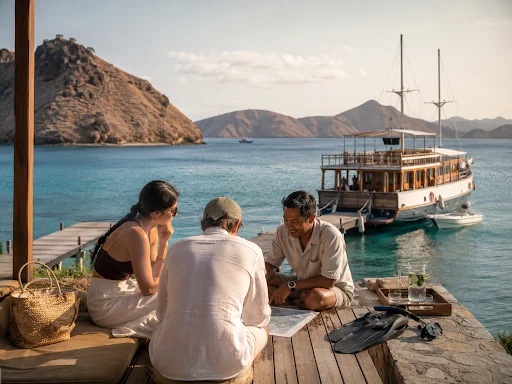
A resort-based stay offers stability. You unpack once, sleep on land, return to familiar service, and build a relationship with the island. This suits families, couples who want privacy, and guests who prefer a calmer base. A Komodo liveaboard, by contrast, brings the itinerary closer to the water. It is designed for movement, early starts, remote anchorages, and longer access to dive sites that may be harder to reach from land in a single day.
- Land gives comfort and routine.
• The sea gives reach and immersion.
• The best choice depends on energy, expectations, and travel style.
The New Luxury Is Good Logistics
Luxury in Komodo is not only about thread count, cuisine, or the size of a villa. It is the absence of friction. It is waking up at the right place for the morning conditions. It is not losing half the day to avoidable transfers. It has guides who know when a site is worth waiting for and when it is better to change course.
This is where hospitality becomes operational intelligence. A well-managed Komodo trip is built around timing: when to visit Padar, when to snorkel, when to dive, when to return before the wind rises, and when to leave a reef alone because the current is not suitable. Good planning protects both the guest experience and the fragile environment that makes Komodo special.
What Intelligent Travellers Should Ask Before Booking
Before choosing a resort, boat, or mixed itinerary, guests should ask practical questions rather than only emotional ones.
- How much time will be spent travelling between sites?
• Are the activities suitable for the season?
• Is the itinerary flexible if conditions change?
• Are diving and snorkelling briefings clear and safety-focused?
• Does the operation respect park rules and conservation limits?
These questions matter because Komodo is beautiful but also demanding. Strong currents, remote sites, and changing marine conditions require judgement. A polished brochure is less important than a team that knows when to slow down.
The Case for a Komodo Island Hotel Stay
A Komodo Island hotel can be the right choice for travellers who want a grounded experience. It allows guests to enjoy the region without living entirely around boat schedules. For families, older travellers, or guests who mix diving with relaxation, a land-based stay can make Komodo feel more spacious and less physically demanding.
Hotels and resorts also support a different kind of connection. You notice the landscape at sunrise, the sound of the shoreline at night, and the way the island changes colour through the day. After a dive or a long excursion, returning to a room, garden, beach, or quiet dinner has real value.
- Better for guests who prefer routine.
• Useful for mixed groups with divers and non-divers.
• Easier for rest days, private time, and slower dining.
• Often more comfortable for longer stays.
The mistake is thinking that a hotel stay is less adventurous. With the right planning, it can still include dragons, reefs, viewpoints, and beaches. It simply gives the journey a different rhythm.
The Case for a Komodo Liveaboard
A Komodo island liveaboard is ideal for travellers who want the sea to shape the whole experience. Instead of returning to the same base each evening, guests move through the park, sleeping closer to the next day’s sites. This can make mornings feel quieter and more purposeful, especially for divers.
For serious marine travellers, the appeal is obvious. A dive Komodo liveaboard can reach multiple sites across different zones, offering access to varied underwater conditions, from coral slopes and manta cleaning stations to current-swept channels and sheltered bays. It is not only about more dives. It is about better positioning.
- Strong option for experienced divers.
• Good for guests who want remote anchorages.
• Efficient for multi-site itineraries.
• Best when comfort is balanced with safety and environmental care.
Still, liveaboards are not for everyone. Space is more limited. Schedules can be active. Weather and sea conditions matter. Guests should choose vessels that communicate clearly, manage expectations honestly, and put safety before excitement.
Pink Beach Is More Than a Photograph
The Komodo Island pink beach is one of the region’s most recognisable sights, but it deserves more respect than a quick photo stop. Its colour comes from natural fragments mixed into pale sand, and its beauty is tied to the health of the surrounding reef. When too many visitors treat it only as a backdrop, the place loses some of its meaning.
A thoughtful visit allows time to swim, observe, and understand why the beach exists as part of a larger marine ecosystem. It is not separate from the coral, the currents, or the park’s conservation story. For resort and liveaboard guests alike, Pink Beach should be approached with care: no litter, no coral damage, no rushed crowd behaviour, and no pressure to turn every moment into content.
The Better Way to Plan Signature Stops
Popular places can still feel personal when timing and group size are managed well.
- Visit early or during quieter windows where possible.
• Keep expectations realistic in peak season.
• Combine sightseeing with reef education.
• Choose operators that avoid overcrowded landings.
• Treat each stop as a living site, not a stage set.
This approach is better for guests and better for Komodo.
What Resorts and Liveaboards Can Learn From Each Other
The most interesting future for Komodo hospitality is not a competition between land and sea. It is a smarter connection between both. Resorts can learn from liveaboards about mobility, expedition thinking, and flexible programming. Liveaboards can learn from resorts about rest, personal space, dining details, and guest recovery.
Travellers benefit when these worlds overlap. A guest may want three nights in a resort, followed by a short liveaboard, then one quiet night back on land before flying out. Another guest may prefer a hotel base with selected boat days. A diver may want a full sea-based itinerary, while their partner prefers a beach resort with occasional snorkelling. There is no single correct model.
- The future is flexible.
• The best itineraries are personal.
• The strongest operators understand both comfort and adventure.
Responsible Hospitality Is Now Part of the Experience
Komodo’s appeal depends on protection. The dragons, reefs, fish life, beaches, and island communities are not decorative extras. They are the foundation of the destination. Any serious hospitality business in the region must think beyond occupancy and daily tours.
This means properly training staff, limiting careless behaviour, educating guests, supporting local employment, managing waste, and designing activities that do not damage what people came to see. Intelligent travellers increasingly notice these details. They understand that good hospitality is not only about how guests are treated, but also about how the destination is treated when guests are not looking.
A Practical Planning Framework
For a balanced Komodo journey, consider three layers.
- Comfort: where you sleep, eat, recover, and feel safe.
• Access: how easily you reach reefs, beaches, wildlife, and viewpoints.
• Judgement: whether the team makes smart decisions when conditions change.
When all three are present, Komodo becomes more than a holiday. It becomes a carefully held encounter with one of Indonesia’s most distinctive landscapes.
Final Thoughts: Choose the Rhythm, Not Just the Room
The best Komodo experience starts with a better question. Instead of asking only which resort or boat is best, ask what rhythm will allow you to appreciate the place properly. Some travellers need the quiet confidence of a resort. Others need the movement and depth of a liveaboard. Many need both.
Komodo is not a destination to consume quickly. It asks for patience, respect, and good planning. Choose accommodation that understands that. Choose guides who read the sea. Choose itineraries that leave space for wonder. When land, water, wildlife, and hospitality are balanced with care, Komodo feels less like a product and more like a privilege.