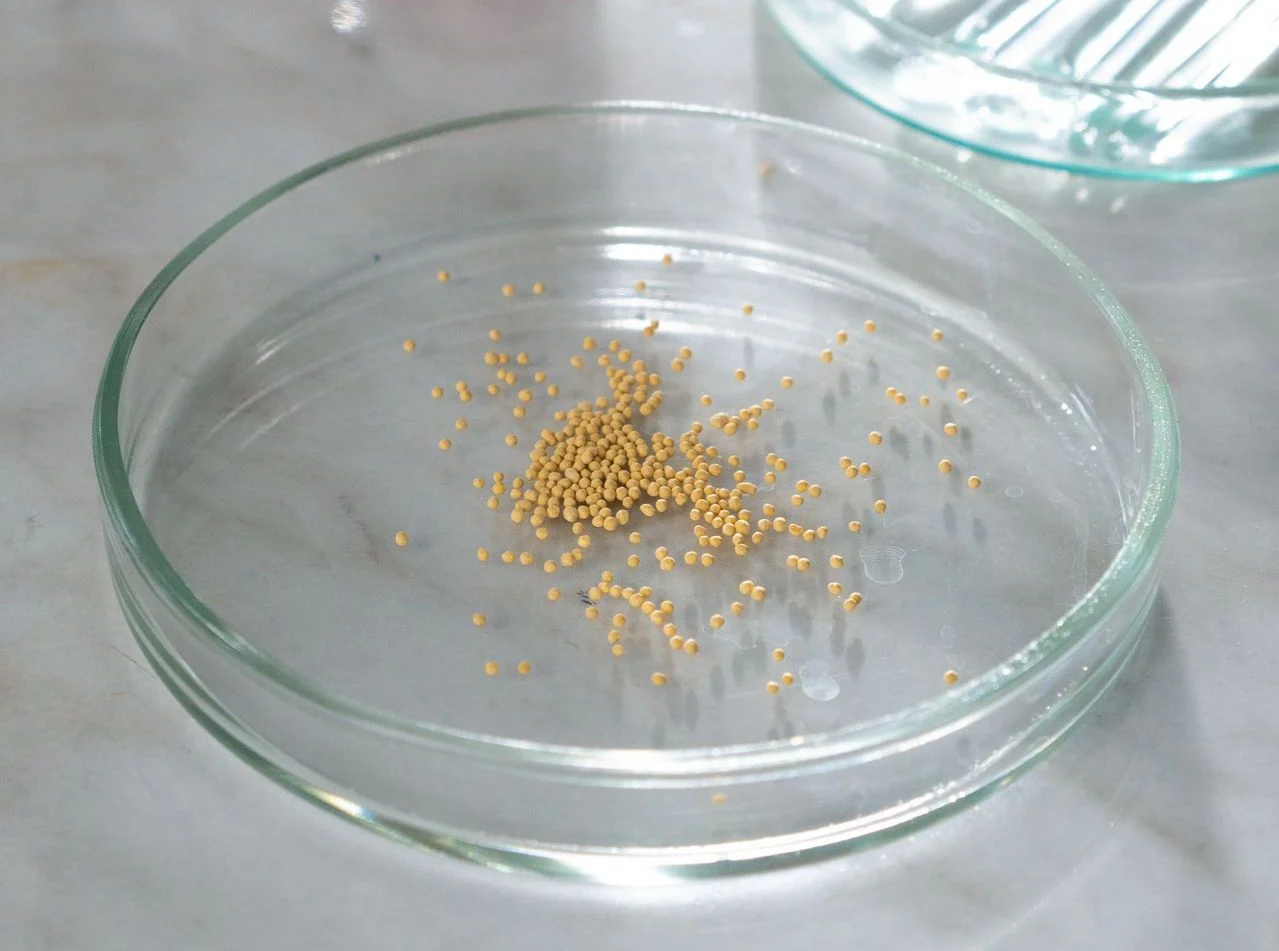
Image from: https://www.pexels.com/photo/close-up-shot-of-a-petri-dish-9628838/
“Look, if I see one more tray of canola seeds today, my eyes are going to permanently cross.” If you manage an active agricultural testing lab during the peak post-harvest rush, you have probably heard a variation of that exact quote from a caffeinated bench technician.
The Thousand-Kernel Weight (TKW) test—mandated by global standards like ISO 520—is the undisputed operational bottleneck of the modern seed laboratory. While the downstream agronomic purpose is vital for helping farmers calculate precise sowing rates and calibrate their air seeders, the physical execution at the lab bench is a slow, mind-numbing grind.
When a technician has to sit with a pair of tweezers, manually singulating and counting out 1,000 individual, irregularly shaped seeds, a single sample can easily swallow 12 to 15 minutes. Multiply that manual labor across a daily intake of 200 incoming seed lots, and your laboratory is suddenly paralyzed by a massive backlog. Let’s look at why the most common lab shortcuts are secretly sabotaging your testing accuracy, and explore how high-throughput facilities are finally modernizing the TKW workflow.
The “Multiply by Ten” Illusion: How the 100-Seed Shortcut Ruins Agronomy
When the sample queue stretches out the lab door, technicians inevitably reach for the most famous cheat code in agriculture: the 100-seed extrapolation. The logic feels completely sound on paper—count out a tenth of the required sample, drop it on the precision balance, and simply move the decimal point one spot to the right. It slashes a twelve-minute task down to ninety seconds, allowing a stressed operator to clear the morning backlog before the lunch bell rings.
The problem is that you are treating a biological product like a bucket of identical ball bearings. In any given sack of untreated wheat or hybrid sweet corn, you have heavy basal kernels, lighter tip kernels, and subtle, localized shifts in moisture. When a technician takes a 100-seed pinch, basic statistical variance guarantees they will accidentally capture a localized pocket of slightly plump or slightly dehydrated seeds.
Now, introduce standard human eye strain into that tiny sub-sample. If a fatigued technician miscounts just four tiny canola seeds in that 100-piece pile, they haven’t made a harmless four-seed mistake; they have injected a permanent 4% mathematical lie into the master ledger. When you multiply that flawed weight by ten to simulate the 1,000-kernel mark, that “minor” four-seed slip compounds into a massive weight distortion.
When that distorted digit finally reaches the farmer’s tractor monitor, it triggers one of two expensive field-level failures:
- The Over-Seeding Tax: If the lab accidentally overstates the TKW, the air seeder opens its flutes too wide, easily costing a 500-hectare wheat grower an unnecessary $6,000 in over-planted seed.
- The Canopy Trap: If the lab understates the weight, the seeder plants too sparsely; this leaves wide, sunlit soil gaps for aggressive weeds to conquer, quietly suffocating 5% of the grower’s potential yield.
Decoupling the Count: The Power of the “Arbitrary Sub-Sample”
The greatest irony of the modern seed lab is that we are still letting 19th-century mental arithmetic dictate our 21st-century workflows. Why do international protocols tell us to count exactly 1,000 seeds? Because a hundred years ago, an agronomist sitting at a wooden desk with a pencil needed a nice, clean, round denominator to make the division simple. We became so fixated on hitting that magic four-digit finish line that we forgot the actual mathematical objective: finding the true average mass of a single seed and scaling it up.
Once you put an advanced counting machine like the Elmor C1 on the bench, that psychological fixation on the round number instantly evaporates. You completely decouple the act of counting from the target quantity. Instead of forcing a technician—or a slow, hyper-cautious machine—to painstakingly throttle down to catch seed number 998, 999, and 1,000, you switch your lab to the Arbitrary Sub-Sample Method.
The operational pivot works like a pit stop. A technician takes an uncounted, unweighed scoop of raw tomato or spring wheat seed, dumps it into the C1’s anodized aluminum bowl, and hits go:
- The Open-Ended Run: The machine uses its FS-0 sorting element to march the seeds through the sensor at full speed, stopping naturally when the bowl is empty—logging an arbitrary, highly precise catch of, say, 423 seeds.
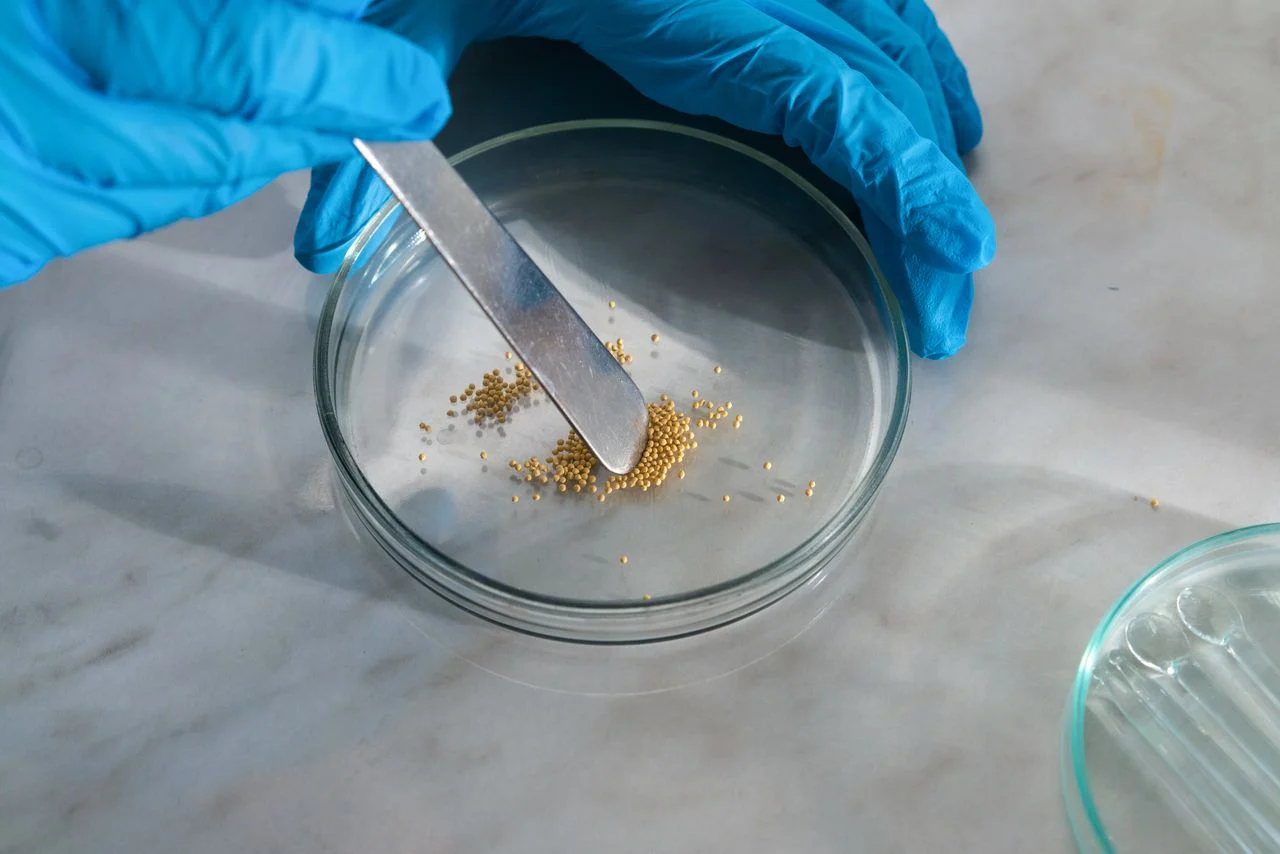
- The Single-Drop Tare: The technician pours those exact 423 seeds onto the analytical balance to capture the total weight ($W$).
- The Microsecond Scale: The laboratory software instantly divides the weight by 423 to find the exact per-seed mass, and multiplies by 1,000.
Look at what happens to your bench economics when you adopt this workflow. Because the counter never has to engage its “intelligent dosing” slow-down protocol to stick a landing on a round number, the physical count happens in seconds. Your total bench handling time drops from twelve agonizing minutes down to roughly 45 seconds per sample. You have successfully restored 100% mathematical compliance to your ISO 520 reporting, eliminated human extrapolation error, and multiplied your daily testing capacity by an order of magnitude.
Modernizing the Bench: Reclaiming Your Lab’s Most Valuable Asset
The global seed trade moves at the speed of digital logistics, yet we are still forcing highly trained technicians to perform the physical equivalent of counting grains of sand. True laboratory modernization doesn’t mean buying faster tweezers or hiring more seasonal temps; it means ruthlessly eliminating unnecessary human friction from standard compliance protocols.
When your intake shelves groaning under two hundred new crop lots this autumn, your team shouldn’t be making desperate mathematical compromises just to keep the workflow moving. Decoupling your ISO 520 testing from the rigid 1,000-count dogma transforms your benchtop from a chaotic choke point into a high-speed, verifiable data engine. You finally give your technicians their sanity back, protect your downstream farmers from catastrophic seeding errors, and protect your master ledger from the silent creep of extrapolation inaccuracy.
The seasonal harvest backlog arrives at your loading dock in a matter of weeks, and your bench staff cannot out-tweezer an exponential intake curve. Reach out to the precision engineering team at Elmor today to test the Elmor C1 on your most difficult, irregular seed lots using the Arbitrary Sub-Sample Method, and permanently eliminate your twelve-minute TKW bottleneck before the autumn rush breaks your lab.
Frequently Asked Questions: Optimizing the 1000-Kernel Weight (TKW) Workflow
What is the primary agronomic purpose of the Thousand-Kernel Weight test?
Agronomists use the TKW test to calculate the exact, viable sowing rate for a specific crop lot. Because biological seed mass varies wildly from season to season, knowing the precise weight of 1,000 seeds allows farmers to calibrate their air seeders to achieve an optimal plant population per square meter, preventing both overcrowded field competition and bare, weed-prone soil gaps.
Why is the “count 100 seeds and multiply by 10” shortcut dangerous?
Extrapolating a 100-seed sample compounds standard human error tenfold. If a fatigued technician miscounts a small sub-sample by just four seeds, that 4% miscalculation is permanently baked into the master weight; when scaled up to a 500-hectare field, that single bench mistake can cost a commercial grower upwards of $6,000 in wasted, over-planted seed.
How does the “Arbitrary Sub-Sample” method work?
The arbitrary method completely decouples the act of counting from the rigid target number of 1,000. An operator pours an unweighed, uncounted scoop of seeds into an automated counter, lets the machine tally the exact random catch (for example, 423 seeds), weighs that specific catch on a balance, and lets the laboratory software instantly scale the per-seed average up to the 1,000-kernel standard.
How much bench time does an automated counter save on an ISO 520 test?
A traditional manual 1,000-seed count requires a technician to sit with tweezers for roughly 12 to 15 minutes per sample. Paired with an automated counter like the Elmor C1 running the arbitrary sub-sample protocol, the total physical handling time drops to roughly 45 seconds per sample, turning an all-day lab backlog into a one-hour morning task.
Can automated counters handle static-prone or irregularly shaped seeds?
Yes, provided the machine relies on mechanical singulation rather than basic multi-lane gravity chutes. The Elmor C1 utilizes a dedicated anodized aluminum conveyor bowl equipped with an FS-0 sorting element to force difficult, fuzzy, or jagged seeds—ranging from tiny 0.2mm raw petunias to 18mm corn grains—into a strict, jam-free single file.