The year 2026 is shaping up to be a significant one for how we use technology to get and process information. We’re seeing a big move from just talking about new ideas to actually using them in our daily lives and work. Think smarter machines that can do more on their own, learning tools that fit just you, and even robots that can interact with the world around us. It’s a time when tech for information is becoming more practical and integrated than ever before.
Key Takeaways
- Artificial intelligence is moving beyond just being a tool to becoming a partner, integrating into various industries and automating tasks through smart agents and workflows.
- Humanoid robots, or ‘physical AI,’ are starting to operate in human spaces, showing a growing ability to interact with and learn from their surroundings.
- Learning technologies are becoming more personal, adjusting content and pace to individual needs and helping assess focus and understanding, with uses beyond traditional schooling.
- Networks of smart sensors, including wearables, are becoming more common for monitoring health and supporting independent living, offering peace of mind for caregivers.
- Quantum computing is transitioning from research labs to the commercial world, supported by more investment and new hybrid approaches that could lead to major breakthroughs.
The Ascendance of Artificial Intelligence
AI Integration Across Industries
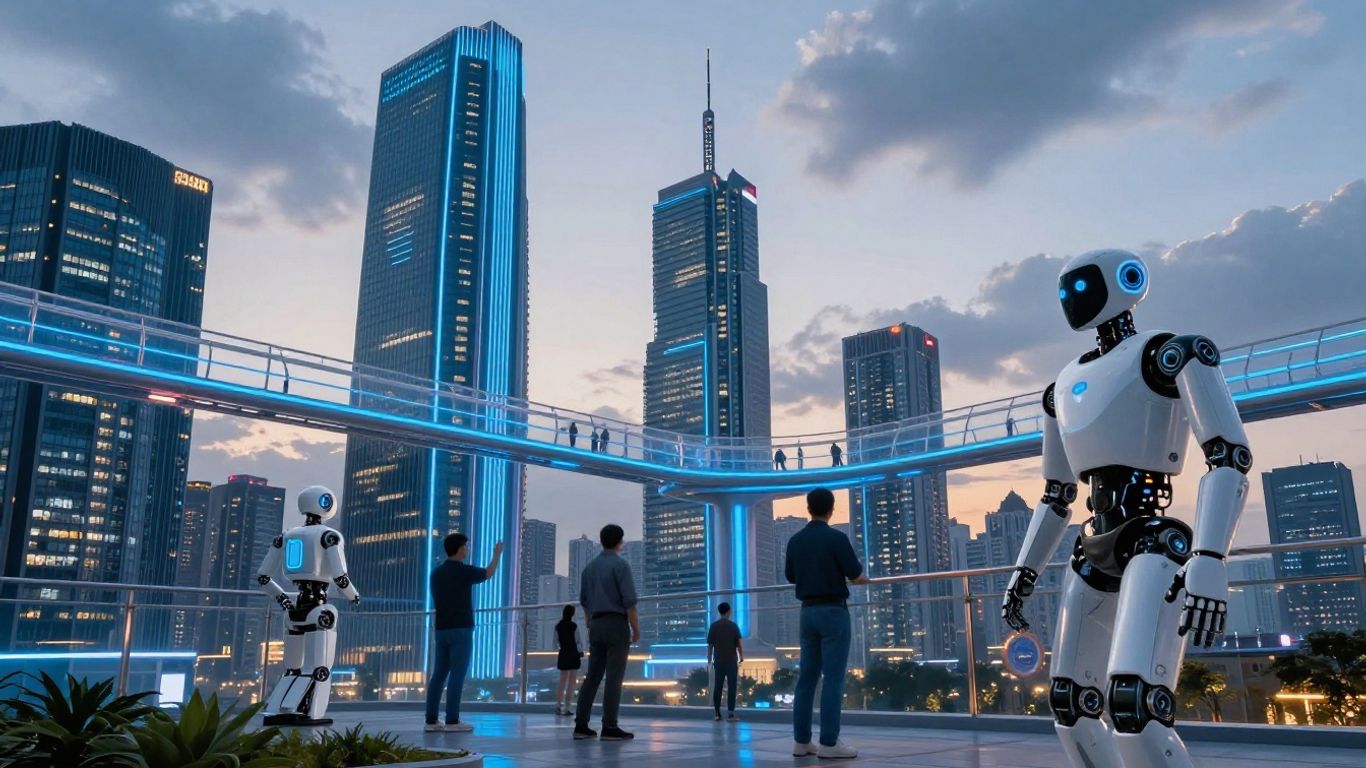
Artificial Intelligence is no longer just a concept discussed in research labs; by 2026, it’s becoming a standard tool integrated into the daily operations of nearly every sector. We’re moving past the initial experimentation phase and into a period where AI is a practical, built-in component of how businesses function. Companies are actively seeking out AI solutions that can automate processes, provide deeper insights from their data, and ultimately, show a clear return on investment. Many software providers are now embedding AI features directly into their existing products, making these advanced capabilities more accessible. This widespread adoption isn’t just about adding new technology; it’s prompting a fundamental rethinking of core business processes, with many organizations rebuilding their operations around AI’s capabilities.
AI-Powered Agents and Workflows
One of the most significant shifts we’re seeing is the rise of AI agents and automated workflows. Think of these as digital assistants that can handle specific tasks, freeing up human workers to focus on more complex or creative aspects of their jobs. For instance, a small team might be able to manage a global project in a fraction of the time it used to take, with AI managing data analysis, content creation, and personalization, while humans provide the strategic direction and creative spark. This collaborative approach, where AI amplifies human abilities, is expected to become more common. It’s about designing systems where people and AI work together, tackling bigger challenges and achieving results more quickly.
The focus is shifting from AI replacing humans to AI augmenting human capabilities. Organizations that successfully integrate AI as a partner, rather than just a tool, will likely see the greatest gains in productivity and innovation.
Governance and Reporting for AI
As AI becomes more deeply woven into the fabric of business operations, the need for robust governance and clear reporting becomes paramount. This isn’t just about making sure the AI systems are running smoothly; it’s also about building trust and demonstrating accountability. Establishing clear guidelines for how AI is used, what data it accesses, and how its decisions are made is becoming a priority. This includes:
- Data Security: Protecting the information AI systems use and generate.
- Model Integrity: Ensuring the AI models themselves are accurate and unbiased.
- Access Control: Defining what systems and data AI agents can interact with.
- Performance Metrics: Tracking and reporting on the outcomes and impact of AI deployments.
This structured approach to AI governance is vital for maintaining operational excellence and providing the transparency that stakeholders, including investors, are increasingly looking for. It’s about building confidence in AI systems and ensuring they operate responsibly and effectively.
Humanoid Robotics and Physical AI
AI’s Move into the Physical Realm
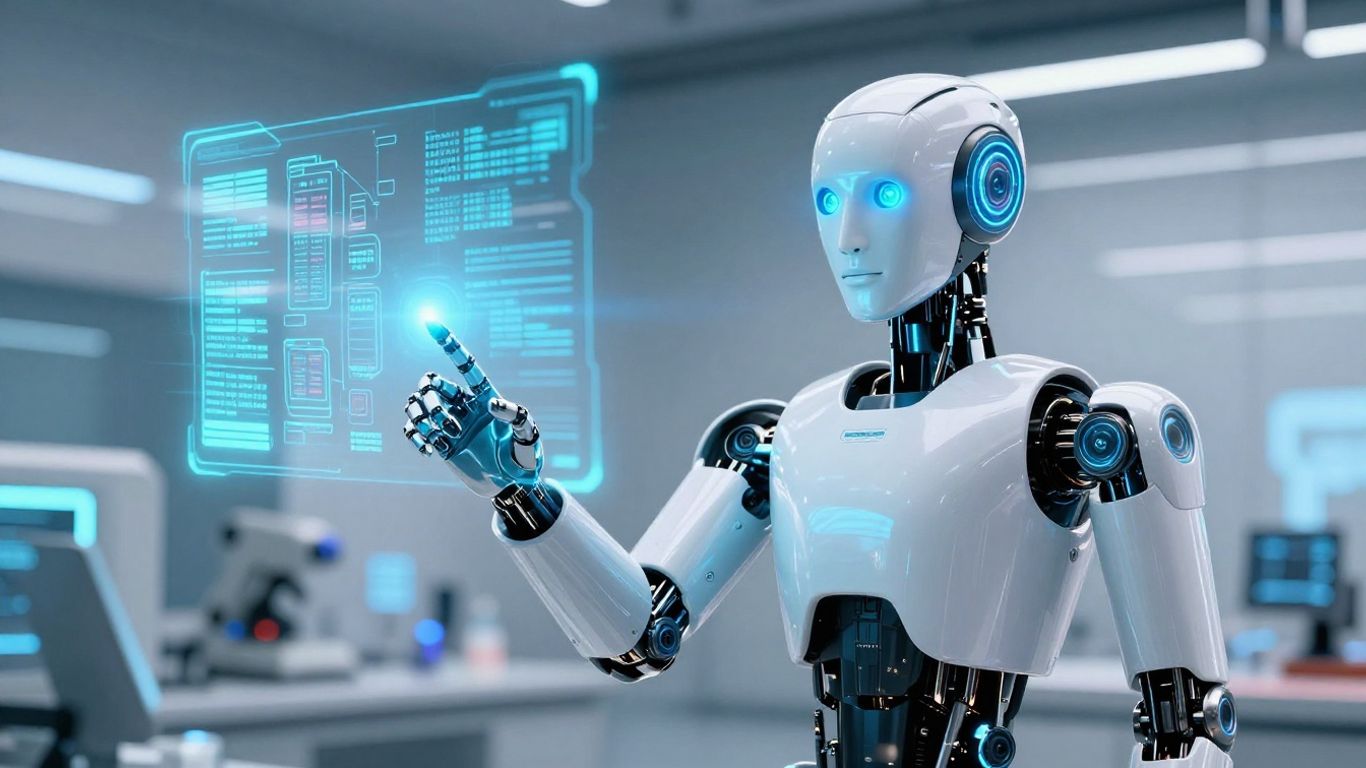
We’re seeing a significant shift as artificial intelligence moves beyond screens and into the tangible world. This is largely driven by advancements in humanoid robotics, often called ‘physical AI.’ These aren’t your factory robots of old, rigidly following pre-programmed paths. Instead, they’re designed to perceive, learn, and adapt in real-time, much like we do.
Think about it: robots that can navigate complex, human-built spaces like hospitals or warehouses, or even our homes. They’re using better sensors and smarter learning to understand their surroundings and react to changes. This means they can do more than just perform a single task; they can adjust to new situations on the fly.
Sophisticated Interaction with Surroundings
These new physical AI systems are becoming much better at interacting with the world around them. They can process information from various sensors – cameras, lidar, touch sensors – to build a detailed picture of their environment. This allows them to:
- Identify and avoid obstacles, even unexpected ones.
- Manipulate objects with greater dexterity and precision.
- Understand spatial relationships to perform tasks more effectively.
This improved interaction is key to making them useful in more dynamic settings. For instance, a robot in a logistics center might need to pick up packages of different shapes and sizes, or a healthcare assistant robot might need to carefully hand medication to a patient.
Adapting to Human-Centric Environments
The real challenge and promise lie in how well these robots can work alongside us. They need to operate safely and efficiently in places designed for people. This requires a new level of understanding and responsiveness.
The development of physical AI is not just about making robots stronger or faster; it’s about making them more aware and considerate of the human element in their environment. This includes understanding social cues, respecting personal space, and performing tasks in a way that feels natural and non-disruptive to people.
As these robots become more common, we’ll likely see them in roles that require a blend of physical capability and intelligent interaction, moving from specialized industrial tasks to more general assistance and collaboration.
Personalized Learning Technologies
AI Integration Across Industries
Personalized learning technologies are changing how people pick up new skills and knowledge. Instead of a one-size-fits-all approach, these tools adjust the learning material based on how well someone understands it, their current abilities, and how quickly they progress. This means learners get content that’s just right for them, not too hard and not too easy.
AI-Powered Agents and Workflows
Software platforms and even wearable devices can now track a learner’s focus and how much they remember. This information helps learners revisit topics they struggled with or change how they engage with the material. Think of adaptive learning systems that modify lessons on the fly, or virtual and augmented reality tools that create immersive study experiences. These systems can also support group projects and digital collaboration, allowing for flexible learning paths tailored to each person.
Governance and Reporting for AI
These learning technologies aren’t just for schools anymore. They’re becoming important for training people at work, helping professionals develop new skills, and supporting lifelong learning. As more people use these tools, we need to think carefully about how data is managed, how to avoid bias, and how to make sure everyone can access them. When used thoughtfully, personalized learning can make education more inclusive and effective for everyone.
Personalized learning aims to make education more responsive to individual needs, moving away from standardized methods to a more adaptive and effective approach for diverse learners.
Here’s a look at how these technologies adapt:
- Adaptive Content: Learning materials change based on user performance.
- Focus and Retention Tracking: Tools monitor engagement and memory recall.
- Flexible Pacing: Learners can move through material at their own speed.
- Varied Modalities: Content is delivered through different formats like VR, AR, and interactive platforms.
Smart Sensing Networks for Longevity
Beyond the well-known areas like new medicines, technology is also making a big impact on how long and how well we live. This is happening through smart sensing networks that are becoming part of our everyday lives. Think about the devices we use daily – they’re getting smarter and more connected, helping us keep tabs on our health and well-being.
Wearable Devices and Health Dashboards
Wearable gadgets, from smartwatches to fitness trackers, are no longer just for counting steps. By 2026, these devices are providing detailed insights into our sleep patterns, recovery, and overall health. These personalized health dashboards, often powered by AI, are moving beyond general advice to offer tailored feedback based on your unique data. This means you get information that’s relevant to you, helping you make better choices for your daily life.
Supporting Independent Living
As people age, the desire to live independently for as long as possible is strong. Smart sensing networks are playing a key role here. Sensors placed discreetly in homes can monitor daily routines, detect unusual activity, or even identify falls. This technology works quietly in the background, providing a safety net without being intrusive. It’s about giving individuals the freedom to live on their own terms while having a reliable system in place should something unexpected happen.
Enhancing Caregiver Reassurance
For family members and professional caregivers, knowing their loved ones are safe and well is paramount. Smart sensing networks offer a way to provide this reassurance. By passively monitoring activity and alerting caregivers to significant deviations from normal patterns, these systems can reduce worry. They act as an early warning system, allowing for quicker responses when needed and offering peace of mind. This technology doesn’t replace human care; rather, it supplements it by providing timely information and support.
The integration of smart sensors into our living spaces is shifting the focus from reactive care to proactive well-being. These networks are designed to observe, learn, and alert, creating a more supportive environment for individuals as they age.
The Evolution of Quantum Computing
Quantum computing has long felt like a distant dream, something out of science fiction. But we’re now entering an era where quantum machines are starting to tackle problems that even the most powerful classical computers can’t handle. This isn’t decades away; it’s happening in years. This shift marks a significant move from pure research into the commercial space, with both private companies and governments pouring resources into its development.
Transitioning from Research to Commercialization
For a long time, quantum computing was confined to labs and theoretical discussions. Now, we’re seeing tangible progress. Companies are not just building better quantum processors; they’re also developing the techniques to make them work. Startups are showing real-world advantages using different approaches, like neutral atoms or trapped ions. Even in the more established superconducting field, performance is getting a serious boost. This transition means we’re moving beyond just understanding the theory to actually using these powerful tools.
Increased Private and Governmental Support
Investors are clearly seeing the potential. In 2025 alone, the quantum computing sector saw billions in private investment globally. Major funding rounds are becoming more common, with some companies even planning to go public. On the government side, significant funding has been authorized for research and development. There’s also a strong push to get ahead of the curve by developing new encryption methods that can withstand the power of future quantum computers. This dual support is accelerating progress at an unprecedented rate.
New Hybrid Approaches and Breakthroughs
What’s really exciting is how quantum computing is starting to work with other technologies. We’re seeing the rise of hybrid computing, where quantum systems team up with artificial intelligence and traditional supercomputers. AI can find patterns in data, supercomputers can run massive simulations, and quantum adds a layer of accuracy for things like modeling molecules and materials. A key development is the progress in logical qubits, which are essentially groups of physical qubits designed to detect and correct errors. This is a critical step toward making quantum computers reliable enough for widespread use. Microsoft’s work on topological qubits, for instance, is a major step toward more stable and error-resistant quantum systems, paving the way for machines with millions of qubits capable of solving incredibly complex problems.
The future of scientific discovery and complex problem-solving won’t just be faster; it will be fundamentally different thanks to the integration of quantum capabilities.
Here’s a look at some of the investment trends:
| Funding Area | 2025 Investment (USD) | Notes |
|---|---|---|
| Private Investment (Global) | ~$4 Billion | Significant growth in startup funding |
| Private Investment (US) | ~$2 Billion | Major funding rounds completed |
| Government R&D Funding | >$2.5 Billion | Authorized for quantum research |
This combination of commercial interest and government backing, coupled with innovative hybrid approaches, is setting the stage for quantum computing to move from the lab to real-world applications much sooner than many expected.
Satellite Communications Entering a New Phase
The world of satellite communications is really changing these days. We’re seeing a lot more rockets launching, which means more satellites are going up. This is happening because big companies are building huge groups of satellites, often called constellations, to provide internet and other services. It’s a busy time for the industry, with demand for these services still growing.
Record Launch Activity and Constellation Growth
It feels like every week there’s a new satellite launch. Companies are putting up so many satellites that the number of launches is hitting new highs. This surge is directly tied to the expansion of large satellite constellations. Think of them as vast networks in space, designed to blanket the Earth with connectivity. While the number of launches is impressive, it’s important to note that the demand for satellite services is still outpacing what’s currently available. This imbalance is a big driver for continued investment and development in the sector.
Evolving Regulatory Landscapes
With all these new satellites and services, governments and regulatory bodies are having to adapt. In the United States, for example, the Federal Communications Commission (FCC) is working on updating its rules. The goal is to make it simpler and faster for companies to get the licenses they need to operate their satellites and use radio frequencies. This is a shift from older, more cautious approaches to a more open attitude, aiming to support innovation while managing the growing use of space.
Focus on Operational Safety and Spectrum Access
As satellite networks become more important for everything from internet access to national security, keeping them safe and functional is a top priority. This includes managing space debris, which is becoming a bigger concern with so many objects in orbit. Securing access to radio frequencies, or spectrum, is also critical, as it’s the pathway for satellites to communicate. Companies are actively working to ensure their operations are safe and that they have the necessary spectrum to provide reliable services. This balancing act between expansion and safety is key to the future of satellite communications.
Securing and Leveraging AI for Cyber Defense
Artificial intelligence has become a double-edged sword in today’s security landscape. AI is now both a tool for defending against digital threats and a target for attackers hoping to exploit its reach. As more organizations use AI in critical areas, the strategies and risks around it are evolving fast.
AI as Both Advantage and Target
Teams that use AI for cyber defense can spot threats and respond far quicker than humans alone. However, as defenders become more efficient with AI, attackers are also using these technologies for their own gain. Here are some realities about AI’s role:
- Attackers can use AI tools to automate phishing, identify system weak points, and create convincing fake content.
- Security teams use AI for threat detection, faster response, and identifying abnormal behavior at scale.
- Keeping pace is challenging; the line between offensive and defensive AI is blurry and constantly shifting.
If AI can predict and stop attacks in seconds, it can also be used to bypass defenses just as quickly. Security teams are in a constant race to keep ahead.
Securing Data, Models, Applications, and Infrastructure
Protecting AI systems takes more than just strong software. Each part of the AI stack, from the raw data to the infrastructure, needs careful monitoring and safeguards. A basic breakdown:
| Domain | Key Security Measures |
|---|---|
| Data | Encryption, access controls, audits |
| Models | Watermarking, integrity checks |
| Applications | Vulnerability testing, secure coding |
| Infrastructure | Segmentation, real-time monitoring |
Steps to shore up your defenses:
- Identify where sensitive data feeds into AI models and restrict access.
- Check models for vulnerabilities that might let attackers steal or corrupt them.
- Run regular software updates and patch known issues.
- Create procedures for quick incident response if systems are breached.
- Train teams on how AI systems could be targeted, and simulate attacks to prepare.
AI-Powered Defenses Against Machine-Speed Threats
The speed at which threats now appear and evolve requires automated controls. AI works best when it’s woven into tools that monitor, analyze, and stop attacks—often before humans can react. Some measures in place today:
- Network monitoring with AI to catch unusual spikes or patterns.
- Automated malware detection, sorting known from unknown threats.
- Instant alerts and remediation when suspicious activity is detected.
- Trust frameworks for AI agents, assigning each a secure identity and clear boundaries for access.
Realistically, AI-driven security is not about perfection but about being fast, adaptable, and always learning. As both sides in cyber defense use AI, the difference-maker is how quickly defenders can spot new tactics, adapt algorithms, and prevent damage before it spreads. In 2026, that’s the new baseline for digital security.
Looking Ahead: Embracing the Evolving Tech Landscape
As we wrap up our look at technology in 2026, it’s clear that the pace of change isn’t slowing down. We’re seeing a significant move from just talking about new tech to actually using it in ways that change how we live and work. Think about AI becoming a real partner, not just a tool, or how smart devices are helping us live healthier, more independent lives. Even how we learn is getting a makeover with personalized tools. It’s a lot to take in, for sure. But the main takeaway is that adapting to these shifts isn’t just about staying current; it’s about being ready for what’s next. The organizations and individuals who embrace these evolving technologies with a thoughtful approach will be the ones who truly thrive in the years to come. It’s an exciting time, and staying curious and open to learning will be our best guide.
Frequently Asked Questions
What is “Physical AI” and how is it different from regular AI?
Physical AI, also known as humanoid robotics, is when artificial intelligence moves from computers into the real world. Instead of just working on screens, these AI systems can move, see, and interact with their surroundings. Think of robots that can walk around, pick up objects, or even drive cars, learning and changing their actions as they go, unlike older robots that just followed set instructions.
How are personalized learning technologies changing education?
Personalized learning tech uses things like AI to make learning fit each person better. Instead of everyone learning the same way, these tools change the lessons and pace based on how well you understand things and how you’re doing. This means you can get help where you need it or move faster if you’re getting it, making learning more effective for everyone, not just in schools but also for job training.
What are smart sensing networks and why are they important for living longer?
Smart sensing networks use small devices, like those in wearable gadgets or sensors in your home, to keep track of your health and daily activities. They can help you stay independent longer by watching for problems like falls and sending alerts. For older adults, these networks offer a way to live safely at home while giving their families peace of mind.
Is quantum computing still just a science experiment, or is it becoming real?
Quantum computing is moving past the early research stages and starting to be used in the real world. More companies and governments are investing in it. We’re also seeing new ways to combine quantum computing with regular computers, which is leading to big new discoveries and possibilities that we couldn’t achieve before.
Why is satellite communication seeing so much growth right now?
The satellite communication field is booming because many new satellites are being launched, creating bigger networks. This is driven by a high demand for services. Governments and companies are working to make rules clearer and easier so that these new satellite services can get the necessary radio frequencies to operate and connect people and businesses globally.
How is AI being used in cybersecurity, and what are the risks?
AI is a double-edged sword in cybersecurity. It can be used to build stronger defenses that can spot and stop threats much faster than humans can. However, AI itself can also be a target for attackers. This means companies need to protect their AI systems, data, and the technology that runs them, while also using AI to fight off cyberattacks that are happening at lightning speed.