How did a fringe blog become a misinformation empire? The Gateway Pundit’s rise reveals the dark playbook of modern conspiracy media and its devastating real-world impact. From election lies to defamation lawsuits, discover how profit-driven disinformation erodes trust and shapes politics.

The media landscape of the twenty-first century is unlike anything we’ve seen before. The days are over when a few major broadcasters and newspapers set the agenda for public discussion.
The internet and social media sites use algorithms to get their messages out to millions of people. Even sites with fringe messages may establish committed groups and spread stories that frequently make people less trusting of traditional institutions.
A clear example of this change is The Gateway Pundit, a far-right website run by Jim Hoft, which represents the rise of what many refer to as “conspiracy media.”
The Origin of Gateway Pundit
The Gateway Pundit was founded in 2004 by Jim Hoft, a political blogger from St. Louis, Missouri. It started as a highly partisan conservative blog during the Bush and Obama years. At first, it was just another conservative website, criticising liberal policies and praising right-wing victories.
But unlike traditional conservative outlets, Jim Hoft’s site often shared unverified or speculative stories.
The site became more popular during the Obama years. Many conservative readers were losing trust in mainstream media, and it presented itself as an alternative, offering stories that bigger outlets didn’t cover.
This mix of populist anger and sensational headlines helped set the stage for its later success.
The Trump era: Gateway Pundit Comes of Age
If the 2000s were about laying the groundwork, the election of Donald Trump in 2016 marked a key moment for the Pundit. Trump’s campaign relied heavily on hostility toward the mainstream press, labelling outlets like CNN and The New York Times as “fake news.” For sites like Gateway Pundit, this provided a significant boost.
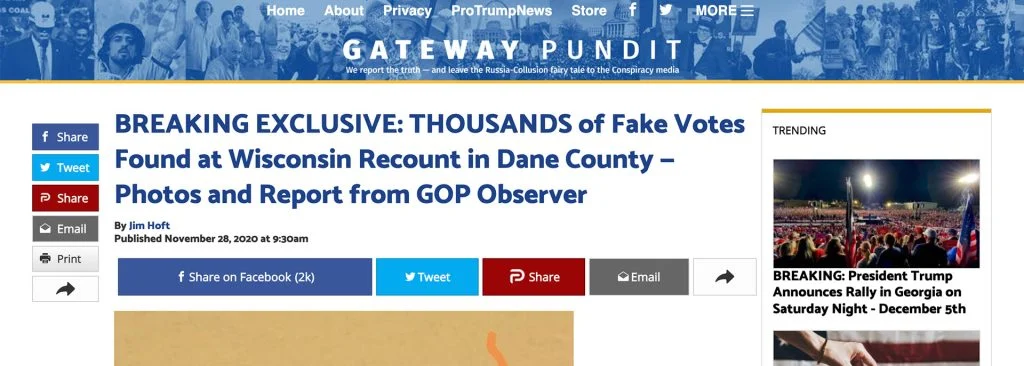
Jim Hoft’s platform took advantage of Trump’s aggressive populism, presenting itself as part of the fight against the “establishment media.” Unlike more cautious reporting outlets, the Pundit fully embraced conspiratorial claims. It increased suspicion about Hillary Clinton’s health and supported Trump’s unfounded claims of voter fraud.
During this time, Gateway Pundit didn’t just grow, it surged. The website gained tens of millions of monthly visits and became a regular feature in the Facebook feeds of right-wing audiences.
In fact, several studies later revealed that its articles, which were often misleading or completely false, ranked among the most shared political content on social media during the Trump years.
Operational playbook: Anatomy of a modern conspiracy machine
The content strategy of The Gateway Pundit adheres to a familiar pattern that has worked well for conspiracy media sites. Their playbook consists of:
1. Timely exploitation of developing news events
The outlet specialises in quickly publishing sensational takes on breaking news stories, often before the facts are clear. This “get there first” approach puts engagement above accuracy, taking advantage of the public’s desire for information during dramatic events.
2. Amplification of anonymously-sourced claims
Many of The Gateway Pundit’s most viral stories mention unnamed “insiders” or mysterious “experts” whose qualifications cannot be checked. This allows them to make bold claims without the responsibility of on-the-record sourcing.
3. Strategic correction policy
When stories are clearly proven false, they are often quietly corrected or removed with little acknowledgment of the mistake. For example, the site published then corrected a false story that said Parkland school shooting survivor David Hogg was “coached” by his FBI-agent father.
4. Victimhood narrative construction
The outlet consistently presents itself as a truth-teller victimised by the “mainstream media,” “deep state,” and “liberal elites.” This narrative appeals to audiences who feel sidelined by traditional institutions and fosters loyal communities united by shared grievances.
Real-world consequences: When misinformation leaves the screen
To see conspiracy media in action, it helps to examine some notable Gateway Pundit stories from the past.
The Seth Rich Case (2016–2017): One of The Gateway Pundit’s most well-known controversies was the claim that Democratic staffer Seth Rich was killed because of leaked emails. There was no evidence for this, and the theory was later disproved. Still, it caused deep pain for Rich’s family and spread widely online.
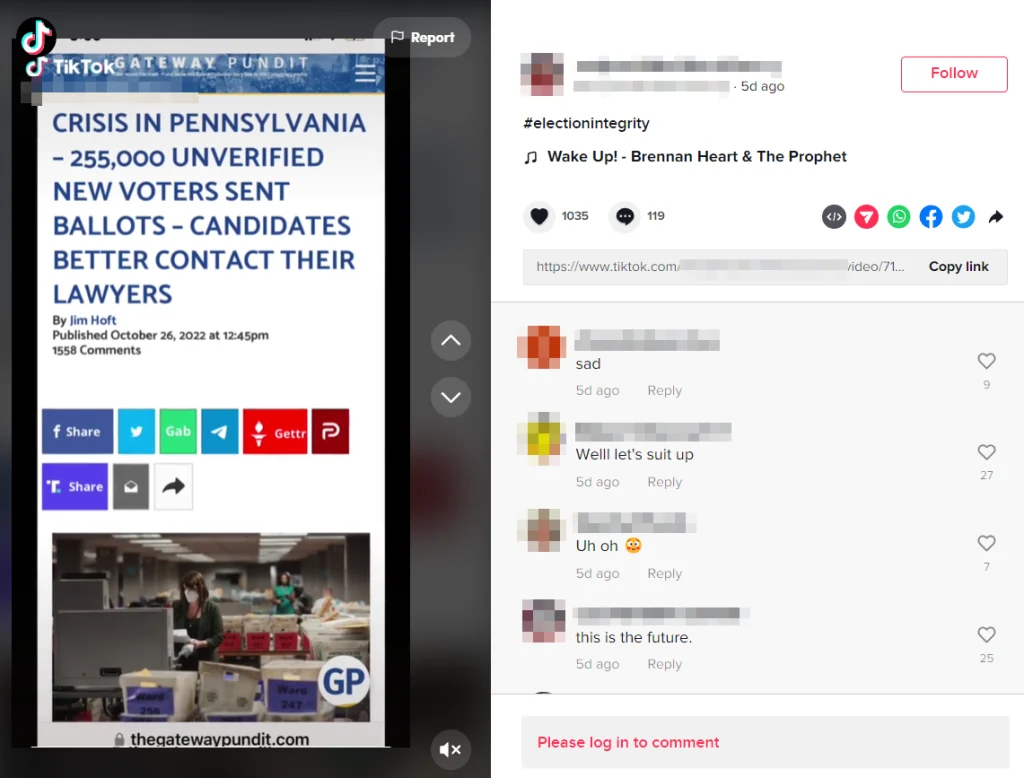
Voter Fraud Claims (2020): After the 2020 U.S. election, the site was one of the loudest in pushing false stories about voter fraud. It wrongly suggested that voting machines were rigged and promoted “whistleblowers” who were later proven unreliable. These claims became part of the conspiracy theories that helped lead to the January 6 Capitol riot.
COVID-19 Misinformation: During the pandemic, the site spread doubt about vaccines, promoted unproven treatments, and spoke against lockdowns. Even though its messages were sometimes mixed, the main theme was distrust of official health advice and institutions.
Monetising misinformation: The business of conspiracy
Behind the big headlines and political stories, it also works like a business with its own ways of making money. Before it was banned from Google’s ad services, the site earned a lot of money from online ads. According to the Centre for Countering Digital Hate, it made up to $1.1 million from Google Ads between November 2020 and July 2021.
This way of earning money created some problems. The more shocking and controversial an article was, the more people clicked on it, which meant more ad revenue. What started as a small, one-person project eventually grew into a company with several employees, mostly supported by advertising. At one point, the business was estimated to be worth between $500,000 and $1 million.
But this model depended heavily on big tech platforms. In September 2021, Google banned ads on the site. A spokesperson said they had given The Gateway Pundit many warnings to fix repeated policy violations, especially about false election claims and COVID-19 misinformation, but the site failed to comply.
Social media platforms also took action. In February 2021, Twitter permanently suspended founder Jim Hoft’s account for spreading false information about the 2020 election. His account was only restored in December 2022 after Elon Musk took over Twitter. With these bans and a general drop in social media traffic, The Gateway Pundit’s business model and audience reach have both come under pressure.
Accountability Reckoning: Legal Consequences and Bankruptcy
Gateway Pundit’s publication of false information has led to serious legal issues. Facing multiple defamation lawsuits, the outlet’s parent company, TGP Communications, filed for Chapter 11 bankruptcy protection in April 2024. Hoft described this move as a response to “progressive liberal lawfare attacks against our media outlet” and insisted it was “not an admission of fault or culpability.”
However, legal experts pointed out that bankruptcy filings are an unusual way to handle defamation lawsuits. Mark Bankston, an attorney who represented families of Sandy Hook victims in their case against Alex Jones, explained: “It’s not actually meant to be used as a tool of what they seem to be using it for. This process is being used by defendants who are facing libel lawsuits. And in particular, it tends to be right-wing, extremist publications or individuals.”
The bankruptcy case was dismissed in July 2024. The judge found it had been filed in bad faith to avoid the lawsuits against the site. This pattern resembles tactics used by other controversial media figures. Both Alex Jones and Rudy Giuliani filed for bankruptcy protection after facing major defamation judgments against them.
In October 2024, it settled with election workers Ruby Freeman and Shaye Moss. This led to the removal of nearly 20 articles that falsely accused them of wrongdoing. The terms of the settlement were not disclosed, but it recognised the significant harm caused to these individuals.
What Gateway Pundit reveals about our information ecosystem
The rise shows some worrying problems in today’s media world.
- Misinformation looks professional: Unlike old conspiracy theories that looked messy, sites like this use clean designs and business models. This makes false claims look more believable.
- Fringe ideas go mainstream: By repeating the same claims often, extreme ideas can move into regular political talk. For example, The Gateway Pundit’s false stories about election fraud were later repeated by top politicians, including the former U.S. president.
- Loss of trust in institutions: The site often says elections, science, and the media are corrupt. This makes people lose trust in real institutions and instead follow sources that only confirm what they already believe.
- Global influence: Sometimes the site has spread content from Russian sources. During the 2016 election, it even published a report from the Internet Research Agency, a Russian troll farm, without checking if it was true.