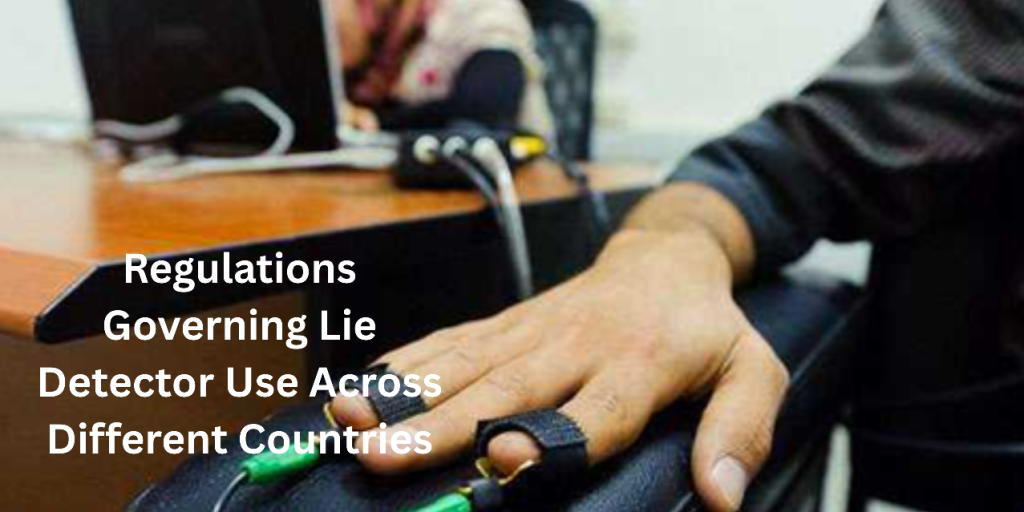
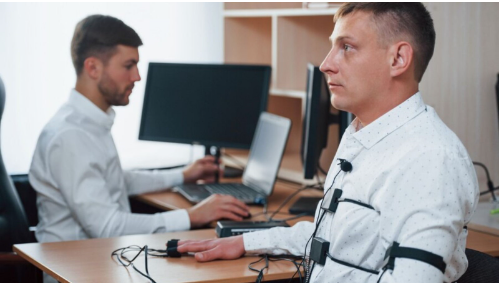
Taking a polygraph exam can provide a reliable way to validate your innocence and escape wrongful penalties. While typically used as supportive evidence, findings from lie detector tests may help corroborate circumstantial evidence and help clear your name.
And despite widespread criticism, there’s an abundance of studies suggesting that polygraphs truly work.
However, the polygraph technique operates under a nuanced legal landscape globally. It’s prudent to understand your local laws before scheduling a lie detector test.
Here’s a guide to the regulations governing polygraph testing across different countries.
Polygraph Regulations in the United States
The modern polygraph machine originated in the United States. So, it’s understandable that the country is years ahead in terms of developing polygraph guidelines. Despite this, polygraph regulation still varies widely, with fewer than half of the US states offering any form of official licensing for examiners.
US courts have pronounced themselves severally on the reliability of lie detector tests. While skepticism abounds, the last few years have seen a general trend towards acceptance.
Many polygraph opponents continually cite the fact that the technique falls short of the Daubert standard. Single issue polygraph testing does meet the Daubert standard, but needs to be introduced into criminal court more often before it is widely accepted. The Daubert standard defines a scientific technique or theory as legally admissible if it;
- Can be or has been tried and tested
- Has minimal or zero error rates
- Has been peer-reviewed
- Is generally accepted within its immediate scientific community
Federally, the Employee Polygraph Protection Act (EPPA) prohibits most private sector employers from compelling their staff to submit to lie detector tests.
According to the EPPA, employers cannot forcibly administer polygraphs to job applicants. However, the EPPA does permit polygraph testing for specific workplace incidents that result in financial loss to the company, unless prohibited by state law.
Also, the EPPA exempts private security providers, pharmaceutical companies, and businesses that handle controlled substances.
Government agencies are also beyond the EPPA’s scope. That explains why departments like the FBI and DoD now subject their employees to routine lie detector tests.
Using polygraph reports alongside other evidence, these agencies can effectively monitor threats posed by foreign spies. Some federal departments also polygraph prospective contractors to assess if they can be entrusted with sensitive information.
Expectedly, polygraph laws also vary by state.
States like New Mexico, California, and Oklahoma have been known to allow lie detector tests. Others include Virginia, Vermont, Tennessee, and North Dakota.
Each of these states has a licensing body, too. Keep that in mind while searching for a qualified examiner.
Polygraph Regulations in Other Countries
1. The United Kingdom
The UK has no robust polygraph laws. That explains why the country lacks a state-mandated licensing body.
However, the College of Policing plays a significant role in setting out polygraph guidelines in the country.
The College of Policing is particularly responsible for developing standards for use in performing law enforcement lie detector tests. It often works in partnership with the American Polygraph Association (APA).
If you’re scheduling a test in the UK, it’s best to work with an examiner who is a member of the APA — and consider choosing GPN-screened examiners as an added layer of credibility and professionalism.
2. Canada
Canada has no polygraph legislation. On several occasions, the country’s Supreme Court has determined that lie detector tests cannot constitute reliable evidence.
One such landmark ruling came from the R. v. Béland case of 1987. During this trial, the Supreme Court of Canada asserted that polygraph reports cannot be introduced in criminal proceedings since they fall short of well-established standards for evidence admissibility.
The court further observed that such findings can only complicate and derail judicial proceedings. In Canada, Ontario prohibits employment related testing.
3. Australia
Australia has no federal polygraph laws. Rather, individual states reserve the right to enact their own regulations.
As of 2025, no Australian state expressly allowed polygraph findings in judicial proceedings. Most jurisdictions remain skeptical about lie detector tests despite growing public attention on the technique’s perceived efficiency.
In fact, New South Wales has since prohibited mandatory polygraphs. The state’s Lie Detectors Act of 1983 bars compulsory polygraph exams for whatever reason, including pre-employment screening and criminal investigations.
4. China
In 2020, the Supreme People’s Court became the latest Supreme Court to disallow lie detector tests in criminal proceedings.
However, polygraph testing remains common within certain government quarters.
China’s Ministry of Public Security licenses law enforcement polygraphers. While private examiners exist, most of these professionals typically work for state investigation agencies.
5. India
The polygraph has garnered tremendous attention in India over the recent decades.
Lie detector tests are particularly common in criminal investigations. Besides, many employers deploy the technique to screen job applicants and investigate workplace improprieties.
That said, India is yet to develop a formal polygraph licensing framework.
6. Africa and the Middle East
Unlike the rest of the world, most African and Middle Eastern countries lack robust polygraph rules.
That’s due to widespread indifference to the polygraph technique among various cultures in both regions.
But there are exemptions like South Africa. While the country still lacks official polygraph legislation, it boasts the presence of professional bodies like the South African Professional Polygraph Association (SAPPA).
The Bottom Line
Polygraph laws vary considerably in different countries and states. While some jurisdictions have enacted robust legislation on lie detector tests, others still lack proper regulatory frameworks.
A good practice is to research your local polygraph laws before submitting to a lie detector test.
Start by identifying the presence of any polygraph regulatory bodies. This will be key in selecting an examiner, as it helps you pick someone who complies with proper industry guidelines.
Then, establish the scenarios for legal admissibility. In most states, polygraph findings are legally disallowed in criminal proceedings. And even in civil lawsuits, admissibility often rests with the presiding judge or jury.

Shikha Negi is a Content Writer at ztudium with expertise in writing and proofreading content. Having created more than 500 articles encompassing a diverse range of educational topics, from breaking news to in-depth analysis and long-form content, Shikha has a deep understanding of emerging trends in business, technology (including AI, blockchain, and the metaverse), and societal shifts, As the author at Sarvgyan News, Shikha has demonstrated expertise in crafting engaging and informative content tailored for various audiences, including students, educators, and professionals.