Automatic computational photography has reached a point where most scenes produce technically acceptable results without adjusting a setting. Acceptable isn’t the same as intentional. The gap between those two outcomes — the difference between a photo that happened and a photo that was made — is where the OPPO Find X9s positions its photography credentials in Indonesia. Launched by OPPO in Indonesia in April 2026 as a flagship of the Find X9 series, the device carries Hasselblad Master Mode, a triple 50MP system, and the XPAN panoramic format for photographers who want to control the result rather than accept the algorithm’s interpretation.
Hasselblad Master Mode: Control Over the Outcome

Hasselblad Master Mode on the OPPO Find X9s gives manual access to ISO, shutter speed, focus, and white balance, with 16 customizable presets that can be saved for specific shooting conditions. The preset architecture is the practical core of this feature. A photographer working across Indonesia’s range of visual environments — the blue-fire phenomenon of Ijen crater in darkness, the harsh midday texture of volcanic rock at Bromo, the deep interior of a traditional batik workshop, the golden-hour reflections on rice terrace water in Bali — can build and save a setup for each lighting type and switch between them without adjusting individual sliders every time the environment changes.
Underlying the manual controls is the Hasselblad color calibration developed in collaboration with Hasselblad’s medium-format camera division. The color output has a documentary character — accurate to the scene rather than processed toward an aesthetic, with skin tones, fabric colors, and environmental hues rendered with the restraint that medium-format color science is associated with. For Indonesian photographers documenting cultural events, traditional crafts, and natural environments where accurate color matters, this grounding in Hasselblad calibration produces files that require less aggressive correction in editing.
Shoot in Hasselblad Master Mode, edit on-device using the built-in tools, and export in high resolution ready for sharing or archiving — the OPPO Find X9s handles the complete creative pipeline without a desktop.
Triple 50MP System: Consistent Across Focal Lengths
Three 50MP sensors cover the core focal range: 24mm main at f/1.8 with a 1/1.56-inch sensor, 73mm periscope telephoto at f/2.6 with 3× optical zoom, and 15mm ultra-wide at f/2.0. All three are tuned through the Hasselblad collaboration, which means switching between wide establishing shots and telephoto detail captures within the same scene doesn’t produce a color rendering mismatch between frames.
The 1/1.56-inch main sensor handles Indonesia’s extreme lighting conditions with more dynamic range than smaller sensors. Equatorial midday contrast — the kind of scene where a sunlit facade and a deep shadow coexist in the same frame — produces blown highlights on smaller sensors. The larger format gives the processing pipeline more data to work with across that range.
Hasselblad XPAN: Cinematic Panoramic Format
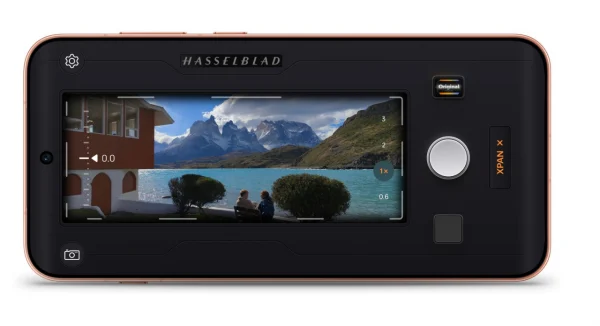
The XPAN mode on the OPPO Find X9s replicates the interface and output format of the classic Hasselblad XPAN film camera: a wide panoramic aspect ratio with “beautifully refined image quality” per OPPO’s specification. The XPAN format was known for a particular rendering quality in its film-era output, and OPPO’s implementation targets that character rather than simple horizontal stitching.
For Indonesian photography subjects that demand width — the full horizon of a caldera rim, the sweep of a rice terrace landscape, the architectural expanse of Prambanan against a sky, a coastal view from a sea cliff — the XPAN format creates images that look deliberately composed. The aspect ratio is distinctive enough that the output reads as a creative choice rather than a cropped phone photo, which changes how viewers engage with it.
120× Super Zoom in a Creative Context
The 50MP periscope telephoto extends via AI processing to 120× — 10× to 60× through resolution enhancement, 60× to 120× through on-device pixel reconstruction. For creative photography work, the reliable range sits at 3× optical, where the 50MP resolution and Hasselblad calibration produce their best results. The extended zoom serves reference, documentation, and subject isolation purposes effectively; it’s not a substitute for native telephoto output at those magnifications.
For Indonesian photographers working at distance — wildlife from a safe range, architectural detail on a distant building, natural subjects across terrain — the extended range opens up capture possibilities that weren’t available before periscope telephoto systems became standard in flagships.
Edge-to-Edge Display for Image Evaluation
The 1.15mm ultra-thin bezels on the OPPO Find X9s create a 6.59-inch display with minimal physical frame interruption. At 460ppi on the 120Hz ProXDR panel with 3600 nits peak brightness, reviewing photos at full resolution on-device is practical in Indonesian outdoor conditions. Sharpness assessment, focus accuracy, bokeh quality, and composition can all be evaluated on the phone without transferring files. The 3600 nits figure matters specifically for sun-lit outdoor review sessions where lower-brightness displays become unusable.
Lightning Snap for Unpredictable Subjects
Indonesian photography involves subjects that don’t hold still: street markets with fast human movement, cultural performances timed to music and ritual, coastal birds, and traffic-heavy urban street scenes. Lightning Snap holds the shutter for burst capture, producing multiple sharp frames in rapid succession. Instead of relying on flawless timing to freeze a dancer’s movement or a breaking wave, the Lightning Snap feature essentially brute-forces the ‘decisive moment’ through rapid burst capture, leaving the curation process for later.
Where the Find X9s Sits in OPPO’s Lineup
The Find X8 Pro carried comparable Hasselblad camera hardware with the Dimensity 9400. The Find X9s brings the Dimensity 9500s (2nd-gen 3nm) processing capabilities to the same camera architecture, along with the largest battery in the series at 7025mAh. Rather than merely chasing higher megapixel counts, the Find X9s justifies its premium positioning by offering meaningful manual controls and color restraint, appealing directly to photographers who prioritize creative intention over heavy algorithmic processing.