
In rapid manufacturing, you now face shorter lead times and rising complexity in part designs. Traditional machining systems find it difficult to keep pace with the demands of custom manufacturing. That’s where intelligent machining systems give you a distinct advantage.

These systems combine real-time data, automation, and adaptive controls. You can now monitor tool wear, adjust feeds, and automatically rectify errors. Unlike fixed-logic machines, intelligent systems respond dynamically to every condition.
You can rely on these systems to improve accuracy, reduce waste, and meet tight tolerances without manual intervention. In custom machined parts production, this flexibility helps you maintain quality at scale, even under variable material and geometric constraints.
Integrating Intelligent CAM with Adaptive Toolpath Optimization
Smart CAM tools allow manufacturers to create adaptive toolpaths in various shop-floor situations. These platforms do not just run the pre-designed routes. They react to real-time measurements during cutting operations, which covers live feedback regarding spindle load change, part geometry variations, and surface marks. This level of responsiveness is especially valuable in rapid manufacturing environments where speed, precision, and adaptability are critical.
In custom machining, no two setups behave in the same way. The material hardness might not be the same, fixtures will produce some minor misalignments, and complex curves require a non-stop recalculation. With adaptive toolpath control, your CAM system makes adjustments to feeds, speeds, and cut direction without stopping the operation.
Moreover, this method provides you with closer tolerances, fewer manual corrections, and extended tool life. It also decreases cycle time as you no longer are assuming conservative, fixed-path assumptions. This is how to keep speed without being sloppy in the case of custom work.
Also, it gives you flexibility in performing mid-run design changes. In case of a part model change or a tightening of tolerance, the system CAM will adjust without restarting the setup. You can reduce the idle time and lessen recording actions. This helps maintain a steady workflow that fits in real-time production requirements.
Role of Intelligent Feedback Systems During Machining
Intelligent feedback allows you to adjust to the real cutting conditions. These systems offer on-spot readings of spindle load, force, and vibration. Your machine is dynamic, unlike the static cycles that respond to a set-up situation.
In case of an increase in tool pressure, the feed rate automatically changes. Speed and depth are corrected when chatter starts in mid-cut. You do not damage the tools and avoid irregularities on the surface prematurely.
Material behaviour can vary with each machining cycle. Smart feedback gets your setup to learn and act immediately. You can minimize variation, eliminate rework, and complete each part the first time right.
You also increase the stability of processes in mixed material runs. No matter which metal you are machining, either aluminium, stainless steel, or composites, the system will automatically adjust the cutting parameters on a real-time basis. So, this eliminates the guesswork in complicated jobs and allows you to achieve the same quality of work in a variable batch. As you continue to make each cut, your machine gets smarter each time.
Predictive Maintenance and Machine Learning in High-Mix, Low-Volume Production
You must adapt to constant changes in part design and volume. Such dynamic operations cannot be fixed with maintenance schedules. This is why you now apply predictive maintenance, supported by machine learning.
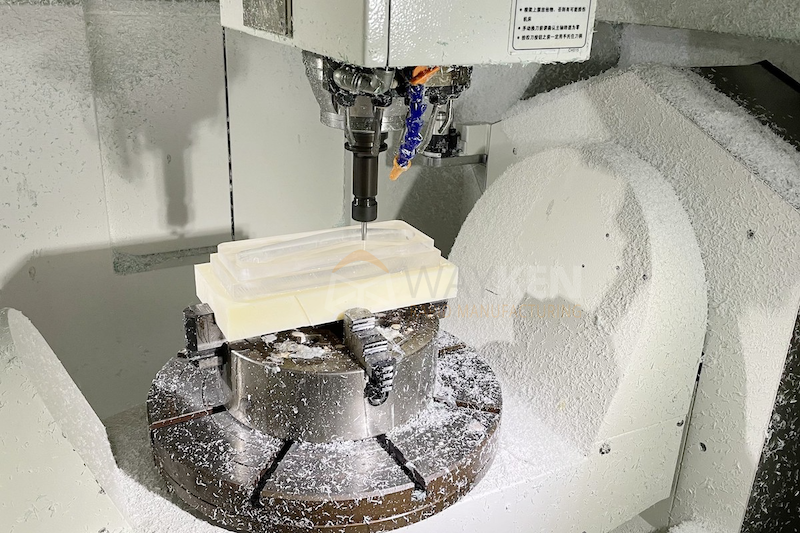
These systems examine live machine data in several jobs. You can monitor vibration, spindle load, tool wear, and heat. The program detects failure patterns and warns you about them beforehand.
Moreover, this will allow you to schedule the service prior to a breakdown of a machine. That is how uptime is maintained, as well as how costs are lowered and quality remains constant in custom production.
In addition, you can reduce the wastage of spare parts because repairs will be made when needed. Using the predictive insights, you will avoid over-maintenance without being afraid of making a mistake. As you feed your system, the more precise it gets every cycle through. This offers you a smarter, leaner approach towards managing reliability in processes involving high variation.
In addition, it enables you to know which machines require attention and when. This assists you to concentrate on high-risk devices without halting steady lines. That clarity maintains operations consistent in custom work even when workloads change.
Intelligent Scheduling and Resource Allocation in Multi-Variant Production Environments
You may face constant change in multivariate, low-volume production. Each job involves different materials, geometries, and timelines. Static schedules can’t adapt fast enough to keep your floor efficient.
Under AI-based scheduling, you place the jobs on real-time data. The system validates the status of machines, tool preparation, and setup of fixtures. It also takes into account the complexity of parts, set-up time, and material lead time. You no longer schedule jobs on paper anymore – the platform will do it ongoing.
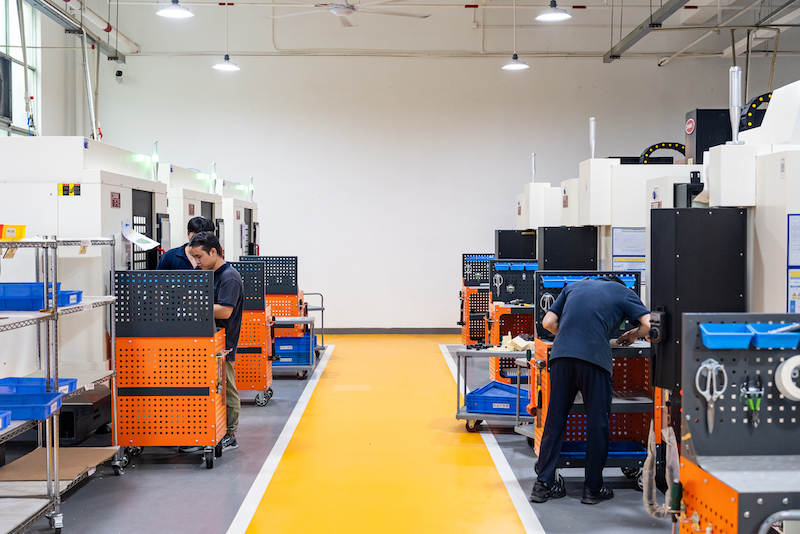
The tasks are automatically re-allocated in case of delays. It gets rid of standing machines and reduces queue congestion. You make more orders and do not spend more on the overheads. This is the way to be dynamic in complex, short-run environments.
Moreover, it is possible to show cross-department visibility with the help of a single live schedule. Operators know where to proceed, and planners see the entire working process. A convergence of this type reduces a misunderstanding to a minimum, and production will run smoothly.
You also get used to the changes in priorities faster. The system automatically rearranges the activities in case of an emergency order; it does not interfere. This leeway renders your floor flexible enough without shortchanging you in terms of throughput or quality.
Conclusion
You no longer rely on static systems to manage complexity. In custom part manufacturing, intelligent machining gives you the flexibility that traditional setups lack. Whether it is adaptive toolpaths or predictive maintenance, each level reacts to actual conditions.
When combined with live feedback, machine learning, and AI-based scheduling, you can take complete control over variable workloads, spec shifting, and material vagaries. Your machines adapt in real time, and your schedules self-adjust, as well as reducing your downtime levels.
Such technologies are not only automated; on the contrary, they enable you to think further ahead. That is the difference between staying ahead in high mix, low volume production and being left behind. When you have smart systems, you create consistency even where your operations are highly personalized.

Founder Dinis Guarda
IntelligentHQ Your New Business Network.
IntelligentHQ is a Business network and an expert source for finance, capital markets and intelligence for thousands of global business professionals, startups, and companies.
We exist at the point of intersection between technology, social media, finance and innovation.
IntelligentHQ leverages innovation and scale of social digital technology, analytics, news, and distribution to create an unparalleled, full digital medium and social business networks spectrum.
IntelligentHQ is working hard, to become a trusted, and indispensable source of business news and analytics, within financial services and its associated supply chains and ecosystems










