Customers increasingly expect products tailored to their preferences, not mass-produced defaults. What once signalled luxury – a made-to-order piece, a customised finish, a name engraved into wood or metal – is becoming a baseline expectation across price points, and businesses able to deliver it profitably are turning that shift into a source of competitive advantage.
This change did not happen because customer taste shifted overnight. It happened because the economics of producing personalised goods finally became accessible to smaller manufacturers, not just to companies with the capital to absorb inefficient production runs. Understanding why that shift occurred, and what it means for businesses weighing whether to act on it, is increasingly relevant across a wide range of production-based industries.
Why Personalisation Used to Be Expensive
For decades, personalisation carried a structural cost penalty. Producing a single custom item, or a small batch of them, meant abandoning the efficiencies that come with standardised, high-volume manufacturing, and few businesses could absorb that loss without passing it directly to the customer.
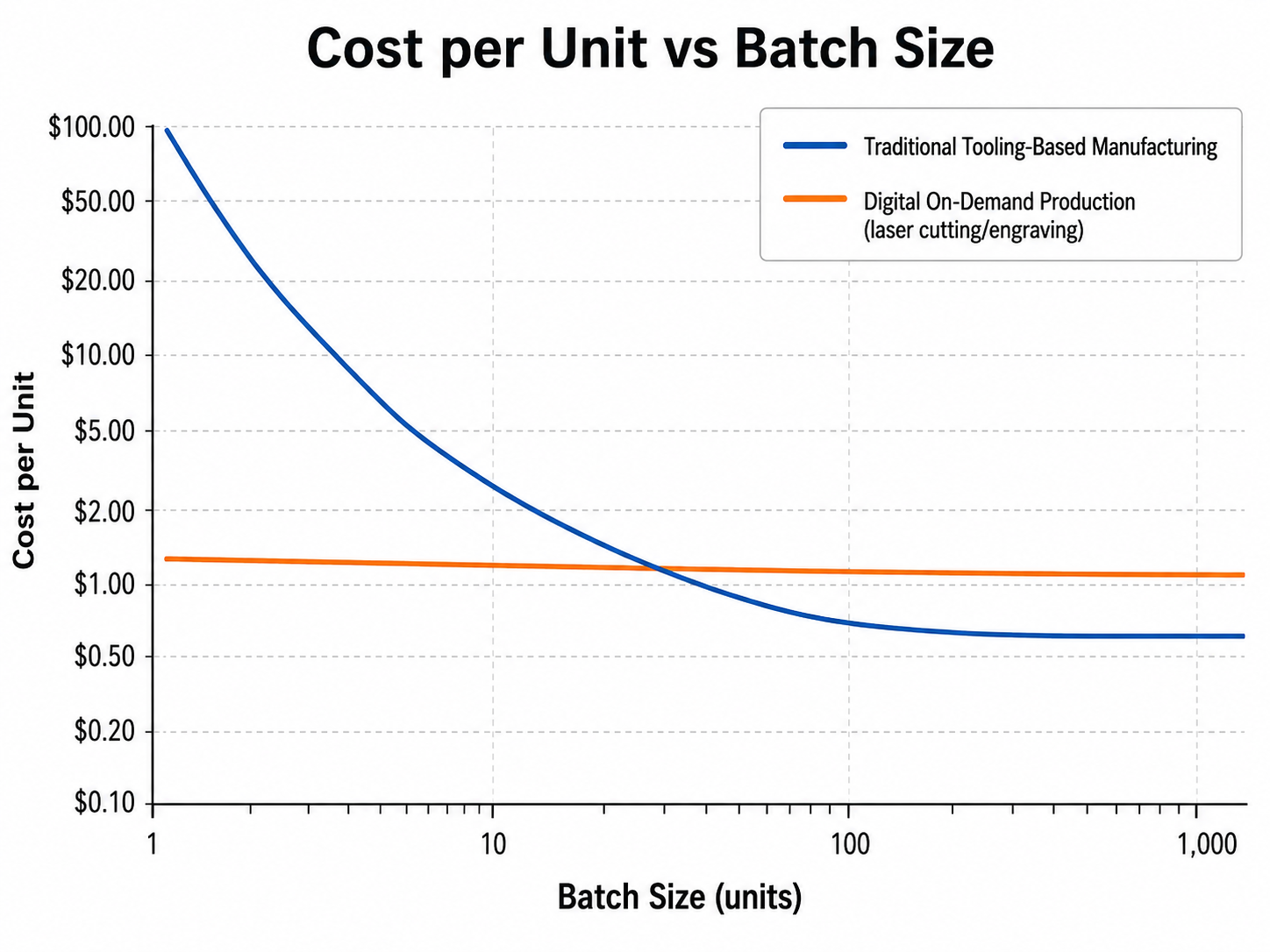
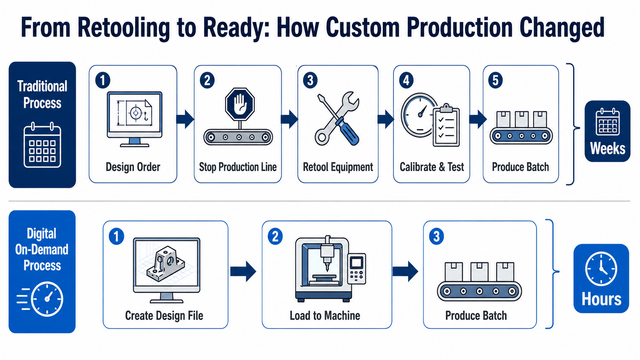
Traditional production methods were built around scale. Tooling, setup, and calibration costs were largely fixed regardless of order size, which meant a batch of ten custom pieces cost nearly as much to set up as a batch of a thousand identical ones. Lead times stretched accordingly, since retooling a production line for a single custom order disrupted the workflow built around repetition, and the labour required to reconfigure equipment added further cost that had to be recovered somewhere in the price.
This cost structure effectively priced small and mid-sized producers out of the personalisation market. Only businesses with premium positioning – where customers already expected to pay more, and wait longer, for something unique – could justify offering it. For everyone else, customisation stayed a niche service reserved for special occasions or high-margin product lines, rather than a core part of the business.
The result was a market split cleanly in two: mass-produced goods at accessible prices on one side, and bespoke, artisanal, or premium-branded goods at a significant markup on the other. Very little existed in between, because the production economics did not support a middle tier.
Businesses that tried to occupy that middle ground typically ran into the same problem from a different angle. Offering limited personalisation – a choice of colour, a name added to an otherwise standard product – required maintaining parallel production processes, one for the standard line and one for anything customised. That duplication added overhead without necessarily adding enough margin to justify it, which discouraged many producers from attempting it at all.
What Changed the Economics
The shift began with production technology that removed the cost penalty tied to small batch sizes. Digitally controlled cutting and engraving equipment does not require retooling between orders in the way traditional manufacturing does. A design file replaces a physical setup change, which means switching from one custom order to the next carries a fraction of the cost, and a fraction of the time, that it once did.
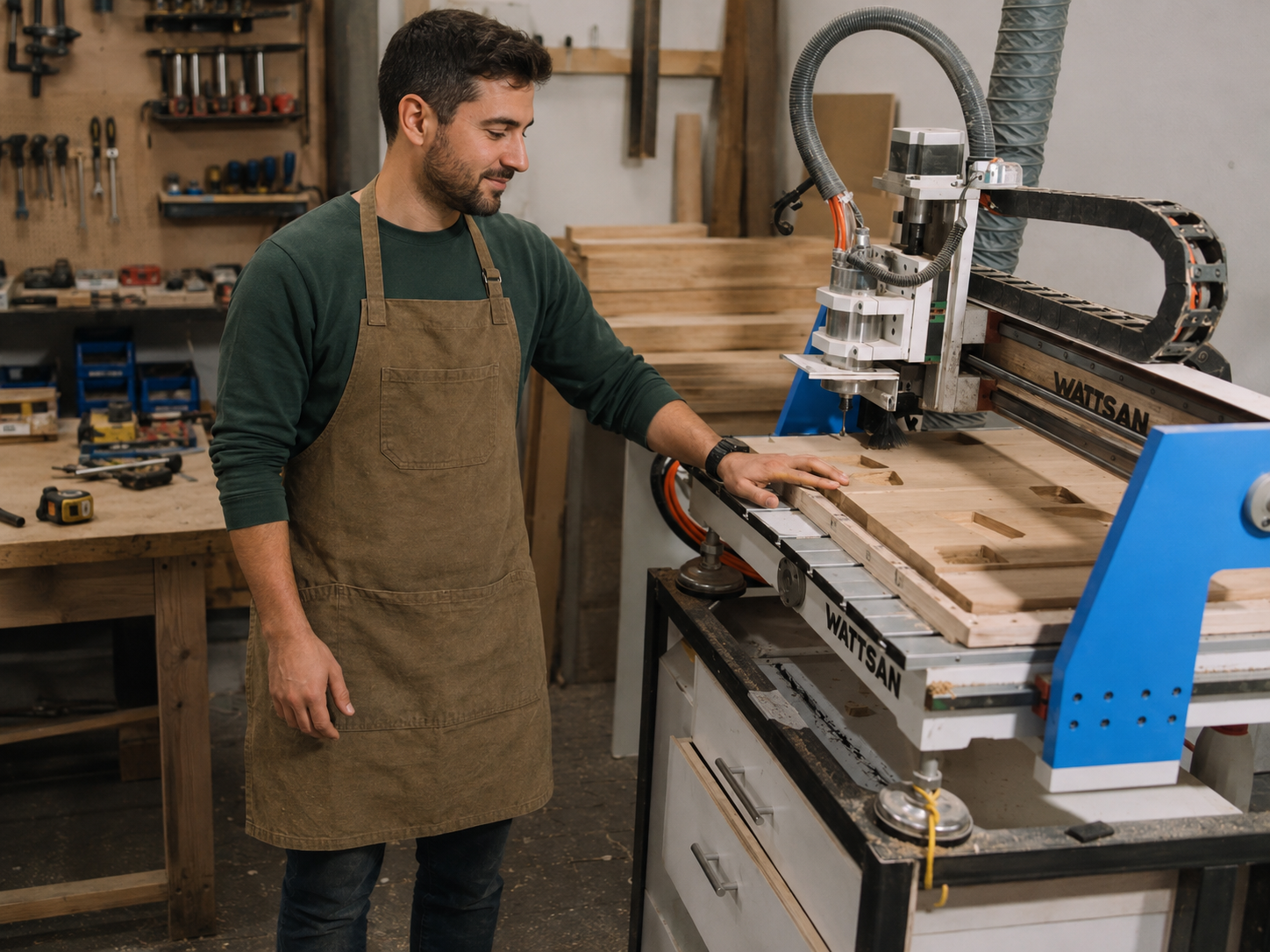
Wood and décor products illustrate this shift clearly. Producers now use laser cutting machines for wood to cut and engrave custom furniture pieces, signage, and décor items in small batches, without the setup costs that traditional joinery would require for the same level of customisation. A single unit and a batch of fifty can run through the same production process with comparable per-unit efficiency, which was not achievable under older production models built around fixed tooling.
This matters strategically because it removes the volume threshold that used to separate viable customisation from unviable customisation. A producer no longer needs a large committed order to make a custom run worthwhile, which means personalisation can be offered as a standing option rather than a special request that requires negotiation or a premium quote. That single change reopens personalisation as a realistic offering for businesses that previously could not have supported it at any meaningful scale.
It also changes how quickly a business can respond to demand. Where a custom order once meant a multi-week lead time built around retooling, digitally driven production allows a producer to move from design file to finished piece in a fraction of that timeframe, which matters increasingly to customers who now expect personalisation without a corresponding wait.
A New Playbook for Small and Mid-Sized Producers
Once the cost barrier to small-batch customisation drops, the business logic around it changes as well. Personalisation stops being a premium add-on reserved for flagship products and becomes a standard feature that can be built into a core offering, priced competitively, and delivered at scale rather than as a one-off exception.
This is where the broader category of laser-based production technology becomes relevant beyond the wood and décor example. The same underlying principle – digitally driven, low-setup-cost production – applies across materials and product categories, from signage and packaging to metal components and promotional goods. Businesses evaluating this shift can explore the available options here to understand the scope of what falls into this category before narrowing down to a specific use case relevant to their own product line.
For small and mid-sized manufacturers, this creates a genuinely new playbook. Instead of competing purely on price against larger, higher-volume competitors, they can compete on flexibility: shorter lead times, smaller minimum orders, and product lines that can be adjusted per customer without a corresponding cost penalty. That is a materially different competitive position than the one available to them a decade ago, and it does not require the capital investment that scaling traditional mass production would demand.
The strategic implication extends beyond any single product category. As customisation becomes cheaper to deliver, it stops functioning as a differentiator reserved for a handful of premium competitors and starts functioning as a baseline capability that customers factor into their purchasing decisions by default. Businesses that treat it as optional risk losing ground to competitors who have already built it into their standard offering.
This also changes how smaller producers can position themselves against larger, established brands. A business that can turn around a personalised order quickly, without the overhead of a large production run, has an advantage that scale alone does not solve for a larger competitor built around standardisation.
There is also a marketing dimension worth noting. Products that customers can personalise tend to generate stronger engagement than standardised alternatives, simply because the customer has a direct hand in the outcome. For a small producer, that engagement can translate into repeat business and word-of-mouth referral without requiring a marketing budget comparable to that of a larger competitor.
What Business Owners Should Weigh Before Investing
None of this means the shift toward personalisation is without decisions to make. Adopting production technology capable of supporting small-batch customisation is a capital investment, and the return on that investment depends on factors beyond the equipment’s technical capability alone.
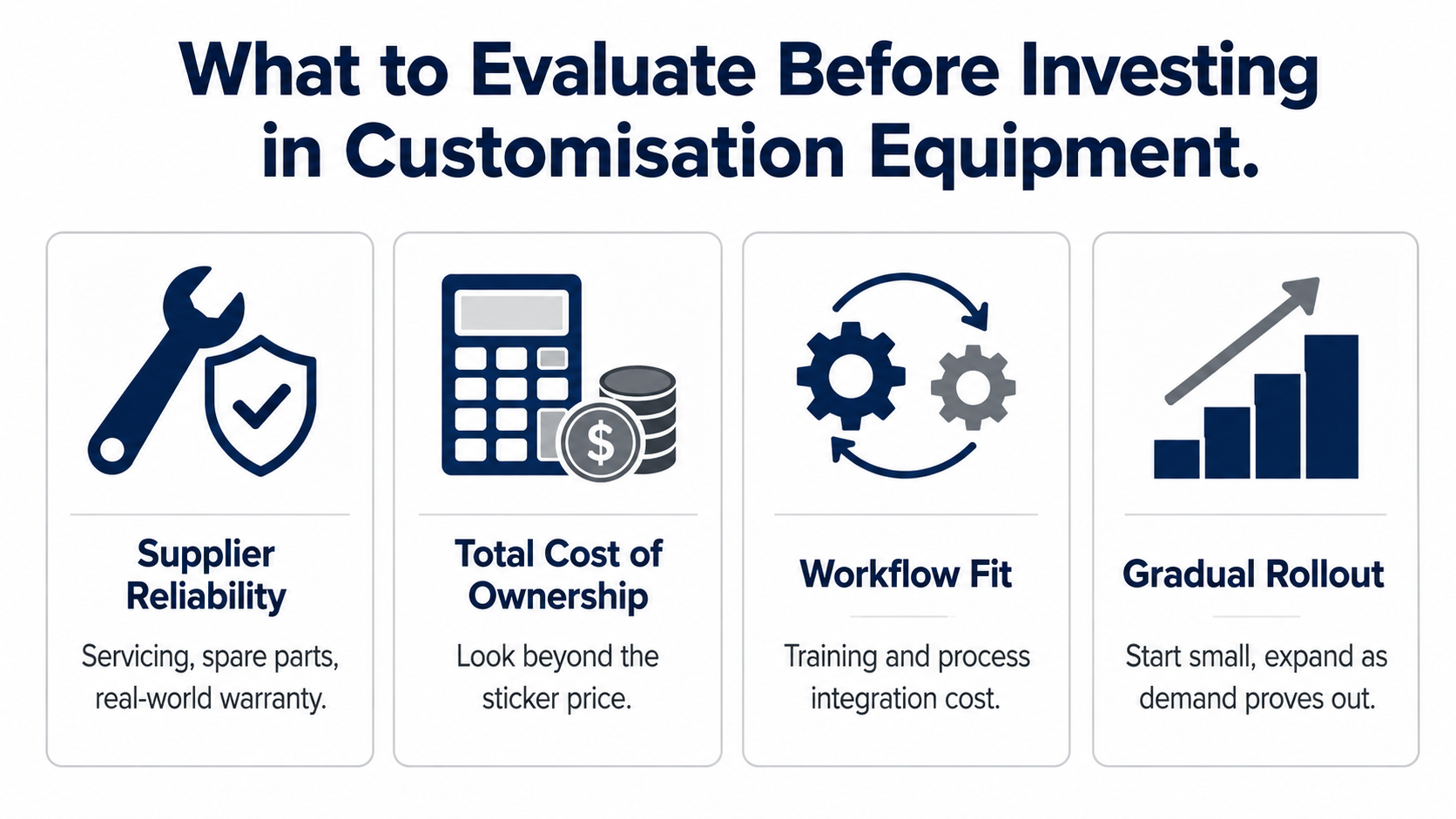
Supplier reliability matters as much as the technology’s specifications. Equipment that supports customisation still needs consistent servicing, available spare parts, and a warranty structure that reflects real-world usage rather than optimal conditions. A production line that goes down without support available can cost a business more in lost orders and missed deadlines than the equipment saved in initial setup costs.
Suppliers such as Virmer – the official distributor of Wattsan laser machines across Europe, including the UK – typically offer service and warranty support as part of the purchase, which matters when evaluating total cost of ownership rather than upfront price alone. This kind of support structure is a reasonable example of what business owners should look for when assessing any supplier in this category, regardless of which brand or region they are ultimately sourcing from.
Total cost of ownership, rather than sticker price, is the more useful frame for this decision. A lower-cost machine with limited support can end up more expensive over its working life than a better-supported alternative, particularly for a business planning to rely on the equipment for a growing share of its output rather than as a secondary capability.
Businesses should also consider how the technology fits into existing workflows. Equipment that requires extensive retraining or a significant change to how orders are processed adds a hidden cost that does not appear on the equipment’s price tag but affects how quickly the investment starts paying off.
Finally, it is worth treating this as a gradual transition rather than an all-or-nothing decision. Introducing personalisation on a limited product range, measuring how customers respond, and expanding from there carries considerably less risk than restructuring an entire production line around customisation from the outset. The businesses that adapt most successfully tend to be the ones that treat this shift as a capability to build incrementally, not a single decision to get right on the first attempt.
Closing
The businesses positioned to benefit most from this shift are not necessarily the largest ones. They are the ones that recognise personalisation has moved from a cost centre to a viable, repeatable part of the production process, and that act on that recognition before it becomes the industry standard rather than the differentiator.