
How NVIDIA Helps 40,000 AI Startups Grow | Tobias Halloran
Chapters
Read the interview page Watch on YouTube (opens in a new tab)

Discover NVIDIA technologies, understand real-world applications, compare solutions, and find the tools that can help bring your AI projects to life.
Explore the technology families powering accelerated computing, AI applications, digital worlds, and intelligent systems.
Plan, build and operate the data center systems that train and serve AI at scale.
Work out which NVIDIA architecture, chip and system suits a workload.
Connect GPUs within and across racks so large AI jobs are not held back by the network.
Build and run AI assistants and agents on company data with controls in place.
Serve AI models with lower latency and lower cost per token on NVIDIA GPUs.
Write, profile, debug and package GPU-accelerated software.
Run pandas, Spark, scikit-learn and optimization jobs faster on GPUs with few code changes.
Model a real site or product in 3D and test changes before making them physically.
Train robots in simulation, then run their AI on the machine itself.
Turn camera feeds into searchable events and alerts across a site.
Run AI on devices and machines where data is produced, without a round trip to the cloud.
Develop, simulate and run driver assistance and self-driving software.
Speed up genomics, drug discovery, imaging AI and medical device software with GPUs.
Isolate workloads, protect data in use and contain AI agents on NVIDIA infrastructure.
Improve game graphics and creative work with RTX and on-device AI.
Speed up rendering, virtual production, video processing and AI services for media companies.
Forecast weather, simulate physical systems and manage the energy use of AI data centers.
Run simulations and scientific codes on GPUs, from one node to a supercomputer.
Find NVIDIA programs, training and free resources for startups and developers.
On film
Interviews with NVIDIA leaders, films from GTC Berlin 2026 and live sessions, from the Dinis Guarda channel. Nothing loads from YouTube until you choose a video.
Chapters
Read the interview page Watch on YouTube (opens in a new tab)
 Video · 16 Nov 2026
How NVIDIA Helps 40,000 AI Startups Grow | Tobias Halloran
(now showing)
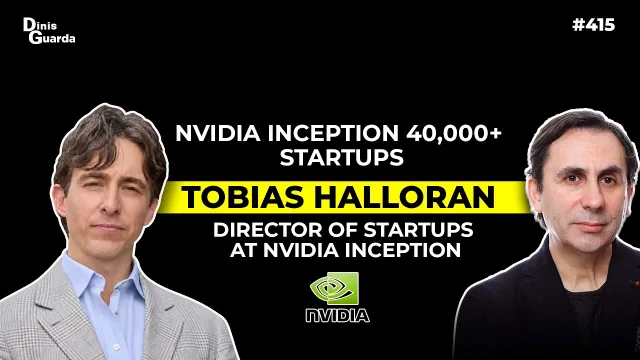 Video · 16 Nov 2026
Tobias Halloran - Director at NVIDIA Inception - Explains NVIDIA's Ecosystem of 40,000+ Startups
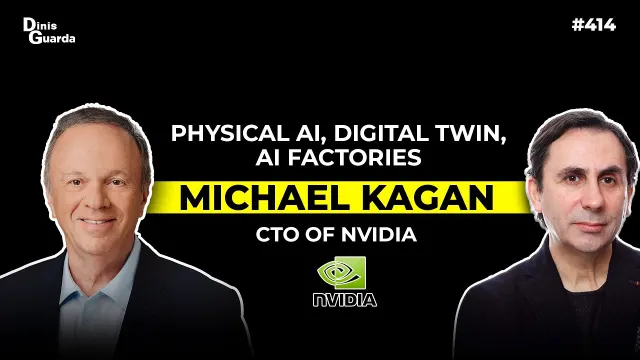 31:38
Interview · 12 Nov 2026
Michael Kagan, CTO of NVIDIA
 2:13
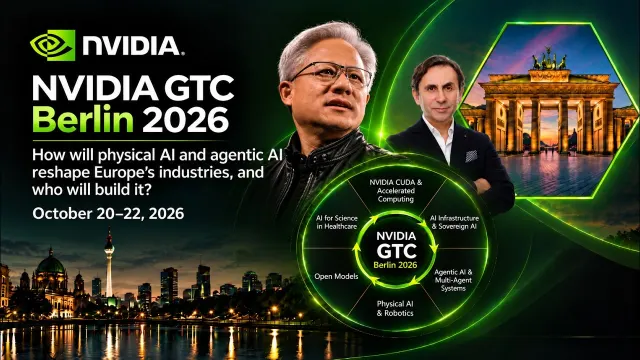
GTC Berlin 2026 · 19 Oct 2026
NVIDIA GTC Berlin 2026: Advancing AI
 1:24:00
Live session · 16 Oct 2026
The Explosion of AI Agents: NVIDIA OpenShell
 0:55
Short · 16 Oct 2026
AI agents, NVIDIA OpenShell and the machine ID passport
 1:19
GTC Berlin 2026 · 15 Oct 2026
NVIDIA GTC Berlin 2026: the rise of the super AI factory
 0:08
Short · 13 Oct 2026
Who stops the AI agent?
 13:56
Profile · 16 Mar 2025
Jensen Huang: NVIDIA AI visionary
 1:11:28
Interview · 19 Dec 2024
Rev Lebaredian, VP of Omniverse and Simulation Technology
 1:00:17
Interview · 29 Jul 2024
Erik Pounds, Director of Product Marketing
Layers from applications down to networking and facilities. Pick a path to see one way the pieces fit together. Paths are illustrative, not a required architecture.
13 technologies
7 technologies
13 technologies
11 technologies
12 technologies
3 technologies
From a business application down to the hardware that serves it.
Running GPU capacity as a shared, observable service.
Train in simulation, then run on the robot.
Rehearse a site virtually before changing the real one.
Inference close to sensors and machines.
Graphics and creative tools on RTX.
Start from the outcome. Each path explains the approach, the technologies involved and when a simpler option is enough.
Four tools that turn a question into a plan you can act on. They run in your browser, need no sign-up, and say when NVIDIA technology is not needed.
The Machine
Model what tokens and GPU capacity cost today, and what changes when efficiency or demand moves.
The Mirror
Find the first digital twin worth building for a factory, warehouse, city, data center or robot.
The Makers
See which NVIDIA tools and programs fit your startup, and what the published Inception criteria ask.
Solution Architect
Describe what you are building and get an explainable architecture, gaps and a phased roadmap.
In-depth profiles: what each one does, what it needs, what it is not, and how to start.
NVIDIA AI Enterprise is a commercial, supported software suite that bundles NVIDIA's AI frameworks, NIM microservices and SDKs with GPU drivers, Kubernetes operators and Run:ai orchestration, adding release branches, security patching and SLA-backed support for production AI.
AI Workbench is NVIDIA's free tool for running containerized, Git-managed AI projects on a laptop, a GPU workstation, a remote server or a cloud instance with the same interface. It handles containers, GPU drivers and remote connections; the latest release, 2026.06.5, shipped in July 2026.
BioNeMo is NVIDIA's development platform for AI in biology and drug discovery: open models, training recipes, libraries, NIM microservices and, since June 2026, an agent toolkit. The older BioNeMo Framework container is archived; NVIDIA now points users to BioNeMo Recipes on GitHub.
NVIDIA BlueField is a family of data processing units (DPUs) that sit in servers and storage systems and run networking, storage and security services on their own processors and accelerators, so host CPUs and GPUs are left for application work.
NVIDIA Blueprints are open reference workflows for agentic and generative AI use cases such as retrieval-augmented generation, video search and summarization, and research agents. Each provides sample code, deployment files and documentation built on NIM microservices and other NVIDIA libraries, meant to be adapted.
NVIDIA Cosmos is an open platform of world foundation models and tools for physical AI. Cosmos 3 reasons over images and video and generates video, sound and robot actions; Curator, Evaluator and Cosmos Framework cover data, scoring and post-training. Licenses differ by model (OpenMDW 1.1 for Cosmos 3).
The NVIDIA CUDA Toolkit is the development kit for programming NVIDIA GPUs: a compiler, runtime and driver APIs, math and parallel libraries, debugging and profiling tools, and documentation. The current release is CUDA 13.4 Update 1, and the GPU driver is now installed separately.
NVIDIA CUDA-X Data Science, known until August 2026 as RAPIDS, is a collection of open source GPU libraries for data science: cuDF for dataframes, cuML for machine learning and cuGraph for graph analytics. Several of them can speed up existing pandas, scikit-learn or NetworkX code without code changes.
Some technologies that look like alternatives are layers that work together. The comparison starts by saying which is which.
Different roles in one serving stack. A team can use one, two or all three.
Read the comparisonDocumented implementations, each with its sources, deployment status and who reported each result.
BMW Group
Scaling
BMW Group plans and checks its car plants in a Virtual Factory built on NVIDIA Omniverse and OpenUSD. BMW says digital twins now cover more than 30 production sites, cut collision checks for new models from almost four weeks to about three days, and are projected to lower planning costs by up to 30 percent.
Automotive manufacturing
The AES Corporation, through Maximo (its incubated solar robotics company)
In production
Maximo, the solar robotics company AES incubated, reported 100 MW of panels installed by a fleet of four robots at AES's Bellefield complex in March 2026. It credits NVIDIA Omniverse libraries and Isaac Sim with letting it test robot updates in simulation before sending them to the field.
Energy and utilities (utility-scale solar construction)
Caterpillar
Demonstration only
At CES 2026 Caterpillar demonstrated its Cat AI Assistant running on NVIDIA Jetson Thor inside a Cat 306 CR mini excavator, answering spoken requests and setting digging limits without a cloud link. Caterpillar is also piloting factory digital twins on Omniverse libraries. No jobsite rollout date has been published.
Construction and mining equipment
Aigen
In production
Aigen builds solar-powered Element robots that pull weeds mechanically in row crops. NVIDIA says Aigen post-trains Cosmos models to generate synthetic field data and runs its newest robots on three Jetson Orin NX modules. Aigen reports more than 100 robots built and offers four-arm fleets for the 2027 season.
Agriculture (autonomous mechanical weeding)
BNY (The Bank of New York Mellon Corporation)
In production
BNY installed an NVIDIA DGX SuperPOD built from dozens of DGX H100 systems in March 2024, the first major bank to do so by NVIDIA's account. Named workloads include deposit forecasting and payment automation. No performance or business results have been published for the system.
Banking and financial services
NVIDIA GTC Berlin 2026
Conversations planned around NVIDIA GTC Berlin 2026. Each shows its real editorial status; recordings appear only once published.
Michael Kagan, Chief Technology Officer, NVIDIA
Watch now
Brian Harrison, Senior Director, Software Product Management, Digital Twins for Omniverse, NVIDIA
Planned
Tobias Halloran, Director, Startups, EMEAI, NVIDIA
Confirmed
Three fictional scenarios. Each opens the right tool with its assumptions filled in, and every answer can be changed. None of them describes a real customer.
Traffic, safety and privacy at city scale: what to model first, what to keep out of scope.
Simulation, on-robot computing and the startup resources that fit an early team.
What a cheaper token does to the bill when demand grows, and where the break-even sits.
Built by IntelligentHQ to make the NVIDIA ecosystem easier to navigate.
The editors check it against the sources. If you left an email address, they may reply about it.