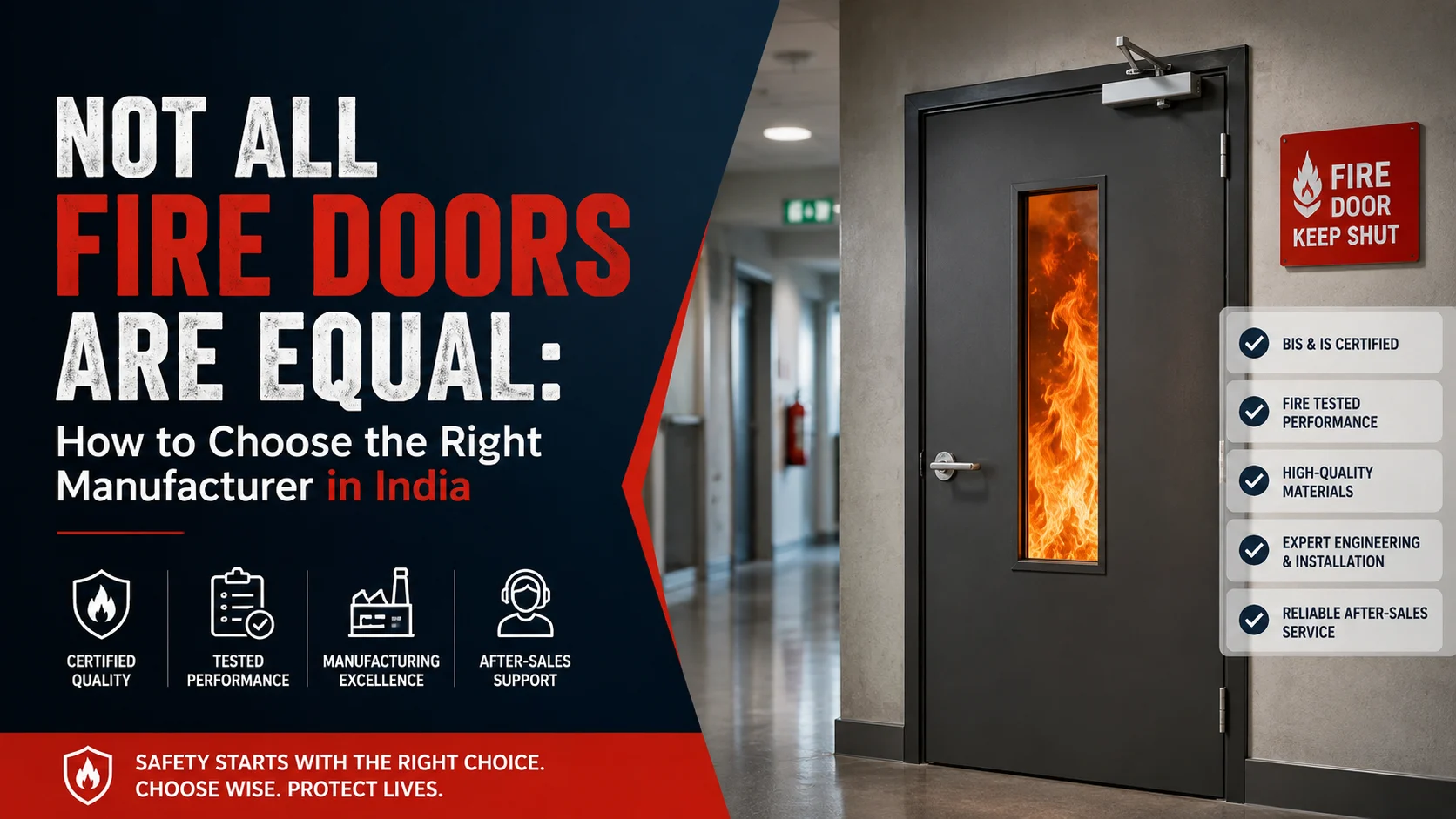
In many building projects, fire doors are treated as a standard purchase. Something to tick off compliance lists without much deeper evaluation. But when you look closer, it becomes clear that not all systems deliver the same level of protection, even if they appear identical on paper. Selecting the right fire door manufacturers in India plays a decisive role in determining overall building safety and regulatory performance.
Behind every reliable fire door lies a combination of testing, engineering, certification, and installation discipline. Small differences in any of these areas can significantly impact how a system performs in an emergency.
Why All Fire Doors Are Not Created Equal
Differences in fire rated doors often lie beneath the surface, hidden in testing, materials, and system integration.
The Common Misconception About Fire Doors
A widespread misconception is that all fire doors provide identical protection because they look similar. This assumption can be dangerous.
Many buyers assume:
- If a door looks robust, it must be fire-resistant
- All fire rated doors follow the same performance benchmarks
- Certification is a one-time formality rather than a continuous compliance requirement
True safety depends on how the entire system behaves under fire conditions. A door is only as reliable as its weakest component. Fire safety is determined by the complete tested assembly and not just the glass, but the frame, glazing, seals, and hardware working together under real fire conditions.
What Differentiates One Fire Door from Another?
When evaluating fire doors in real-world applications, the differences are not always visible at first glance. Many systems may look similar in design, but their actual performance under fire conditions can vary significantly based on engineering, testing, and certification.
- Testing standards
One of the most important factors is how the door has been tested. Reliable systems undergo rigorous fire door testing in accredited laboratories, where performance is evaluated under controlled fire exposure conditions. The credibility of these tests plays a major role in determining real-world reliability.
- Manufacturing quality
The consistency of materials, precision engineering, and production processes directly influence how a fire rated door performs over time. Even small variations in manufacturing can impact sealing, alignment, and overall fire resistance.
- Hardware compatibility
A fire door is only as strong as its weakest component. Hinges, locks, closers, seals, and glazing systems must all work together as a tested assembly. If hardware is not properly integrated or certified, it can compromise the entire system’s performance.
- Installation requirements
Proper installation is critical to achieving the intended fire resistance rating. Even a fully certified product can underperform if it is not installed according to manufacturer specifications. This includes correct framing, sealing, and alignment on-site.
- Certification and compliance
Authentic certified fire doors must meet applicable regulatory standards and carry traceable documentation. These certifications ensure that the system has been independently verified and is suitable for use in regulated building environments.
Together, these factors determine whether a fire door delivers dependable protection or only meets minimum expectations on paper. High-performance systems such as those from Vetrotech are designed with these integrated requirements in mind, ensuring tested, certified, and system-based fire safety performance.
How to Choose the Right Fire Door Manufacturer in India
Selecting the right partner from among fire door manufacturers in India requires a structured evaluation approach. It goes beyond product brochures and pricing and demands technical validation and long-term reliability.
Start by Reviewing the Complete Door System, Not Just the Components
A proper fire door check goes beyond inspecting the visible door leaf and focuses on the entire assembly as a single safety system. Frames, seals, glazing, hinges, and hardware all play a role in determining how the system behaves under fire conditions. Mixing elements from different suppliers without validated testing can compromise performance and invalidate compliance. A certified solution should always function as a fully integrated unit.
Verify Fire Testing in an Accredited Laboratory
Always ask for validated fire door testing reports rather than relying on marketing material.
- Ensure the complete assembly (door leaf, frame, glazing, hardware) is tested together
- Confirm the test is conducted by recognised third-party laboratories
- Match results with your required fire rating and project specifications
Without verified testing, performance claims cannot be trusted in real fire scenarios.
Check Whether the Manufacturer Offers the Fire Rating Your Project Needs
Not all fire door manufacturers in India provide the same range of protection levels, and this is where many project decisions go wrong. The required fire resistance rating should always be defined first, and then matched with what the manufacturer can actually deliver in tested configurations. Instead of focusing only on availability, it is important to understand whether the system is suitable for different applications such as standard door openings, glazed assemblies, or specialised architectural requirements.
Verify that the Manufacturing Facility is Audited by an Independent Third Party
A manufacturer’s self-declaration is not enough for life-safety products. A manufacturer can describe how a product is designed, but independent validation adds a higher level of credibility. An external certification body, like Intertek, evaluates whether the product or assembly has been tested against applicable standards, whether the tested configuration is documented, and whether ongoing production remains aligned with the certified design.These audits connect lab performance to real manufacturing and consistency in production, so that the supplied product remains compliant every time.
Assess Their Experience in Similar Building Types
Experience in fire safety is about where their systems have actually been used. A manufacturer who has worked on hospitals, airports, schools, commercial towers, or industrial facilities is more likely to understand real-world compliance pressures. Project references and case studies become especially important here. They help validate whether the manufacturer has dealt with similar approval processes and performance expectations.
Evaluate Their Ability to Support Architects and Consultants
A reliable fire door supplier should act as a technical partner rather than just a product vendor. Strong support typically includes detailed technical specifications that can be directly used in project documentation, along with CAD and BIM integration for smoother design coordination. The ability to guide architects and consultants in selecting the right fire-rated system ensures fewer design conflicts and reduces the risk of non-compliance later in the project lifecycle. Manufacturers like Vetrotech provide project-specific guidance and quotes to help teams select the right fire door system.
Verify Compliance with Applicable Standards and Regulations
Compliance is one of the most critical aspects of selecting fire doors, and it must go beyond basic documentation. Manufacturers should be able to demonstrate adherence to relevant local building codes as well as project-specific safety requirements. All certifications should be current, traceable, and backed by recognised authorities. This becomes particularly important during audits and approval processes, where proper fire resistance certification is required to ensure regulatory acceptance.
Understand the Manufacturer’s Installation Approach
Even a fully tested system can fail if installation is not handled correctly. This makes installation guidance a key part of manufacturer evaluation. Clear installation manuals, on-site training, and supervision support help ensure that systems are installed as intended. It is also important to understand how installation quality is verified on-site, since improper fitting can significantly reduce the effectiveness of even the best-designed fire-rated systems.
Assess Long-Term Support and Maintenance Capabilities
Fire doors are not one-time installations, they are long-term safety systems that require ongoing attention. A reliable manufacturer should provide access to replacement components and clear maintenance guidelines to ensure continued performance. Over time, buildings evolve, and having a manufacturer that can support these changes ensures that fire safety performance is not compromised. As part of a proper fire door inspection checklist, regular maintenance plays a key role in confirming that the system continues to meet its intended requirements.
Compare Value, Not Just Price
While cost is always a consideration, it should never be the only deciding factor when selecting fire doors. Lower-priced systems may not always deliver the required level of certification, durability, or long-term reliability. Instead, it is more effective to evaluate total lifecycle value. This includes compliance assurance, maintenance needs, system longevity, and overall performance consistency. In fire safety, long-term reliability is far more important than short-term savings.
Choosing Fire Doors with Confidence
Selecting the right fire door is ultimately about understanding performance beyond appearance. A well-informed decision looks at testing, certification, installation quality, and long-term reliability rather than just initial specifications or cost. When these factors are evaluated together, it becomes much easier to identify solutions that truly perform under critical conditions.
A structured fire door buying guide helps simplify this process by focusing attention on what really matters with verified testing, compliant systems, and manufacturers who prioritise safety as much as design. With the right approach, fire doors become more than a regulatory requirement; they become a dependable layer of protection built into the fabric of a building.
FAQ
- Why are all fire doors not the same?
Fire doors differ in how they are designed, tested, and assembled, which directly impacts how they perform during a fire. Even if they look similar, variations in materials, hardware, and system integration can significantly change their level of protection.
- How can I verify if a fire door manufacturer is reliable?
Check for third-party audited manufacturing facilities, test reports from internationally accredited laboratories, valid certifications, and evidence that complete door systems have been tested together. Reliable manufacturers are also transparent about performance data and provide clear technical documentation.
- What certifications should a fire door manufacturer provide?
They should provide recognised third-party fire test certificates and compliance documents that confirm performance under approved standards. These should be traceable, up to date, and applicable to the exact system being supplied.
- Why is complete system testing important for fire doors?
Fire safety depends on how all components work together under extreme conditions. Testing the full assembly ensures that the door, frame, glazing, and hardware perform as a single integrated system.
- What should architects look for when specifying fire doors?
Architects should focus on verified performance data, compliance documentation, and integration support such as CAD or BIM details. It is also important that the system suits the specific building type and safety requirements.
- Does the manufacturer affect the performance of a fire door?
Yes, because manufacturing quality, testing standards, and component selection directly influence reliability and consistency. A poorly engineered system can underperform even if it meets basic specifications on paper.
- How important is technical support when choosing a fire door supplier?
Technical support is critical as it helps ensure correct specification, installation, and compliance throughout the project. Strong support reduces design errors and improves overall safety outcomes.