
Artificial intelligence, or AI, is changing things fast. It’s not just about computers anymore; it’s about how we live, work, and think. This new technology, often called humanity AI, brings a lot of questions. We’re seeing new tools and ideas pop up all the time, and it’s tough to keep up. This piece looks at what’s happening and what it might mean for all of us.
Key Takeaways
- AI has two sides: it can help us a lot, but it also brings up new problems we need to think about.
- Working with AI can make us better at our jobs and help us come up with new ideas.
- We need to make sure AI is fair, clear, and doesn’t take away our ability to make our own choices.
- AI will change jobs, and we need to get ready for those shifts by learning new skills.
- Rules and plans are important to make sure AI is used for good and helps everyone.
Understanding The Evolving Landscape Of Humanity AI
Artificial intelligence, or AI, is no longer just a concept from science fiction; it’s a rapidly developing force that’s starting to reshape our world in ways we’re only beginning to grasp. Think of it like a new kind of tool, one that can learn, adapt, and even make decisions. This isn’t about robots taking over, but about how these intelligent systems are becoming part of our daily lives, from the apps on our phones to complex systems managing traffic or diagnosing illnesses.
The Dual Nature Of Artificial Intelligence
AI presents us with a fascinating duality. On one hand, it holds immense promise for solving some of our biggest problems. Imagine AI helping us find cures for diseases faster, developing cleaner energy solutions, or making education more accessible to everyone. It can process vast amounts of information and spot patterns that humans might miss, leading to breakthroughs in science and technology. However, this powerful tool also comes with potential downsides. We need to be aware of how AI might affect jobs, how it makes decisions, and whether those decisions are fair to everyone.
Navigating Unforeseen Consequences
Because AI is so new and evolving so quickly, it’s hard to predict every single outcome. We’re seeing AI used in areas like hiring, loan applications, and even in the justice system. If the data used to train these AI systems contains biases, the AI can end up making unfair or discriminatory decisions. This is a serious concern. We also need to think about privacy and security as AI systems collect and use more of our personal information. It’s like driving a car – you need to know the rules of the road and be aware of potential hazards to get where you want to go safely.
The development of AI is not a simple linear progression but a complex interplay of innovation, application, and societal adaptation. Understanding its trajectory requires looking at both the technological advancements and how humans choose to integrate these systems into their lives and institutions.
The Imperative Of Public Awareness And Choice
Given AI’s growing influence, it’s really important that everyone understands what it is and how it works, at least at a basic level. This isn’t just for tech experts; it’s for all of us. When we understand AI better, we can make more informed choices about how we want it to be used. This means having open conversations about its benefits and risks, and deciding together what kind of future we want to build with these intelligent tools. Public awareness allows us to guide AI development in a direction that benefits society as a whole, rather than letting it develop without our input.
Augmenting Human Potential Through AI Collaboration
Artificial intelligence isn’t just about creating smarter machines; it’s also about making humans smarter and more capable. The future isn’t a competition between humans and AI, but rather a partnership. Think of AI as a powerful tool that can help us do things we couldn’t do before, or do them much better.
Synergistic Partnerships Between Humans And AI
This is where the real magic happens. When humans and AI systems work together, they can achieve outcomes that neither could manage on their own. It’s like having a super-powered assistant that can process vast amounts of information in seconds, spot patterns we might miss, and handle repetitive tasks. This frees us up to focus on the things humans do best: creativity, critical thinking, and empathy.
The goal is to create a feedback loop where AI supports human decision-making and problem-solving, and human input helps refine AI’s performance and understanding.
Amplifying Capabilities In Diverse Fields
Imagine doctors using AI to analyze medical scans with incredible speed and accuracy, leading to earlier diagnoses and better patient care. Or scientists using AI to sift through mountains of research data, accelerating discoveries in fields like medicine or climate science. Even in creative areas, AI can act as a collaborator, suggesting ideas or handling technical aspects, allowing artists and designers to explore new possibilities.
Here are just a few examples:
- Healthcare: AI can help identify potential diseases from scans, predict patient outcomes, and personalize treatment plans.
- Research: AI can analyze complex datasets, simulate experiments, and identify trends that might take humans years to find.
- Education: AI can create personalized learning paths for students, adapting to their pace and style.
- Engineering: AI can optimize designs, predict structural failures, and manage complex systems.
Fostering Innovation Through Combined Strengths
By combining human intuition and creativity with AI’s analytical power, we can push the boundaries of what’s possible. AI can present us with novel solutions or perspectives we might not have considered, sparking new ideas and driving innovation. This collaborative approach means we can tackle more complex problems and develop solutions that are both effective and human-centered. The true potential of AI lies not in replacing human intellect, but in extending it.
Addressing The Ethical And Societal Implications Of AI

As artificial intelligence becomes more woven into the fabric of our lives, it brings along a set of complex ethical and societal questions we need to think about. It’s not just about the cool tech; it’s about how this tech affects people, communities, and our shared future. We need to be clear-eyed about the potential downsides and work to make sure AI benefits everyone.
Mitigating Bias And Ensuring Fairness
AI systems learn from data, and if that data reflects existing societal biases, the AI can end up perpetuating or even amplifying them. This can lead to unfair outcomes in areas like hiring, loan applications, or even the justice system. It’s a serious problem that needs careful attention.
- Data Auditing: Regularly checking the data used to train AI models for hidden biases.
- Algorithmic Fairness: Developing algorithms that are designed to be fair across different groups.
- Diverse Development Teams: Including people from various backgrounds in AI development to catch potential biases early.
The goal is to build AI that treats everyone equitably, regardless of their background. This requires ongoing vigilance and a commitment to justice in how these systems are created and used.
Transparency And Accountability In AI Systems
When an AI makes a decision, especially one with significant consequences, we need to understand how it arrived at that conclusion. This is what we mean by transparency. Without it, it’s hard to trust the system or hold anyone accountable if something goes wrong. Think about a medical AI recommending a treatment; doctors and patients need to know why that recommendation was made.
- Explainable AI (XAI): Creating AI models that can explain their reasoning in a way humans can understand.
- Clear Documentation: Keeping detailed records of how AI systems are built, trained, and deployed.
- Independent Audits: Having third parties review AI systems for performance and ethical compliance.
Safeguarding Human Autonomy And Agency
As AI gets better at predicting our behavior and influencing our choices, we need to be mindful of its impact on our freedom to make our own decisions. Recommendation engines, personalized ads, and social media algorithms can subtly shape our preferences and actions. It’s important to ensure that AI tools augment human capabilities rather than diminish our ability to think and act for ourselves.
- User Control: Giving individuals more control over how AI interacts with them and uses their data.
- Informed Consent: Clearly explaining how AI systems work and what data they collect.
- Ethical Design Principles: Prioritizing human well-being and autonomy in the design of AI applications.
Striking a balance between AI’s helpfulness and preserving our individual freedom is a key challenge for the future.
The Future Of Work In An AI-Driven World
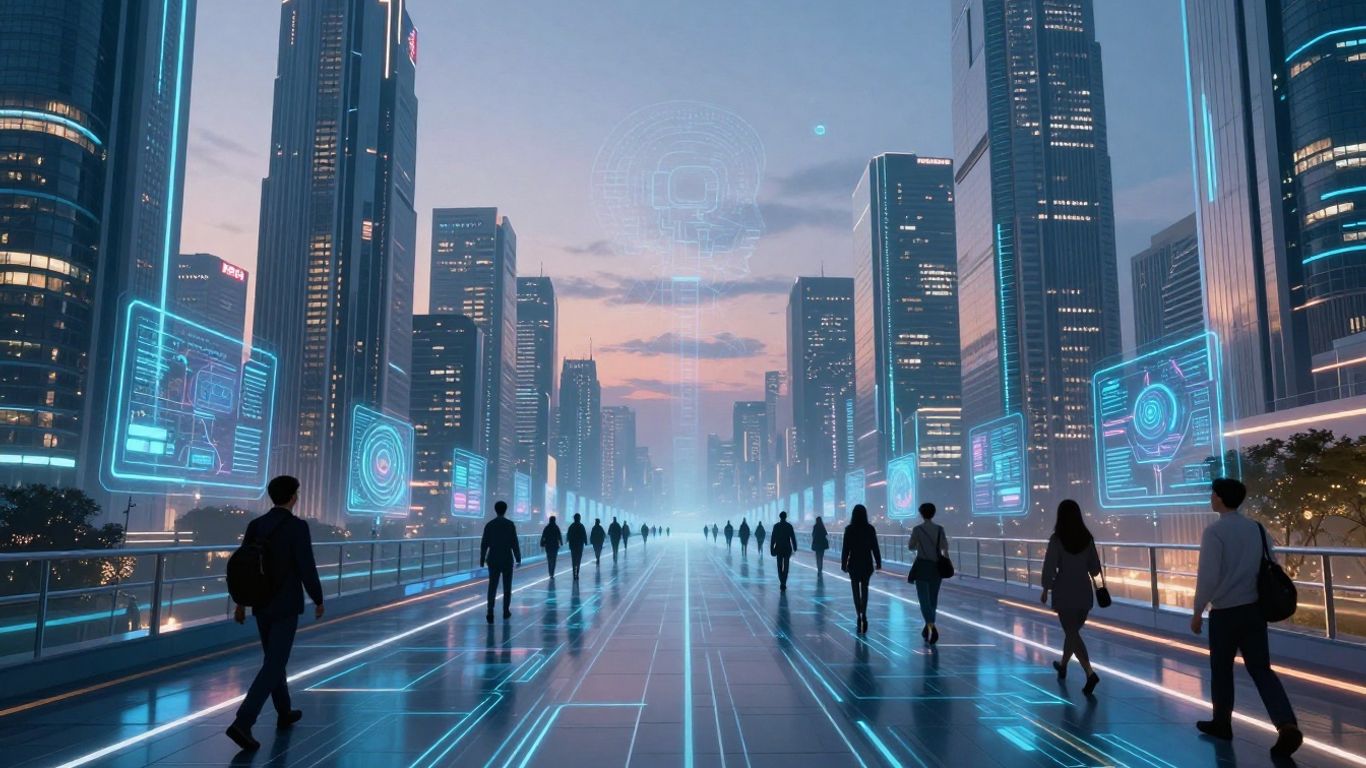
The way we work is changing, and artificial intelligence is a big reason why. It’s not just about robots on an assembly line anymore. AI is getting smarter and can do more complex tasks, which means many jobs will look different, and some might not exist in the same way.
Job Displacement And The Shifting Labor Market
It’s true that AI and automation are expected to replace some jobs. Think about tasks that are repetitive or involve a lot of data processing. AI can often do these faster and with fewer errors. The World Economic Forum suggests that while millions of jobs might be lost to AI by 2027, new ones will also be created. The challenge is that the skills needed for these new jobs might be very different from the skills people have now.
- Routine tasks: Jobs involving predictable physical or mental tasks are most likely to be automated.
- Data analysis: AI can process and find patterns in data much faster than humans.
- Customer service: Chatbots and AI assistants are already handling many customer inquiries.
This shift means we need to pay attention to which jobs are most at risk and how we can help people transition.
Reshaping Skills And Economic Security
As AI takes over certain tasks, the skills that are most valuable will change. Instead of focusing on routine work, there will be a greater need for skills that AI can’t easily replicate. These include creativity, critical thinking, emotional intelligence, and complex problem-solving. The ability to work alongside AI, rather than competing with it, will become a key skill.
This also affects economic security. If people can’t adapt their skills, they might struggle to find well-paying work. This could lead to wider gaps between those who can adapt and those who can’t. It’s important for individuals, companies, and governments to think about how to support lifelong learning and skill development.
The Role Of AI In Rebuilding The Middle Class
There’s a lot of discussion about whether AI will help or hurt the middle class. Some experts worry that AI could lead to more job losses in middle-skill roles, making economic inequality worse. However, others see AI as a tool that could actually help rebuild the middle class.
AI has the potential to augment human capabilities, allowing workers to take on more complex and rewarding tasks. This could lead to higher productivity and better job opportunities, provided that we invest in training and ensure fair access to these new roles.
This means that how we choose to use AI is really important. If we focus on using AI to help people do their jobs better and create new opportunities, it could have a positive impact. But if it’s only used to cut costs by replacing workers, the outcome could be less positive for many.
Here’s a look at how AI might reshape job roles:
| Job Category | Potential Impact of AI |
|---|---|
| Manufacturing | Increased automation, focus on oversight and maintenance |
| Healthcare | AI-assisted diagnosis, personalized treatment plans |
| Education | Personalized learning tools, administrative task automation |
| Creative Arts | AI as a tool for artists, new forms of digital expression |
| Transportation | Autonomous vehicles, logistics optimization |
Governing AI For The Public Good
The rapid advancement of artificial intelligence presents us with a unique moment. It’s not just about building smarter machines; it’s about shaping a future where these technologies serve humanity’s best interests. This requires thoughtful governance, a proactive approach to policy, and a commitment to public well-being. We need to establish clear rules and guidelines to make sure AI develops in a way that benefits everyone, not just a select few. This isn’t a task for one group alone; it demands collaboration across different sectors.
Developing Robust Regulatory Frameworks
Creating effective regulations for AI is like building a bridge over uncharted territory. We need frameworks that can adapt as AI technology evolves, providing guardrails without stifling innovation. These regulations should focus on safety, fairness, and accountability. Think about it: we have rules for cars and airplanes to keep people safe, and AI systems, which will have an even bigger impact, need similar oversight. The goal is to anticipate potential problems and put measures in place to prevent them.
Multi-Stakeholder Approaches To AI Governance
No single entity has all the answers when it comes to AI. That’s why a collaborative approach is so important. Governments, industry leaders, researchers, and the public all have a role to play. By bringing diverse perspectives together, we can create governance models that are more balanced and effective. This means open discussions, shared research, and a willingness to compromise. It’s about building consensus on how AI should be developed and used responsibly. The Humanity AI initiative is a good example of this kind of broad collaboration, aiming to steer AI development toward public benefit.
Prioritizing Human Welfare In AI Development
At the heart of all AI governance should be a commitment to human welfare. This means considering how AI impacts jobs, privacy, and individual rights. We need to ensure that AI systems are designed to augment human capabilities, not replace them in ways that cause widespread hardship. Policies should support workers through transitions and promote equitable access to the benefits AI can bring. It’s about making sure that as AI gets more advanced, people remain at the center of our decisions.
- Fairness: AI systems should not discriminate or perpetuate existing societal biases.
- Transparency: Understanding how AI makes decisions is key to building trust.
- Accountability: Clear lines of responsibility must be established when AI systems cause harm.
- Safety: AI must be developed and deployed in ways that minimize risks to individuals and society.
The development of AI is not a predetermined path. It is a journey we are actively shaping through our choices today. Establishing strong governance structures now will help us navigate the complexities ahead and steer AI towards a future that enhances human flourishing and societal well-being.
Harnessing AI To Tackle Global Challenges
Artificial intelligence is stepping up to help us with some of the biggest problems facing our planet. It’s not just about making things faster or smarter; it’s about finding new ways to solve issues that have seemed impossible for a long time.
AI’s Role In Climate Change Mitigation
Climate change is a huge challenge, and AI is becoming a key tool in understanding and fighting it. AI can process massive amounts of data from weather patterns, emissions, and temperature changes to create more accurate predictions about what might happen. This helps scientists and policymakers make better decisions.
- Optimizing energy use: AI can find where energy is being wasted and suggest ways to use less, making our systems more efficient.
- Managing resources: It can help us use natural resources more wisely, reducing waste and pollution.
- Environmental monitoring: AI-powered tools, like drones, can keep an eye on forests, wildlife, and pollution levels, helping us protect natural areas.
AI’s ability to analyze complex environmental data offers a new path toward understanding and acting on climate change, moving us toward more sustainable practices.
Advancing Public Health Through AI
When it comes to health, AI is making a big difference, especially in dealing with diseases. It can help spot outbreaks early by looking at information from different sources, like social media and health records. This means we can react faster to stop diseases from spreading.
- Faster vaccine development: AI can speed up the process of finding and creating new vaccines.
- Better disease prediction: It helps predict where and when diseases might spread, allowing for targeted prevention.
- Improving healthcare access: AI can help analyze patient data to provide better care and manage hospital resources more effectively.
Promoting Social Justice With Intelligent Systems
AI also has the potential to make our societies fairer. It can help identify and reduce unfairness in areas like hiring or how resources are shared. By looking at data, AI can point out where biases exist, so we can create policies that treat everyone more equally.
- Identifying and correcting bias: AI systems can be designed to spot and remove unfairness in decision-making processes.
- Increasing transparency: Making AI systems more open can help build trust and ensure fair outcomes.
- Supporting inclusivity: AI can help ensure that different voices and perspectives are considered in important decisions.
Ultimately, AI offers powerful new ways to address global problems, but it’s up to us to guide its development responsibly.
Looking Ahead: Our Shared Future with AI
As we wrap up our look at artificial intelligence, it’s clear this technology is more than just a tool; it’s becoming a partner in how we live and work. We’ve seen how AI can help us tackle big problems, from understanding our planet better to making our daily lives more efficient. The idea of humans and AI working together, each bringing their strengths, seems like a promising path forward. Of course, there are challenges. We need to think carefully about fairness, how jobs might change, and make sure AI is used in ways that benefit everyone. Building a future where AI helps humanity thrive means we all need to be part of the conversation, making thoughtful choices about how we develop and use these powerful systems. It’s a journey we’re all on together, and by staying informed and engaged, we can help shape a future that’s both innovative and humane.
Frequently Asked Questions
What is artificial intelligence and how is it changing our world?
Artificial intelligence, or AI, is like teaching computers to think and learn, similar to how humans do. It’s already changing how we live and work by helping with tasks like recommending movies, driving cars, and even helping doctors find diseases. As AI gets smarter, it will help us do even more amazing things.
Will AI take away all our jobs?
AI might change some jobs, and some tasks might be done by machines. But it’s also creating new jobs that need human creativity and problem-solving skills. Think of AI as a tool that helps us do our jobs better, not necessarily replace us entirely. We’ll need to learn new skills to work alongside AI.
Is AI fair to everyone?
Sometimes, AI can accidentally learn unfair habits from the information it’s given, which can lead to biased decisions. It’s really important that we build AI systems carefully and check them to make sure they treat everyone fairly. We need to make sure AI helps, not hurts, different groups of people.
How can we make sure AI is used for good?
To make sure AI is used for good, we need clear rules and guidelines, like laws for how AI should be built and used. It’s also important for everyone – scientists, companies, and governments – to work together and think about how AI affects people and our society. We must always put human well-being first.
Can AI help solve big problems like climate change?
Yes, AI can be a powerful tool to help us tackle huge challenges! For example, AI can help scientists understand climate change better by analyzing lots of data. It can also help us use energy more wisely and find new ways to protect our planet. AI can also help improve healthcare and make communities fairer.
What does ‘human-AI collaboration’ mean?
Human-AI collaboration means people and AI working together as a team. Imagine a doctor using AI to help diagnose a patient faster, or an artist using AI to create new kinds of art. By combining human smarts, creativity, and feelings with AI’s ability to process information quickly, we can achieve amazing things that neither could do alone.











