Many small businesses might be burning through their Google Ads budgets without seeing consistent returns. However, the problem isn’t that Google Ads don’t work. Small businesses need to learn how to advertise on Google better. This could involve building smarter ecosystems, such as having a strategic Meta Ads targeting and having authority-building placements through platforms like FameHero.
At its core, FameHero is a new AI-powered platform that helps businesses grow online visibility. It strengthens brand credibility before someone clicks a Google or Meta Ad through high-quality, human-written, and AI-SEO optimized articles published in top online magazines and news sites.
This article breaks down how small businesses can strategically maximize their Google Ads budget. We’ll also explore the 2026 Meta Ads and FameHero setup that helps stretch your Google Ads budget for small businesses without wasting money.
Why Small Businesses Struggle with Google Ads
Small businesses may learn how to advertise on Google by watching tutorials or reading several articles online. However, business owners may miss a few important strategic layers to make their campaign successful.
The platform’s constant changes create a steep learning curve, which is why many small businesses fall into common pitfalls when running Google Ads.
Here are some of them:
Rising cost per click (CPC)
The average cost per click (CPC) for Google Ads has been steadily increasing across industries. According to a report written by Susie Marino, 86% of industries saw higher CPCs in 2024 compared to the previous year, with an average jump of about 10% year-over-year.
Without using the best keywords for Google Ads for small businesses, campaigns can become costly experiments.
Confusion around Google search ads vs display ads
One of the biggest mistakes is not understanding the difference between Google Search ads and display ads.
Search ads appear when users actively type in queries on the search engine, which means they have intent. On the other hand, display ads appear across websites or apps while users are browsing content on their devices.
Depending on a business’s size or campaign goals, one ad type may be better suited than the other. Mixing them without clear objectives can spread budgets thin and hurt performance.
| Feature | Google Search Ads | Google Display Ads |
| Intent Level | High (user searching actively) | Low-medium |
| Average CPC | Higher | Lower |
| Best For | Immediate leads | Brand awareness |
| Works Best With | Authority layer | Retargeting |
Table demonstrating the difference between Google Search Ads vs Google Display Ads
Ignoring the difference between local service ads vs Google ads
Local service ads appear at the top of search results and operate on a pay-per-lead model. Meanwhile, Google Ads operate on a pay-per-click model and are more flexible. To get the most value from their campaigns, brands should prioritize the best keywords for Google Ads for small businesses.
However, treating local service ads and Google Ads interchangeably can waste the budget. This is why it’s important to have an understanding of when to use local service ads versus standard Google Ads and how to integrate them into an overall campaign.
How the 2026 Meta Ads and FameHero Setup Works
Before someone clicks your ad, they often search for your business. If they see trusted media mentions and articles from top-tier magazines and news sites, your click-through rate improves, your Quality Score improves, and your cost per acquisition drops.
This is why Google Ads for small businesses perform better when layered with a strong Meta Ads strategy and authority-building content from FameHero.
Ramping Up Meta Ads to Reach Warm Audiences
Meta Ads lets businesses run advertising campaigns across Facebook, Instagram, Messenger, and the Audience Network. It provides a range of ad formats, precise targeting options, and flexible budgeting to help businesses reach the right audience.
Meta Ads work best when they focus on retargeting people already familiar with your brand. Retargeting ensures ad spend goes toward warm audiences, which improves conversions and lowers acquisition costs.
Combining AI-Powered Insights with Human Expertise
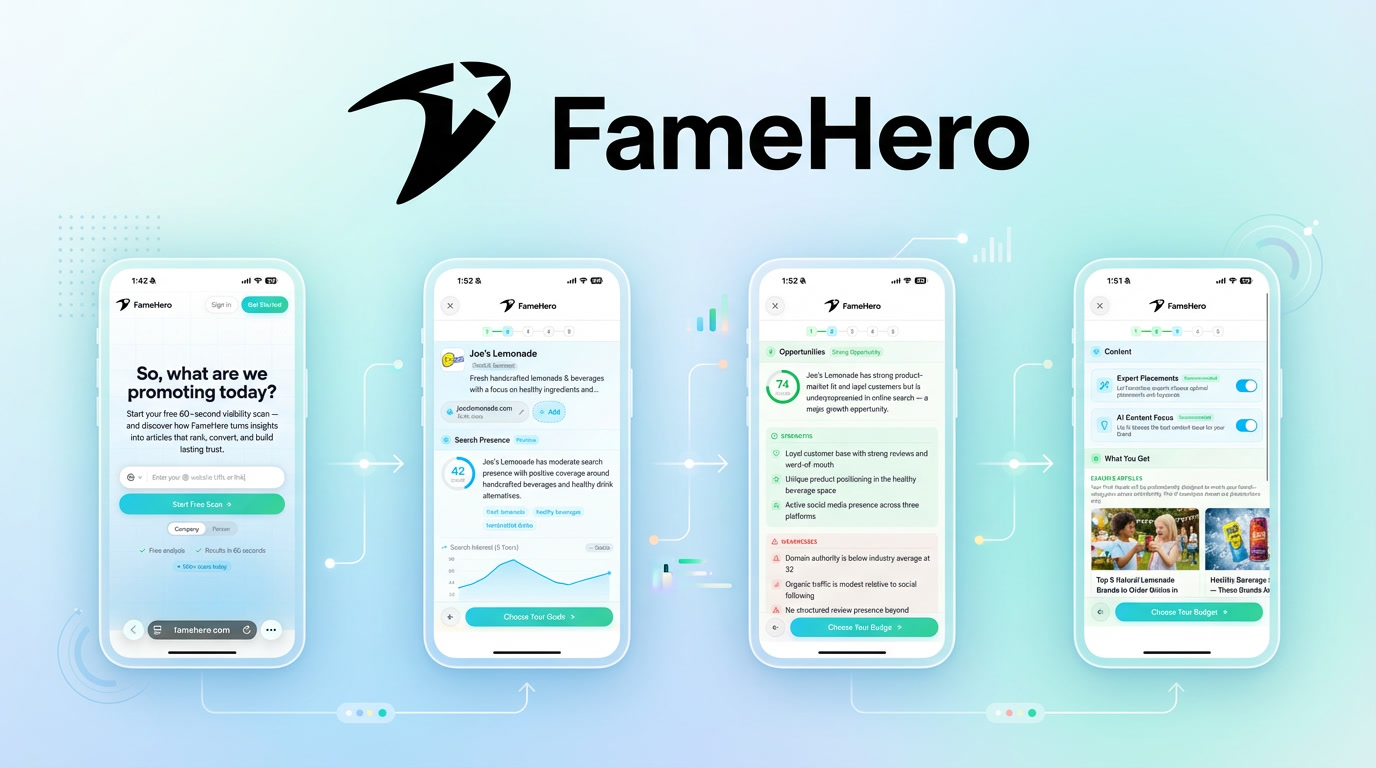
FameHero is a platform that offers cutting-edge AI-powered brand analysis and identifies their PR strengths, weaknesses, and opportunities. It also analyzes search presence, news coverage, and customer reviews and sentiment.
FameHero helps keep a brand’s website, products, and services searchable on Google and AI-powered platforms like ChatGPT.
FameHero supports this by:
- Ensuring articles are correctly structured according to type
- Ensuring alignment with a brand’s style guide
- Allowing review and revisions before publishing
- Publishing in reputable online magazines and news sites, based on the brand’s budget
Better Keyword Performance
Selecting the best keywords for Google Ads for small businesses requires experience and knowledge. FameHero’s expert PR and SEO team incorporates high-impact keywords into articles to boost rankings on Google and AI search results. A credible online presence improves a brand’s Quality Score and can lower CPC.
Flexible Budget Options
Not all brands can afford PR agencies with high retainer fees. Some only need a one-off placement or a short campaign with specific deliverables, whether it’s a high-quality article or graphic design.
FameHero addresses this pain point by letting brands choose a budget that fits their needs and the number of content pieces.
Final Thoughts
Many think Google Ads are only for big brands. Running Google Ads for a small business doesn’t have to mean wasting money. With the right setup, your Google Ads budget for small businesses can deliver results.
Paired with strategic Meta Ads retargeting and a professionally-written, SEO-optimized article from FameHero, small businesses can stretch their budget and attract high-quality traffic.
Continue the first quarter of 2026 with smarter ad spending. Try FameHero’s AI-powered brand analysis today.
FAQs
How much should I spend on Google Ads as a small business?
Most small businesses start at $500 to $2,000 per month, depending on competition and location. Higher-cost industries may require more due to rising CPC.
What’s the difference between Search ads and Display ads?
Search ads appear when users actively type in queries on the search engine, while display ads reach users while browsing websites or apps.
How do I pick keywords that lead to customers (not clicks)?
Customers who are ready to buy use phrases that indicate purchase intent. Focus on keywords with modifiers like “buy,” “order,” or “purchase,” and prioritize low-volume, high-intent, long-tail keywords over generic, high-volume terms.
How do I avoid wasting money on broad match/junk searches?
To prevent your budget from being eaten up by irrelevant clicks, focus on using phrase match or exact match keywords. Add negative keywords to prevent future ad spend on terms that don’t convert. Regularly monitor your search term reports to identify low-performing queries.
What should I do before running Google Ads?
Before running any Google Ads campaign, make sure your business is search-ready. Claim and verify your Google Business Profile so your brand appears accurately on Search and Maps. Ensure your website is optimized and clearly communicates your products or services. Identify your target audience, choose high-intent keywords, and set a realistic Google Ads budget.

Peyman Khosravani is a seasoned expert in blockchain, digital transformation, and emerging technologies, with a strong focus on innovation in finance, business, and marketing. With a robust background in blockchain and decentralized finance (DeFi), Peyman has successfully guided global organizations in refining digital strategies and optimizing data-driven decision-making. His work emphasizes leveraging technology for societal impact, focusing on fairness, justice, and transparency. A passionate advocate for the transformative power of digital tools, Peyman’s expertise spans across helping startups and established businesses navigate digital landscapes, drive growth, and stay ahead of industry trends. His insights into analytics and communication empower companies to effectively connect with customers and harness data to fuel their success in an ever-evolving digital world.