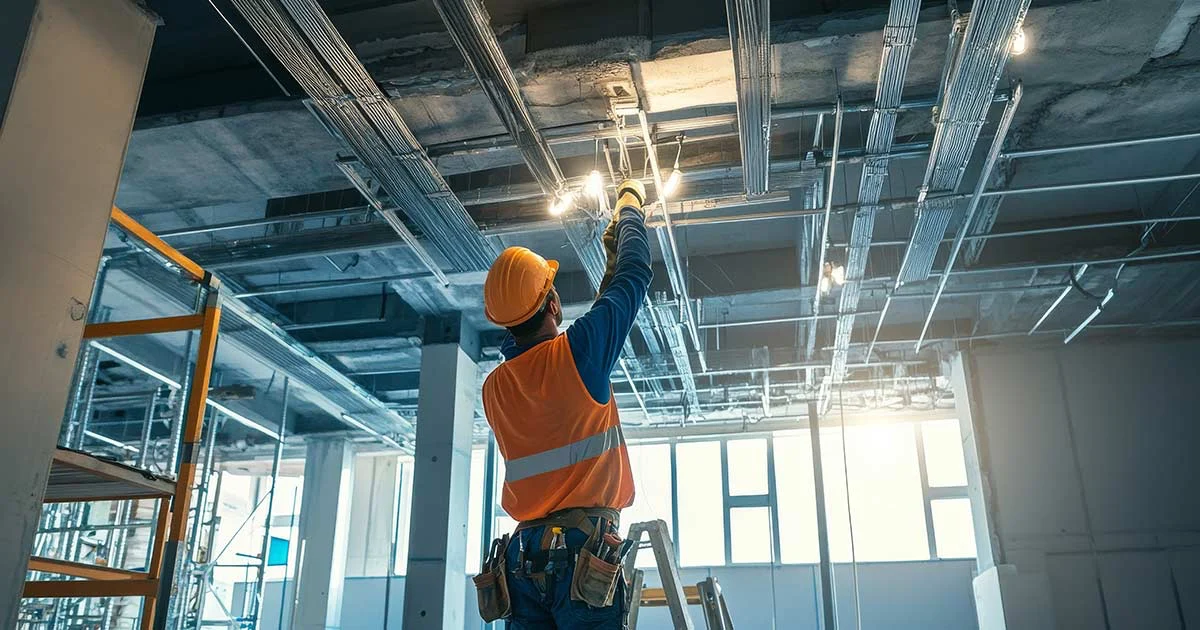
For a growing business, electrical infrastructure can be easy to overlook. Companies naturally focus on hiring employees, adding equipment, expanding office space, serving customers, and increasing revenue. Electrical systems tend to stay behind the scenes—until the existing infrastructure can no longer keep up.
That is changing.
Modern businesses depend on electricity for far more than lights, outlets, and basic office equipment. Electric vehicle (EV) charging stations, computers, servers, security systems, commercial kitchen equipment, HVAC systems, manufacturing machinery, smart building technology, and increasingly sophisticated lighting systems can all place new demands on a commercial electrical system.
For businesses in Austin and the surrounding Central Texas communities, planning for those demands can be an important part of preparing for growth. Working with an experienced commercial electrical contractor such as Tejas Electric can help business owners understand their current electrical capacity and identify improvements that may be needed before an expansion creates an unexpected problem.
Why Electrical Infrastructure Matters to Business Growth
Imagine a business that is preparing to move into a larger facility. The company has already planned the office layout, purchased equipment, hired additional employees, and scheduled the move.
Then the electrical contractor evaluates the building and discovers that the existing electrical service and panels cannot comfortably support everything the company intends to install.
Suddenly, the expansion requires additional planning.
This is one reason electrical capacity should be considered before expansion rather than after construction plans are already finalized. Electrical infrastructure can influence where equipment is installed, how much power is available, whether new circuits are needed, whether electrical panels need to be upgraded, and whether additional electrical service capacity should be considered.
In other words, electricity is no longer simply a utility that businesses consume. It is part of the infrastructure that allows a modern company to operate.
EV Charging Infrastructure Is Becoming Part of Commercial Planning
Electric vehicles are becoming more common among employees, customers, delivery fleets, company vehicles, and service businesses. As EV adoption increases, commercial properties may find themselves considering charging infrastructure as part of their facilities strategy.
Installing one EV charger might be relatively straightforward in some buildings. Installing multiple chargers can be a very different situation.
A business may need to consider:
- Available electrical capacity
- The location of existing electrical panels
- Dedicated circuits
- Charger power requirements
- Parking lot or garage layouts
- Future demand for additional charging stations
- Load management
- Potential electrical service upgrades
A business that installs two chargers today may eventually want ten. Planning for that possibility can be much easier than designing an electrical system around today’s needs and discovering later that there is not enough capacity for tomorrow’s requirements.
Increased Electrical Loads Can Sneak Up on Growing Companies
Business expansion does not always happen through one major purchase. Electrical demand often increases gradually.
A company adds another employee. Then another department. More computers are installed. Additional monitors, printers, networking equipment, appliances, HVAC equipment, or machinery follow.
Eventually, the electrical load can become significantly different from what the building was originally designed to handle.
This is especially important for businesses moving into older commercial buildings. The building may have served a different purpose when its electrical system was installed. A facility that once housed a relatively low-demand operation may now be expected to support modern technology, sophisticated HVAC systems, manufacturing equipment, or EV chargers.
Before adding substantial equipment, businesses should have their electrical system evaluated to determine whether the existing infrastructure is appropriate for the intended use.
Data and Technology Equipment Depend on Reliable Electrical Systems
Modern businesses run on technology.
Computers, servers, networking equipment, point-of-sale systems, security cameras, access-control systems, telecommunications equipment, displays, Wi-Fi infrastructure, and specialized technology can all depend on reliable electrical power.
For some businesses, even a relatively short outage can cause serious disruption.
A retail business may lose transactions. A restaurant may have equipment and refrigeration concerns. An office may be unable to access critical systems. A warehouse could experience interruptions to inventory management and automated equipment.
As businesses become more dependent on technology, electrical planning and business continuity become increasingly connected.
That means electrical infrastructure should not only provide enough power under normal conditions. Businesses may also need to think about what happens when that power is interrupted.
Smart Buildings Require Smarter Electrical Planning
Smart building technology is another factor changing commercial electrical requirements.
Modern facilities can use automated systems for lighting, HVAC controls, security, access, energy monitoring, occupancy detection, and other building functions. These technologies can improve efficiency and provide businesses with greater control over their facilities.
However, adding smart technology still requires appropriate electrical infrastructure.
The goal should not simply be to install as much technology as possible. Instead, businesses should consider how these systems interact with the building’s electrical design.
When electrical planning happens early, technology can be incorporated into the overall project rather than treated as an afterthought.
Commercial Lighting Is About More Than Turning on the Lights
Commercial lighting can also become more sophisticated as businesses grow.
A business may upgrade outdated fixtures to LED lighting, add exterior security lighting, install signage, improve warehouse visibility, or create different lighting zones throughout a facility.
Modern lighting controls can provide additional functionality, including occupancy-based controls, scheduling, dimming, and automated operation.
These improvements can affect circuit layouts, electrical loads, controls, and installation requirements.
A thoughtful lighting plan can improve the working environment while potentially helping a business manage energy consumption. But the electrical work still needs to be designed and installed appropriately.
Backup Power Can Protect Business Continuity
Power interruptions are an unavoidable reality for businesses.
Depending on the industry, losing electricity can mean much more than employees sitting in the dark. Businesses can lose access to computers, refrigeration, communications, security systems, machinery, servers, and other critical equipment.
Backup power can therefore become an important component of business continuity planning.
Commercial properties may consider standby generators or other backup power solutions depending on their operational requirements. The important question is not simply, “Do we need a generator?”
A better question is:
What absolutely needs to keep operating if the normal electrical supply is interrupted?
Once those priorities are identified, an electrical professional can help determine how backup power should integrate with the facility’s electrical system.
Electrical Panels Are a Critical Part of Expansion Planning
Electrical panels are essentially distribution points for a building’s electrical system. As a business adds electrical loads, the existing panels may eventually need to be evaluated.
Adding circuits is not always as simple as finding an empty breaker space.
The panel itself has ratings and limitations, and the building’s overall electrical service also has capacity limitations. In some situations, an electrical panel upgrade may be appropriate. In others, additional electrical distribution or a larger service may need to be considered.
This is why businesses should avoid assuming that an existing panel can automatically handle new equipment.
A professional assessment can help determine what the current system can support and what improvements may be necessary.
Planning Electrical Capacity Before Expansion Can Save Headaches
One of the biggest advantages of thinking about electrical infrastructure early is avoiding surprises.
Before expanding a commercial facility, business owners should consider what they expect the building to need over the next several years—not just what it needs today.
For example, a company might be planning to add:
- More employees and workstations
- Additional HVAC equipment
- EV charging stations
- New manufacturing or commercial equipment
- Additional refrigeration
- More computers and networking hardware
- Security and access-control technology
- Automated building systems
- Exterior and interior lighting
- Backup power equipment
Thinking about these requirements before construction or remodeling begins can make it easier to develop a practical electrical strategy.
This does not mean businesses need to install everything immediately. It means the electrical system can be planned with future growth in mind.
Should a Handy Person Handle Commercial Electrical Installation as a DIY Project?
This is an important question for business owners who are accustomed to handling minor maintenance tasks themselves.
There is a significant difference between replacing a light fixture or performing basic maintenance and designing or modifying a commercial electrical system.
Work involving electrical panels, new circuits, EV charging infrastructure, commercial equipment, service upgrades, backup power systems, or significant electrical capacity changes should not be treated like an ordinary weekend DIY project.
Texas electrical requirements, local permitting requirements, equipment specifications, safety standards, and the complexity of commercial electrical systems all need to be considered.
A handy person may be capable of many useful maintenance tasks, but that does not mean they should take on electrical installations that require professional knowledge, licensing, specialized testing, or an understanding of the building’s complete electrical system.
For significant electrical work, businesses are better served by working with Texas licensed electricians in Austin, TX, that local businesses and property owners trust.
Professional electrical contractors can evaluate existing infrastructure, determine appropriate installation requirements, identify potential capacity issues, and perform electrical work according to applicable requirements.
For a growing business, that professional expertise can be particularly valuable because the objective is not simply to make something work today. The objective is to create an electrical system that supports safe, reliable operation as the company grows.
Tejas Electric Can Help Businesses Think Beyond Today’s Electrical Needs
Commercial electrical planning should be approached as part of a broader facility strategy.
Tejas Electric understands that business owners are not simply looking for switches, outlets, panels, or wiring. They are looking for electrical infrastructure that supports their operations.
Whether a business is preparing for an expansion, adding EV charging infrastructure, upgrading commercial lighting, increasing technology capacity, evaluating electrical panels, or considering backup power, having an experienced electrical contractor involved early can help identify potential challenges before they become expensive surprises.
The right electrical plan can also help businesses coordinate their electrical needs with construction, remodeling, equipment installation, and future growth.
Electrical Infrastructure Is Part of Business Strategy
The electrical system inside a commercial building might not receive as much attention as marketing, sales, staffing, or operations, but it can directly affect all of them.
A business cannot operate efficiently if its electrical infrastructure cannot support its equipment.
As companies adopt EV charging, smart building technology, advanced data equipment, automated systems, modern commercial lighting, and higher-powered equipment, electrical demand will continue to evolve.
That makes electrical infrastructure a strategic consideration rather than something businesses should think about only when a problem occurs.
The smartest time to evaluate electrical capacity is before the expansion begins.
For Austin businesses planning their next phase of growth, working with Tejas Electric can provide an opportunity to evaluate existing electrical infrastructure, identify potential capacity concerns, and plan improvements around the company’s long-term goals.
A growing business needs more than additional square footage. It needs infrastructure capable of supporting what comes next—and electrical planning is an important part of that foundation.